No, proper technique preserves natural body contours.
Surgical Vectors and the Causes of a “Boxy” Profile
One of the most frequent issues of patients in the advanced fields of body contouring, plastic surgery and high definition abdominoplasty is whether excising abdominal skin will make them have a “straight”, “square” or “boxy” look. A boxy after-operative result is generally due to a surgery that only pulls the skin downward in a single vertical plane without considering the existing natural three-dimensional waist, hip and flank curves.
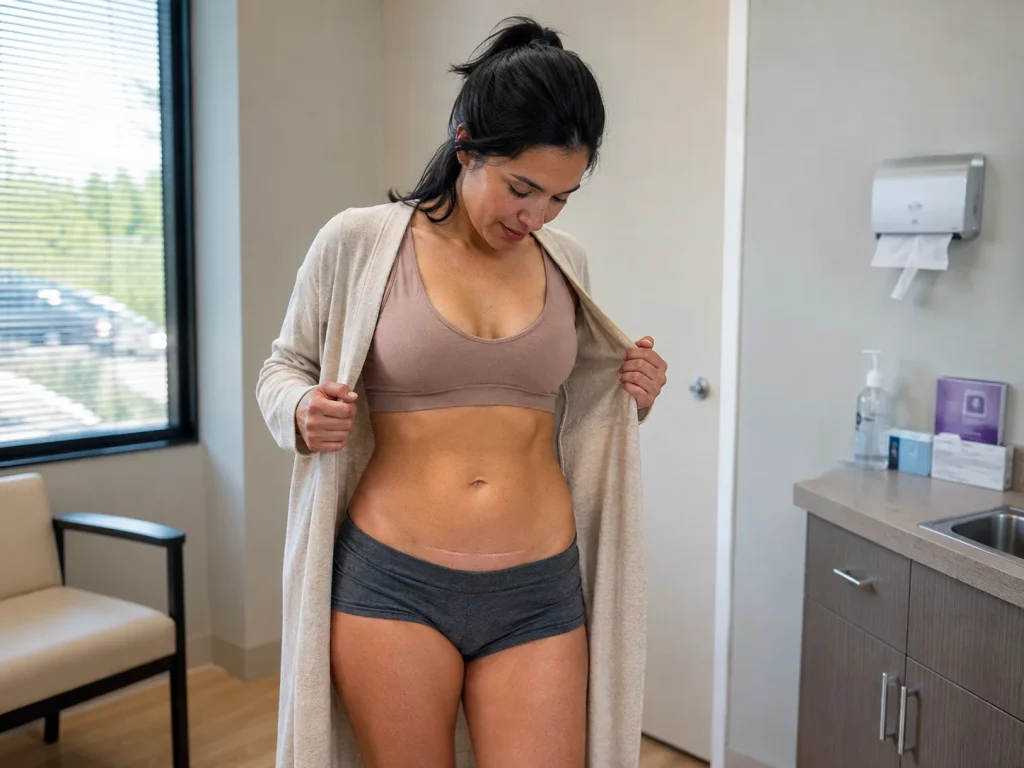
From a definitive clinical viewpoint, a well-conceived and performed state-of-the-art tummy tuck will not leave you appearing “boxy”; in reality, it will narrow your waistline while enhancing the natural curves. Combining the old-fashioned skin removal with modern lippo-abdominoplasty techniques and localized muscle repair, the surgeon at the same time carves the waist sides while keeping the front relatively smooth, making the result a soft, hourglass or tapered look rather than a flat, rectangular type.
Technical Sculpting: Preventing a Square Silhouette
Understanding how modern surgical procedures prevent the so-called square or flat-looking after-surgery outcome requires considering the three anatomical methods employed to generate curves during abdominoplasty:
- Integrated Flank and Waistline Liposuction (Lipo-Abdominoplasty): Classic tummy tucks only removed skin from the belly surface. Occasionally, this left the fat rolls, uncut, that had been accumulating on the sides (flanks), causing the blocky, wide-looking effect. On the contrary, the new-age surgeons perform tummy skin removal in conjunction with a high-definition liposuction across the flanks and the waistline to produce an inward-looking waistline that highlights the hips.
- Internal Corset Muscle Closing (Diastasis Recti Repair): Beyond just flattening the front, the repair of split abdominis recti muscles achieves this by not only pulling the separated muscles together in the most central line but also reducing the internal abdominal volume. The waistline from the side is also being inwardly pulled, hence resulting in the tapering of the torso again.
- Gradual Tension Suturing and Flap Vectoring: Skin re-draping in the most advanced forms does neither pull the skin flap vertically nor horizontally to the body. On the contrary, the skin flap is stretched over the area using vectors that are angled and multidirectional in order to follow the natural hip bone contours.
Pre-Existing Anatomy and Bone Structure Influence
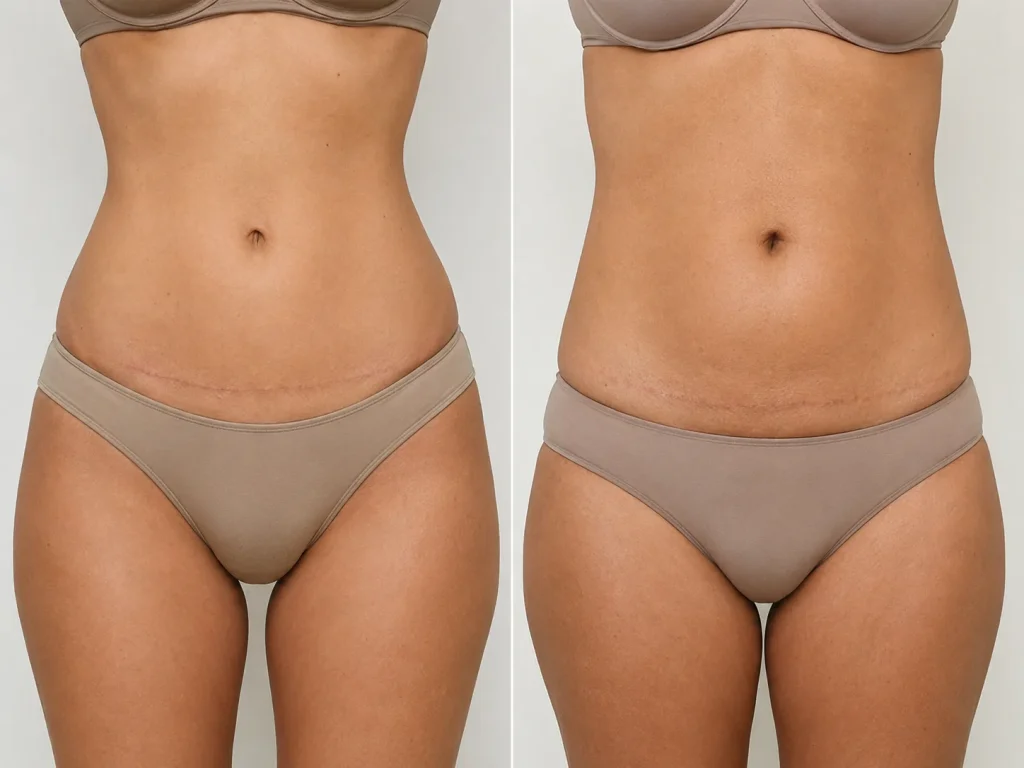
It is imperative that one should grasp how their underlying skeletal anatomy and the soft-tissue modeling during body contouring interact to set out achievable, realistic expectations regarding aesthetics:
- Rib Cage and Hip Proportions: People who have a naturally short length from their lowest rib to the hip bones will be able to have a very slim body with minimal “waist” due to being anatomically restricted (the so-called short-torso body type). While your abdomen is made perfectly flat, the muscle tightness as well as the waist size being reduced will get to its maximum level dictated by your natural skeletal frame.
- Subcutaneous vs Visceral Fat Distribution: Liposuction can be used to remove the visible, outer layer of fat on your flanks that contributes to the width of your waist. On the other hand, visceral fat hidden deep inside the belly cannot be taken off with surgery. Being at the healthy minimum BMI is vital, and surgery is scheduled after you have reached that level. When the internal volume is minimized to a point of tightness where the muscle wall is tightened, the sculpted waist should become clearly visible.
Preserving Structural Integrity and Post-Operative Boundaries
For those wanting their body contour post-operatively to be a perfect reflection of their ideal vision, adhering to the restrictions of protection and behavior during the initial phase after operation is crucial. As far as the newly tightened muscle-fascial wall is concerned, along with repositioned skin flaps and the low abdominal incision line, only the mechanical protection provided during that very first six to eight weeks is sufficient for them to form firm collagen and fibrin bonds.
If you wish that your newly shaped body has been fixed as precisely as possible, then for the first one to two weeks you must not stand upright completely to avoid mechanical loads on the incision lines, which are under tension. You will have to be lying on a “beach chair” (knees and back elevated) position to ease your abdominal tension and swelling at deep levels. Besides that, putting on and wearing the special kind of post-op compressive belt/abdominal binder for 4 to 6 weeks non-stop will do wonders by taking away dead space as well as preventing fluid buildup and facilitating smooth skin healing.
Tummy Tuck in Turkey
Closing the chapter of plastic beauty by choosing LIN Europe Clinic is like entering a first-rate medical wellness center on the global arena offering comprehensive care to face aesthetics, cutting-edge restructuring of your body, and the entire surgery process being handled with no-compromising clinical professionalism combined with an empathetic concern. We are well aware that the successful correction of the lower rectus muscles (diastasis recti), the right positioning of the tissues (vectors) with liposuctions and the accurate adaptation and handling of tissues for an exceptional tummy tuck surgery require an extremely sophisticated, honest, and supportive setting which puts the patients’ interest before even considering other things besides evidence based medicine as a foundation.
The main point of trust here is our dedicated experts at LIN Europe Clinic in Istanbul, who keep total diagnostic control of your structural parameters. Pre-operative planning, high-definition tissue assessment, and healing tracking are personalized services offered to patients so that the process of tissue development and changes in lifestyle are all gradually taken under their guidance. The best part is you can enjoy your cosmetic makeover in complete peace, knowing your investment in looking good and your overall physical health are well safeguarded against all risks.
FAQ:
No. The most recent tummy tuck techniques together with flank liposuction and muscle tightening are made specially so that waistlines get narrower while the body’s curves remain untouched and a square look is avoided.
Boxy look typically occurs when only a traditional abdominal skin removal tuck (front skin excision and tissue tightening) takes place without any flank liposuction, or if the patient already has a relatively short distance between the rib cage and hips.
Definitely. The standard modern method of carving the waistline and contouring the hips and buttocks, which creates a smooth hourglass shape, is lipo-abdominoplasty, combining a tummy tuck and liposuction.
Yes. If the two abdominal muscles on the sides are separated in the case of diastasis recti – one of the most often seen post-pregnancy conditions – then muscle tightening will work as if you are wearing an internal corset: it will pull the abdominal wall in on all sides and will reduce the middle region.
The waist is narrower right after the procedure; the swelling along the waist and the flanks can last from 3 to 6 months, during which time you can fully drain these fluids. After the recovery phase, your waist shape with smooth contours will finally be visible.
Gunter, J. P., & Rohrich, R. J. (1987). Management of abdominal wall laxity, diastasis recti repair, and subcutaneous tissue sculpting in abdominoplasty. Plastic and Reconstructive Surgery, 80(2), 161-173.
Toriumi, D. M. (2006). Structural body contouring: Maintaining long-term abdominal wall stability, muscle closure, and flap integration. Facial Plastic Surgery Clinics of North America, 14(4), 289-301.
Rohrich, R. J., et al. (2014). Advanced postoperative care, deep fascial tissue elevation, and risk mitigation protocols in abdominoplasty. Aesthetic Surgery Journal, 34(5), 587-595.