The surrounding organs naturally shift to fill the space.
The Dynamic Environment of the Pelvic Cavity
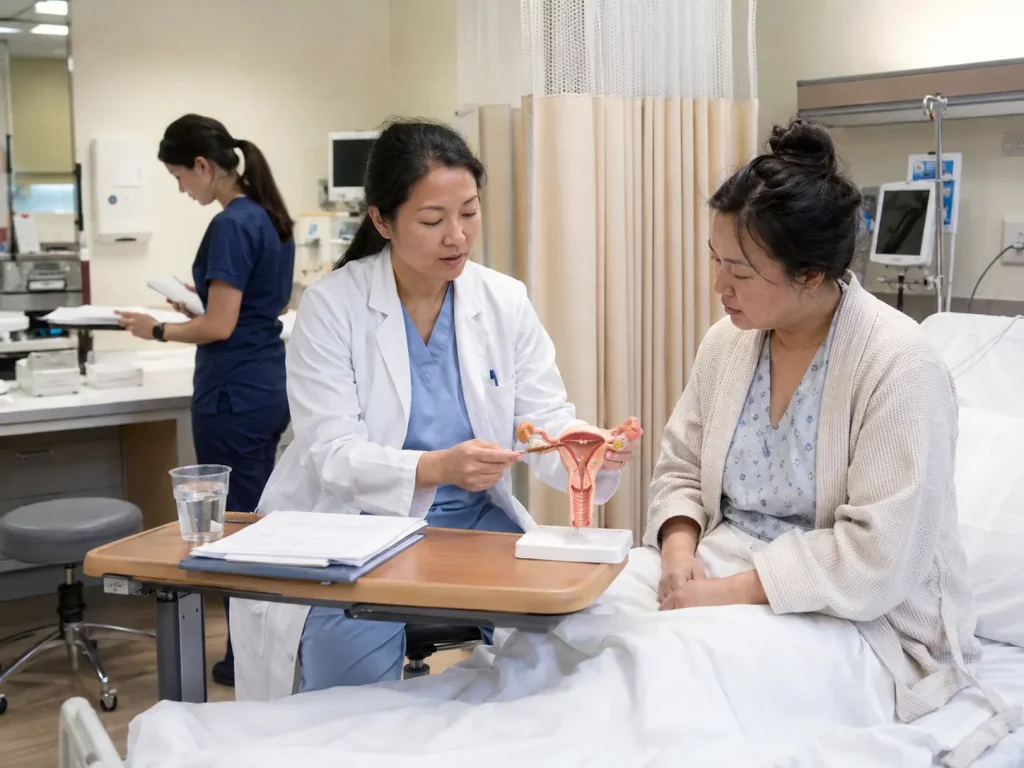
Knowledge of your anatomy after a surgery such as a hysterectomy is the key to knowing what kind of recovery to expect. If you had a hysterectomy, one of the things that probably came into your mind is whether the uterus was removed from your body and whether or not the area where it was left an empty space or an unhealed wound that would remain that way forever. As far as the medical truth goes, there is definitely no empty hole or wound left; instead, the hollow place is instantly taken by surrounding body parts. In this case, the human abdomen is not at all a rigid, hollow box. It is actually a really dynamic, high-pressure environment that includes soft, movable organs that automatically fill the area left vacant after the removal of the uterus.
Intestinal Migration and Organ Repositioning
The small bowel and large bowel are the main organs that take the place of the removed physical volume of the uterine body. In normal circumstances, the uterus lies very low in the pelvis with a snug fit between the bladder (anterior) and rectum (posterior) and with the loops of your small and large bowel lying on top. The surgical team takes out the body of the uterus, and the intestines under the influence of gravity and of the body’s pressure naturally shift and fill the newly-made void. This is a perfectly natural phenomenon, and at the top level of efficiency, it generally occurs at the time of surgery or directly following the surgical intervention only. The reason for this is that the bowels are soft and flexible, so they can smoothly adjust to the new spatial configuration of your abdomen that you didn’t even know. Not only that, but you won’t feel this shifting, and there’s no danger that these changes will affect your bowels in a negative way.
Structural Stability and Pelvic Floor Support
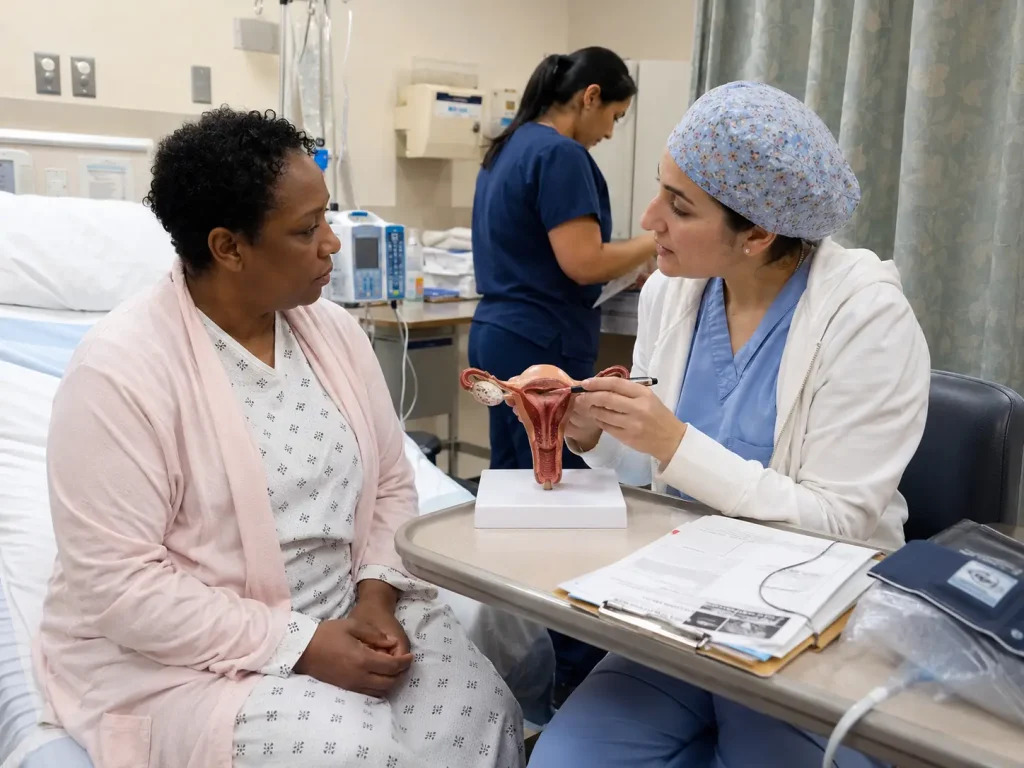
Even though the intestines can quite well cover the physical space formerly occupied by the uterus, the structural integrity of the remaining pelvic organs, especially the bladder, rectum, and the vaginal vault, needs to be supported through high-level surgical accuracy. After a total hysterectomy (where both the uterus and cervix are taken away), the top of the vagina is stitched close and thereby a tight area is created called a vaginal cuff. To prevent prolapse (falling) of these organs due to the absence of the pressure from the uterus, the surgical team carefully fixes the uterosacral and cardinal ligaments that are the tough, connective tissues holding the uterus in the pelvis previously. This surgical fix is to anchor these important ligaments directly to the top part of the newly formed vaginal cuff so the surgeon can be sure, for the entire life of the patient, that the vaginal canal, bladder, and pelvic floor remain suspended, tight, and anatomically supported.
Post-Surgical Healing and Kinetic Boundaries
Complying with physical restrictions during the early recovery period is highly important for those who want only perfect results from their healing body. Since your intestines have already moved and your pelvic internal ligaments are slowly forming connections at their new positions along with your vaginal canal or cuff, your pelvis is a high-stress region for the 6th or the 8th week. Let’s say that an abrupt rise in your internal-abdominal pressure would be very hard on biology. Such a thing can tear the healing ligaments or break the vaginal cuff (a medical emergency called cuff dehiscence). The safest way to guarantee that your pelvic structures, i.e., the muscles, ligaments, and connective tissue of your pelvis, lock in place with structural precision to their full extent is through total avoidance of any type of heavy lifting, intense core training, sexual activity, and excessive straining during the use of the toilet. Nicotine or any tobacco products must be totally eliminated. Nicotine is a powerful vasoconstrictor that, upon use, immediately restricts and narrows the small capillaries delivering blood to your pelvic organs so that your healing vaginal wall lacks the amount of oxygen-rich blood necessary to make the tissue bond tightly and heal quickly from the surgery.
Hysterectomy in Turkey
Selecting LIN Europe Clinic means that you have been admitted to an unparalleled international medical facility where your pelvic health, surgical procedures, and after-surgery details are handled expertly and compassionately with no compromise. We understand that after a hysterectomy, it’s necessary to have detailed knowledge of internal anatomy, to monitor internal tissue healing, and to protect the areas of concern. That’s exactly why we need a level of clinical, analytical, and human support that can only come from a very advanced clinical environment of total patient understanding, with all clinical decisions backed by evidence and research without the need for any personal gain. Placing your utmost confidence in our specialized personnel from LIN Europe Clinic, we have in Istanbul, your healing parameters and pelvic stability are closely looked at with the most accurate medical diagnosis. We offer a detailed individualized post-surgery program, high-resolution image reports of the surgical site, and a personalized healing schedule to guide you through each step of the tissue development and adaptation process from within and lifestyle changes with full support.
FAQ:
Once the uterus is taken out from your body, the empty space is very quickly and effortlessly taken over naturally by your intestines both small and large. These organs will slowly slide downward and fill the new area at the lower part of your abdomen.
The removal of a large womb, such an enlarged fibroma or adenomyosis, will probably result in a flat and tight-looking stomach area which can be seen by just looking. A normally-sized womb, on the other hand, won’t change the shape of your stomach from the outside much.
No. Though the intestines come a little closer to the top, your bladder, and the whole vaginal canal are nicely held in place. The strong pelvic ligaments are reconnected at the top of the vagina by your surgeon in the process so that the organs don’t move downwards too much.
No sense will be physically felt when your large and small intestines will enter their new area. But it is quite a normal experience to temporarily feel bloated abdominal pains, gas, or rumbling from bowels when your system gets used to a slightly new anatomy after going under anesthesia.
Normally, the bladder is very close to a woman’s womb. After the removal of the uterus, the bladder might move slightly behind, as it is in a free area now. However, your bladder is well-secured by the re-connected strong pelvic ligaments, and you can even have occasional frequency of urination while healing up is taking place in these local tissues.
American College of Obstetricians and Gynecologists (ACOG). (2020). Pelvic Organ Prolapse and Structural Support Following Total Hysterectomy. Practice Bulletin No. 214.
DeLancey, J. O. (1992). Anatomic aspects of vaginal eversion after hysterectomy: Managing uterosacral ligament suspension vectors. American Journal of Obstetrics and Gynecology, 166(6), 1717-1724.
Rohrich, R. J., et al. (2014). Advanced Postoperative Care, Micro-Vascular Wound Healing, and Systemic Vasoconstriction Parameters in Pelvic Tissue Recovery. Journal of Aesthetic and Reconstructive Surgery, 34(5), 587-595.