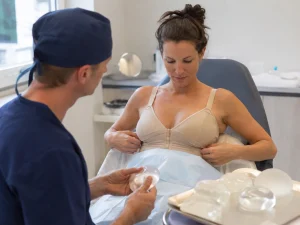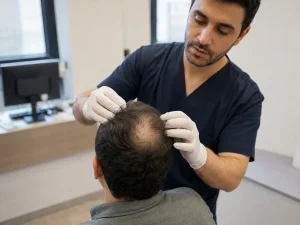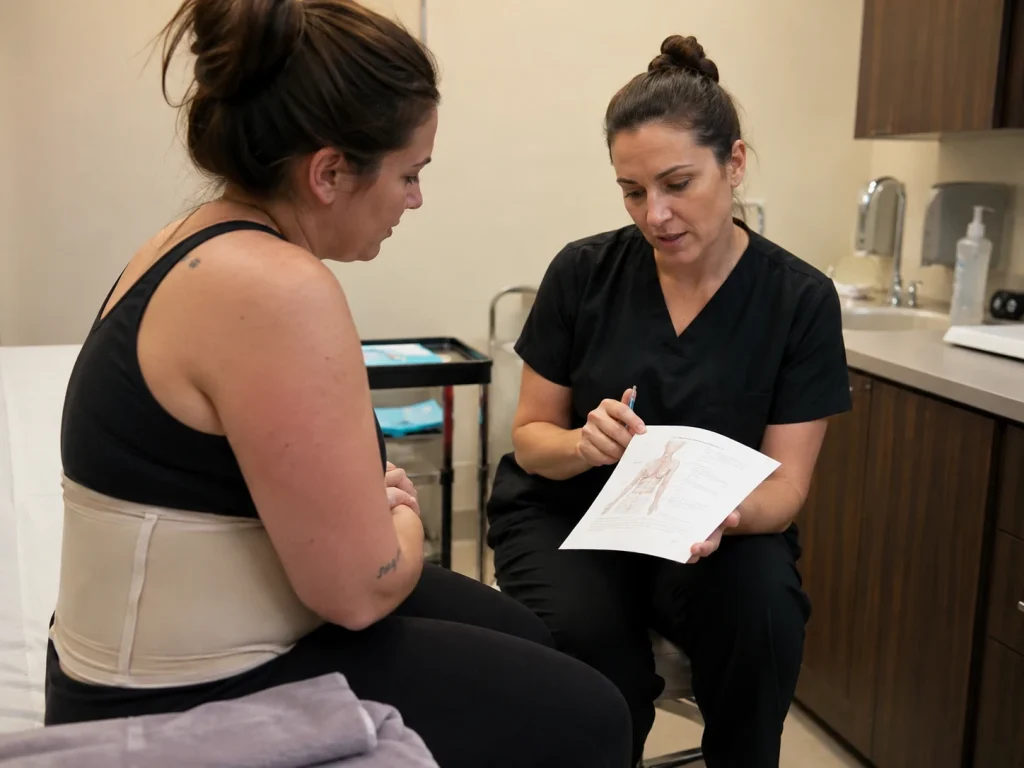
Body lift procedures have the longest recovery.
The Cellular Scale of Tissue Trauma and Multi-Planar Remodeling
In reconstructive surgery and macro-body sculpting, a patient’s recovery period after surgery is almost entirely determined by the extent of tissue damage and the number of anatomical planes that are altered. If we consider the plastic surgery with the longest recovery time, a body lift all around the torso—sometimes called a belt lipectomy—is the solid winner in overall time spent in clinical aftercare. This surgery is mainly carried out on people who have lost massive amounts of body mass, resulting in large, loose skin envelopes and severely weakened fascial support.
Looking at it from a biometric point of view, a body lift all around the torso consists of a continuous incision that goes all the way around the body. The surgeon has to raise and separate huge areas of skin and subcutaneous fat (fat) tissue at the level of the lower abdomen, outer thighs, hips, and lower back. Such extensive multiplanar remodeling inevitably changes the local blood and lymphatic circulation. As a result, the body’s acute wound healing system has to operate at a very high metabolic capacity in order to reconstruct cellular bridges, thereby prolonging the primary healing phase dramatically beyond that of a localised operation.
Deep Muscle Repair Boundaries and Delayed Lymphatic Regeneration
Another factor that makes a lower body lift mechanically complicated is that the deep muscles also have to be repaired so they are able to support the central part of the body. The surgeons are not only refreshing the outer skin layer; they are also actively tightening the abdominal wall muscles and lifting the fascial layers deep inside the gluteal and thigh areas. Because of the muscular system being operated on in this way, enormous horizontal and vertical tensions are put on the internal stitch lines, resulting in physical movement being severely limited for a few weeks in order to avoid a mechanical failure happening too soon.
Also, not only are the native superficial lymphatic channels interrupted, but the 360-degree dissection also results in surgical disruption of these channels. For this reason, patients experience a very serious and prolonged form of localized fluid retention and micro-edema. Lymphangiogenesis is the process by which the body biologically regenerates fresh lymphatic vessels over the course of several months, allowing for the efficient disposal of stagnant fluid. The delay in lymphatic clearance is what causes the tissue to remain soft, tender, and visually changed. This is why the timeline for complete tissue maturation and final structural resolution extends over a required period of six to twelve months.
Preserving Structural Longevity to Highlight an Athletic Silhouette
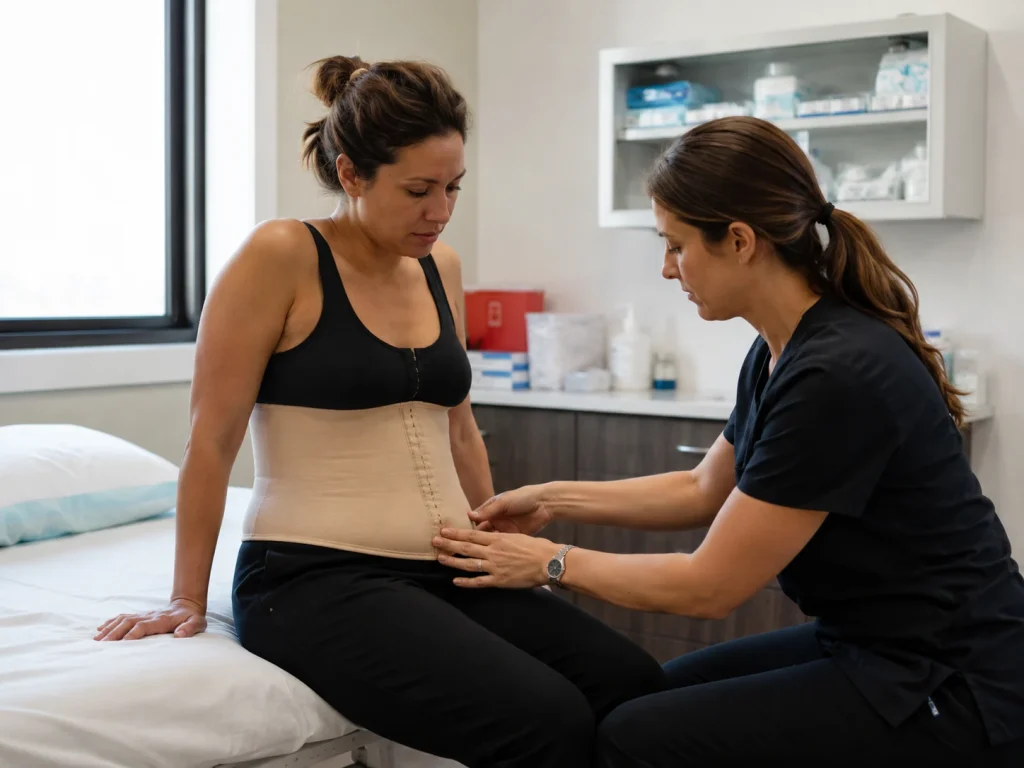
It is very important to have a deep knowledge of the biological phases that extend beyond the immediate post-operative period in the case of a recovery that is high in complexity. Those dedicated individuals who are constantly working on advanced lower body hypertrophy and gluteal engineering in order to obtain the perfect hourglass figure will find this period of enforced inactivity extremely difficult from both a mental and physical perspective. Nevertheless, rolling back to the weight room too soon after a macro-contouring procedure is a severe clinical error.
Engaging in resistance training prematurely or spiking your systemic blood pressure results in an excessive mechanical loading of the healing fascial lines and fragile capillary networks. In fact, this mechanical stress could cause internal bleeding, fluid collections (seromas), or wound separation along the 360-degree scar line, thereby significantly damaging the aesthetics of the final result. In order for your skin envelope to heal with the same level of definition and sharp contour as your athletic form, it is essential that you fully adhere to a low-heart-rate walking protocol for the first two months. This will allow your core architecture to safely stabilize itself.
Comparing the Recovery Milestones of Major Procedures
It is both necessary and very useful to build a clinical reference that consists of a comparison of the long-term tissue maturation cycles of the most comprehensive surgical interventions. In the same way that a circumferential body lift tops the list of recovery times as the most substantial surgical intervention, other major body contouring procedures also require a significant level of patient patience and strict adherence to behavior in order to biologically succeed.
| Procedure Type | Primary Healing Phase (Return to Desk Work) | Structural Matrix Maturation (Return to Heavy Lifting) | Full Tissue Resolution (Final Aesthetic Result) |
| Circumferential Body Lift | 3 to 4 Weeks | 8 to 12 Weeks | 6 to 12 Months |
| Deep-Plane Facelift | 2 to 3 Weeks | 4 to 6 Weeks | 3 to 6 Months |
| Full Abdominoplasty | 2 Weeks | 6 to 8 Weeks | 6 Months |
| Complex Rhinoplasty | 1 to 2 Weeks | 3 to 4 Weeks | 12 to 18 Months |
For a complex rhinoplasty patient, the internal cartilaginous and bony structures may take up to 18 months to be completely free of microscopic swelling, even though the patient is able to perform daily activities within 7 days. On the other hand, the deep-plane facelift is less restrictive when it comes to the patient’s ability to lift heavy weights after the face has been tightened and lifted surgically. However, a deep-plane facelift does require patients to have emotional patience as healing of facial nerves that were temporarily stretched surgically occurs slowly.
Plastic Surgery in Turkey
If you select LIN Europe Clinic, you will be joining a top global medical center where your high-complexity structural transformation can be carried out with both the highest clinical mastery and expert care that knows no bounds. We understand that a massive anatomical restoration requires a very sophisticated, clear, and highly supportive environment, one which puts evidence-based medicine above everything else, too. LIN Europe Clinic in Turkey serves as the world’s largest community of patients undergoing post-bariatric and facial contouring procedures. We offer a calm and peaceful space where your recovery plan is strictly aligned with the worldwide top safety standards for patients.
By trusting our talented specialists at LIN Europe Clinic in Istanbul with your surgery, you can be sure that your post-operative recovery path will be subjected to the finest diagnostic accuracy. We offer thorough, individual medical follow-ups, specially designed lymphatic drainage treatments, and medical-grade compression garments, among other services. These are all directed towards achieving multicompartmental tissue healing with safe access to their optimal positions. Come and experience our intricately coordinated care services at LIN Europe Clinic to attain a harmonious and balanced profile safely and artistically:
FAQ:
A circumferential body lift (belt lipectomy) is the surgery with the longest recovery time. Since it changes the 360-degree envelope of skin around the whole torso, it takes the internal healing and tissue maturation a full twelve months.
You are not allowed to drive for at least three weeks. You can only start driving again safely once you are comfortable with wearing a seatbelt, are off all prescription pain medicines, and have your full reflexes for sudden stops.
Most patients will have to wear a medical-grade compression garment non-stop from 6 to 8 weeks. This kind of support is essential to limit the build-up of fluids, reduce swelling, and help the skin fall into place over the new body.
Although the changes are visible and the face is presentable to the public after around two weeks, the complete healing of a rhinoplasty takes quite some time as the skin of the nose is so tightly connected to the bone and cartilage beneath. The limited space in there leaves the microscopic fluid in the tissues until it is fully absorbed – which may take a year or more.
Physical activity too early will raise your blood pressure and cause a great deal of pressure on your deep internal stitches. If this happens, your skin incision can get opened and you may suffer from severe internal bleeding as well as long-term fluid build-up.
Lockwood, T. (1995). High-lateral-tension abdominoplasty with superficial fascial system plication. Plastic and Reconstructive Surgery, 96(3), 603-617.
Aly, A. S., et al. (2004). Circumferential approaches to body contouring after massive weight loss. Aesthetic Surgery Journal, 24(3), 211-223.
Singer, A. J., & Clark, R. A. (1999). Cutaneous wound healing. New England Journal of Medicine, 341(10), 738-746.