Normal shampoo is usually safe after two weeks.
The Critical Phase Of Early Graft Stability And Specialized Cleansing
In a highly advanced field like hair restoration surgery, the first post-op days are attended to very precisely from a clinical point of view. When patients ask when it’s safe for them to return to their usual commercial shampoo after a hair transplant, the timing actually depends on the physiological stages of the hair follicle anchoring. The new hair follicles after follicular unit extraction or transfer are extremely fragile during the first 7 -10 days, and the only thing they have to hold them inside their new channels is simple cellular sticking.
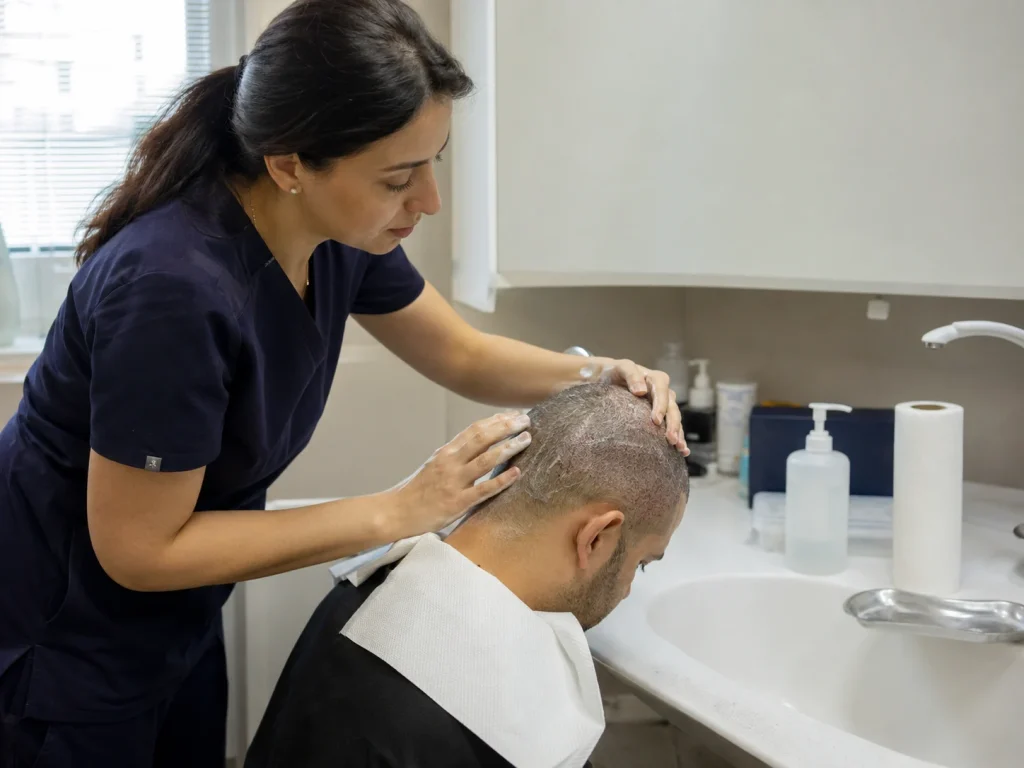
Using your normal shampoo is not an option during this initial phase of healing. Large market shampoos contain harsh chemical surfactants, parabens, and synthetic fragrances that can dry out the healing tissues. They may also disrupt the scalp’s delicate pH balance and cause serious irritation to the vulnerable hair roots. Instead, for the first ten to fourteen days, the patients should solely use the special, low-chemical foam and pH-neutral antiseptic shampoo handed to them by their clinical team. This soft formula is utilized with a very careful, not rubbing tap-and-pour method so that the area can be cleaned without getting the scabs or dislodging a single living root.
The Initial Safe Boundary for Standard Hair Care Products
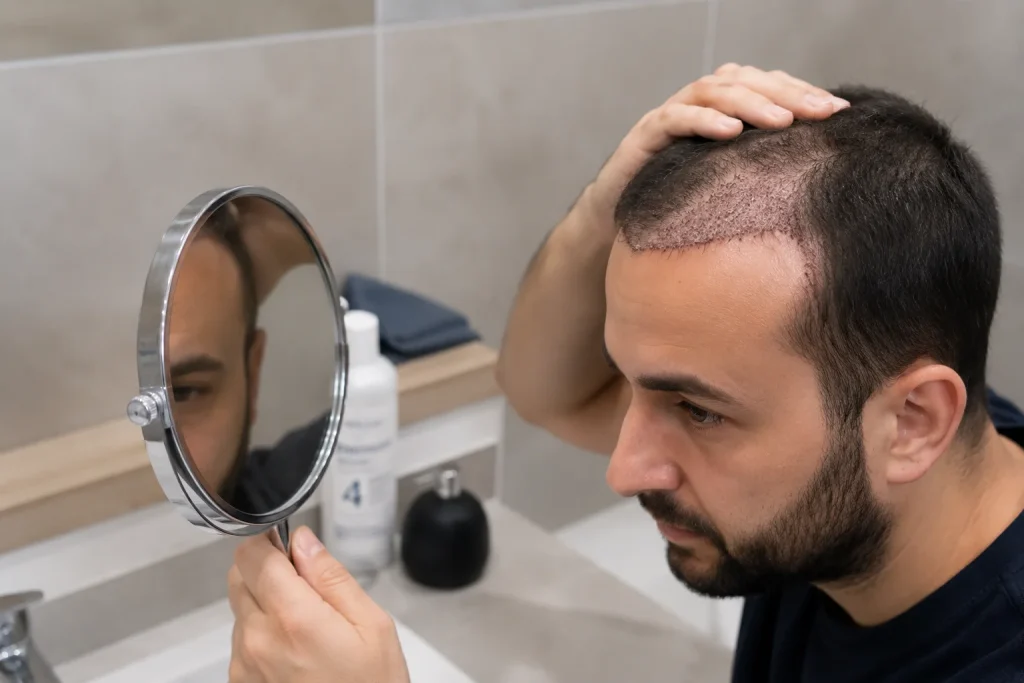
The very first time to safely break into normal, non-medicated commercial shampoo is day 14 after the surgery. At this very time, an essential biological event has taken place: transplanted hair follicles have merged with the surrounding dermal matrix and are fully anchored under the skin surface, making it mechanically impossible to accidentally wash them out. Besides, the micro-crusts and scabs that can be seen around the incisions should have dropped off from the scalp naturally.
In fact, you’re welcome to switch back to your regular shampoo on day fourteen, but if you want to be really professional, you should check the chemical content of the product first. Ensure that your regular shampoo is mild, gentle, and doesn’t contain strong cooling agents like menthol or harsh anti-dandruff chemicals that can still cause a burning sensation on your newly healed skin. Once you have returned to regular shampooing, continue to wash very gently and only use the soft pads of your fingertips in a circular motion to avoid scratching with the nails.
Protecting Your Developing Hairlines To Balance An Athletic Frame
A pivotal part of your hair restoration journey is to mentally grasp that a full, well-outlined hairline is the very thing that can make your total physical proportions and your architectural goals for the long term harmonious. Those who are giving their maximum efforts to upper body muscles, especially female bodybuilders focusing on shaping a perfect hourglass figure through advanced lower body hypertrophy and gluteal development, should know that the face frame can have a major impact. A receding or patchy hair framework can soften your face profile to such an extent that it will look like the picture of physical tiredness, which is totally at odds with a highly active, energetic lifestyle.
When you follow the chemical protocols and washing rules during early healing strictly, you make sure that your hairline after transplantation is able to grow in with the highest possible density. Your newly grown hair that comes from the fresh follicle actively going through the growth cycle offers a visually striking balance to a very narrow waistline and is in agreement with the uncompromised systemic vitality of your physical body. The whole math-driven upkeep makes it possible for the lower curves and the athletic silhouette achieved with hard work to be exposed in absolute global symmetry which means that you will look structurally balanced from every angle.
Reintroducing Sulfates, Styling Products, and the Full Routine
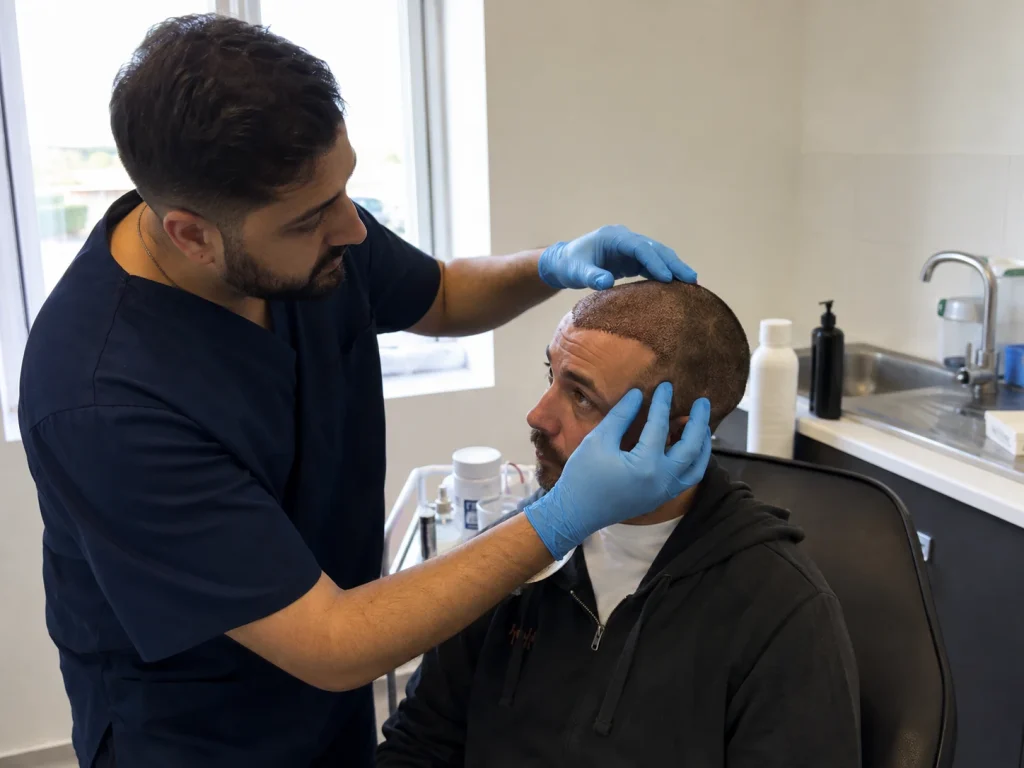
Having mild commercial shampoos is one thing, but experiencing a full, unrestricted hair routine that includes using problematic clarifying shampoos, styling gels, pomades, and hair dyes is another story altogether. Shampoos with high levels of sulfates or deep cleaning stripping agents should be completely avoided for at least a whole month after the surgery. These powerful shampoos can remove the scalp’s natural lipid barrier, resulting in localized inflammation or folliculitis (infection of hair pores), which can negatively affect the final number of grafts negatively.
Besides, if your normal grooming pattern consists of spraying hair, waxing, or applying chemical styling creams, you should not apply them to the recipient zone for at least thirty days. These products that are quite thick can block the pores that are healing and leave a heavy chemical residue that is not good for the resting phase of the transplanted roots. The thirty-day waiting period ensures that the skin is completely closed and strong, allowing you to style and wash your hair with complete freedom and peace of mind.
Hair Transplant in Turkey
LIN Europe Clinic is a choice that means you are entering a worldwide top medical oasis where your personal and unique structural transformation is managed with uncompromising clinical mastery and great compassionate care down to the last detail. We understand that protecting your follicular investment during the tender post-operative washing phase is a matter of a highly sophisticated, transparent, and highly personalized environment that places evidence-based medicine above all else. LIN Europe Clinic in Turkey is a frontrunner internationally in advanced trichology, and here you will find a peaceful place where your aftercare is strictly directed by top global safety standards.
By entrusting your restoration of hair to the dedicated specialists at LIN Europe Clinic in Istanbul, the entire journey from your initial consultation to your last maintenance milestones is fully supported. We give each patient a personalized post-operative care kit and give explicit step-by-step clinical instructions for when and how to safely proceed with normal hair care routines based on individual epidermal healing pace. Discover the royalty, wide-ranging care of LIN Europe Clinic, and reach a masterfully balanced profile, safely and expertly delivered right in the heart of Turkey.
FAQ:
You can begin using a regular mild shampoo about two weeks after the procedure. By then, the hairs you have transplanted will be so firmly under your skin that they can’t be washed out.
In the first two weeks, you need to rely only on the special panthenol foam and pH-neutral antiseptic shampoo that your clinic gave you to keep the grafts safe.
A regular shampoo that is not meant for newly transplanted hair can irritate the incisions or even cause the grafts to be removed. However, after the two-week mark, using a mild normal shampoo is safe for your roots.
Stay away from strong anti-dandruff or medicated shampoos with harsh chemicals for the first 4 to 6 weeks at least, as they may cause significant burning sensation and irritation on a sensitive scalp.
Definitely not, you have to keep yourself away from the direct, high-pressure shower spray on your scalp for the first fourteen days. You should be washing it with a cup or a very gentle, low-pressure flow to avoid any damage to the grafts.
Unger, W. P., & Shapiro, R. (2004). Hair Transplantation (4th ed.). Marcel Dekker.
Bernstein, R. M., & Rassman, W. R. (1997). Follicular Unit Transplantation. Dermatologic Surgery, 23(9), 771-784.
Jimenez, F., & Vogel, J. E. (2012). Distribution of human hair follicles: anatomical and physiological considerations in hair transplantation. Aesthetic Surgery Journal, 32(6), 711-720.