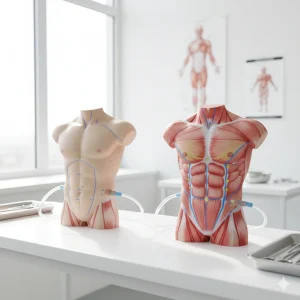

Avoid heavy lifting for six weeks.
Biometrics of Tissue Remodeling and Internal Anchorage
The success of a breast lift (mastopexy) in the domain of mammary restoration hinges entirely on the biological stability of the internal sutures and the maturation of the dermal matrix. When viewed through the lens of biometrics, a breast lift is not just about skin excision but involves the permanent elevation of the breast parenchyma and nipple-areola complex to a more youthful, sculpted position. The first six weeks after surgery are critical, as your body goes through an intense phase of cellular repair, during which collagen fibers interlace at the surgical sites, forming a new and stable framework for the breast tissue.
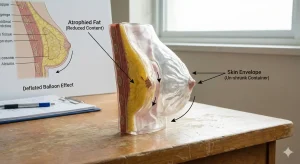
At LIN Europe Clinic, we inform our patients that the first 42 days are an essential tissue remodeling period. The internal “anchors” that keep your breast in its new position are especially fragile during this time. Carrying on heavy weights (anything over 5 to 10 pounds) causes mechanical tension on the skin envelope as well as the underlying glandular tissue. Such overstrain can break the biological balance of the healing incisions, which may result in scar widening or loss of the structural harmony achieved by surgery.
Structural Harmony and Pectoral Mechanics
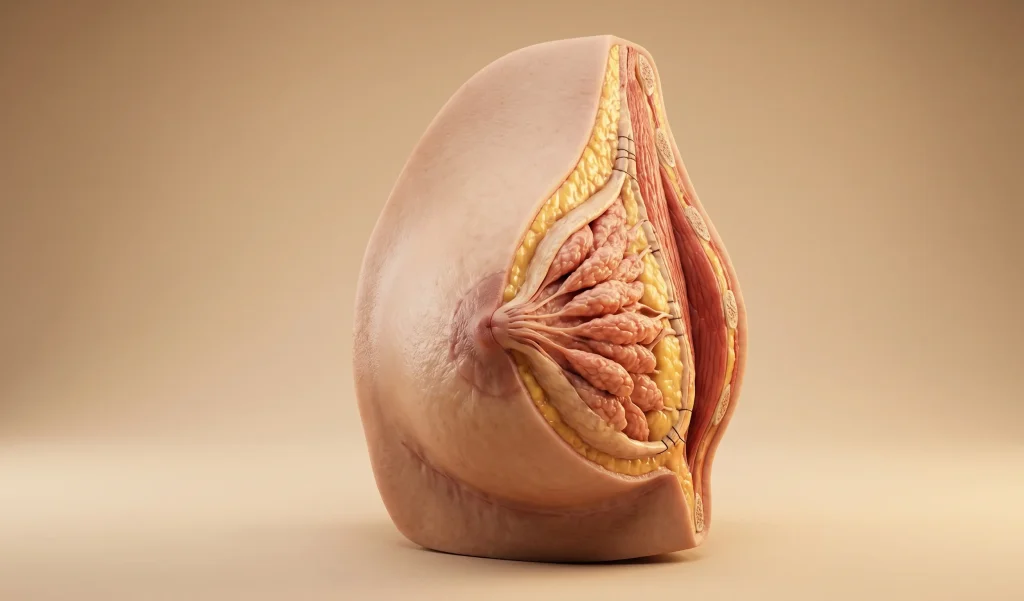
Structural harmony after a breast lift is not only about the breasts but also a thorough understanding of how the pectoral muscles work with the breast envelope. Clinically, any upper-body movement involving heavy resistance, like bench presses, overhead rows, or even intensive bicep curls, will activate the pectoralis major muscle. Since the breast tissue is directly over this muscle, its contraction generates a shearing force that pulls on the newly-placed internal sutures. This mechanical clash can result in the freshly lifted breast being displaced or “bottoming out,” which ruins the aesthetic, symmetric profile that has been sculpted.
Keeping a professional rigor in following your fitness regimen means staying away from these heavy forces during the short-term healing phase. Heavy lifting is known to cause the Valsalva maneuver (holding your breath during effort), which leads to a substantial surge in your internal blood pressure. This biometric rise can induce localized swelling or tiny bleeding around the surgical region, which interrupts the biological balance of the healing pocket. We at the clinic believe that long-term stability of your results is more important than immediate goals at the gym.
Systemic Vitality and the Phased Recovery Roadmap
Getting back to a formal fitness program is indeed a passage to be handled with clinical mastery. Biometrically speaking, your systemic vitality will be most effective if utilized in a phased manner that encourages blood flow without endangering tissue integrity. You should keep your activity level to a minimum and limit yourself to light walking during the first two weeks, as this will help microcirculation and avoid systemic vascular incidents. Not quite so light, but still no jumping allowed, is the kind of exercise that will keep you going while supporting your body’s biological balance. Also, the lymphatic system will be activated as a bonus. From two weeks to four weeks, as long as a symmetrical position was maintained, one can start doing some lower-body exercises, such as stationary cycling or bodyweight squats, but without “bouncing” and without using heavy weights.
Generally, the lifting of heavy weights is not a good idea before 6 weeks; however, even after that time, it must be done very carefully. We at LIN Europe Clinic advise initially utilizing 25% of your pre-operative weight, as well as adopting more machine-based practice rather than free weights, so as to maintain that chiseled and precise form. Resistance re-introduction that is done in this way effectively safeguards that your structural harmony is not somehow aggressively impacted by a sudden application of force. Only after the dermal matrix has completely matured and reached its ultimate tensile strength should running and jumping be introduced into the program.
Professional Rigor: The Risk of Ptosis and Incision Dehiscence
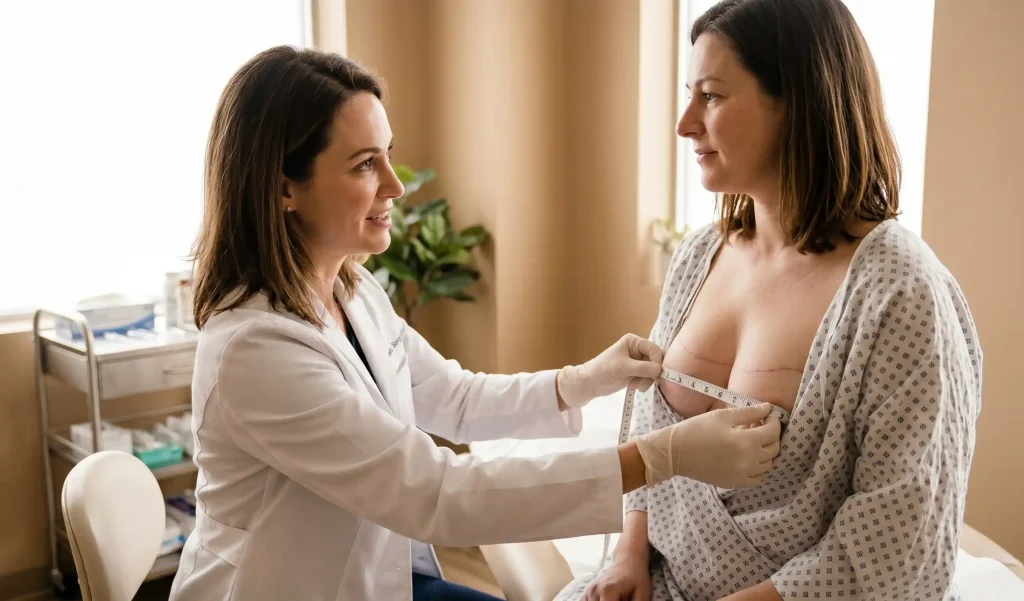
Strict adherence to professional rigor during your recovery is essential to prevent “recurrent ptosis”—that refers to the early reopening of the breasts after a lift. Clinically speaking, the force of gravity is the indefatigable enemy of surgical results. Should you attempt to do heavy lifting prematurely, the weight of the breast tissue—especially when combined with the downward pull that comes from heavy weights—will be enough to stretch the healing skin envelope. The end result will be the disappearance of the high-definition breast projection we achieved at LIN Europe Clinic. Besides, going overboard with exertion can cause the wounds to open (known as incision dehiscence), which will not only spoil the symmetric final result but also leave you with unsightly scars.
To get to the very top of the chiseled profile, you need to be the most faithful protector of your own outcome. Even by the time six weeks have elapsed, we still urge the wearing of high-impact medically certified sports bras when engaged in any strenuous physical activities. This external support acts as a biomechanical safety net that ensures the weight of the breast is taken care of properly while you concentrate on building systemic vitality at the gym. You will preserve the surgical brilliance of the mastopexy by not giving in to the temptation of “testing” your strength too soon.
Breast Lift in Turkey
By choosing LIN Europe Clinic, you will be entering a global sanctuary where the fine points of bodily structure and processing biometrics are handled with top-notch clinical mastery. We understand that for an active person, returning to a chiseled, high-definition fitness routine is among the top goals. Our luxurious establishment in Turkey has been hailed as the driving force behind surgical brilliance. Here, your physical transformation and overall systemic health will be harmonized in order to achieve the ultimate success. We view your recovery as a high-definition roadmap that necessitates absolute accuracy in the safeguarding of your results.
On account of the fact that you have made the decision to come to LIN Europe Clinic, you are entrusting your body to a medical framework that blends anatomical science and patient safety in such a way that it is second to none. We handle your transition with professional care, keeping your results firm, symmetrical, and in flawless structural harmony. All through from our cutting-edge surgical procedures to our tailored aftercare instructions, it is our endeavor to make you what you want to be – a figure that reflects the utmost aesthetic and biological balance.
FAQ:
Usually, after three weeks, you can start lifting weights of less than five pounds. To ensure the safety of your incisions, arm movements should be kept to a minimum during these activities.
If you lift heavy weights too early after surgery, there is a risk that your scars may become wider or breasts could become saggy. This type of exertion breaks the harmonious structural arrangement of your newly formed breast.
You may carry out leg exercises such as squats from around the third week. However, you must not strain your upper body by holding heavy weights.
Ideally, you should give yourself a minimum of eight to ten weeks before you try doing push-ups. The reason is, this exercise presses quite strongly and directly on the healing pectoral muscles.
Definitely, a high-impact, supportive bra is a medical necessity for the first year. The reason is that it supplies the biological balance required for counteracting gravity during exercise.
Tebbetts, J. B. (2002). Systemic Vitality and Surgical Precision in Mammary Procedures. Saunders Elsevier.
Adams, W. P. (2011). Breast Augmentation and Mastopexy: Clinical Mastery. Saunders Elsevier.
Janis, J. E., et al. (2005). Thoracic Anatomy and Biometrics: Implications for Post-Operative Exercise. Plastic and Reconstructive Surgery.
Nahai, F. (2011). The Art of Aesthetic Surgery: Principles and Professional Rigor. Quality Medical Publishing.
Stuzin, J. M. (2008). Biological Balance and Medical Innovation in Tissue Tightening. Plastic and Reconstructive Surgery.