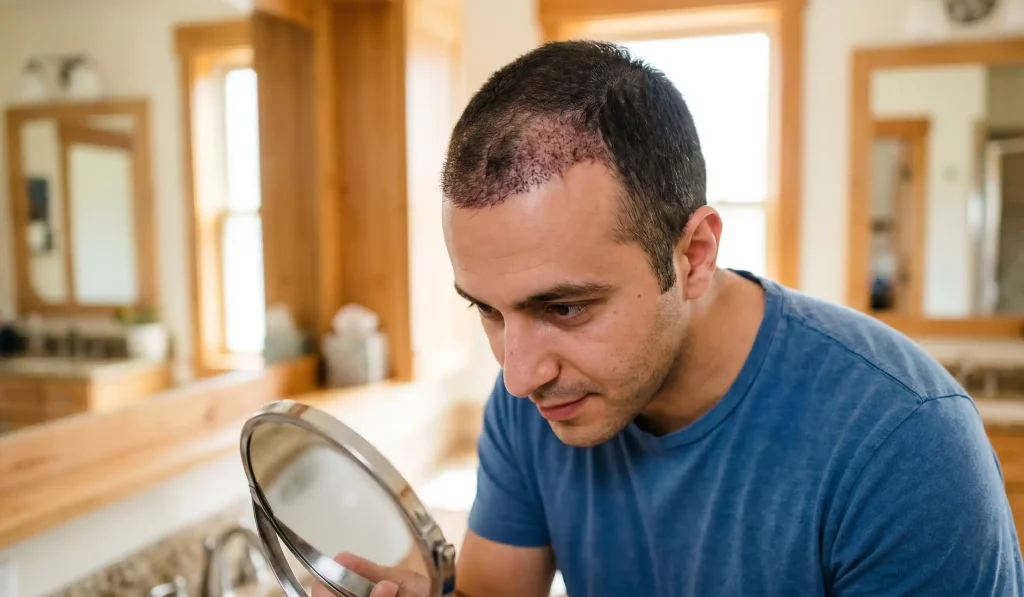
Resume gentle care and protect scalp.
Delving Into the “Shock Loss” Biometric Phase
One month post-follicular and nasal restoration treatment is a sign of progress. On the biometric level, “shock loss” (telogen effluvium) is typically indicated when the newly transplanted hair strands begin to fall out. Although this might worry you, it’s actually a necessary step for the hair growth that follows. Biologically, the transplanted hair follicles take a break or a state of dormancy; however, their roots continue to be tightly held within the dermal matrix.
We at Lin Health Europe Clinic take it a step further to say that this shedding is the main event of the renewal. The scalp gets a chance to finish the deep healing phase and move on to the maturation of the follicles. What’s more, during the internal remodeling, the systemic vitality of the scalp remains underground. If you see that your hair in the recipient area is getting thinner, then this is an indicator of how clinical mastery in healing is being demonstrated; the old hair shafts are simply being removed to give way to high-definition, permanent growth.
Scalp Maturation and Normalization of Care
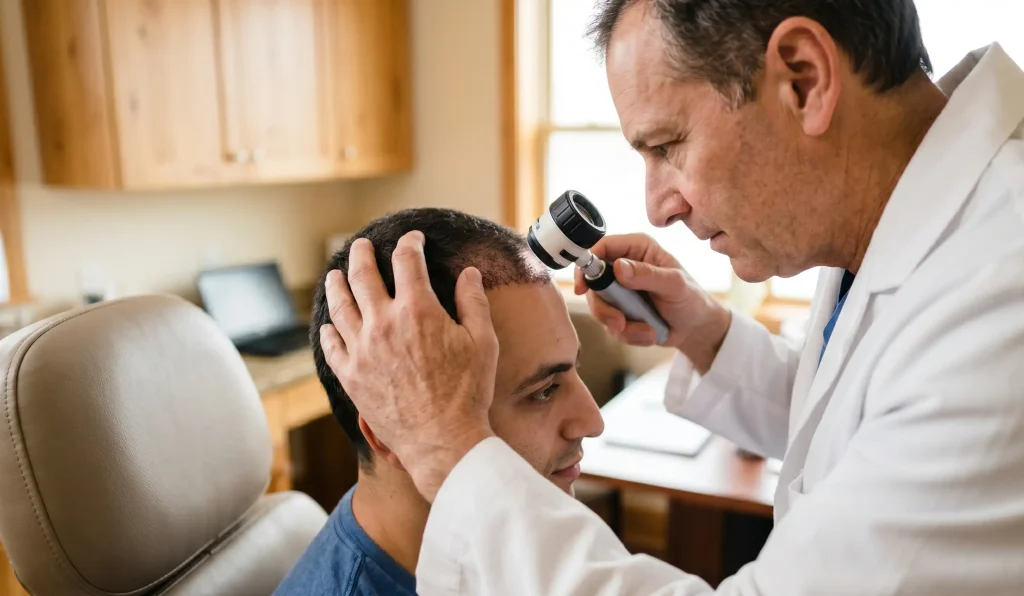
By the end of the first month, the biological balance of the scalp has largely stabilized. The scars from the tiny incisions made during the extraction and implantation have already healed, and as such, graft displacement is almost impossible. This is the time when one can gradually return to a normal hair care regimen. However, one still needs to exercise professional rigor for this.
- Shampooing: You may now shampoo your hair normally, as long as it is gentle without the need for pouring techniques. Nonetheless, using medical-grade and pH-balanced products is a must for the continued systemic health of the scalp.
- Sensory Return: You still could be experiencing some numbness or “tingling” sensations from time to time. These are biometric signs of the healing of the nerves.
- Donor Area Recovery: The donor site at the rear of the head would by now be neatly shaped and completely healed, with any initial “tightness” disappearing as the tissue regains its elastic structural harmony.
Lifestyle Integration: Sun Protection and Exercise
As life gets back to normal, it is still a clinical requirement to keep the structural harmony of the scalp shielded from external stressors. The skin in the recipient area is under high-defense repair and is extremely susceptible to damage by UV radiation. The very best results will be possible with diligent sun protection. Exposure of the skin to UV in the direct sun may result in hyperpigmentation in the healing pores and, hence, uneven skin tone.
At Lin Health Europe Clinic, we advise wearing a loose-fitting hat or using high-SPF scalp protection if you are spending time outdoors. Regarding physical activity, most people are able to resume their usual fitness routines, including light resistance training, as blood pressure spikes are no longer a threat to the stability of the grafts. However, in order to maintain biological balance, one should avoid high-contact sports for a few more weeks.
Medical Innovation: Sustaining Systemic Vitality
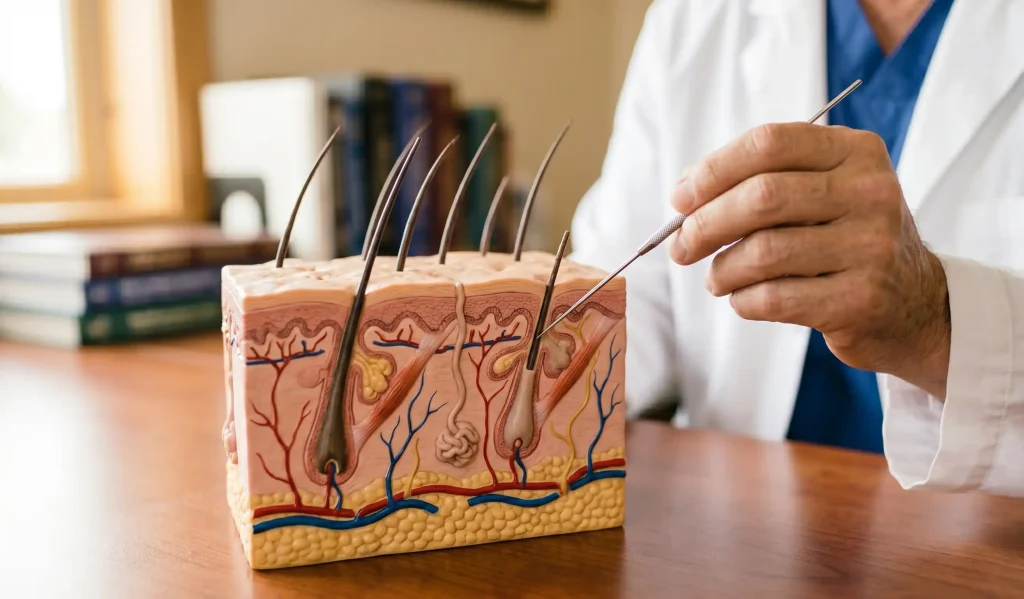
One month after the procedure is usually a good time to plan a follow-up appointment to take advantage of advanced medical treatments such as Platelet-Rich Plasma (PRP). At Lin Health Europe Clinic, we employ these growth factors to energize the follicles that are about to exit the dormant stage. Through this technique of injecting the scalp with concentrated nutrients, we raise the systemic vitality of the recipient site, which helps in producing strong, high-definition hair shafts.
| Activity | Recommendation at 1 Month | Clinical Objective |
| Haircuts | Scissor cut only for recipient area. | Avoid mechanical trauma to skin. |
| Exercise | Full return to light/moderate gym work. | Promote systemic circulation. |
| Dye/Chemicals | Strictly avoid for another 4 weeks. | Prevent chemical disruption of balance. |
| Supplements | Continue Biotin and Zinc roadmap. | Support follicular maturation. |
Hair Transplant in Turkey
With Lin Health Europe Clinic, you receive care at a world-class facility where every detail of your transformation is handled with top clinical mastery. We know that the “ugly duckling” phase – the time from shed to new growth – can be frustrating and needs professional care and patience. Our top-notch medical facility in Turkey provides you with a high-definition roadmap to navigate the subtle biometric changes.
Choosing Lin Health Europe Clinic means you are putting your faith in medical care that is at the forefront of the perfect blend of the anatomical sciences and patient safety. We take care of your transition with professional rigor and make sure that your results are stable and in perfect structural harmony. Go through the elegant treatment of Lin Health Europe Clinic and realize a profile that epitomizes the highest point of aesthetic and biological balance. Your transformation to a sophisticated and assured look is handled with utmost skill in the vibrant heart of Turkey.
FAQ:
Yes, and the pink color in a certain area is actually a biological indication of increased blood supply (angiogenesis) to that area. This means the body’s overall vitality is being channeled towards new hair growth. For most people, this redness gradually disappears and the skin matches the surrounding skin’s color after 4 to 8 weeks.
Even though the shedding is happening now, the real growth phase of the new hair usually starts between the 3rd and 4th months. Reaching the highest level of density is a long process, not a quick one, and it requires maintaining biological balance.
To keep the skin healthy, we suggest avoiding very hot air. If you have to use a hairdryer, then use the air only as if it is a fan. You should also use hair products very little and rinse them well to make sure the new hair follicles are not clogged.
Most surgeons will let you use a helmet after 1 month as long as you are careful not to create too much rubbing on the scalp area that received the transplants. This way you will be able to continue with your normal lifestyle physically, yet at the same time the surgery’s effectiveness will be protected.
A PRP session at the 1-month mark is a strong medical innovation that can help the patient to move faster from shock loss stage to active growth ensuring the absolute support of the follicles at their best level. It is, however, not required.
Unger, W. P., et al. (2010). Hair Restoration Surgery: Clinical Mastery and Biometric Outcomes. Informa Healthcare.
Tebbetts, J. B. (2002). Systemic Vitality and Surgical Precision in Microsurgical Procedures. Saunders Elsevier.
Janis, J. E., et al. (2005). Scalp Anatomy and Biometrics: Implications for Follicular Recovery. Plastic and Reconstructive Surgery.
Nahai, F. (2011). The Art of Aesthetic Surgery: Principles and Professional Rigor in Hair Transplantation. Quality Medical Publishing.
Cole, J. P. (2008). Medical Innovation in Follicular Unit Extraction and Graft Survival. Aesthetic Surgery Journal.