Follow washing routine and avoid picking.
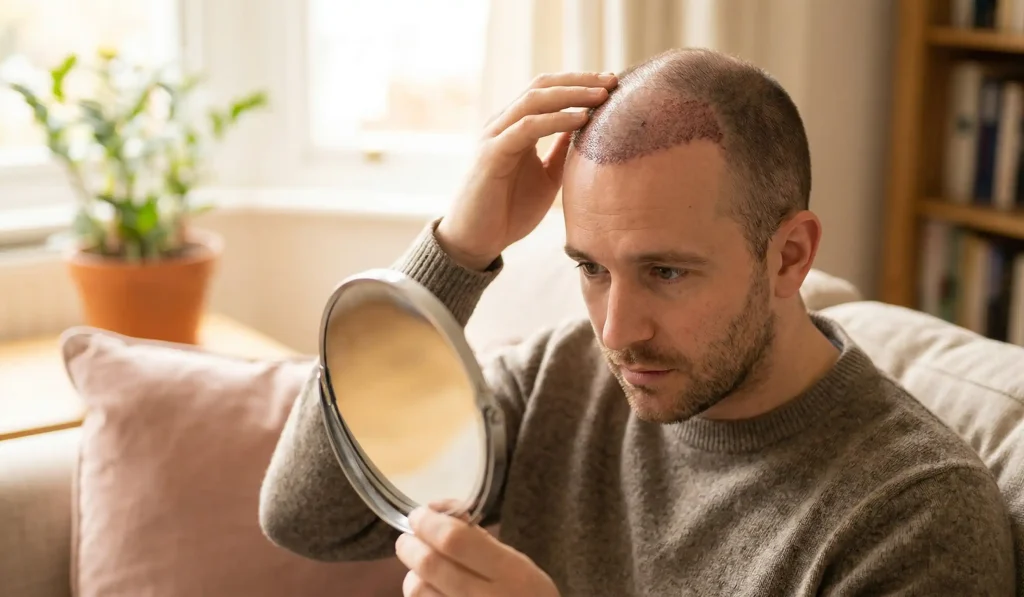
In the expert field of follicular unit extraction and high-definition hair restoration, scab formation is a normal bodily defense mechanism. After micro-incisions are made in the recipient area, the body starts a coagulation cascade to close the small wounds and prevent pathogens from getting in. This results in small quantities of blood and interstitial fluid drying and turning into a protective crust or “scab” covering each implanted follicle. Although such scabs signify that the clotting was successful and that the healing process has started, the thickness and the time they last can be largely dependent on the care that one takes after the operation. If not controlled, heavy or thick crusting can cause the new grafts to be mechanically strained and might also provide a haven for bacteria. So, the medical objective is not the total removal of scabs—they are a sign of biological repair—but their prevention from becoming too big or sticky, which will allow the structural harmony of the scalp to be maintained during recovery in Turkey.
Strategic Hydration: The Role of Saline Mist in Scab Mitigation
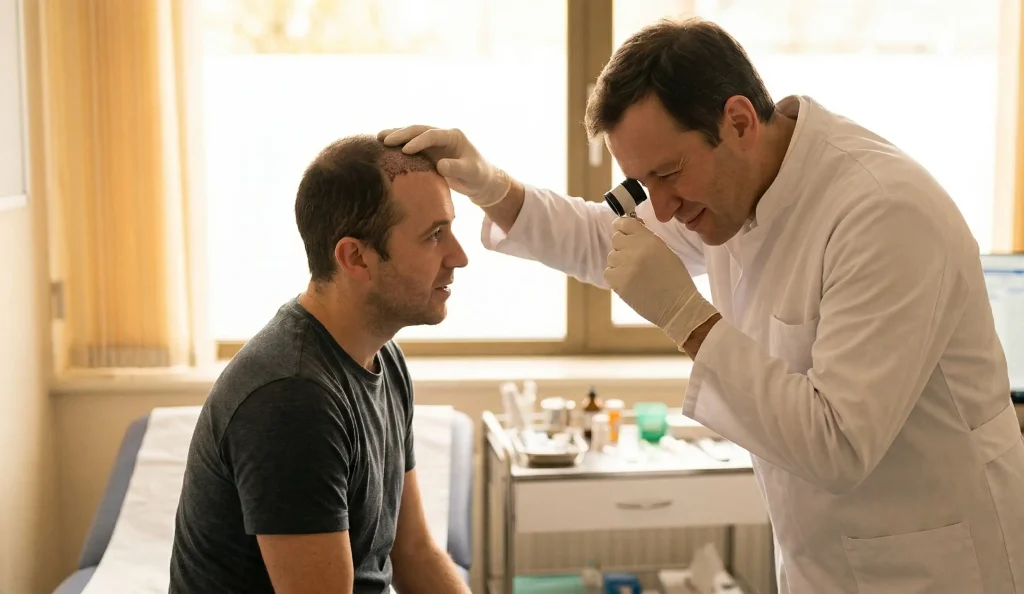
The main clinical method of blocking thick scab formation is to ensure that the scalp stays moist for the first 48 to 72 hours. If the micro-incisions are kept wet, the blood and plasma will not be able to fully solidify into a thick crust, so they will be much easier to remove during the following healing stages. This ‘Strategic Hydration‘ regime calls for the regular use of sterile saline spray, which works as a mild shield against the drying impact of the atmosphere. By gently spraying the recipient area every half to an hour, the patient is, in effect, promoting the early stage of epithelialization without creating a solid barrier that would trap the follicles.
We at Lin Health Europe Clinic approach the phase of hydration with the highest degree of professional rigor, for the purpose of protecting the follicular investment of our international guests. Our medical staff in Istanbul equips each patient with a ‘Saline Defense Kit’ comprising only those items necessary for the treatment and a complete schedule of how they should be used. We also think that excellent surgical skills in the operating room should be complemented by careful moisture management in the recovery area. By picking Lin Health Europe Clinic, you are availing of a recovery system in Turkey that takes care of the overall health of the scalp, meaning that the early formation of crusts is limited through targeted, data-driven hydration protocols.
High-Definition Washing Protocols: Gentle Debridement Techniques
The commencement of washing the scalp, usually on the third day, is by far the most decisive period in the gentle elimination of initial-stage scabs. A high-definition washing protocol employs specific pH-neutral shampoos and panthenol-based foams that break down the crusts without the use of scrubbing. This procedure features a ‘patting’ movement, where the foam remains on the scalp for about 15 to 20 minutes to dissolve the proteins in the scabs that are responsible for adhesion. After the scabs have been softened, the foam is washed away with a very gentle flow of lukewarm water, permitting the scabs to come away naturally as they loosen their hold on the skin.
At Lin Health Europe Clinic, we follow a guideline of total professional rigor in carrying out the instructions of these washing methods with our visitors in Turkey. Istanbul medical team not only offer working sessions but also provide high-definition video manuals which allow each patient carry out their first wash successfully and confidently. We highlight that just as surgical deha requires, patience is also necessary at this phase; it is through patience that the follicles are able to develop a permanent and secure connection with the scalp. Our global clients are allowed to experience a clean, scab-free scalp within ten days as a result of this commitment to careful debridement, indicating the excellent standards of care we maintain in Turkey.
Systemic Vitality and the Prevention of Excessive Crusting
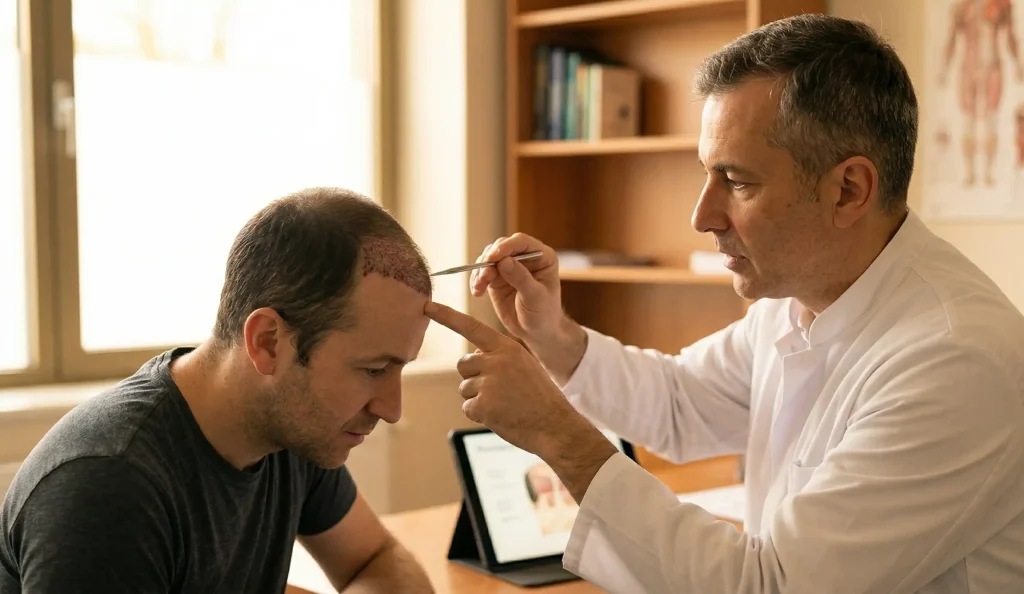
The extent to which scabs are produced and peeled off can also be determined by the patient’s systemic vitality and lifestyle habits. Hydration, diet, and refraining from using blood-thinners such as alcohol and nicotine are some of the components that deeply affect the blood’s coagulation capacity. When a patient is sufficiently hydrated and keeps away from those provoking inflammation, the interstitial fluid turns out to be less viscous which causes less adhering and thicker scabs that are easier to handle. On top of that, if the scalp is kept cool and avoided from direct sunlight, it is less likely to sweat which otherwise irritates the micro-incisions and results in re-crusting or localized inflammation.
In Lin Health Europe Clinic, we focus on a comprehensive approach to healing in Istanbul. Along with carrying out their surgical brilliance to make the least damaging implantion of grafts in Turkey, our doctors also stress the importance of the patient’s keeping a good metabolic condition. We share with our patients full and detailed instructions regarding nutrition and their systemic health which let them achieve the body’s optimum healing response. Concentrating on the structural harmony and curbing of over-inflammation, Lin Health Europe Clinic guarantees that the hair restoration path becomes one with utmost clinical accuracy of care, unburdened by the weight of heavy scabbing.
Hair Transplant in Turkey
Lin Health Europe Clinic puts an emphasis on your systemic vitality and overall health for the long term. Our widely recognized specialists in Turkey are proficient in the vertical and horizontal stabilization of hair grafts and use the newest techniques in follicular management to give a lasting and healthy result. We offer a smooth, all-inclusive getaway in Istanbul where your appearance goals are in perfect accord with the highest level of clinical deha. Witness the surgical brilliance of our first-rate team and, through the advanced hair restoration methods of Lin Health Europe Clinic, lead yourself back to your most confident self. Become part of the thousands of our international patients who have entrusted the world leader in structural restoration for their change in the very center of Turkey.
FAQ:
One of the most restful ways to get rid of scabs is by gently washing with a foam designed for this purpose. After a shampoo has been applied, leaving it for around 15 minutes will allow the scabs to soften and they rinse away without having to use force.
The majority of the scabs would naturally shed somewhere between the 7th day and 10th day of the procedure. Keeping the hair well-hydrated and washing it softly is enough for scabs to come off without the risk of hurting the newly transplanted hair.
Never ever pick or scratch the scabs that form over your scalp. Physically picking might even pull out the freshly implanted hair roots resulting in irreversible patches and low hair density.
If scabs are still present two weeks after they can inhibit the growth of the new hair. You should contact your clinic for a professional cleaning and examination if your scabs are extremely thick.
Yeah getting scabs after a hair transplant is normal. They are actually the protective barrier which your scalp uses while the little cuts are closing and healing.
- Beehner, M. (2014). The Physiology of Hair Graft Survival and Wound Healing. Facial Plastic Surgery Clinics.
- Bernstein, R. M., & Rassman, W. R. (2011). Follicular Unit Extraction: Managing Post-Operative Crusting. Journal of Aesthetic and Restorative Surgery.
- Unger, W. P., et al. (2010). Hair Restoration Surgery: Clinical Factors Influencing Scalp Recovery. Informa Healthcare.
- Kim, J. C., et al. (2002). The Role of Epithelialization and Vascularization in Scalp Healing. Dermatologic Surgery.