
Hormonal changes and reproductive function stops.
In a specialized branch of gynecological surgery and female endocrinology, a total hysterectomy—the surgical removal of the entire uterus and cervix—is considered a major operation that will lead to many changes, both quite visible and subtle, in the patient’s body. In fact, the primary and most relevant aspect of this change pertains to a woman not having a menstrual cycle or being able to get pregnant anymore. But these changes can even go beyond the uterine changes and affect areas like the pelvic-supportive structures, and if the ovaries are out as well, the endocrine system can be thrown into disarray. So, even when preservation of ovaries is successfully done through the surgical process, a period of neocollagenesis and structural remodeling is needed so that the newly modified pelvic anatomy attains long-standing robustness and comfort.
We at Lin Health Europe Clinic view the period after a hysterectomy as a new phase of life and a chance to get back to being energetic and well. For the international patients coming to Turkey for this surgery, one thing we stress is that removing the uterus doesn’t mean you lose your womanhood or that your overall health will suffer. In fact, your systemic health will be kept intact through careful surgical procedures and good aftercare. Apart from extremely thorough gynecological restoration, our medical rigor level also comprises making sure the pelvic floor is handled with the utmost care and that your hormonal profile gets stabilized, thereby ensuring not only a safe transition to a life without uterine conditions but also one that is biologically optimized.
First and Foremost, Anatomical Changes: Menstruation Ceases
After a total hysterectomy, you directly and inevitably lose the very organ responsible for the monthly menstrual cycle. The uterus and the cervix, once removed, mean that the “target tissue” for the hormonal changes dispatched monthly is no more. Simply put, this means you won’t get your monthly periods nor will you get the pains that menstruation sometimes brings, like the ones seen in endometriosis or fibroids. Clients who visit us from outside Turkey are often really happy to hear that no more periods are going to be a great relief.
Yet it remains a very important clinical reminder that hysterectomy without ovary removal is not menopause-inducing surgery. The body can still produce the female hormones that affect mood, bone density, and skin elasticity, even though in physical terms, the monthly menstruation cycle has ended in Turkey.
Pelvic Floor Dynamics and Structural Support
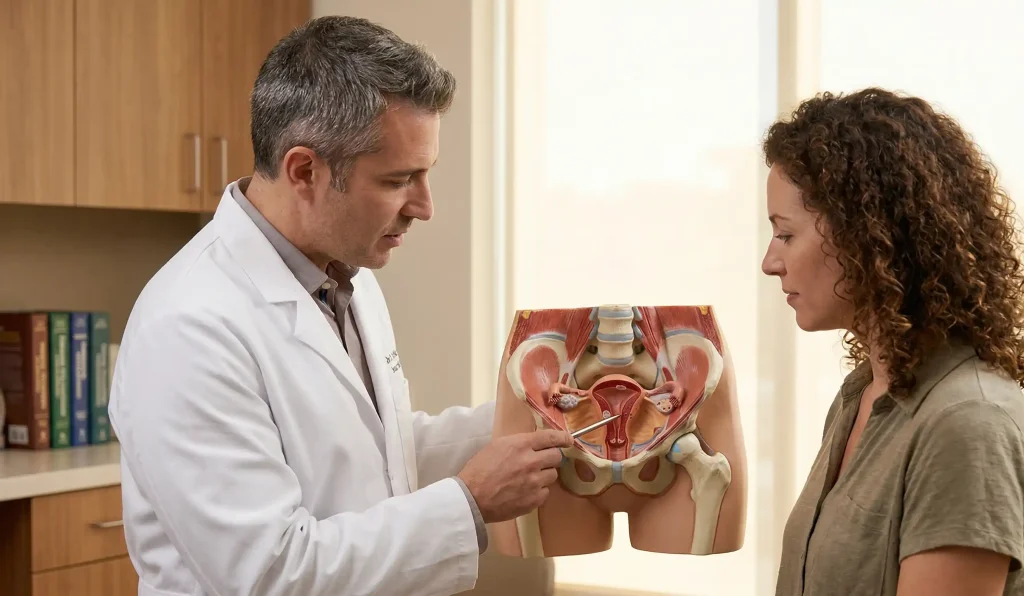
The uterus and cervix are part of the pelvic floor structure “web”. They are connected by a very intricate system of ligaments that include the uterosacral and cardinal ligaments, which also support the bladder and the rectum. When the uterus and cervix are removed, the surgeons at Lin Health Europe Clinic, in Turkey, will have to reattach the remaining ligaments to the “vaginal vault” (top part of the vagina) with the aim of avoiding any later pelvic organ prolapse.
In the process of neocollagenesis, your body will reinforce these new attachments by making new high-tensile collagen fibers. At our center in Istanbul, once our patients have been medically cleared, we even recommend that they do pelvic floor physical therapy consisting of Kegel exercises. Such a preventative approach means that your internal architectural setup will continue to be steady, and you will not suffer from complications such as losing urine involuntarily or a pelvic “heaviness” sensation when your body has settled into the new arrangement of the anatomy without the uterus.
The “Ovarian Shift”: Potential Endocrine Impact
If a woman is having a hysterectomy but with her ovaries kept in place (“total hysterectomy with ovarian conservation”) the procedure may still cause minor hormonal disturbances. This is what people call the ovarian shift. Because a part of the blood supply to the ovaries comes from the uterine arteries, at the time when the uterus is taken out, this particular blood flow is discontinued, thus leaving the ovaries relying on ovarian arteries alone. For some women, this diminished blood supply may result in the ovaries undergoing a phase of “sub-clinical” failure or they might enter menopause a little earlier than they would normally do.
Using state-of-the-art biometric technology, we at Lin Health Europe Clinic in Turkey are able to follow up your FSH and estradiol levels with great precision after the surgery. Should we find signs of diminished ovarian function, we are quite ready to offer bio-identical hormone treatment in order that you do not suffer from sudden dips in energy or mood during your recovery here in Istanbul.
Sexual Function and the Vaginal Vault

It is one of the common concerns of patients about what effect the total hysterectomy, specifically removing the cervix, will have on their sexual feelings and functions. Parts of support for the vaginal canal come from the cervix structurally, and it also houses the nerve endings responsible for certain physical responses. But the majority of clinical trials show that the great majority of women who are having their painful uterine conditions resolved in this way either maintain their level of sexual satisfaction or indeed see it improved. The surgical closure of the “vaginal vault” (the vaginal cuff) usually takes around 6 to 8 weeks to become strong enough for sexual intercourse.
At a Lin Health Europe Clinic, located in Istanbul, using our priority on “nerve-sparing” techniques, we manage to keep a maximal level of sensation. We inform our visitors from abroad that as the internal tissues heal and the inflammatory process calms down here in Turkey, the emphasis turns to keeping the vaginal tissue stretchability through a gradual increase in activity and, if required, local estrogen treatments for you to experience lasting pleasure and confidence.
Body Composition and Metabolic Health
A hysterectomy itself does not directly bring about an increase in weight; however, the overall changes in the level of physical activity and occasional hormonal changes that come along with it could affect the body composition. There are some women who actually feel that their weight has shifted more to the abdominal area as the body is adapting to the new hormonal balance. To help normalize this situation, Lin Health Europe Clinic medical experts concentrate on a metabolic recovery program.
One important aspect of the post-operative lifestyle is having meals that are rich in protein which helps with neocollagenesis as well as muscle maintenance, and on top of that, going for gentle walks in Istanbul is going to help your metabolic rate stay in a good and healthy state during the first few weeks of healing. It has always been our conviction that treating the post-hysterectomy body from a metabolic angle is what will help you avoid that “sluggishness” feeling so commonly associated with major operations. Ultimately, we want your body to be as toned and vibrant as all the other facets of your new, pain-free life in Turkey.
FAQ:
The most obvious change will be that you will no longer have periods and you will not be able to get pregnant naturally. When the uterus is removed, in a total hysterectomy, the pelvic ligaments will be re-attached to the vaginal vault, surgically, in order to preserve the shape and positioning of the internal organs in Turkey.
Menopause will only happen immediately after the operation if, along with the uterus, the ovaries are also taken out surgically. In case the ovaries are left intact, they will keep releasing estrogen, but natural menopause may be induced a bit earlier because of the changes in the blood vessels in Istanbul.
Maintaining the ovaries allows the body to keep circulating the hormones that, among other things, help bones stay dense and the heart healthy. Our experts at Turkey will be able to check your biochemistry regularly so that your endocrine system can be stabilized during the convalescence period.
Most of the recovery of the strength of the internal dressings of the vaginal vault will be done within 6 to 8 weeks postoperative. Full expansion of the tissue repair and the last molding of the internal support ligaments may require up to six months of continued collagen production at our location in Istanbul.
To give the internal tissues that are healing enough time, you shouldn’t do high-impact or heavy lifting exercises for 6 to 8 weeks. Slowly getting back to core exercises with the go-ahead of the doctors in Turkey will ensure that you rebuild your core strength and remain physiologically fit in a safe way.
- Parker, W. H., et al. (2009). Long-term mortality associated with oophorectomy compared with ovarian conservation in the Nurses’ Health Study. Obstetrics & Gynecology.
- Farquhar, C. M., & Steiner, C. A. (2002). Hysterectomy rates in the United States. Obstetrics & Gynecology.
- Shifren, J. L., & Gass, M. L. (2014). The North American Menopause Society recommendations for clinical care of midlife women. Menopause.
- Ellström, M. A., et al. (1998). Hysterectomy and sexual function: a prospective 6-month follow-up study. Obstetrics & Gynecology.
- Altman, D., et al. (2007). Risk of urinary incontinence after hysterectomy. Lancet.
- Moorman, P. G., et al. (2011). Effect of hysterectomy with ovarian preservation on ovarian function. Obstetrics & Gynecology.