Gently exfoliate after healing period.
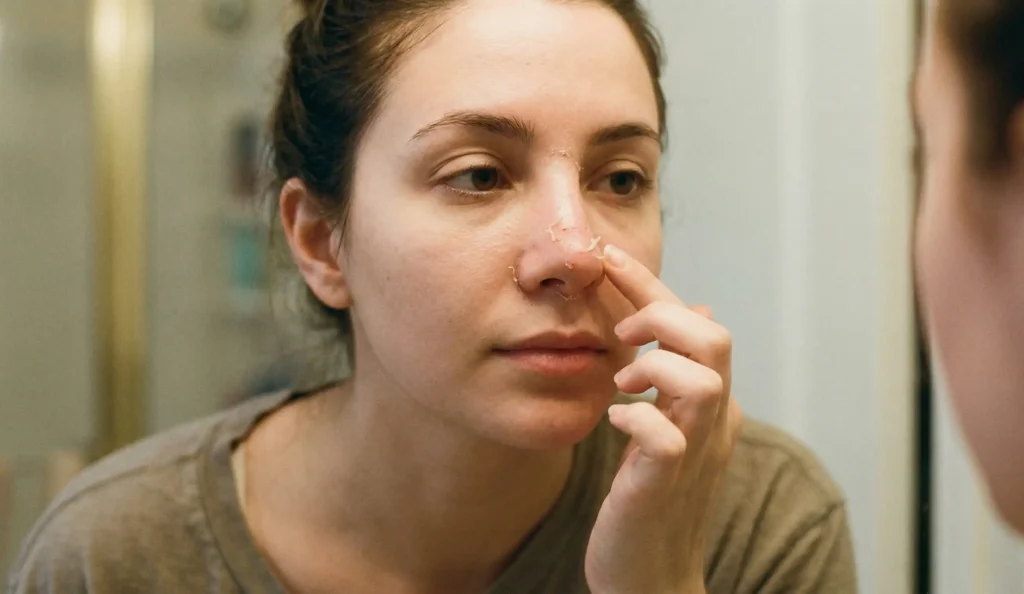
First and foremost in the practice of structural rhinoplasty followed by facial aesthetic reconstruction, restoration of the outer skin covering holds equal importance as that of internal cartilage. Most patients experience the nasal skin flaking, congestion, or though covered with layers of ‘dead skin’ right after the outer splint removal (usually happened on the 7th day); so, this is a common notion among patients that how to get rid of the dead skin post-surgery. The clinical response is three basic tenets i.e., non-mechanical exfoliation and intensive hydration. Simple explanation is that the principal factor of such skin flake is the packing of the surgical cast that deprives the normal shedding of the skin layers by skin cells. This occlusion leads to entrapment of the sebum which in turn results in a temporary condition of sebaceous hyperplasia. But since the internal tissues are under the acute phase of neocollagenesis, any form of scrubbing, picking or peeling shall be strictly avoided for a minimum of four weeks.
At Lin Health Europe Clinic, our first step is post-operative dermatological management that is an inseparable part of your recovery plan. International patients coming to Turkey are specifically told that their re-shaped noses are highly susceptible and even the slightest friction could jeopardise the new nose. We are, therefore, a location known for high-quality rhinoplasty hence able to offer you the ‘Skin Recovery Protocol’. This way, losing the hard-earned smoothness resulting in a refined nose from premature/excessive exfoliation won’t be an issue. Your skin will be breathing and healing as per the newly set structural foundation.
Why Does The Skin Flake After The Nose Job?

If someone decides to get rid of dead skin, first they need to understand the environmental biological changes created by the splint that has undergone a nose surgery. For a period of 7-10 days, a person will have their nose in a protective cast that forms a warm, occlusive ‘micro-climate’. Such occlusion inhibits the skin’s natural shedding mechanism (desquamation). Besides, as a further consequence, the trauma that occurred during surgery initiates inflammation, which causes the sebaceous glands to generate more oil. The excessive oil mixing with the skin cells trapped under the cast is a thick, flaky substance that may be described as ‘crusty’ or gritty.
At the Lin Health Europe Clinic in Turkey, we comfort our international visitors by letting them know this is only a phase of their healing that the dead skin layer actually served as a minor protective barrier for the wounds in Istanbul.
The “No-Scrub” Rule: Safeguarding Your Internal Structure
The most harmful thing a patient could do is to try to ‘scrub’ the dead skin off using a washcloth, facial brush, or physical exfoliant (scrub). At this time, the skin is ‘reattaching’ to the newly shaped bone and cartilage. Mechanical friction or pressure of any kind can result in the skin flap moving, which may only be a slight asymmetry or the ‘pollybeak’ deformity if the underlying tissues are disturbed. One of our clinic’s skills is imparting to our international visitors the technique of ‘passive exfoliation’.
In Turkey, your fingertips and a very gentle touch are what you are only allowed to use. By keeping the pressure off, you are encouraging the neocollagenesis phase to go on smoothly, the skin seamlessly wrapping around the newly formed nasal bridge without any traumatic tissue displacement.
Step 1: Steam and Sterile Saline Compresses
The best clinical procedure for extracting dead skin is not to forcibly peel it away but to soften it instead. The intent behind this is to turn the sebum into liquid and ‘detach’ the dead cells so that one can wipe without rubbing.
- Lukewarm Steam: The steam temperature should not be high if you decide to have a steam bath; however, taking a lukewarm shower will also allow the ambient steam to naturally soften the skin.
- Saline Soaks: Wet a sterile gauze pad with Sterile Saline Solution (0.9% NaCl). Put the pad gently on the nose bridge for 5-10 minutes.
This saline compress is a bio-solvent that softly breaks the link between the dead skin cells. The greatest benefit of this non-invasive method that we here at Lin Health Europe Clinic in Istanbul practice is that it can be done without any risk of mechanical damage to the tip or the nasal bridge when you are staying in Turkey.
Step 2: Gentle, Oil-Based Cleansing
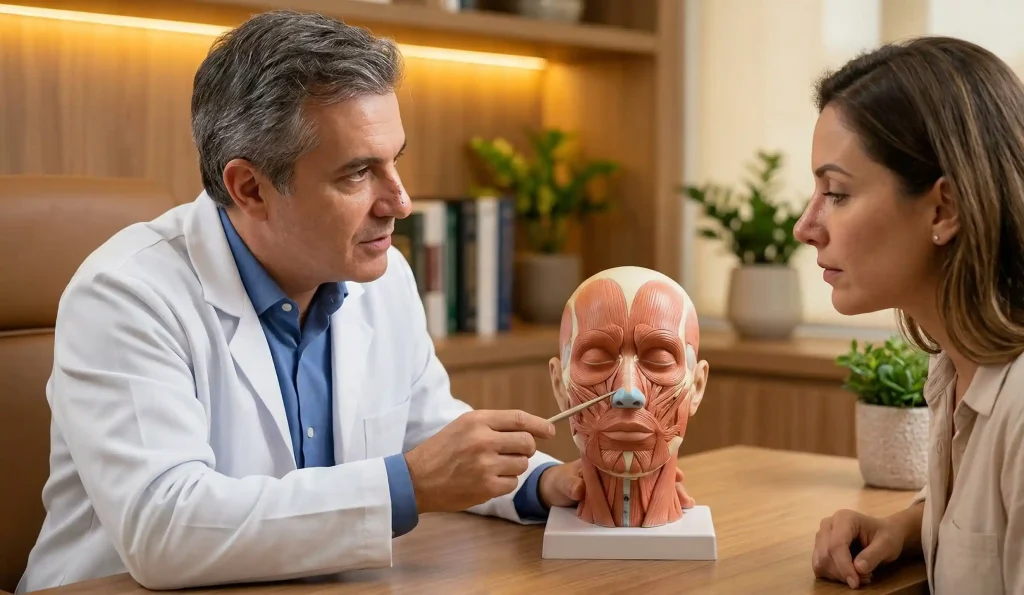
After skin-softening dead, the next step is to use a ‘surfactant-free‘ cleanser. As a rule, foaming cleansers are made with sulfates that can dry out the skin even more, which causes the skin to flake badly. The staff here in Istanbul suggests medical-grade Cleansing Oil or a very gentle cream cleanser without foam in most cases. Especially effective are oil-based cleansers because ‘oil dissolves oil’. The hardened sebum can be disintegrated and the dead skin flakes can be lifted when the oil is massaged over the nose with the ring finger (which gives the least amount of pressure). You are to wash off with lukewarm water and blot dry with a lint-free gauze – never with a towel. Such a professional cleaning routine is the best at keeping your nasal skin clean and free of debris while also avoiding the localized irritation that generally follows traditional face washing in Turkey.
Step 3: Intensive Hydration and Barrier Repair
Dead skin’s presence often means that the skin barrier has been damaged. To keep flaking from coming back, you must fix the moisture balance by using a ‘non-comedogenic’ (pore-friendly) moisturizer. We suggest our international visitors in Turkey to buy products with ceramides or hyaluronic acid, as these ingredients not only ‘stick’ the remaining skin cells together but also pull moisture into the layers beneath the epidermis.
Applying a very thin layer of moisturizer while the skin is slightly damp from your saline soak will ‘seal in’ the hydration, and at least at Lin Health Europe Clinic, we stress that you should avoid heavy ointments like Vaseline on the bridge of the nose unless specifically directed, as these can clog the pores and cause postoperative acne. Keeping a healthy moisture barrier will quicken the skin’s natural healing cycle and bring forth a vibrant, smooth result in Istanbul.
FAQ:
The most effective thing to do would be to use sterile saline compresses to loosen the skin, and then, a very mild cleanser, oil-based should be enough, finger only, no scrubbing or even picking at the skin, to be sure the nose didn’t move and get unaligned.
It’s best to wait at least four to six weeks before you start using any physical or chemical exfoliants on your nose. If you exfoliate too early, you might cause the healing tissues to get irritated and it could also disturb the delicate process of neocollagenesis that is responsible for securing your new nasal shape in Istanbul.
The biggest “metabolism killer” is the reduction of lean muscle mass, which is most common for people who lose weight very quickly and neglect protein consumption and resistance training. Without muscle tissue, which is like your “internal engine,” your resting energy expenditure decreases, which makes it very difficult to keep on the weight loss results in Turkey.
The cast used after surgery will trap heat and sebum, which may cause increased activity of the sebaceous glands. This is a run of the mill oiliness and it will disappear in a few weeks at most when your skin gets used to its new surroundings and you get back to a mild cleansing regimen in Istanbul.
Absolutely not, pore strips are banned for the 3 months at least after rhinoplasty. The pulling and the suction of pore strips are so strong that they can cause the sensitive skin to get damaged or even displace the delicate cartilage grafts that you have at our clinic in Turkey.
- Rohrich, R. J., et al. (2011). Nasal skin thickness and its impact on rhinoplasty. Plastic and Reconstructive Surgery.
- Toriumi, D. M. (2006). Structure rhinoplasty: personal philosophy and techniques. Facial Plastic Surgery Clinics.
- Gunter, J. P., et al. (2002). Dallas Rhinoplasty: Nasal Surgery by the Masters. Quality Medical Publishing.
- Constantian, M. B. (2000). Rhinoplasty: Aesthetic and Functional Nasal Surgery. Little, Brown and Company.
- Daniel, R. K. (2010). Rhinoplasty: The Art of Revision. Springer.
- Byrd, H. S., et al. (2001). The external approach in rhinoplasty. Plastic and Reconstructive Surgery.