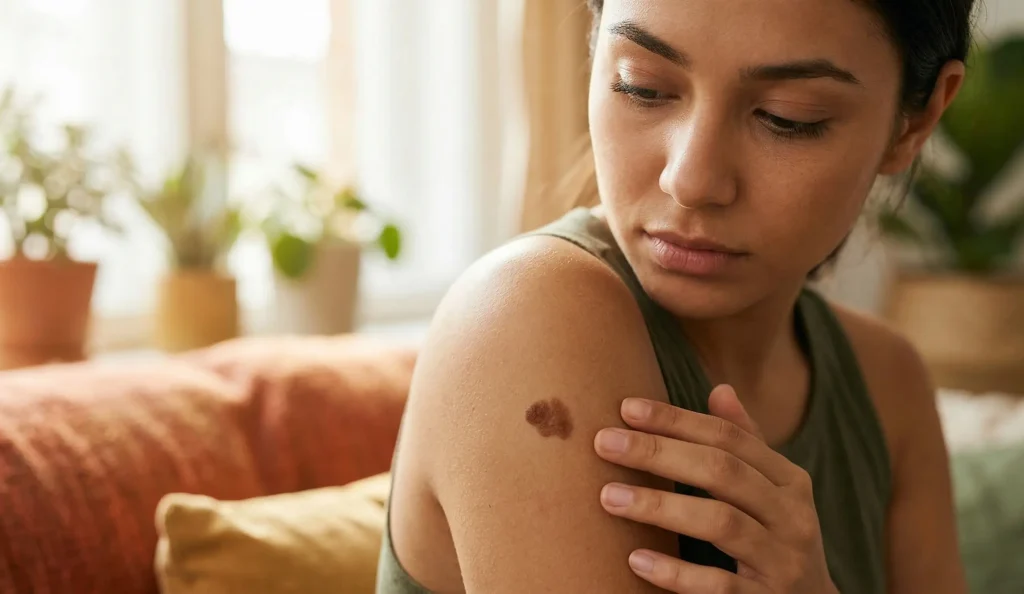
Cancerous moles require medical treatment.
In the field of dermatologic oncology and reconstructive plastic surgery, seeing a suspicious or confirmed malignant lesion means that there must be a transition from focus on aesthetics to life-saving medical protocol. The patients who ask if you can “just remove” a cancerous mole can count on the clinical answer being a definitive no. The treatment of a skin cancer—basal cell carcinoma, squamous cell carcinoma, or melanoma—will never be a simple cosmetic removal. The urge to immediately shave, freeze, or laser a malignant mole can lead to a major mistake that leaves the malignant cells hidden deep in the tissue and facilitates the cancer to spread to other parts of the body.
We at Lin Health Europe Clinic consider skin cancer treatment to be a highly precise, scientific, and multidisciplinary process. We remind our international patients who are coming to Turkey that safety from the perspective of cancer always takes precedence over the desire for beauty or avoiding inconvenience. Our center is a top-notch clinic for reconstructive dermatology, where medical accuracy is so high that every lesion is carefully staged, definitively biopsied, and surgically removed with safety margins calculated mathematically to give you a 100% cancer-free assurance.
The Diagnostic Mandate: Why We Cannot Use Lasers
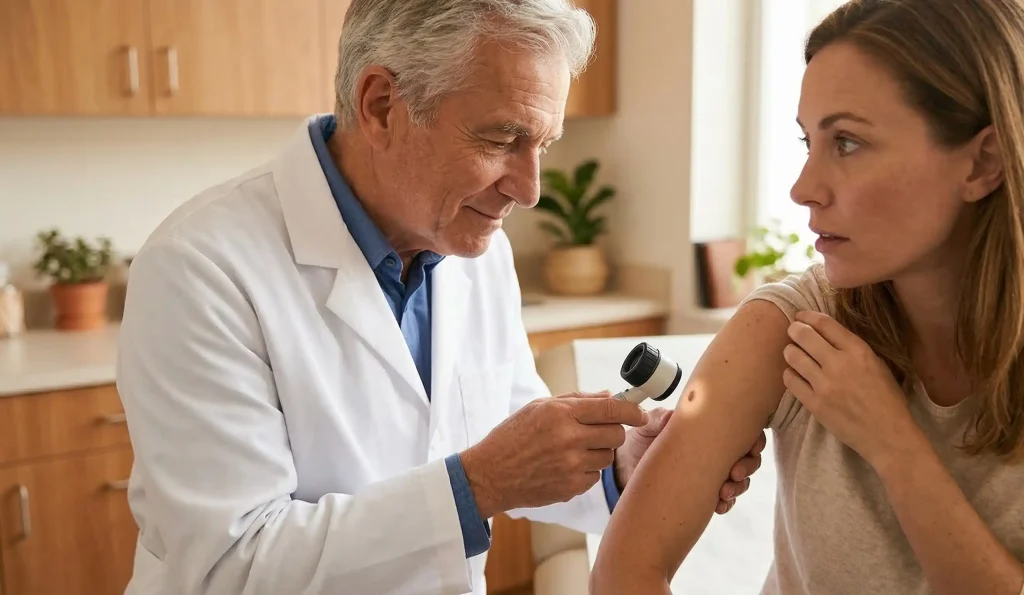
The main law of dermatologic oncology: a suspicious lesion must never be permanently eradicated without first establishing its precise cellular pathology, since the lesion will no longer be visible after the ablation. Techniques such as CO2 laser ablation or liquid nitrogen (freezing) destroy the cells of the mole.
If the mole appears to be cancerous, the act of vaporizing destroys the physical clues that a laboratory needs to perform a biopsy. The absence of a tissue specimen means that the pathologist will be unable to ascertain the kind of cancer and the degree of penetration into the skin. At Lin Health Europe Clinic (Turkey), any mole showing ABCDE criteria of melanoma is excisionally or punch biopsied without delay. We take an intact cellular matrix, which is subsequently scrutinized by microscopy, and the resulting data serve as a compass for the operations that are likely to be performed.
The Oncological Standard: Wide Local Excision (WLE)
Once you have the official confirmation that the mole is a cancer, colouring should not be the only factor when deciding what the extent of the excision should be. Cancer cells may be present even around the edges of the visible mole so the tumor needs to be removed along with the tissue surrounding it, i.e. the skin and the underlying layer of fat or subcutaneous adipose tissue as well.
The clinical prescription for a thorough cure is to carry out a Wide Local Excision (WLE). The procedure necessitates the surgeon to make an incision through a predetermined circumference of normally appearing, healthy skin surrounding the tumor. Based on the level of aggressiveness of the cancer, the “clear margin” could be as little as 0.5 cm or as much as 2 cm in all directions. Our well-established clinic will implement this critical oncological margin so that no cancer cells from the previous tumor will be left physically behind to multiply and cause the disease again.
Breslow Depth and Lymphatic Staging
Judging a cancerous mole by its width on the surface is misleading since the critical factor is how far the cancer has spread through the layers of the skin, which is determined by measuring the Breslow depth. A deep melanoma that has reached the blood and lymph vessels may make surgery necessary in addition to a Wide Local Excision. At this point, cancer cells will have already traveled through the lymph system.
At the highly specialized level, the Lin Health Europe Clinic medical team in Turkey is capable of carrying out a Sentinel Lymph Node Biopsy (SLNB) at the same time as the Wide Local Excision. The diagnostic surgical procedure is used to find and remove the very first lymph node that the cancer would theoretically spread to first, so that the patient can be made aware of a silent metastasis even before it has symptoms and the vital organs have been compromised.
Reconstructive Artistry: Closing the Defect
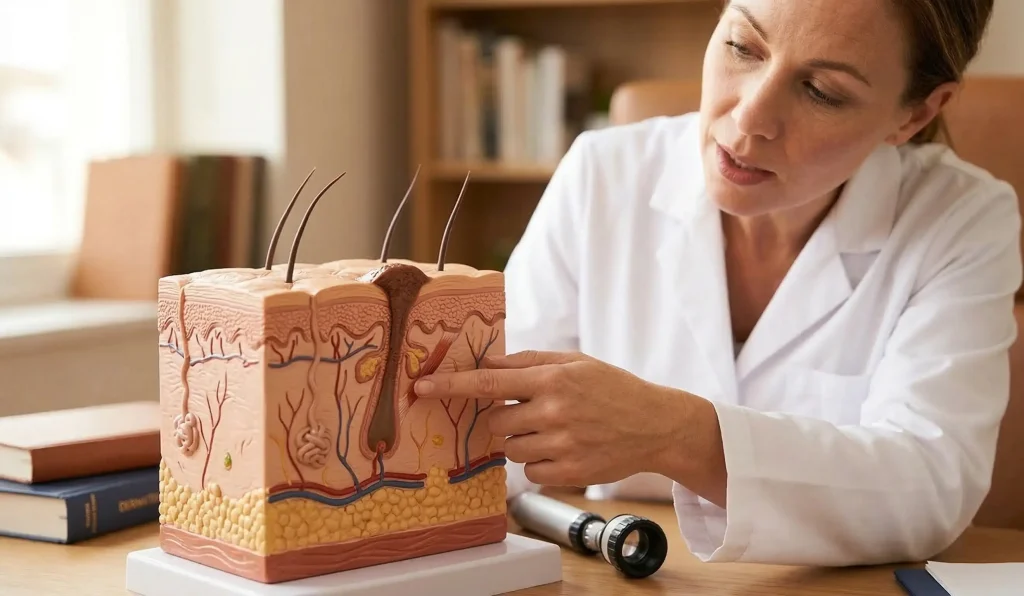
Since a Wide Local Excision will be intentionally removing a significant amount of healthy tissue in order to protect the patient’s life, it will result in a sizeable physical wound (surgical defect), especially if the excision is performed on cosmetically important areas such as the face, neck, or décolletage.
This is exactly why the collaboration of oncology and plastic surgery is so essential. Lin Health Europe Clinic is world-class in surgical reconstruction at the highest level. Instead of simply stitching the skin tightly, which results in a lot of tension and deformity, our surgeons use a combination of local tissue flaps or skin grafts to rebuild the surgical site in a very natural way. After the tissues have been realigned along the painless and most natural lines of skin tension, the expectation is that the scar will be very fine, flat, and practically invisible following wound healing and neocollagenesis.
Mole Removal in Turkey
Lin Health Europe Clinic considers the moment of skin cancer diagnosis to be a very serious and life-changing event that requires not only the best medical intervention but also emotional support. Our clinic in Turkey is a medical excellence sanctuary operating in the latest and most technologically equipped JCI-accredited hospitals which are an expression of our leadership in international medical tourism and reconstructive surgery.
Going with Lin Health Europe Clinic means opting for the best, most diagnostic hands in Istanbul. Our internationally distinguished multidisciplinary team of elite dermatologists, surgical oncologists, and plastic surgeons will focus on your survival as well as your beauty. You will receive the utmost professionalism and finest hospitality from the first dermoscopic mapping until your revelation of the beautiful, cancer-free reconstruction, which is the reason why we have become the leading name in medical excellence. With us, your health is in the hands of the finest people in the world.
FAQ:
No, simply cutting out the visible pigment will leave microscopic cancer cells in the deeper tissue, which can then multiply and spread aggressively. Our surgeons carry out a Wide Local Excision to remove a measured safe margin of healthy skin around the tumor, thus ensuring complete elimination of the cancer.
Both scratching or accidentally picking off a melanoma cannot eradicate the cancer because the malignant cells are firmly embedded in the deeper layers of the skin. This physical damage only results in the postponement of proper medical diagnosis, which in turn allows the remaining cancer to spread through your lymphatic system.
Cryotherapy (freezing) or a laser cannot be used for melanoma because these methods use heat and thus, the physical tissue sample is destroyed which is needed for laboratory testing. You need to get the lesion surgically excised at our clinic in Istanbul so that a pathologist can confirm the cancer has been completely removed beyond any doubt.
For example, basal cell carcinoma or melanoma in situ are the cases where complete surgical excision with clear margins usually results in a 100% permanent cure. Still, in case the pathology report shows that the tumor was deeply invasive, you might need further oncological treatments after the initial surgery in order to safeguard your health in the long term.
The length of the surgical margin is solely determined by the biological depth of the tumor and can be anywhere between 0.5 centimeters and 2 centimeters of the surrounding healthy tissue. Our reconstructive experts in Turkey very carefully schedule this excision so as to maintain total oncological safety at the same time, using advanced plastic surgery methods, they minimize the scar produced as a result.
NCCN (National Comprehensive Cancer Network). (2023). Clinical Practice Guidelines in Oncology: Melanoma.
Bolognia, J. L., et al. (2018). Dermatology. Elsevier.
Slutsky, J. B., et al. (2010). A systematic review of the surgical margins for malignant melanoma. Dermatologic Surgery.
Rigel, D. S., et al. (2011). Cancer of the Skin. Elsevier Health Sciences.