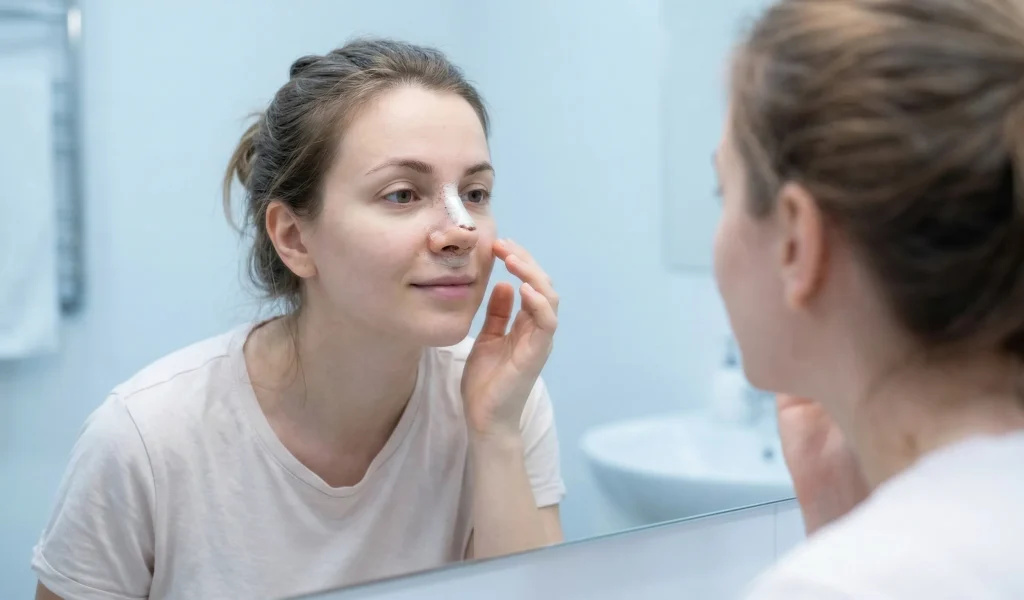
Use saline and gentle cleaning.
In facial plastic surgery, a rhinoplasty is a surgical procedure where the surgeon changes the bone, cartilage, and mucosal tissue carefully and precisely. After the operation, the nasal passages will create mucus, blood, and dead cells due to the inflammation healing process, which will cause crusting and a feeling of heavy congestion. Even though clearing the airway may be very tempting, using the wrong methods to clean can lead to dislodging the structural grafts placed with great care, cause bleeding from rupture of vessels, or bring infection into the surgical system.
For us at Lin Health Europe Clinic, we believe that postoperative intranasal hygiene is a major factor in your surgical outcome. For our international patients coming to Turkey, we make it clear that nose cleaning needs to be done with a lot of gentleness, patience, and only using strict sterile, medically approved solutions. Our clinic is the first choice for those who want advanced ultrasonic and structural rhinoplasty, offering a level of surgical perfection that internal healing of your nose is directed by very strict aftercare measures based on scientific evidence.
The First 48 Hours: The “Drip Pad” and Hemostasis
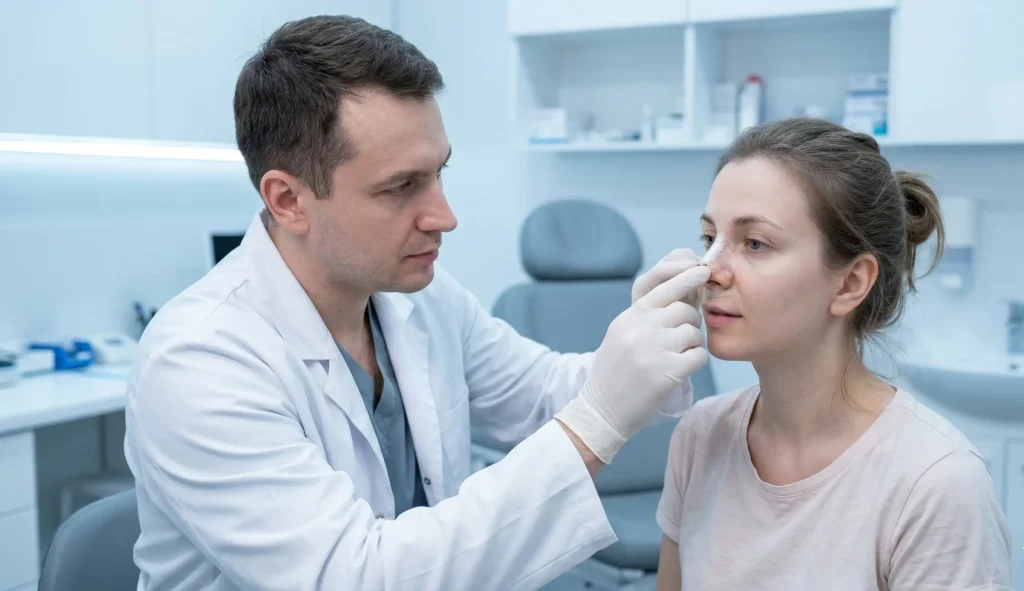
Directly after your surgery, your nose will be very tender, and you can expect a small amount of bleeding as a normal sign. In the first 24 to 48 hours, hemostasis is achieved (the stoppage of the flow of blood) and also the new incisions are being protected. You should not try at all to clean the inside of your nose at all during this short phase. Instead, you will be wearing a “drip pad,” which is a small piece of sterile gauze taped under your nostrils that will absorb any dripping fluid.
Besides, our nurses at Lin Health Europe Clinic in Turkey will take care of all your hygiene needs immediately post-operatively in our very comfortable recovery suites. You will be shown how to very lightly pat the area under your nose with a clean tissue, but doing so without rubbing or pushing on the columella (the tissue between the nostrils). Having your surgery in our prestigious clinic means your early healing stage will be closely watched by specialists who give the highest priority to the strength of your fragile, newly formed nasal framework.
Saline Sprays and Mucosal Hydration
Generally, by the third day, bleeding stops and then the best method to clean inside the nose is by keeping it continuously hydrated. It is very important that the internal mucosa remains moist so as not to form hard scabs, which can cause trauma to internal sutures. The most common and effective way to do it in hospitals and clinics is with the use of nasal sprays containing sterile, isotonic saline solution. They are soft and non-irritant and break down crusts, and also the nose is able to naturally clean itself of dirt without using force.
Lin Health Europe Clinic team in Turkey supervises you through dosing and frequency of saline application—most commonly 2 to 3 sprays in each nostril every few hours. Our main concern is to set the best biological conditions for the neocollagenesis stage of wound healing and mucosal regeneration. We take great pride in our methodical patient aftercare which has healed patients’ tissues very well and airway clearing has been rapid and safe.
The Q-Tip Protocol: Cleaning the Anterior Nares
Touching the deep nasal cavity is not allowed but the anterior nares (the outermost part of the nostrils) may accumulate dried blood which can be removed by the patient themselves with care. For that procedure, patients are recommended to use a pharmaceutical-type Q-tip dipped in sterile saline or the diluted form of hydrogen peroxide (as your surgeon will instruct).
Training you in the right steps of this operation is the main skill Lin Health Europe Clinic has and in Turkey, patients are told to go with the cotton tip just inside the nostril ring limit—no deeper than the cotton itself—and also try a gentle, rolling motion rather than scrubbing. After cleaning, a little bit of antibiotic ointment prescribed by the doctor is put on the wounds to serve as a barrier against bacteria and to keep sutures lubricated. The precision in every single detail during recovery is what we think makes a really good final result, even down to the daily cleaning routine.
What is Strictly Forbidden: Blowing and Picking
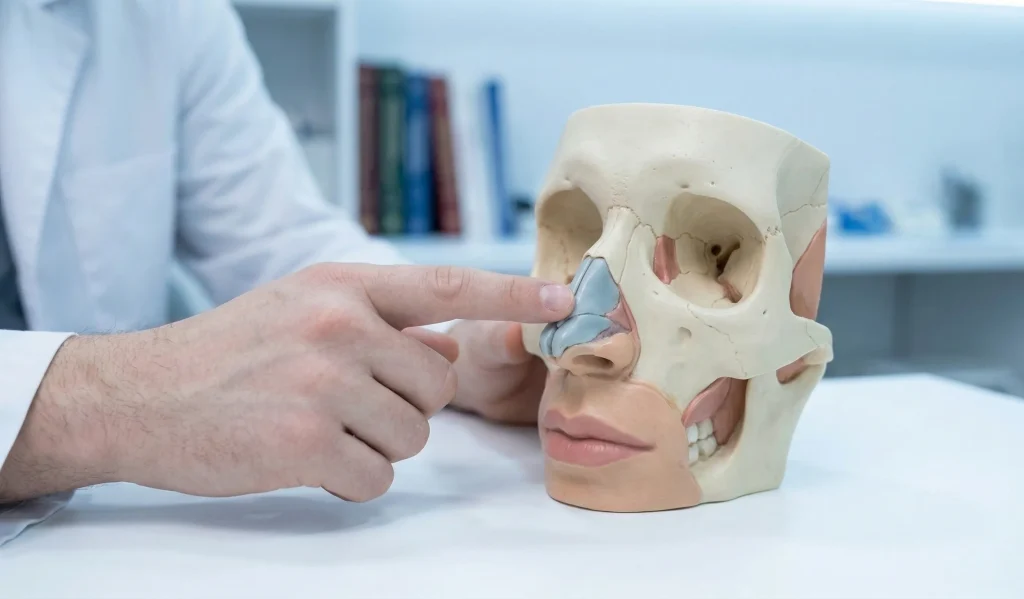
Nose blowing and picking at internal crusts are the two biggest mistakes you can make that will irreversibly ruin your rhinoplasty outcome. Blowing the nose creates a high internal pressure which can easily lead to rupturing of blood vessels that are healing, resulting in a big bloody nose (epistaxis) or physical displacement of the very delicate cartilage grafts that are supporting the new nasal tip. Besides that, picking at the scabs can lead to tearing the mucosa and also touch the surgical site with bacteria from fingers.
In Turkey, at Lin Health Europe Clinic, we set firm and unambiguous rules for our international patients about such behavior. It is essential that you control the desire to blow your nose for a minimum period of 4 to 6 weeks, after which your surgeon will permit it. Sneezing should be done with your mouth wide open so that the nasal passage doesn’t get involved. Our clinic is the leader in patient education, helping you avoid unknowingly giving up your beauty results.
Rhinoplasty in Turkey
At Lin Health Europe Clinic, we think that a great rhinoplasty is the result of a combination of the surgeon’s creativity and skill during the operation and the patient’s willingness to follow the rules during recovery. Our clinic in Turkey is a place of medical excellence as well as advanced facial plastic surgery and a luxurious, personalized, comprehensive patient care. Our operations are performed in state-of-the-art, JCI-accredited hospitals that mirror our position as the world leader in international medical tourism and aesthetic refinement.
Lin Health Europe Clinic can be your choice if you want the most talented hands for rhinoplasty in Istanbul. Our surgeons are recognized worldwide for their skills and they focus not only on your aesthetic beauty but on the function of your airway as well. Your initial 3D simulation will be the first of many moments to witness our professional thoroughness and outstanding hospitality that made us the first name in rhinoplasty. We are the ones who can give you the journey to a beautifully re-shaped nose that you can breathe through with ease and confidence.
Frequently Asked Questions About Rhinoplasty:
The simplest and safest way is to clean your nose is by using a sterile saline nasal spray; it helps to keep the inside wet while making crusts easier to remove. As for the outer parts of the nostrils, you can very gently roll a Q-tip in saline or a solution prescribed by your doctor just inside the rim to get rid of dried blood.
No, you should under no circumstances blow your nose for the first 4 to 6 weeks after the surgery. The pressure from blowing the nose can lead to a heavy bleeding, break down the internal wounds, or move the grafts of cartilage that our surgeons in Turkey placed.
If you pick your scabs, you are breaking the tissue before it is ready which will delay the wound healing, form a major scar, and may also bring bacteria that will cause an infection. The best approach is to allow the crusts to naturally dissolve by frequent saline moisturizing.
Soft saline sprays are a must; however, high-volume sinus rinses such as a Neti Pot are normally not recommended during the first weeks because the pressure of the liquid can be quite strong for the new internal wounds. Your doctor at Lin Health Europe Clinic will give you the green light when the use of high-volume rinses will be safe again.
Surgical congestion results from the normal healing process of inflammation, which causes the mucosal lining of your nasal passages to swell, and together with the build-up of mucus and dried blood, the inside of the nose gets blocked.
- Daniel, R. K. (2007). Mastering Rhinoplasty. Springer.
- Rohrich, R. J., et al. (2004). The role of saline irrigation in postoperative rhinoplasty care. Plastic and Reconstructive Surgery.
- Tardy, M. E. (1997). Rhinoplasty: The Art and the Science.
- Guyuron, B. (2012). Dynamics in rhinoplasty. Plastic and Reconstructive Surgery.