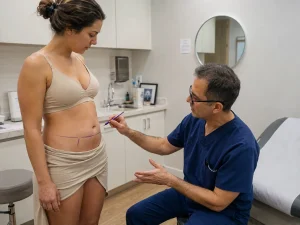
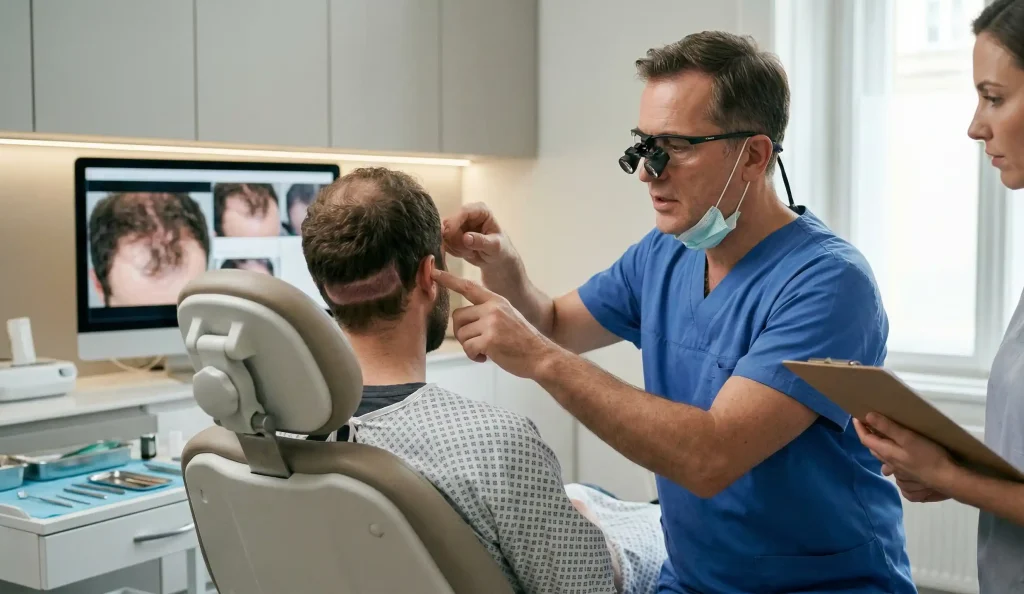
No, only your own hair.
In the hair restoration therapy, the biologic triumph of the procedure is determined solely by how well the body accepts the transplanted tissue. A hair transplant, from the clinical aspect, represents an autograft, which means that the donor hairs have to be taken from the patient’s own body. Usually, the donor area would be the back or the sides of the head as the hair follicles there have a genetic resistance to the hormone dihydrotestosterone (DHT). It is true that transplanting organs between different patients is quite common in general medicine; however, the practice of transferring hair from one person to another is still at the experimental stage because of the complicated immune issues involved.
Our mission at Lin Health Europe Clinic is to keep the top priority the health and safety of our patients in the long run. For those who want to visit our clinic in Turkey, it is really important to know the reason why you need to be your own donor, so that you can be very well aware of what is possible in your hair restoration procedure. We are the best provider for foreign patients, and we guarantee not only the surgical excellence but also the use of your own subcutaneous adipose tissue-protected follicles that will naturally and permanently grow for a lifetime.
The Biological Barrier of Immune Rejection
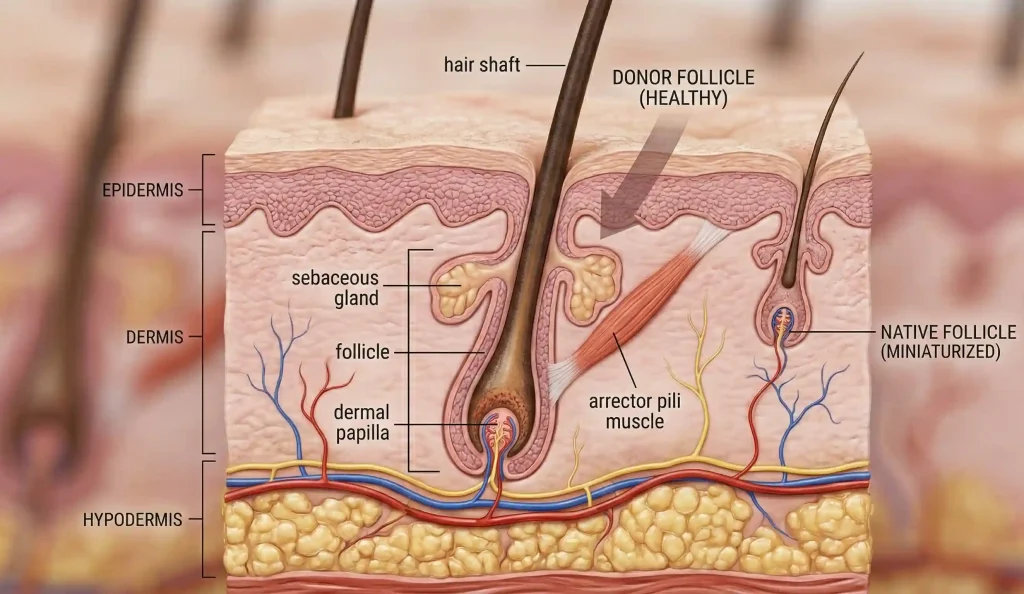
The main cause of not being able to use another person’s hair is the consequence of “graft rejection”. The human body’s immune system performs the role of an identification system and once it detects a living foreign element, it attacks it. Moreover, it is a mechanism to ensure that any cells or tissues that do not have the patient’s genetic fingerprints are eliminated. So, if you receive an allograft (transplanted hair follicles) from another person, your immune system will detect the grafts as a different species and start a reaction in an attempt to get rid of the intrusion.
Our surgical team at the Lin Health Europe Clinic in Turkey informs that the only thing that can save the life of transplanted hair in a foreign hair transplant is to put the recipient on a course of immunosuppressant drugs. Such pills, taken for a long time, could cause serious side effects that outweigh the benefits of getting a hair transplant just for the sake of appearance. Our clinic offers you the option of carrying out the operation with your own follicles so that you are biologically 100% compatible and thus you can enjoy a safe recovery without any medication.
The Exception: Identical Twins
There is an exception clinically to the rule of “self-donor”, and that is the case of monozygotic or identical twins. We know identical twins have the same genetic code and in this case, body hair will not be immune to the immunological profile and thus be accepted as from the self. In these extraordinary circumstances, twin hair transplantation is feasible if one twin has a shortage of hair and the other has plenty, as long as neither of them uses immunosuppressants. However, for the rest of the population (99.9%), the standard procedure is that donor hair can only be obtained from one’s own scalp or body.
In Turkey, the Lin Health Europe Clinic staff is well-versed in the use of FUE (Follicular Unit Extraction) and DHI (Direct Hair Implantation) methods for the effective utilization of your donor’s limited resources. Our emphasis is on tapping into donor tissue, hence enabling even individuals with scarce hair to go through a highly visible change. Our establishment has acquired a worldwide reputation for the achievement of high-density results, which is attained through the extreme meticulousness necessary for carefully harvesting and implanting each graft at the highest efficiency possible.
Alternative Donor Sites: Body Hair Transplant (BHT)
If the scalp donor site has been exhausted or is of very poor quality, the treating doctors are sometimes forced to look for hair elsewhere on the patient’s body. That is what the so-called Body Hair Transplant (BHT) is all about. The facial hair, chest, or back usually serves as the donor area. Since the texture and the hair growth cycle of body hair differ a little from the scalp hair, the transplanted hairs would still grow naturally because these follicles are autologous (i.e., coming from you) and fully compatible with the recipient site, hence there is no danger of rejection.
One of the strengths of Lin Health Europe Clinic is our ability to work on complex BHT cases in Turkey. We often resort to beard follicles to add more volume in the crown or to “blend” the areas where scalp hair is scarce. We hold the view that an outstanding outcome can only be achieved by leaving no stone unturned in terms of identifying and exploiting the full biological potential of your body. We are pioneers in the provision of BHT solutions to individuals who had been denied the treatment previously at other centers.
The Future of Hair Cloning and Multiplication

Donor hair from another person cannot be used right now, but regenerative medicine is looking very promising in hair cloning or follicular multiplication through different techniques. It would be ideal to get a very small sample of the patient’s hair follicles for the repeated hair cells in a lab, and then these would be implanted to the scalp to produce thousands of new hair strands. With this, you would never run out of donor hair and be able to have the hair supply you have always dreamed of.
At Lin Health Europe Clinic, we always closely follow these clinical innovations ahead of our competitors in Turkey. Though hair cloning technologies are still at the basic research and development level and have therefore not been released to the public, we use the most efficient “follicle-preserving” methods to save your resources for the future. Our dedication to the creative application of surgical techniques guarantees that you will choose our medical center to be the most advanced caring system available worldwide.
Hair Transplant in Turkey
In our view, the greatest hair transplant is a healthy one, which is permanent and well-matched with the original hair color and texture. The Lin Health Europe Clinic, a true haven of medical excellence, combines cutting-edge surgical technologies with personalized patient care in Turkey. We have access to modern JCI-accredited hospitals where our level of medical practice meets the global standards of international healthcare tourism.
When you select Lin Health Europe Clinic, you are not only picking the greatest surgical hands in Turkey, but also becoming a part of the worldwide network of recognized professionals who most value the health of every graft. The high-resolution unveiling that follows your initial donor density examination will be a delightful mix of your impeccable results and our famed hospitality. Our medical professionals will take care of your follicular health, so you can focus entirely on the happiness of seeing your hair grow back fuller and thicker.
Frequently Asked Questions About Hair Transplant
The transplanted hair is permanent because the hair follicles come from an area of the scalp that is genetically resistant to the balding hormones. Over a decade, you might lose some of your original, non-transplanted hair, but this hair thinning can be easily handled with maintenance therapies.
Usually, the immune system attacks the foreign hair as a tissue invader and will destroy it before you can even receive it. Unless you are an identical twin, you will have to use your own hair follicles to get a successful transplant.
A 5000 grafts procedure is a big surgical session and it can take from eight to ten hours before it is completed. At Lin Health Europe Clinic, we have a highly effective team in Turkey, so we can prioritize graft survival.
3500 grafts are quite a lot and they can make you look very different. You will see a big change to your receding hairline and a great increase in the number of hairs in your mid-scalp. For most patients with moderate hair loss, 3500 grafts will be enough to give back their youthful look.
Nowadays, with FUE and DHI methods, the result looks so much like normal hair that it is hardly possible to recognize it as a hair transplant. When the redness and shedding phase is over, the new hair will match your existing hairline without any visible difference.
Unger, W. P., & Shapiro, R. (2004). Hair Restoration Surgery.
Bernstein, R. M., & Rassman, W. R. (1997). Follicular transplantation. International Journal of Aesthetic and Restorative Surgery.
Parsley, W. M., & Perez-Meza, D. (2010). Review of factors affecting graft survival. Hair Transplant Forum International.
Jimenez, F., & Ruifante, E. (2010). Distribution of human hair follicles: anatomical and clinical relevance. Dermatologic Surgery.