Fat transfer is the best natural alternative.
For many years, silicone breast implants have been the top choice for cosmetic surgery by far. But nowadays, we witness a considerable cultural and medical trend reversal. Coming from the side of naturalness, as well as from concerns about the “Breast Implant Illness” (BII) that allegedly results from implants and the ongoing maintenance of foreign devices, women want to know if they can get bigger breasts without having plastic inside their bodies. And medically, it is still possible to answer such a question in the affirmative. The perfect substitute for implants from the gold standard is Autologous Fat Transfer, aka Natural Breast Augmentation.
This operation marks a revolutionary step in how we look at body reshaping. Instead of implanting a prosthetic bag, the volume is created with the body’s living tissue. Surgeons have even compared it to the most radical “upcycling” procedure. We take unwanted fat (like the one from your tummy or thighs) and, at the same time, carefully add it to your breasts where you want the fat to be. At Lin Health Europe Clinic, we think that this alternative will be very attractive to those patients who value a natural, very soft feeling rather than a high-projection look of a round implant.
The Procedure: Fat Grafting Step-by-step
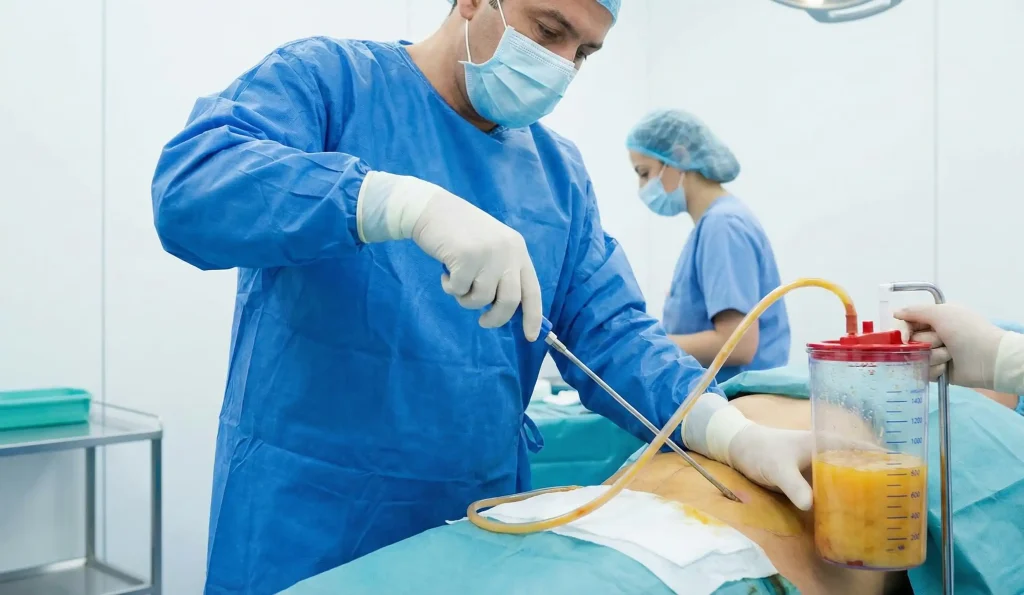
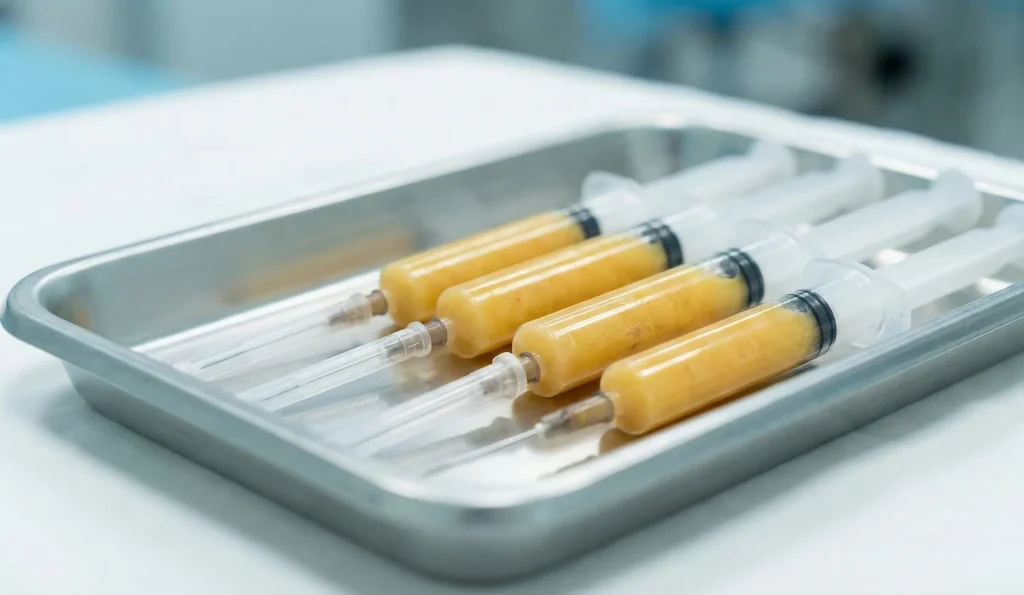
The principle of Autologous Fat Transfer is, on one hand, quite dumb and straightforward, and on the other hand, it’s very smart. Essentially, we are talking about two operations combined into one. First, the surgeon extracts fat cells through Liposuction (usually this is done in a gentle way with the help of Body-Jet or VASER at low settings). But these cells are not just randomly sucked out; they are carefully collected to ensure that the cells remain alive. Fat is then processed after being extracted – washed, filtered, or centrifuged, depending on the technique, to get rid of blood, oil, and broken cells and retaining only fresh, unbroken adipose tissue.
After that, the “liquid gold” is injected using fine cannulas. The surgeon by no means just squirts the fat into the center but has to intricately interweave very thin strands of fat through subcutaneous tissue and muscle, layer by layer. The “micro-droplet” technique is vital because every transplanted fat cell must find a blood supply within 48 hours to live after the transplantation. If the fat gets stuck in one big clump, the core cells will starve and die. This careful, slow process lets the breast tissue swell naturally and subtly without having to make a single cut in the breast.
The “Robin Hood” Benefit
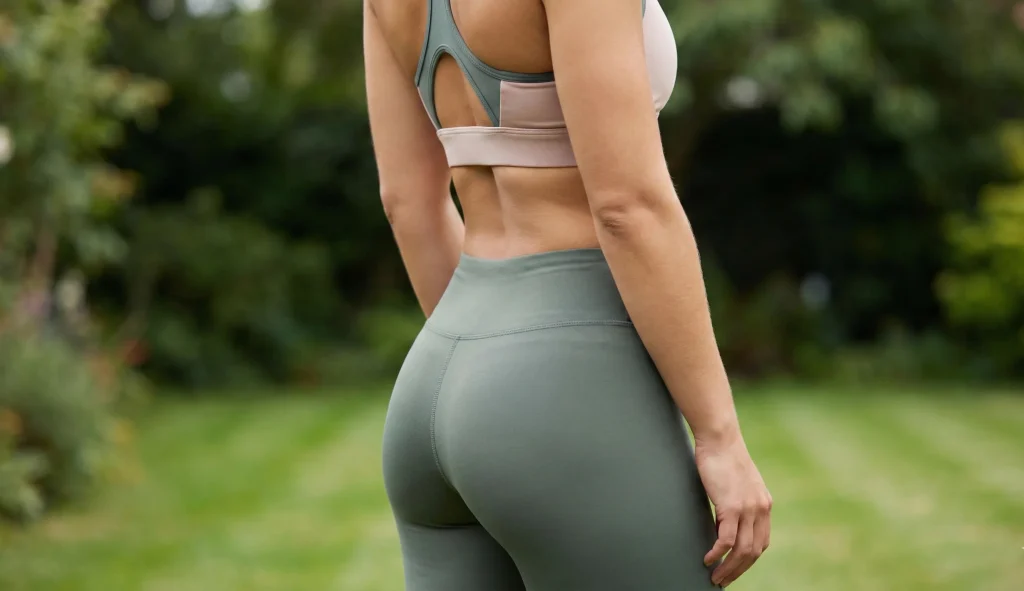
The main justification in favor of fat transfer vs. implants lies in the fact that, by this operation, the body silhouette benefits doubly. We use the analogy of the “Robin Hood” phenomenon in this case: taking from the rich (one’s surplus fat areas) and giving to the poor (one’s volume- deficient areas). Just think how many stubborn love handles or saddlebags a patient must have to face, and this surgery will offer her a total body makeover.
What you are really getting here is both Liposuction and Breast Augmentation at one session under anesthesia. Due to the contouring of the donor site, an optical illusion is created, making the breast enhancement look even more significant. For example, by narrowing the waist while adding volume to the chest, the overall hourglass ratio is dramatically improved. This makes it an ideal procedure for “Mommy Makeover” candidates who want to restore lost breast volume after breastfeeding while simultaneously flattening their post-baby tummy.
The Reality of Size Limitations
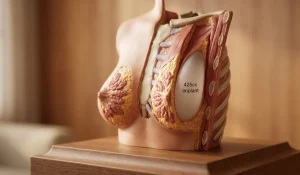
Even though fat transfer is amazing, there are several, quite strict biological limitations that every patient should know. It is not like implants that can turn a person from an A cup into a D cup in just one hour; fat transfer takes a patient from one step to another only gradually. There is a finite capacity of breast tissue to accommodate fat at just a single time; if you try to put in too much fat in the breast, the fat cells will die from the lack of blood supply (pressure necrosis).
The reality is, after one session of fat transfer, you can usually expect a size change in the range of 0.5 to 1 cup size. What you get is volume, cleavage, and a lifted look, but it is not going to be the high-profile projection of a 400cc silicone implant. Sometimes such patients who want a dramatic size increase can undergo several fat transfer operations spaced 3 to 6 months apart. That is why this operation is more suitable for women who plan to “fill out” their bra rather than overhaul their wardrobe with bigger clothes.
Survival Rates and Calcification Risks
The key factor in natural breast augmentation has to be Graft Retention. When the fat is taken from the thigh and moved to the breast, not all of the cells will make it through the trip. Statistically, only about 60 – 70% of the transferred fat survives by establishing a new blood supply and staying there permanently. The remaining 30 – 40% will be reabsorbed by the body gradually without the need for surgery over 3 to 6 months. That’s the reason why we normally do a slight “overcorrection” (additional fat) during the procedure.
On the other hand, the fat cells that do not survive often can result in the formation of small lumps called Oil Cysts or Calcifications. Typically, those lumps are harmless and benign (non-cancerous) but it happens that sometimes they are palpable and can show up on mammograms as well. Today’s radiologists are very skilled in differentiating between fat necrosis and cancer, but still, it remains a risk that patients must accept. By using minimally traumatic harvesting methods such as Water-Assisted Liposuction, the fat cells remain healthier during the transfer and thus, the risk of these complications is lowered significantly.
Who Is the Ideal Candidate?
Natural breast augmentation is not for every woman. Firstly, the very first and obvious condition for that is having enough “donor fat” to take advantage of. Very slim, athletic females with very low body fat percentages are often found ineligible only due to the lack of “raw materials” for breast-making. Having about 1000cc of fat that is ready to be removed usually is enough to give a woman a good outcome on the chest.
Besides that, an ideal candidate will be someone whose skin is still elastic. Fat is kind and gentle; it does not brace against the skin in the same way that a firm implant does, but rather is pressed by the skin. If there is a lot of sagging (ptosis) or skin is extremely loose and empty, a single fat transfer will not be able to lift the breast; the weight of the fat will make the breast sag even more. In these situations, we often combine the fat transfer with a Breast Lift (Mastopexy). The mixed method incorporates the lift to reshape the skin envelope and the fat to fill it, thus the result is a firm, young- looking breast without an implant.
Frequently Asked Questions About Fat Transfer Breast Augmentation
Overall, fat transfer is considered safer simply because the tissue used is your own thus it is unlikely to cause implant rupture, capsular contracture, or breast implant illness.
After the transplanted fat cells have developed a blood supply (usually 3 months), the outcome is permanent and the fat will behave like any other breast tissue.
Indeed, this is a very typical practice. The breast lift corrects the sagging and repositioning of the nipple, and the fat provides the amount of breast volume that cannot be achieved by the lift alone.
It may lead to calcifications, which will show up on a mammogram, but generally, the experienced doctors are able to tell between these non-cancerous changes and cancer signs.
Most of the time, the breast area is not the painful part of healing after the procedure; just feeling tight. The part where the liposuction was performed (donor site) is usually the area that hurts the most during recovery.
Coleman, S. R., & Saboeiro, A. P. (2007). Fat grafting to the breast revisited: safety and efficacy. Plastic and Reconstructive Surgery.
Spear, S. L., et al. (2014). Fat Injection to the Breast: Technique, Results, and Indications Based on 880 Procedures Over 6 Years. Aesthetic Surgery Journal.
Khouri, R. K., et al. (2012). Current clinical applications of fat grafting. Plastic and Reconstructive Surgery.
Delay, E., et al. (2009). Fat injection to the breast: technique, results, and indications based on 880 procedures over 6 years. Aesthetic Surgery Journal.