Yes, but candidates typically need a BMI under 30.
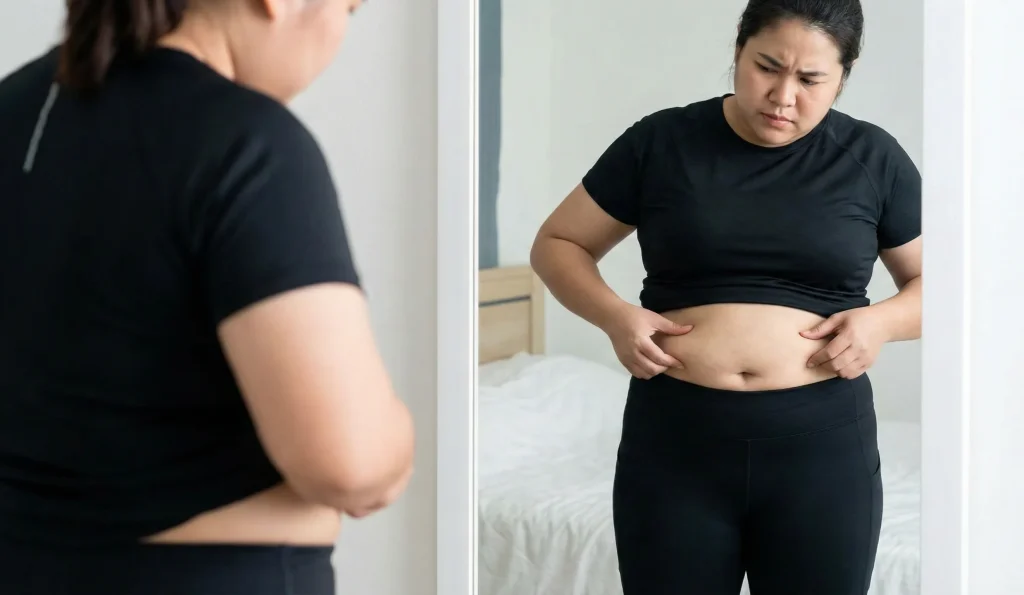
Many people who have been struggling to lose weight for quite some time might see liposuction as a rescue, an answer to the question of how to finally get rid of the parts that just don’t respond to diet and exercise. Sadly, most times a consultation with a specialist results in a disappointment that prevails over the hope. Just calling the clinic in the area is enough for a potential patient to get to know a widespread and firm rule: “We don’t do surgeries on patients with a BMI over 30.” A patient who has a healthy lifestyle but whose BMI is as high as 32 or 35 may perceive this denial as unjust and humiliating.
The issue of High BMI Liposuction is complicated because it is truly at the crossroads of medical safety and visual appearance. No one should doubt that higher body weight brings about higher risks of surgery. However, Body Mass Index (BMI) is a flawed mode of assessment. It does not indicate how much muscle there is or how much fat, and neither does it tell us where that fat is. At Lin Health Europe Clinic, we are convinced that a figure on the scale should not immediately prevent one from being at ease with one’s own body. While our concern for safety is paramount, we do not rely on just a simple calculator to assess patients but rather focus on an individual’s physique and health markers. Hence, we are able to provide specialized high-volume protocols for those who meet our requirements.
The Safety Limit: Why Do Clinics Say No?
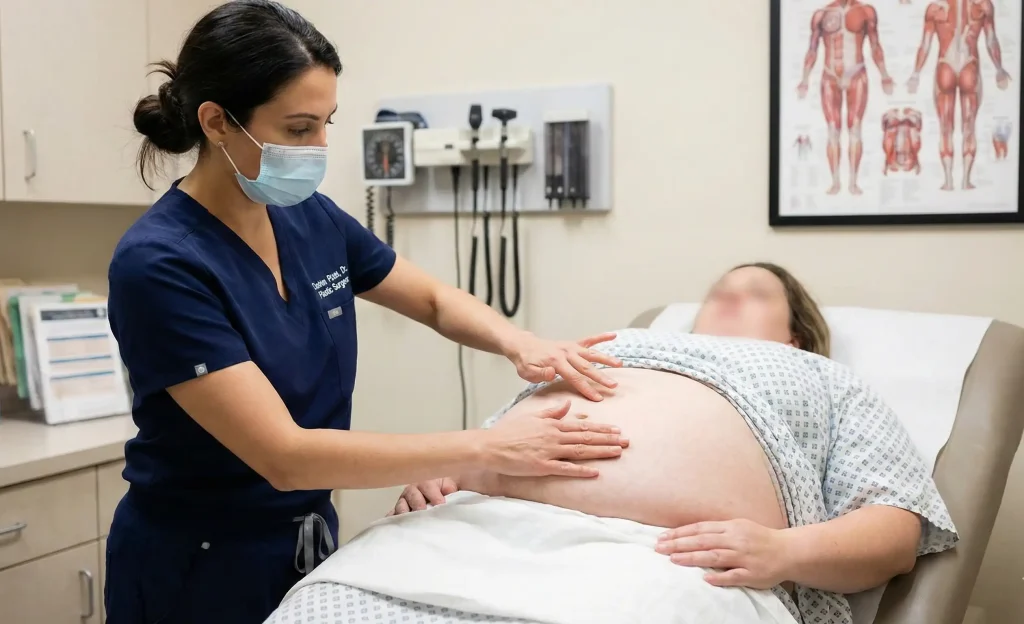
You cannot understand the bans without first understanding the risks. On average, the medical community decides that the limit of BMI should be 30 or 32 for elective operations. After all, research confirms that complications increase with the weight of the patient. The reasons why are wound healing takes longer, infections are more likely to occur, and the highest risk is Deep Vein Thrombosis (DVT) or pulmonary embolisms (blood clots). In addition, giving anesthesia to a person who weighs more means that the heart and lungs will be put under further strain during the operation.
That being said, these dangers do not simply exist or not exist; they are a matter of degree. Think about a person whose BMI is 34 but who takes a walk every day, has normal blood pressure, and is also non-diabetic—such a person, in fact, may be a safer candidate for the surgery than a “thin” smoker who has a BMI of 22. For this reason, a general ban is often considered to be anachronistic and unfair. By performing High BMI Liposuction, a specialized clinic limits these risks through strict pre-operative cardiac clearance, administration of blood thinners (anticoagulants) to patients after surgery, as well as the introduction of early mobilization protocols. It calls for a more skilled anesthesia team, but the healthy “plus-size” patient usually finds this manageable risk level.
The Truth: Visceral Fat vs. Subcutaneous Fat
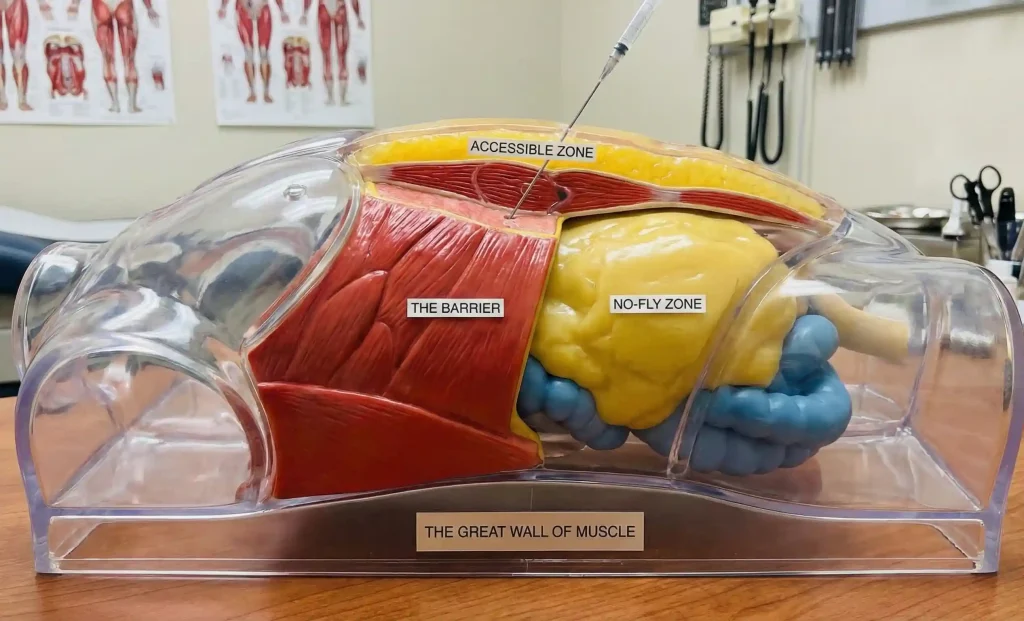
What determines your eligibility for the liposuction procedure more than anything else, is not your weight but the kind of fat that you possess. There are two types of fat on the stomach. Subcutaneous fat is that soft, squishy layer you can see stretched out under the skin of your belly and over your muscles. It is the fat that you pinch with your fingers. This is the fat that liposuction can target.
Visceral fat, by contrast, is the troublesome fat that is hidden deep inside your belly where it surrounds your liver, intestines, and other organs. This fat forces the abdominal wall to bulge, making the stomach appear big, while it feels hard or drum-like when touched. Since visceral fat lies behind the muscle wall, it has to be left untouched by liposuction as the attempt to suction it would bring about internal damage from the organs. In case you are obese and have a “hard belly”, you will not be eligible for liposuction, no matter how adept the surgeon is. Initially, you will have to shed the weight either through dieting or bariatric surgery so that you would be able to reduce the volume of your insides. The thing with liposuction is that it’s only a method for removing the top surface of soft, pinchable fat layer.
High Volume Liposuction: What is Realistic?
Patients whose BMI are higher and who happen to have soft, subcutaneous fat usually are transitioned to high-volume liposuction or “Debulking” as opposed to the standard sculpting. When talking about a regular case, a doctor can extract 2 to 3 liters of fat. For high-BMI cases, the quantity of fat that is removed in one session might even be over 5 liters.
The necessity of controlling expectations cannot be emphasized enough. No doubt, this is not a procedure for weight loss. More or less, 5 liters of fat weighs 4 to 5 kilograms. For someone who weighs 100kg, this is unlikely to lead to a significant change on the weighing scale, but the person’s silhouette can be greatly affected. If the circumference of the waist or thighs is decreased, one will be able to wear clothes comfortably, and the reduction of chafing between the thighs is also a plus. It is about changing the shape, not the number. Although the removal of this quantity of fluid and fat has an impact on the electrolytes of the body, which is why, in most cases, high-volume patients are kept in the hospital overnight for IV fluid replacement and observation purposes.
The Skin Factor: Will I Need a Tummy Tuck Instead?
On the other hand, heavy people usually have highly stretched skin. If we take away a huge amount of fat, the skin may not snap back. Rather, it will become loose and saggy, leading to the creation of an “empty bag” look.
On high BMI patients, liposuction might lead to a body that is smaller but sagging. Thus, the subject often gets turned towards discussion of the Lipoabdominoplasty (Tummy Tuck + Lipo). Through this procedure, first, the area is unburdened by fat via liposuction, and then the extra skin is removed with the help of surgery. The process of healing is longer with this kind of surgery, but the visual impact is much better and more appealing. So, in case you purely want to get rid of the volume and you’re willing to accept some skin looseness, liposuction alone will do, though usually, skin removal is necessary for a perfect contour.
Lin Health Europe Clinic: Individualized Assessment
We, Lin Europe Clinic in Turkey, do not use body mass index (BMI) as a reason to deny someone. Every file is given an individual review. In addition to pictures that will help us tell if the fat is subcutaneous (operadable) or visceral (non-operadable), we also have a collaboration with top-tier anesthesiologists who are experts in bariatric physiology to make sure that the heavier patients can undergo surgery in the safest way possible.
We are upfront about the boundaries. If the outcome of the operation is not going to be worthwhile or if your visceral fat is too much, then you will be advised to lose weight first for your own safety and satisfaction. However, if you are a healthy and active individual but with a slightly higher BMI and some pinchable fat, we can create for you a plan for High Volume Liposuction based on VASER technology that works by reshaping your figure. We recognize the individual beyond the number and are here to offer you a helping hand in making a start towards a more positive look and perhaps a healthier lifestyle after the operation.
Frequently Asked Questions About High BMI Liposuction
Most clinics limit the BMI to 30, but there are some expert surgeons who will consider doing High BMI Liposuction for patients with a BMI in the range 34-35 if they are healthy and the fat is subcutaneous.
It is a high-risk procedure (compared to normal lipo) especially in terms of blood clots and fluid shifts. That said, if High BMI Liposuction is done in hospital with overnight monitoring, it is safe to carry out.
No. A “beer belly” is mostly a hard visceral fat which is located inside the abdomen around the organs. High BMI Liposuction can only remove soft subcutaneous fat; it cannot affect visceral fat.
There is a possibility. If your skin is not elastic enough, a large fat removal can produce the effect of loose skin. Quite a few High BMI Liposuction patients require a tummy tuck later to get rid of the extra skin.
Liposuction is not the right tool if you are thinking of losing weight; it is a contouring method. You may lose 4 to 6 kilos of fat, but the main benefit will be the inch and clothing size reduction rather than a drastic scale drop.
Hoyos, A. E., et al. (2013). Large-volume liposuction: a review of 631 consecutive cases. Aesthetic Surgery Journal.
Rubin, J. P., et al. (2004). Safety and efficacy of large-volume liposuction in overweight and obese patients. Plastic and Reconstructive Surgery.
Cárdenas-Camarena, L. (2005). Lipoaspiration and its complications: a safe operation. Plastic and Reconstructive Surgery.