Yes, lipo foams help reduce swelling.
Often times, when patients open the post-operative care their surgeon provides, they can be puzzled by the simple, plain, rectangular sheets of polyurethane foam included. They resemble common packing material and their inclusion in the post-operative kit might appear to be very unusual to the patients. However, surgeons and recovery specialists swear by these foam sheets and even consider them to be as essential as the compression garment. For patients struggling to fit a tight compression garment (faja), the last thing they want is to add another layer of bulk, which to them is a very counterintuitive idea. Thus, numerous patients opt to skip foams, seeing them as an unnecessary upsell or a mere inconvenience. This is a serious error.
In fact, Liposuction Foam Pads serve to help redistribute the compression making the garment more comfortable. The purpose of a compression garment, whether it is very nice or custom-made, is essentially just a tight elastic mesh with seams, zippers, and boning. Putting a texture like this with all the bumpiness, directly onto the skin that has been detached from the muscle underneath is at least a risk of imprinting those irregularities on the body during the healing stage. At Lin Europe Clinic, we think of lipo foams as the “finishing tool” of your surgery. If the cannula removes the fat, the foam facilitates the skin settling down as a smooth, flawless sheet rather than a rippled, uneven surface.
Preventing the “Washboard” Effect: Smoothing the Ripple
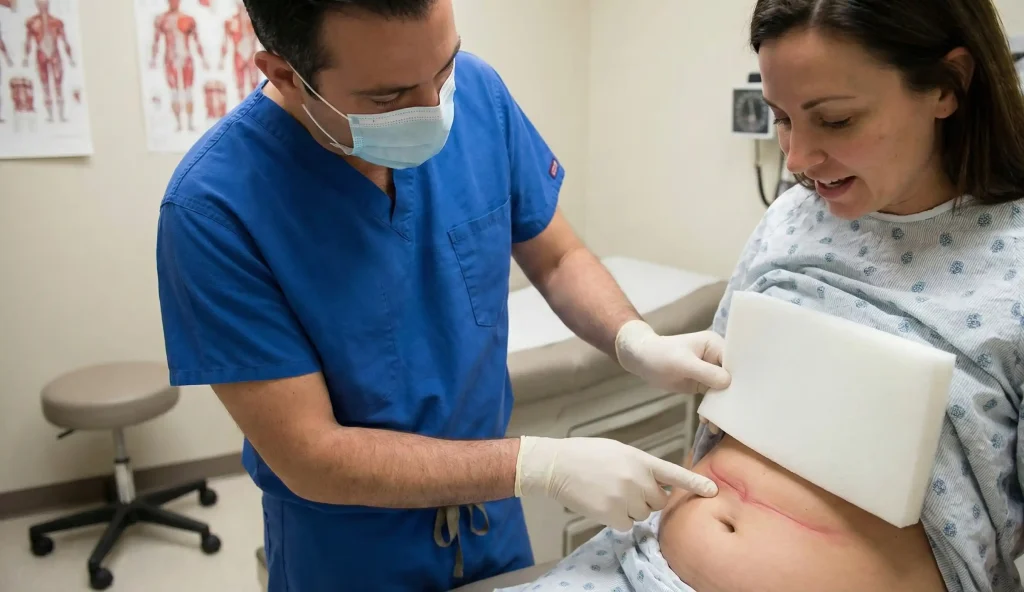
To appreciate the importance of a foam insert, you first need to picture the skin after it has undergone liposuction and then it starts healing; the same skin “floats” over the muscle and waits to “stick” again. At that moment, the skin is very flexible, just like wax at a warm temperature. Therefore, when you place a textured faja against it, the skin is going to take on the texture of the fabric.
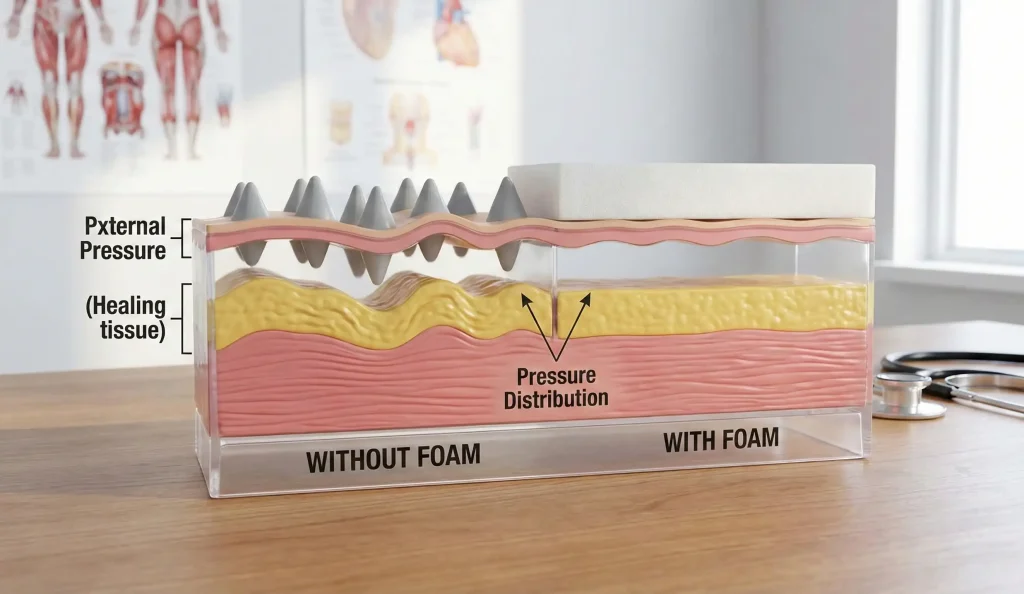
Liposuction foam pads are a crucial interface layer. By sandwiching your skin with a smooth layer of foam between your skin and the garment, you create a flat surface. The foam acts as a buffer that takes in the pressure of the fabric of the garment, which was previously felt as rough, and then distributes the pressure evenly over the whole surface of the skin. The skin then reattaches smoothly and evenly to the muscle. If you go without a foam pad, you will be very likely to have a “washboard” or “cobblestone” texture, which means the skin heals with permanent ripples that take the pattern of the compression garment.
Fighting the Crease: Preventing Faja Burns
The compression garment puts pressure on your skin, yet it is not a uniform pressure. The garment creases on your waist when you sit. The fabric gathers at the crotch when you bend. These creases are turned into pressure points—areas where the pressure is highest and most intense and which hence will be forced into your already swollen tissue.
If you have a crease in your faja pressing on your stomach for the duration of 3 weeks, your body will respond to this crease in a way that it will be permanently marked on your fat layer. This is often misdiagnosed as a failure of the surgery whereas actually, it is an indentation due to pressure. What the foam does is that it creates an intermediate buffer between the surfaces that are folding. It also prevents the sharp pressure caused by the fold from cutting into your waist and hence forming deep, dark scars commonly referred to as “faja burns” or pressure necrosis.
The Comfort Factor: Managing Hypersensitivity
Apart from its cosmetic role, foams make a huge contribution to your comfort on a daily basis. After surgery, your skin goes into hyperesthesia, meaning it gets extremely sensitive. In fact, the nerve endings are so raw that even the lightest touch feels like you are being rubbed with sandpaper that has just been left in the sun. So, the very coarse and synthetic material of the faja, which gets rubbed directly on the numb or tingling skin of the patient, can be painful.
The foam acts as a velvety, luxurious shield that gets rid of the friction component effectively. It provides padding to the pain and prevents the “rope burn” sensation that most of the time happens at the armpits or ribcage. Patients who are always using foams experience less burning, itching, and general irritation to a great extent in comparison to patients who wear the faja directly against the skin. This is hugely beneficial because they are free to make more movements that are necessary for the healing process.
Accelerating Lymphatic Drainage and Reducing Bruising
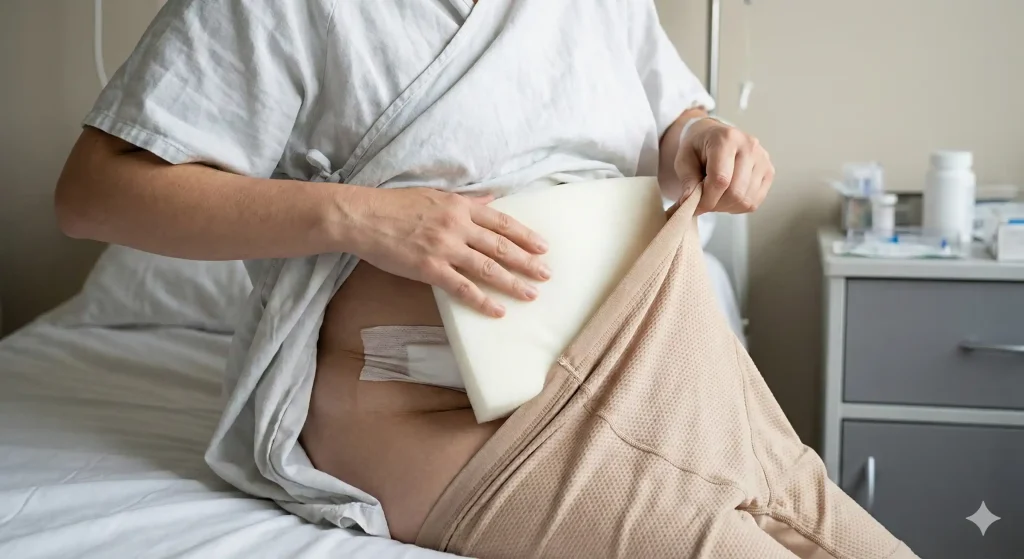
The skin foam allows for the exertion of a gentle and uniform pressure while at the same time ensuring that it is not so soft that the skin is not properly compressed. The foam will help to more rapidly push out the red blood and fluids from the cells, and so help get rid of the bruises faster than a faja alone that applies pressure in an erratic fashion.
When pressure is uneven, blood tends to pool in the low-pressure spots, leading to dark, stubborn staining of the skin. By applying consistent pressure across the entire zone, the foam encourages the reabsorption of this blood. In addition, the foam prevents the “tourniquet effect” which happens when the top of the faja obstructs the flow; the soft buffer maintains the superficial lymphatic channels open, thus letting fluid flow freely past the restriction and thereby reducing the overall swelling faster.
Experience the Lin Europe Difference: The “Sandwich” Protocol
At Lin Europe Clinic in Turkey, we don’t merely give you a foam sheet; we demonstrate to you the “Sandwich Protocol” in order to attain superior hygiene and results. Foams being absorbent of sweat and body oils, the bare skin contact can predispose to bacterial proliferation.
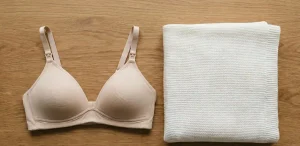
Our instruction to the patients is to first wear a thin, seamless cotton tank top, then put the medical-grade foam over the cotton, and lastly, zip the faja. This gives protection to your skin, keeps the foam clean, and ensures that the pressure is applied perfectly. Custom-shaped foams are also offered that conform to your specific body contours—waist-sized curves, back-tapered shapes—thus, eliminating gaps in your compression. We hold that it is this meticulous attention to the “dull” aspects of the recovery that really makes the difference, resulting in the spectacular and flawless reveals for which our patients have become well-known.
Frequently Asked Questions About Lipo Foams
It is our standard advice to wear the foams around the clock for the first couple to four weeks. As soon as the primary “liquid” swelling goes down and the skin gets tightly re-attached, in most cases, the use of foams can be discontinued.
Yes, you can, but you should only wash them by hand with antibacterial soap and cold water. Never wash them in a washing machine or dryer since the heat and the agitation will shred the foam and break down its smoothing function.
The answer is no. Medical lipo foam is a specially perforated soft polyurethane. Yoga mats, on the other hand, are very dense and stiff; they can result in the trapping of heat to a great extent (which causes rashes), and moreover, the mats can have a hard edge that results in indentations.
In case the foam sheet you are using gets a very deep permanent crease or fold, you should dispose of it and get another one for use. A crease on the foam can transfer that crease to your body and hence, the whole idea will be lost.
No. You cannot keep the foams (and the faja) on when you take a shower. This period of time is great for washing your foams by hand as you can enjoy your bath and changing the dressings while the foams dry in the air.
Chow, I., et al. (2015). Postoperative management in body contouring. Clinics in Plastic Surgery.
Hoyos, A. E., & Millard, J. A. (2007). Vaser-assisted high-definition liposculpture. Aesthetic Surgery Journal.
Dixit, V. V., & Wagh, M. S. (2013). Unfavourable outcomes of liposuction and their management. Indian Journal of Plastic Surgery.