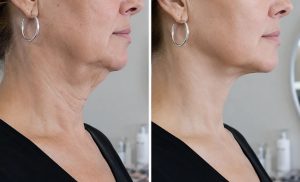

A facelift’s results may start to naturally age, but the overall effect remains.
People who undergo a facelift rarely if ever want to look their age if it means losing their okay or attractive appearance that they once had. Instead, they want to “turn back the clock”, but then the patients are quite right to ask what will happen when that clock starts ticking again. A decade after surgery an individual’s face, it is estimated, will still look younger if the person had not gone through the procedure at all, but the condition will be different as the natural aging process will still go on anyway. At Lin Europe Clinic, we point out that a facelift gives a new face to your facial structure, but unfortunately, a facelift cannot stop time.
Most people who have had a facelift surgery report that even after ten years, they appear to have a more chiselled jawline and a smoother neck than their contemporaries. You are almost like those who kept the “head start” that the operation gave you. Yet, elements such as skin elasticity, gravity, and lifestyle choices take their toll eventually. This article discusses the changes in the physical aspect of the body that one can anticipate ten years later and the measures that one can take to maintain the appearance of their rejuvenated state.
The “Reset Clock” Concept
A facelift is often described as if the doctor’s scalpel can turn you back in time 10 to 15 years. So instead of aging 10 years after a facelift and the perception of aging based on the way the face looks will create the illusion that only 5 years have gone by or in some cases even less, which means that a person who looks 50 when he is 60 will still look 60 at 70 and not 70. You thus continue to age starting from this new younger level. It is not like you overnight go back to your old self and lose the face and benefits that you had before the operation. The benefits simply “grow old” with you.
The changes in the structure of the skin if we list down the most important such as the repositioning of the SMAS (layer of the muscle) is what surgery is mainly about, so it is the first thing that remains forever. Your cheek and neck muscles will still be elevated as differentiated from their non-surgical condition. However, the skin that covers those structures contains less collagen after a decade. It might be the case that you see fine lines coming back or your jawline becoming less sharp, but at any rate, the extreme sagging will have been significantly reduced.
Longevity Differences: Deep Plane vs. SMAS
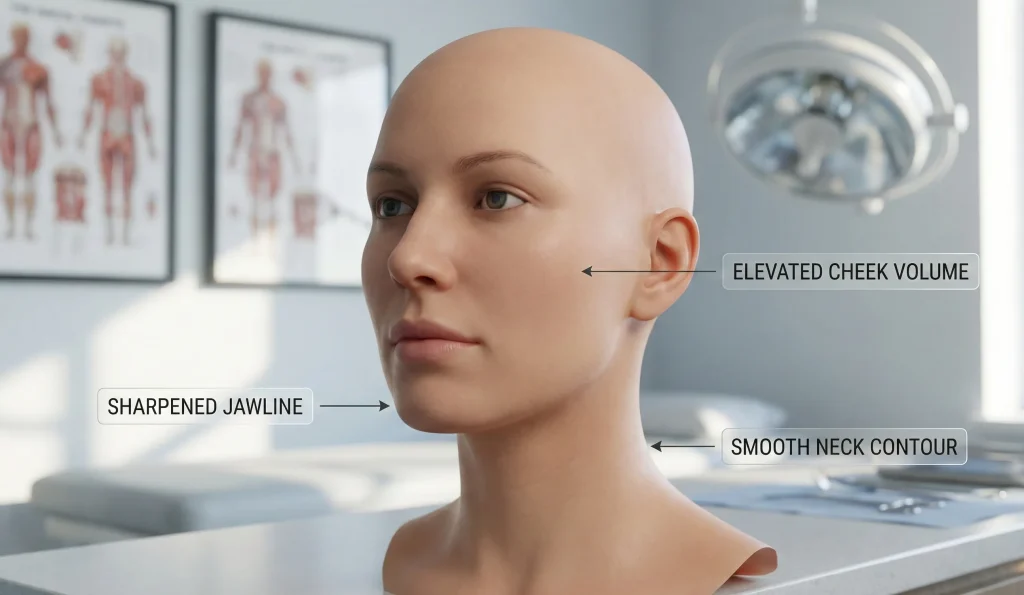
The extent to which you look good and young after 10 years depends largely on what was used during your first facelift operation. It is Deep Plane Facelift that releases and repositions the facial ligaments, thus great result and durability can be expected from this type of facelift. Ten years later, patients with deep plane lifts often retain excellent mid-face volume and jawline definition. This is because the face’s structural base that has been changed and fixed, physically, remains strong.
If you are one of those who went for a SMAS plication (or folding) or a skin-only lift, then in a decade’s time, you may see a great degree of relaxation. Such methods depend more on tension, which the tissues subconsciously give way to over time. It may become apparent to you that the “jowls” have started to return a little bit, but this does not mean that the surgery was not successful: it simply indicates that the less invasive procedure naturally does not last as long.
Skin Quality and Elasticity Changes
Despite the fact that the muscles below might be still in good shape and compact, your skin quality will definitely have gone through alterations within the next ten years. The transition of menopause, the ill effects of sunlight exposure, and hereditary factors combine against the skin and diminish its ability to bounce back. You are probably going to get vertical lip wrinkles, wrinkles at the outer corners of the eyes, or the skin on the neck becoming very thin and fragile. It takes a facelift to give a person’s skin a lift, but that very facelift cannot modify the biological properties of the skin.
Therefore, a lot of people at Lin Europe Clinic decide to add non-surgical treatments to their programme at the time of this decade. Laser resurfacing, chemical peels, and top quality skincare products are used to keep collagen production going. Those patients who do not take good care of their skin often feel the need for a “refresh” at an earlier time than those who protect their skin from the harmful effects of the sun and keep it well moisturized.
Weight Fluctuations and Volume Loss
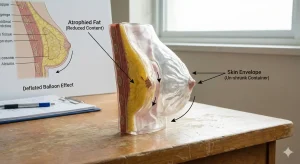
Among the things that will change the most for you in ten years’ time is the amount of your face volume. The normal course of events leading from getting older one of the most common characteristics of old age is the loss of fat in the face, making the face appear gaunt and bony. It is a fact that your skin may be firm, but if you lose volume, then you will look old as a result. On the other hand, if you have had a considerable increase in weight, then the skin gets stretched and the surgical outcome is altered.
If you want your facelift to last trip the binding force of stable body weight. Notice that hollowness ten years later does not mean you necessarily require another facelift. Most of the time it is enough to restore the youthful look by using fat grafting or fillers. In other words, we meet a lot of patients who were operated on for a facelift but now only require volume replacement for their revitalized results and not another scalpel operation.
Is a Secondary Facelift Necessary?
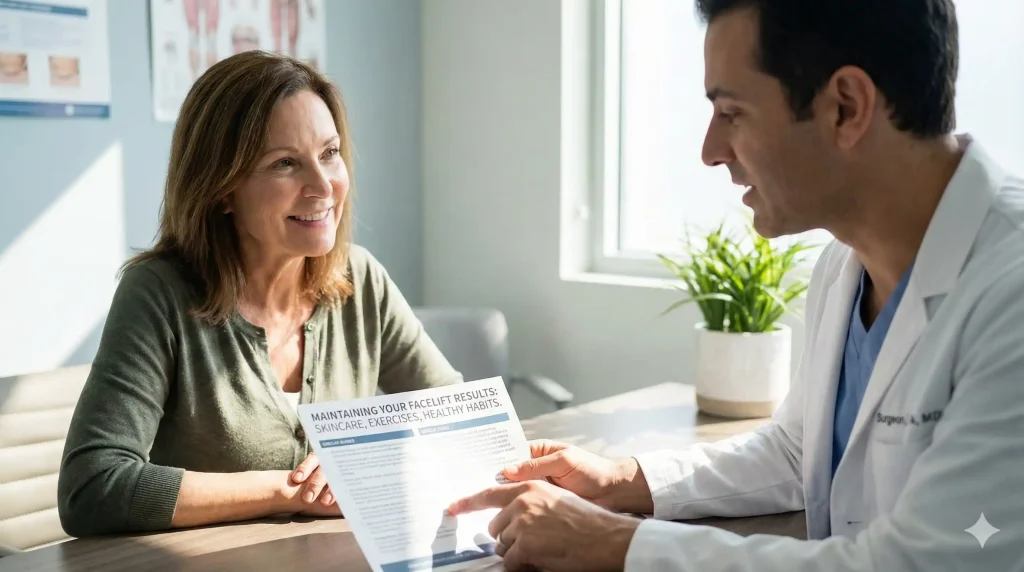
Some people at approximately the ten years mark wonder if they can get by with a “tuck-up” procedure or a secondary facelift. The matter is that they have to decide this by themselves, considering in the first place how much the returning signs of aging are bothering them. Usually, the operation of the secondary facelift is a minor procedure compared to that of the first occasion. The surgeon’s task after a heavy lifting procedure is basically just to tighten the skin and do a little refreshing of the SMAS layer, so the necessary work in the secondary facelift is minimal.
If performed by an expert, a secondary facelift is a very safe procedure with a good outcome. Recovery time is usually shorter as less dissection is needed. Lin Europe Clinic will assess your facial characteristics and determine whether a surgical revision is the most suitable way or if you can get the desired rejuvenation with less invasive methods such as threads or energy-based devices.
Facelift in Turkey
Turkey remains the premier destination for high-quality facial rejuvenation, offering world-class expertise for both primary and secondary facelifts. Lin Europe Clinic in Istanbul specializes in long-lasting techniques like the Deep Plane Facelift, ensuring your investment stands the test of time. We understand that you want to look good not just for a year, but for a decade.
We combine surgical precision with a comprehensive aftercare plan. Lin Europe Clinic is more than just a medical facility; we are your partner in aging gracefully. Our luxury medical experience includes VIP transfers, 5-star hotel accommodation, and everything you need to recover in style. Let the hands of our talented surgeons in Istanbul, where beauty meets longevity, be your confidence keeper for the years ahead.
Frequently Asked Questions About Long-Term Facelift Results
It is normal to experience some signs of aging 10 years after the facelift. The good news is that resurfacing surgery has undoubtedly kept the loss of time at bay. The longevity of the surgical rejuvenation is maintained if the patient does not suffer from causes of skin loosening such as obesity or sun exposure.
Facelift is not a procedure that you are supposed to undergo repeatedly. It is the procedure that aims at correcting the still aging face turning back the clock on your face. However, as you mature further, you might have a desire for another facelift in order to keep on looking young.
In fact, the deep plane facelift combines the advantages of a deep and a superficial facelift. The scarring is minimal and the results are long-lasting and natural. The operation lasts about two hours and the patient can go home the same day.
The normal aging process results in the sagging of facial skin. Facelifting, however, restores the youthful facial contours and the area will look better than before surgery for many years, usually at least 10.
The answer is, normally, that the recovery time for a secondary facelift will likely be shorter and less discomforting than a primary one. However, the operative details or the surgical plan may be more complex in some patients, especially where the surgeries are fairly close to one another, and in this case, the recovery time may be longer and more troublesome.
Hamra, S. T. (2002). Composite Rhytidectomy. Quality Medical Publishing.
Jacono, A. A. (2021). The Park Avenue Face: Secrets and Tips from a Top Facial Plastic Surgeon. BenBella Books.
Mendelson, B. C. (2013). Facelift anatomy, SMAS, retaining ligaments and spaces. Aesthetic Plastic Surgery, 37(6), 1215-1217.
Rohrich, R. J., & Sinno, S. (2016). The aging face: Facial aesthetic analysis. Plastic and Reconstructive Surgery, 137(1), 164-167.
Stuzin, J. M. (2008). Restoring facial shape in face lifting: The role of skeletal support and deep layer soft tissue. Plastic and Reconstructive Surgery, 121(1), 1-12.