
It includes severe pain, swelling, or unusual drainage.
A tummy tuck sometimes referred to as an abdominoplasty, is a procedure to drastically change the look of your body by cutting off the extra skin and fat and also by tightening the muscles. Tummy tucks are frequently the result of a reshaping journey due to either huge weight loss or a “mommy makeover” after pregnancy. However, just like any major surgery, it is very necessary to closely monitor the time and days after the surgery for any unfavorable developments. Most of the recovery periods are successful and without any problems, but being aware of the signs and knowing them can be a great help in steering clear of relapses and achieving the best outcome.
After a tummy tuck operation, your body is not allowed to overwork or do strenuous activities as it needs time to heal. The first few days see some pain, swelling, and bruising which are all part of the normal healing process. But there are also those situations where the signs may point at some serious health problems. Knowing the symptoms raises and calling your doctor immediately is the only way a recovery can be considered safe. Having the insight into which signs to be on the lookout for enables one to recognize infection, blood clots, or wound complications at an early stage thereby prevent them from becoming severe. That information is a source of power because it urges one to make an appointment with his/her doctor and take that step toward a smooth recovery and optimal results.
What is a Tummy Tuck and How Does Recovery Work?
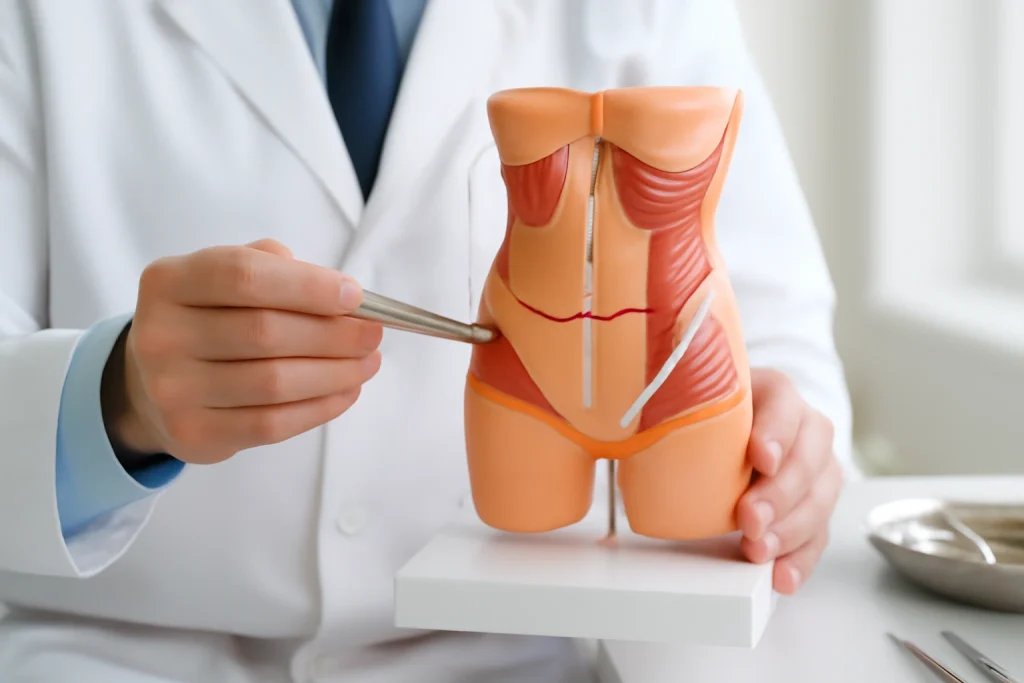
A tummy tuck (abdominoplasty) is a surgical intervention enabling the practitioner to radically achieve the goal of getting rid of the excessive skin and fat from the stomach area together with tightening the belly muscles. This plastic surgery is the most common way out for those who had a massive weight loss or women after childbirth whose bodies have changed. A tummy tuck will most likely lead to the eventual shape and tone of the belly being improved where the skin becomes smooth and tight thus looking younger which in turn leads to higher self-esteem and body confidence.
The recuperation from a tummy tuck is a must series of events that demand the person’s attention and the following of the surgeon’s after-surgery instructions. Directly after the operation, the patient will be in some pain and notice swelling and bruising which are all parts of the normal healing process. The swelling will go down slowly during the following weeks, and the results might take from several weeks to a few months. You are advised to put on a compression garment all through this time since it will not only help decrease the swelling but also provide support to the muscles and skin that have been tightened. Apart from that, heavy lifting or any form of vigorous exercise should be avoided for at least six weeks for proper recovery to take place. Thus, the patient ensures a smooth and efficient recovery by abiding by the doctor’s injunctions.
Common Warning Signs After a Tummy Tuck
Most patients after a tummy tuck will feel a degree of pain, but it is very important to understand and distinctly see when the discomfort has been caused by something wrong. One of the very frequent problems with which the patients are faced is their swelling going to an extreme or being aggravated and likewise happening to the first three days after the operation. Although swelling is a natural occurrence, it should get less and less with passing time. In case the swelling is vastly increased or the area is painful, this may be a sign of liquid accumulation, a hematoma, or an infection.
Besides that, the matter of pain is very important as well. If to some extent pain may be expected, however, an increment of it accompanied by the sudden sharpness and severity may be an indication of the development of complications. It is important to make a distinction between the pains caused by the normal healing process and the ones that are most likely associated with complications. The incision sites should be closely looked at for any changes. Around the wounds, redness is normal, but if it gets very intense, the infection may be at its early stage. Any secretion or drainage from the wound that is yellow, green, or is of an unpleasant smell should be checked immediately by your surgeon as it might be an infection that needs medical intervention. You should contact your surgeon if any of these warning signs accompany your symptoms so that he/she can prevent the situation from worsening.
Serious Complications to Watch for After Surgery

After a tummy tuck, in addition to the most uncommon incidences, at least one potentially dangerous situation is conceivable that is a hematoma, i.e., the accumulation of blood under the skin that may causes pain, swelling, and a lump that is hard. Usually, when hematomas are not resolving and are bothering, they have to be drained. In case you see that the swelling has increased to a great extent or that the area where the procedure was done has a hard lump, this might be indicating a hematoma. For checking, you ought to call your doctor right away.
An infection is another serious issue. In theory, all surgical procedures are connected with a certain risk of infection, but the probability is quite low if proper care is given. Therefore, signs of infection include excessive redness, swelling, and warmth of the surgical site, and if a person gets a fever. If the infection symptoms are not taken care of promptly, the microorganisms can spread quickly and thus make healing difficult and even dangerous. Deep vein thrombosis (DVT) defines the development of blood clots in the deep veins, most typically in the legs, and a scenario that can deteriorate following an operation if the patient is immobile, thus sitting or lying down for a long period. This leads to swelling, redness, and pain and in case the issue is dismissed and left untreated, the patient may experience a pulmonary embolism which is a condition when the clot interrupts a vessel in the lungs. Hence, it is utmost important to go to a doctor without delay if someone feels that he/she may have DVT.
How to Respond to Warning Signs During Recovery
Tummy tuck recovery problems or disorders signs, if that is the case timely response is of utmost importance in order to prevent escalation of the problems. Step one should be to get in touch with your operating surgeon at all times. They will be in the position to evaluate and give you an advice besides issuing instructions for the next steps. For instance, he/she may require you to come to the clinic if you see the wound is not healing normally or if the pain getting worse significantly.
Besides contacting the doctor, you are still expected to keep up with the rest of the instructions given after the operation. For instance, the doctor may recommend different methods of reducing the swelling apart from the compression garment like pain relief medication if you are going through it. Moreover, shortness of breath, chest pain, and heavy bleeding are symptoms that deserve and urgent and emergency treatment after which hospital care is needed immediately.
How to Prevent Complications During Tummy Tuck Recovery

Although you cannot always avert a complication, you can take different measures so that the risk is minimal and a smooth recovery is likely. To begin with it is very important to comply with your surgeon’s instructions after the operation. This comprises such things as wearing the compression garments as advised so as to not only alleviate the swelling but also stabilize the abdominal region, taking medication as prescribed to relieve pain and prevent infection, and staying away from any activities that put too much pressure on the part of the body where the surgery has been performed. These activities are lifting heavy objects, repetitive bending over, or engaging in any strenuous exercise.
Along with the doctor’s instruction, live a healthy life during your convalescence and it will do wonders for your healing process. A balanced diet full of vitamins and minerals is very important because it makes the body able to regenerate tissues and take care of itself in the period of convalescence. Drinking sufficient water is equally important as it is responsible for maintaining the skin’s elasticity, allowing for better blood circulation and thus integrating the body’s natural healing systems. In case you are a smoker, you must quit during the period of your recovery. Smoking limits blood flow and thus it slows down the process of healing while at the same time it increases the probability of different kinds of complications. Lastly but not least, undergoing follow-up with the surgeon is extremely important as it helps keep progress under close view and any problems can be dealt with in the early stages.
References
- American Society of Plastic Surgeons. (n.d.). Tummy Tuck (Abdominoplasty). Retrieved from https://www.plasticsurgery.org
- Poon, E. (2020). Postoperative care and recovery after a tummy tuck. Aesthetic Surgery Journal, 40(4), 421–429.
- Jones, S., & Davis, R. (2019). Complications of abdominoplasty and their prevention. Journal of Plastic, Reconstructive & Aesthetic Surgery, 72(8), 1295-1303.
- Khan, Z., & Raza, S. (2018). Post-operative care for abdominal surgeries: Strategies to enhance recovery. Surgical Review, 56(2), 133-140.
Frequently Asked Questions About Tummy Tuck Warning Signs
The most common warning signs include excessive swelling, increasing pain, redness around the incision sites, fever, and unusual drainage or discharge from the wound. If any of these symptoms occur, contact your surgeon immediately.
If you notice symptoms like sharp pain, worsening swelling, or signs of infection, reach out to your surgeon immediately. Early intervention can prevent further complications and improve your recovery outcome.
To minimize complications, follow your surgeon’s aftercare instructions closely, stay hydrated, maintain a healthy diet, avoid smoking, and attend follow-up appointments as scheduled.
Signs of infection include fever, swelling, redness around the incision, and drainage of pus or an unusual odor from the surgical site. If any of these signs are present, seek medical attention promptly.
You should contact your doctor if you experience excessive pain, swelling that does not improve, signs of infection, or changes in the appearance of your incisions. Prompt communication with your healthcare provider is essential.