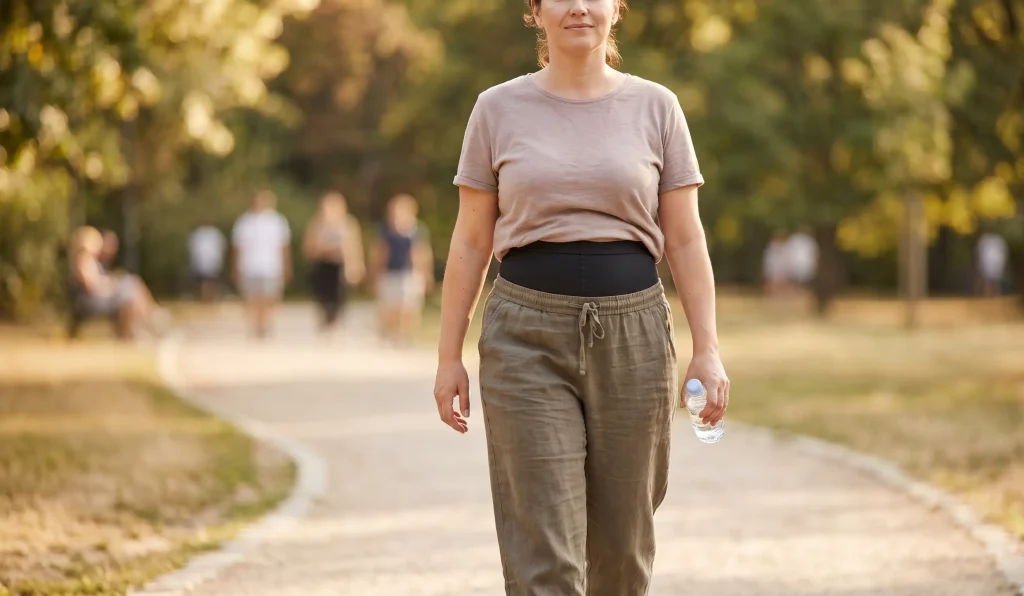
Yes, walking improves circulation and reduces swelling.
The Biometrics of Movement as a Biological Engine
In the specialized discipline of body contouring, the postoperative phase is frequently seen as a period for complete immobility. However, from a biometric standpoint, walking is the fundamental “biological engine” that facilitates the resolution of edema (swelling). When a surgeon performs high-definition liposuction, the interruption of the subcutaneous space leads to a local inflammatory response, resulting in fluid accumulation. Walking helps activate the vascular system, thus the fluid does not become stagnant and localized.
At Lin Health Europe Clinic, we consider early ambulation not as an option but as a clinical necessity for systemic vitality. Stagnant fluid is the enemy of structural harmony; if it is not controlled, it may even cause the formation of seromas or uneven tissue maturation. By having light and frequent walks, you are signaling the body’s natural filtration systems to begin the challenging task of eliminating surgical byproducts. Our clinical mastery in Istanbul makes sure that patients know that “rest” should be active, and healing happens through movement instead of in spite of it.
The Lymphatic Pump and Systemic Vitality
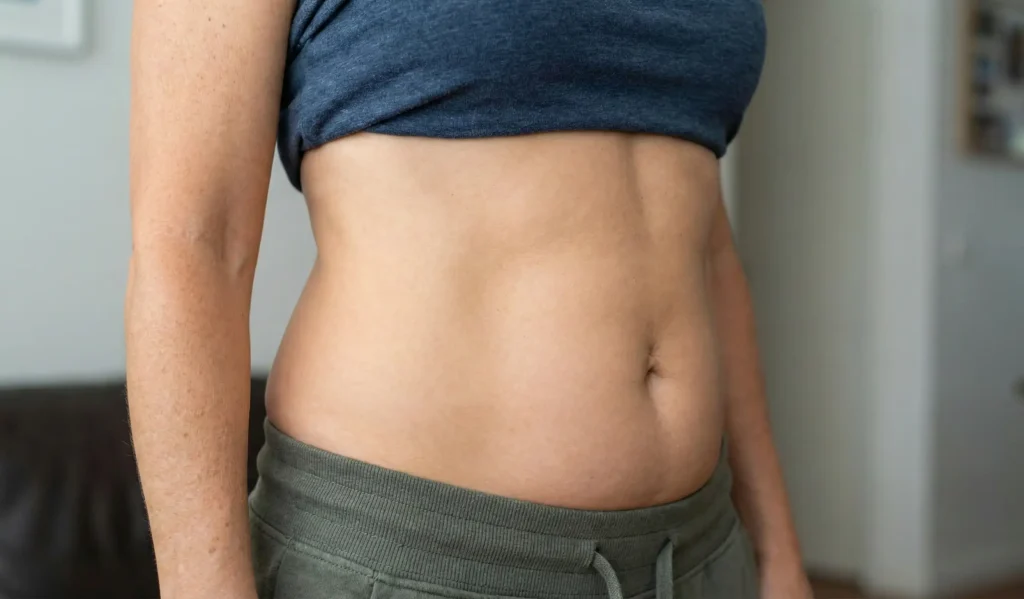
Unlike the cardiovascular system, the lymphatic system does not have a “heart” that pumps the lymph fluid. Therefore, muscle movements are the only way to move the lymph fluid inside its vessels. After surgical brilliance to the abdomen or limbs, this is especially important. During walking, the muscle contraction of the calves and the movement of the hip flexors work together as a mechanical pump. This “lymphatic pump” is nature’s best mechanism for managing edema, pushing the fluid toward the lymph nodes, where it is processed and eliminated.
At Lin Health Europe Clinic, we almost always promote movements and body activities to help patients avoid the congested feeling, which is very common during the first week after the operation. This is definitely not only about looks, it is also about systemic health. With improved circulation, the internal dermal matrix will receive oxygen-rich blood and all the necessary nutrients—it is a prerequisite for the skin to effectively “shrink-wrap” over the newly sculpted muscles. Without this mechanical stimulation, the healing process will be slower, and the high-definition details can stay hidden under a layer of persistent swelling for a prolonged period of time.
Structural Harmony: Preventing Fluid Stagnation and DVT
Walking is an essential and simple, easy-to-perform defense tool against the biggest biometric risks of surgery, namely Deep Vein Thrombosis (DVT) and pulmonary embolism. From a clinical point of view, professional rigor means that blood flow must be maintained to avoid “stasis”—the slowing of blood in the veins. Aside from safety, walking also keeps you from having fluid “pool” in your feet or other dependent areas. Gravity cannot be fought, so if you stay down and zoned out for too long, fluid will find its way to the lowest living parts of your body, and these are the areas where you will have (most of the time) “hard” areas or localized discomfort.
Getting to a state of structural harmony is all about the body healing as one, a symmetrical and unified unit. At Lin Health Europe Clinic, we combine medical innovation in compression therapy with walking guidelines to “push” the fluid toward the center of the body. This double way guarantees that the swelling gets redistributed and absorbed smoothly. Our Istanbul premises feature daily checking of the skin “snap-back”, and it is a regular occurrence for us to see that patients who stick to the “walking protocol” experience a quicker acquisition of a smoother, more refined silhouette than those who are more inactive.
Professional Rigor: Distinguishing Walking From Overexertion

Walking is a must for a successful recovery; however, it should be handled thoughtfully, i.e., with professional care. There is a clear biometric distinction between “walking for circulation” and “exercise for cardio”. At the beginning of the 14 days, your heart rate and blood pressure must be kept normal (stable). Increasing the blood pressure will cause the “vasodilation” phenomenon, and as a result, there will actually be more fluid leaking into the tissues, which in turn may lead to the formation of hematomas or swelling, which is totally opposite to what we want.
As part of our clinical mastery, we guide patients to do the “recovery stroll”, which only consists of small walks, 5 to 10 minutes, within your hotel or the flat areas of our Istanbul sanctuary every couple of hours. This much activity is sufficient to turn on the lymphatic pump without stressing the systemic vitality of the organism. We show professional rigor in recommending against the hilly parts of Istanbul during the first week because the goal is consistency and frequency, not distance or intensity. So, the technical correctness of the pacing protects the surgical brilliance of your procedure.
Liposuction in Turkey
Going to Lin Health Europe Clinic is like entering a world-class sanctuary where each step of the journey is tailored to give you the very best results. Since our surgeries are mostly for international clients, we know that the recovery is a very important part of the journey and that it is just as important as the surgery itself. We will take care of each and every biological and mechanical detail of your healing process with clinical mastery so that, if possible, your transition to a high-definition silhouette is a smooth one without any issues.
By selecting Lin Health Europe Clinic, you are entrusting your health completely to a medical system that is excellent at the combination of medical innovation and patient care. We make it possible for you to have at your disposal the necessary tools, garments, and high-definition instructions for you to convert your recovery into a period of active metamorphosis. Come and enjoy the advanced care at Lin Health Europe and be proud of the results, which you will consider a biologically perfect balance. Your road to the refined and vibrant self is certainly taken in the heart of Turkey with complete precision, which ensures your structural harmony for life.
FAQ:
Absolutely, it is probably the most effective natural method of lowering swelling. The activity of walking triggers the lymphatic pumping, which is essential for getting the surgical liquids from the areas where the liposuction was performed and moving them into the general circulation.
You must start quite soon even a few hours after the procedure. Our clinical mastery team in Istanbul will assist you in taking your very first steps to ensure that your systemic vitality is stable before you begin the regular short walks.
If you walk too fast or for a very long time, the raise of blood pressure might actually cause a further inflammatory reaction. We are very stringent in recommending frequent but very short and slow walks for maintaining the structural harmony.
Walk slowly and choose flat terrains. Use a “pacing” method–walk for 5 minutes after every 2 hours rather than doing one single 30-minute walk. The constant engagement of the lymphatic system is the result of this.
When you are not moving, the fluid gets stagnated and under the effect of gravity, it gathers in your midsection or in your lower limbs. This produces the “heavy” feeling and can also hamper the maturation of your high-definition results.
Tebbetts, J. B. (2002). Systemic Vitality and Surgical Precision in Body Contouring. Saunders Elsevier.
Hoyos, A. E., and Millard, J. A. (2007). VASER-Assisted High-Definition Lipoplasty: Clinical Mastery and Recovery Biometrics. Aesthetic Surgery Journal.
Janis, J. E., et al. (2005). Abdominal Anatomy and Biometrics: Implications for Post-Operative Ambulation. Plastic and Reconstructive Surgery.
Nahai, F. (2011). The Art of Aesthetic Surgery: Principles and Professional Rigor in Recovery. Quality Medical Publishing.
Matarasso, A. (1991). Liposuction Recovery: High-Definition Surgical Technique and the Mechanical Pump. Clinics in Plastic Surgery.