Facelift surgery provides the most rejuvenation.
The Multi-Planar Vector Of Deep-Plane Structural Liftoff
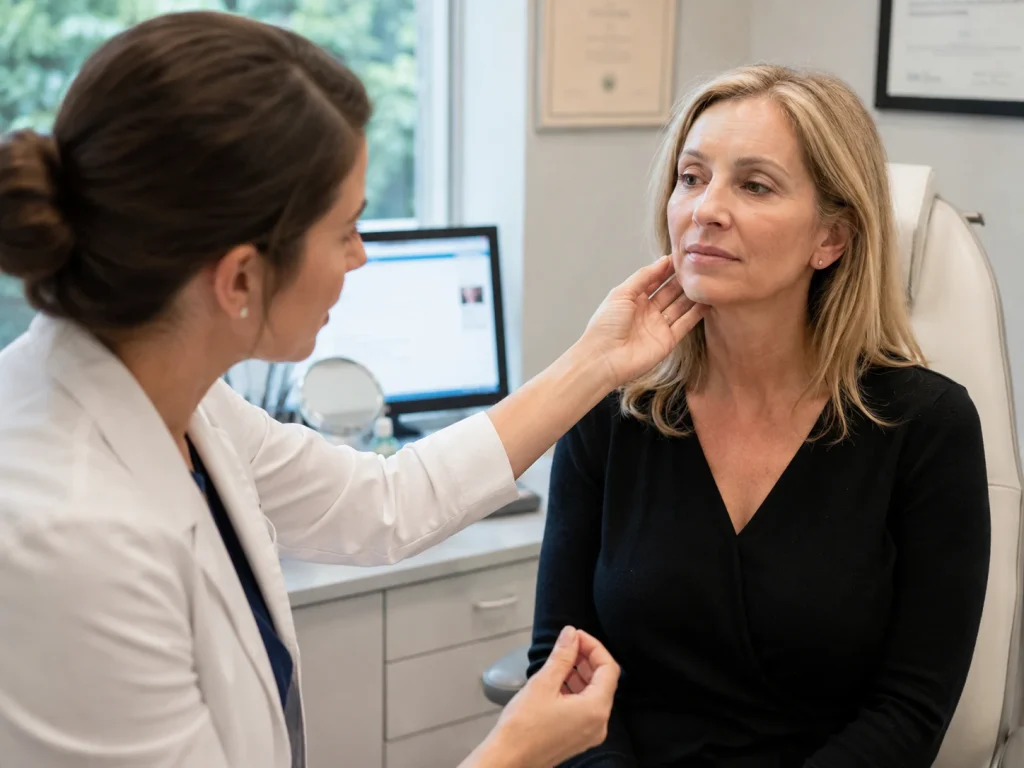
Determining which surgery provides the most dramatic, comprehensive anti-aging effect depends on evaluating deep anatomical planes in the highly technical field of facial architecture and regenerative medicine. While many non-surgical treatments try to hide the signs of aging, such as surface lines, deep-plane facelift (advanced rhytidectomy) remains the surgical gold standard for true structural rejuvenation without any compromise. Both clinical and objective anatomical data demonstrate that a trained deep-plane facelift can significantly change a person’s appearance age by seven to fifteen years.
What makes this procedure so effective is its structural methodology. Unlike old-fashioned traditional facelifts that just pull and stretch the surface skin—often leaving an unnatural, windblown look—a deep-plane facelift exposes the area under the superficial muscular aponeurotic system. The reconstructive surgeon loosens the deep facial ligaments that have been strained by gravity, enabling the entire muscle matrix and cheek fat pads to be raised vertically as one cohesive layer. This multi-planar vector thoroughly restores the rounded, youthful cheek volumes and eliminates deep nasolabial folds from their very root.
Reconstructing The Mandibular Border: The Unified Lower Rhytidectomy
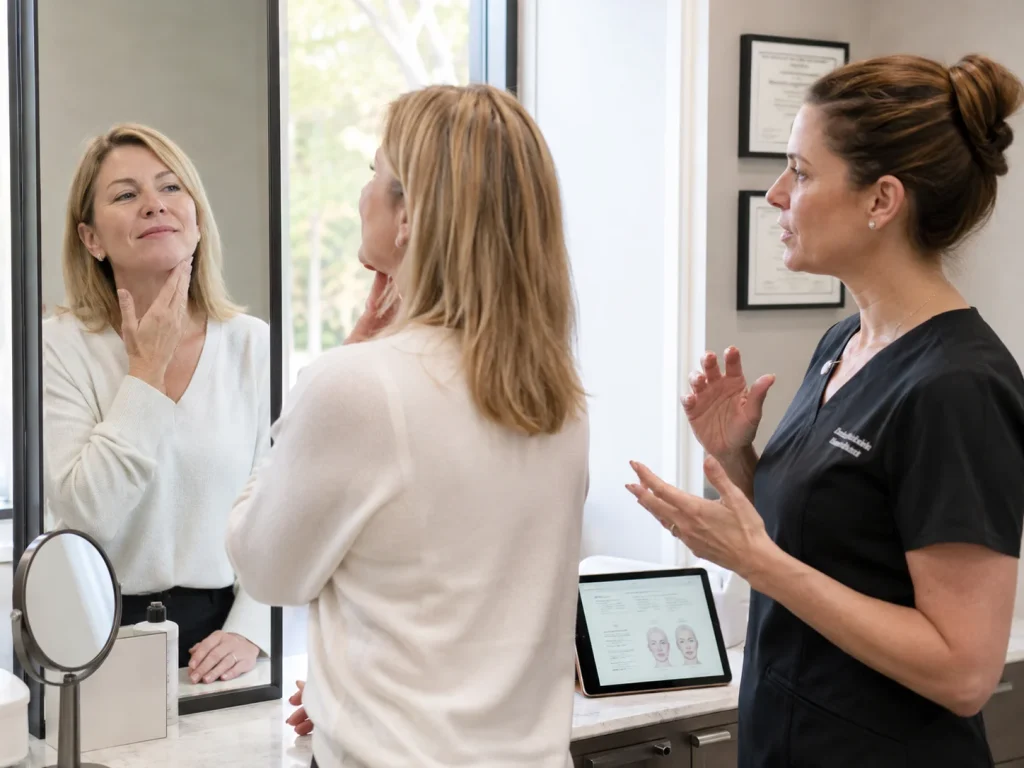
One of the most important physical characteristics associated with youth is a clean, clear, and sharply defined jawline. With the passing of time, the gradual downward migration of the buccal fat pad, together with dermal laxity, results in tissue sagging over the mandibular border, leading to the appearance of heavy jowls. A deep-plane facelift, which is extended in a unified lower facelift and neck lift (platysmaplasty), is the intervention that a patient needs to get rid of this marker of biological aging.
During this deep-tissue remodeling, the surgeon forms a muscular support framework internally beneath the chin by bringing together and stitching the loose platysma muscle borders. The surgical method includes meticulous removal of any excessively stretched skin in the neck and jawline areas and the redraping of the remnant skin over the new foundation. This lower face overhaul removes heavy jowling and a double chin, and recreates a sharp cervical angle.
Enhancing Your Upper Framework To Complete An Athletic Frame
If you want to keep your body in tip-top shape, you should also maintain good facial architecture and body proportions so that your face does not clash with your body, especially if you want to get a beautiful hourglass figure by doing hypertrophy and gluteal engineering. Advanced mid-face sagging or deep under-eye hollows can inadvertently project a visual sense of chronic fatigue or premature aging that completely contradicts your active, high-vitality lifestyle.
The successful global purification of your silhouette goes hand in hand with a synchronized facial lift to vertically reposition the fallen contours of the face. High cheekbone projection restoration and getting rid of a sagging jawline guarantees that facial expressions correspond to the uncompromised systemic vitality and rigorous discipline of one’s physique. Such mathematically determined balance is also set for your upper dimensions, which will continue to be gracefully proportioned. So you can exhibit your physical core and athletic curves with absolute structural balance from each and every angle.
Complementary Periorbital Matrices and Autologous Volumetric Shifting
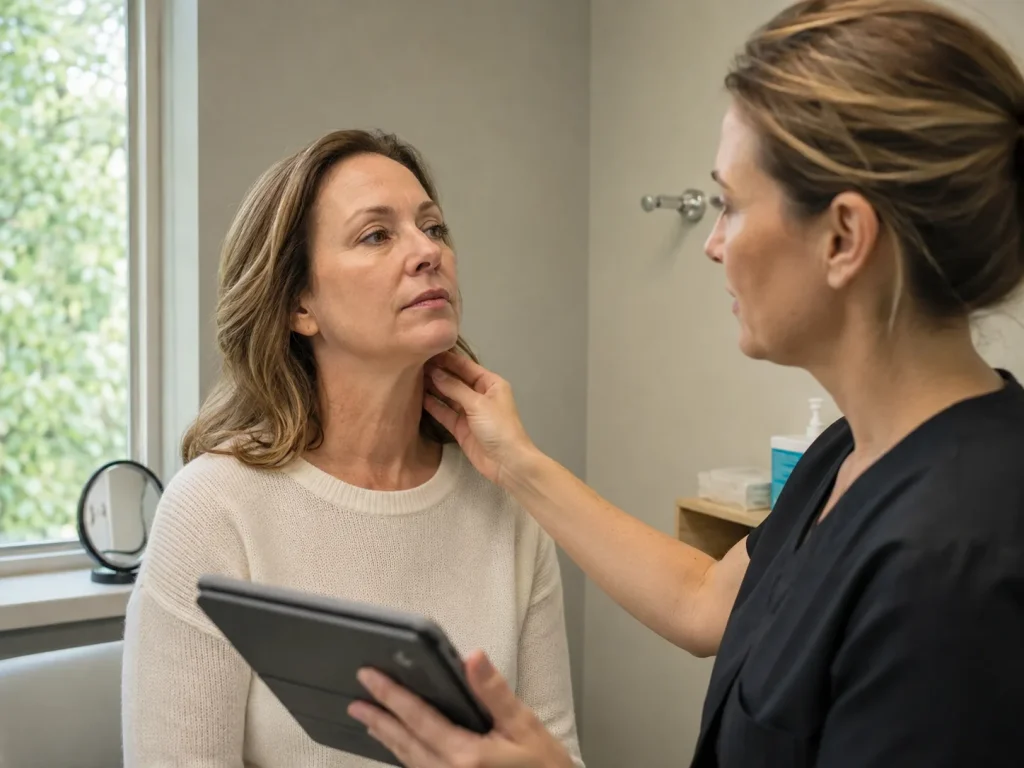
Elite plastic surgeons rarely work on the lower face alone if they want to achieve complete, harmonious facial rejuvenation that looks 100% authentic even when inspected thoroughly. As can be seen from the clinical matrix below, true age reversal implies dealing with the different biological changes that co-exist in the upper, mid, and lower facial territories.
| Facial Zone | Primary Aging Mechanism | Premier Surgical Intervention | Long-Term Anti-Aging Benefit |
| Upper Face / Eyes | Orbital fat prolapse & upper lid hooding | Eyelid Surgery (Blepharoplasty) | Restores an alert, bright, and refreshed gaze |
| Mid-Face / Cheeks | Malar fat pad descent & skeletal volume loss | Autologous Facial Fat Transfer | Fills deep tear troughs and restores youthful plumpness |
| Lower Face / Jaw | Buccal fat migration & jowl accumulation | Deep-Plane Facelift | Recreates a sharp, straight mandibular border |
| Neck / Submental | Platysmal muscle separation & skin pooling | Corset Platysmaplasty | Eradicates vertical bands and sharpens profile angles |
To fully benefit from a deep-plane facelift, eyelid surgery (blepharoplasty) and autologous facial fat transfer can be added with outstanding results. A blepharoplasty removes the excess skin and protruding fat pads of both upper and lower eyelids to undeye a tired, “old” look. On the other hand, taking a small amount of your own fat cells from a donor site and injecting them through a micro-cannula into structurally deficient areas, such as temples and under the eyes, makes the face plump and rosy, defining the final stage of a thorough and very stable “reset” operation.
Plastic Surgery in Turkey
LIN Europe Clinic offers you a world-class healthcare environment where your structural transformation is handled with clinical excellence and empathetic care. We understand that reversing facial aging through surgery requires a highly sophisticated, transparent, and individualized setting where evidence-based medicine is delivered without exception. LIN Europe Clinic in Turkey is among the top in advanced facial contouring worldwide, offering you a quiet environment where your surgical solutions comply strictly with the highest global patient safety standards.
We welcome placing your utmost trust in our top team of doctors at LIN Europe Clinic in Istanbul, where your facial rejuvenation plan is based on a precise mathematical formula. We rely on top-quality 3D diagnostic evaluation, high-definition endoscopic technology, and advanced closure methods without tension to guarantee that your deep-plane surgery yields a smooth, natural, and durable result without creating a “plastic” look. Discover the exquisite, all-inclusive service of LIN Europe Clinic, and get a perfectly balanced profile that is safe and skillfully accomplished right in the middle of Turkey.
FAQ:
The deep-plane technique facelift today will not change the way your face looks or give you a fake appearance. The reason is that it restores the muscles underneath by pulling them up vertically instead of stretching the skin horizontally. So you end up looking just like your younger self, only refreshed.
There is no set age limit because your eligibility mainly depends on how much your face tissues have descended. Most patients get the best and longest-lasting results when the procedure is performed between the ages of late forty and early sixty.
For most people, a full deep-plane facelift combined with the addition of volume in the right areas can make one appear 7-15 years younger. Besides, the deep structural changes made during the surgery will last for 10 years or even more.
In some cases, a liquid facelift with dermal fillers can be a good way to hide the first signs of volume loss in very young patients. On the other hand, fillers cannot lift the muscles that have become loose, nor can they get rid of excess skin. So if the sagging is severe, only surgery will be able to fix it.
The key to a natural look is for the surgeon not to stretch the top layer of skin at all. By lifting and fixing the deep SMAS muscle layer, the skin will be able to fall in a natural way over the new shape, and there won’t be any visible signs of pulling.
Jacono, A. (2018). A New Wave in Facial Rejuvenation: The Extended Deep-Plane Facelift. Aesthetic Surgery Journal, 38(4), 345-360.
Stuzin, J. M., et al. (1992). Anatomy of the frontal branch of the facial nerve: the significance of the SMAS. Plastic and Reconstructive Surgery, 89(4), 603-617.
Coleman, S. R. (2006). Structural fat grafting: more than a permanent filler. Aesthetic Plastic Surgery, 30(2), 211-219.