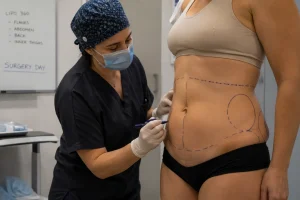
Stop smoking and follow preoperative instructions.
Pre-Operative Breast Structure Evaluation and Screening
Executing a successful breast reduction (reduction mammoplasty) in plastic and reconstructive surgery requires a thorough preoperative clinical evaluation. The first step lies in obtaining an accurate anatomical baseline by measuring the extent of glandular hypertrophy, tissue ptosis, and the length from the sternal notch to the nipple-areola complex (NAC). Since large tissue removal drastically changes systemic biomechanics, surgeons use these geometrical figures to define the right surgical approach, providing maximal flap viability and symmetry.
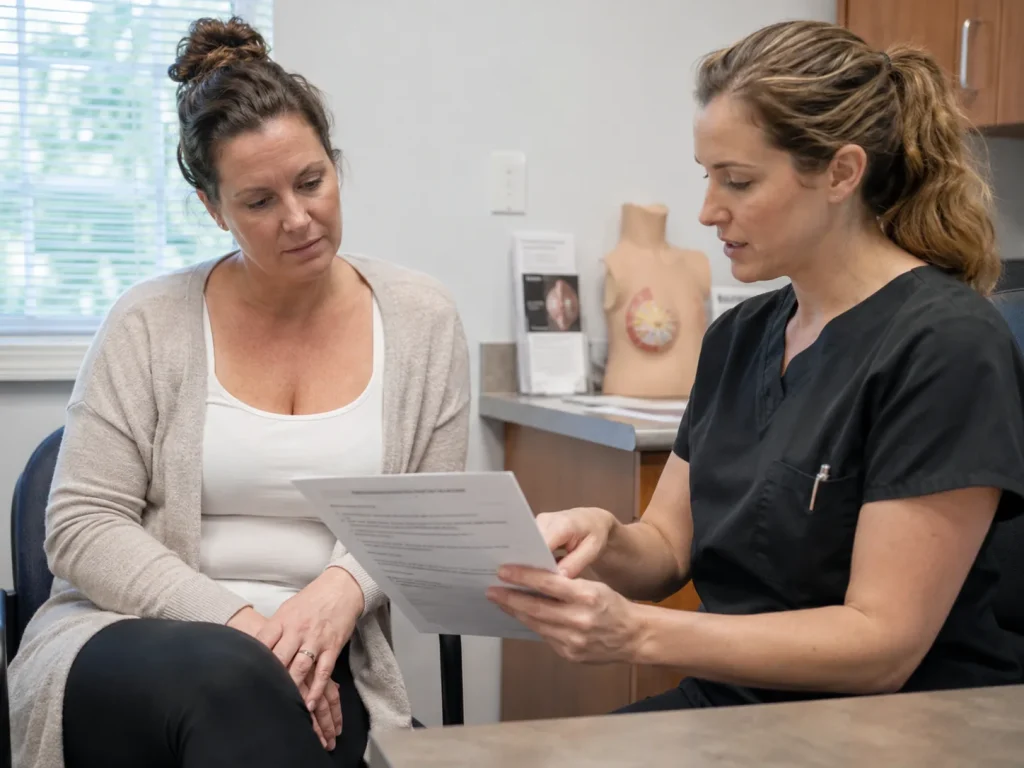
Besides physical measurements, strict diagnostic screens are essential to avoid risks before anesthesia administration. Elderly patients or those having a personal/familial history of breast diseases must go through a screening mammogram or ultrasound before the surgery. This excludes the presence of hidden pathologies, which could be treated before changing the tissue structure. Besides, a full blood count and biochemical analyses help to assess the state of patients for in- or outpatient surgical procedures.
Drug Detoxification and Systemic Hemostasis
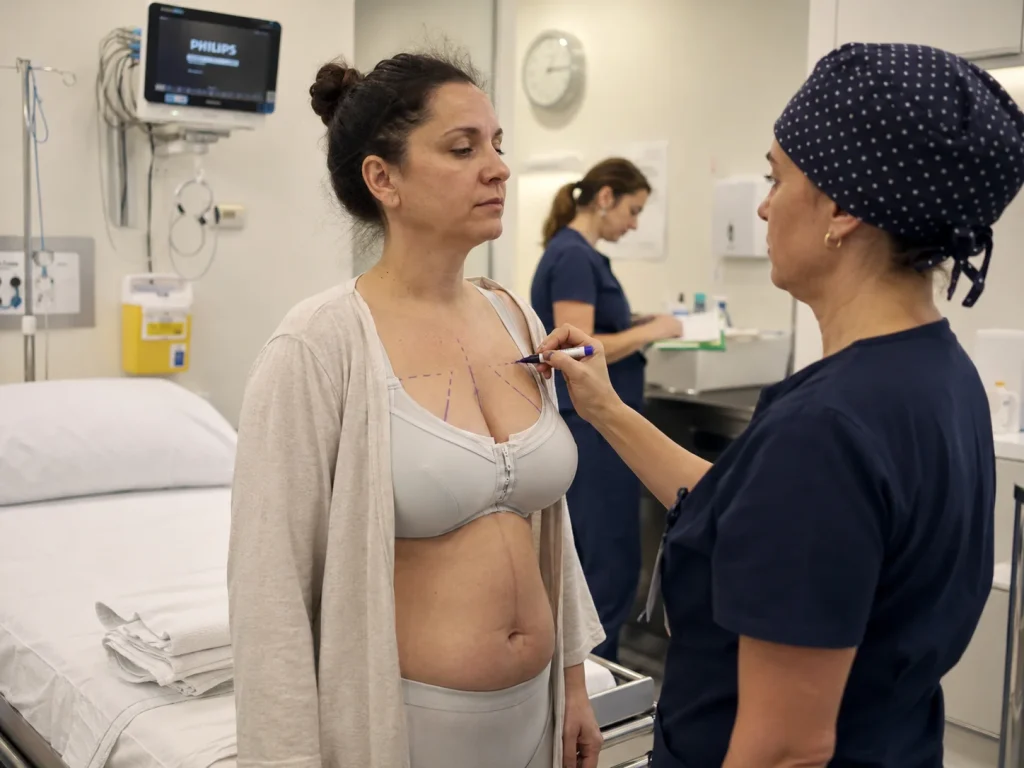
To ensure good intraoperative mechanics and avoid postoperative hematoma or excessive bleeding, patients have to follow a drug detox regimen for a few weeks before the intervention. Quite a few well-known drugs, supplements, and herbal preparations generally contain substances that lower blood clotting and platelet aggregation. The management of these chemical boundaries with exactitude is an indispensable part of safeguarding your vascular health.
Starting at least two weeks before operating day, patients have to stop using completely NSAID drugs like aspirin, ibuprofen, naproxen, etc. Besides, systemic nutritional supplements, such as vitamin E, omega-3 fatty acids (fish oil), ginkgo biloba, ginseng, and green tea extracts, should also be restricted due to their interfering effects on blood clotting, which can lead to micro-vascular bleeding during skin incisions. Whenever chronic illness medication is otherwise required, your surgical team will compute safe alternatives to keep your system perfectly stable.
Protecting Your Sculpted Silhouette
Observance of biochemical/lifestyle restrictions preoperatively is of utmost importance to persons who achieve and maintain an elite level of physical presentation and demand healing dynamics without any compromise. In fact, those who are disciplined and rigorously exert themselves in search of attaining a balanced, highly athletic body with a refined, well-proportioned torso gain from maximizing vascular kinetics as an essential measure for facilitating recovery progress. Obviously, practices that limit blood supply are biologically heavily penalized: the newly transposed nipple-areola complex and surrounding skin flaps get deprived of oxygen, which is a vital element, leading to significantly increased risks of delayed wound healing or tissue necrosis.
Here is the most important behavioral boundary that you have to implement and the absolute one: Nicotine and tobacco use should be totally stopped for the whole period of 4-6 weeks at least prior to the operation. Nicotine is one of the strongest systemic vasoconstrictors, which immediately causes micro-vessels to narrow and at the same time leads to a decrease of the very fragile capillary networks that are the main source of tissue regeneration. Also, you could nudge your preoperative diet with foods having a high content of protein and micronutrients while at the same time nourishing with essential vitamins and minerals. The underlying tissue milieu of your body will be adequately equipped with the fuel for repair, and your newly acquired, more slender figure could be able to metabolically operate at the highest level of efficiency from the start.
Pre-Operative Home Preparations Regarding Meals
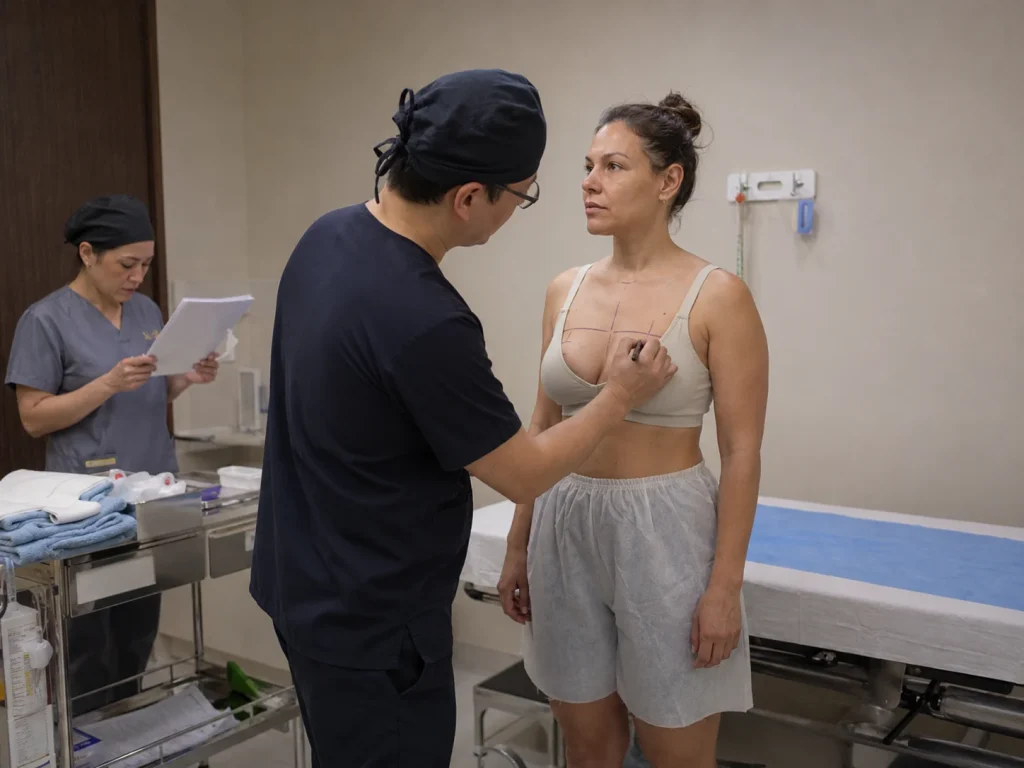
You can leverage beyond what you intake by preparing your physical surroundings and domestic space before going to the clinic, which gives you very effective mechanical tools to ease and speed up your postoperative period. The reduction of the breast leads to chest muscles and tissues getting quite damaged, which means that immediately after the operation, post-surgical mobility will definitely be very limited, especially raising arms, pushing heavy objects, reaching up to a height beyond the shoulder, etc., will be difficult, if not impossible, for you.
To lessen these restrictions, patients after breast reduction surgery have to make thorough changes to their home environment prior to the operation date by performing such tasks as placing daily necessities, kitchenware, medications, and loose-fitting clothing all at waist level so that there would be no need for stretching or reaching. Also, you have to buy post-surgical front-closure compression bras because the incisions’ healing can be further injured by the effects of gravity and movement. Finally, preparing a recovery sanctuary at home by keeping extra pillows in position to facilitate a sleeping arrangement of reclining at a forty-five-degree angle not only mechanically reduces postoperative swelling but also keeps you from rolling over accidentally in your sleep during the night.
Breast Reduction in Turkey
At LIN Europe Clinic, you get a one-stop global medical haven where your breast aesthetics, body transformations, and surgical routes are directed with absolute clinical proficiency and deep empathetic care. We understand that managing the complicated preparations and lifestyle changes after advanced surgery needs a highly sophisticated and supportive environment that is transparent and prioritizes evidence-based medicine at the same time. LIN Europe Clinic in Turkey is the most advanced breast reconstruction and body contouring center at the international level, providing a calm environment where your health roadmap is totally guided by the highest global patient safety standards.
Our team is composed of such committed specialists that, with your full trust, your preoperative status will be checked with perfect diagnostic accuracy at LIN Europe Clinic Istanbul. We offer dietary counseling, pharmacological examinations, and metabolic profiling to help you achieve your tissue maturation and lifestyle integration in a methodical manner. Our premier medical personnel guarantees that you will successfully preserve your body contouring and systemic health, together with your dream silhouette, thus allowing for a smooth transition with no regrets and worry. Embrace the elegant and all-round healthcare services at LIN Europe Clinic and realize a masterfully balanced physique, safely and expertly produced in the very center of Turkey.
FAQ:
Yes. Those who are plagued by physical pain, shoulder grooving, and posture problems caused by having very large breasts will find breast reduction an excellent way to solve these problems and get the body proportions which they will find very satisfactory from an aesthetic perspective as well.
In most cases the best age is simply any time after your breasts have fully developed, which is usually at the age of around 18 years. That being said, if the rest of your health conditions are quite good, it is perfectly possible to have the operation even at an old age.
The breast reduction surgery usually is performed under a general anesthesia, and the time spent ranges from 2 to 4 hours. The factors influencing the length of surgery are the amount of breast being cut out and the type of surgery used.
It is true that the surgery will always lead to permanent scars. Most commonly the scars are near the areola, going vertically down the breast mound, and some women also have scars along the inframammary fold. However, in 12 to 18 months’ time these scar lines become quite thin, flat, and very faint.
The actual breast tissue which the surgeon removes will not grow back. But significant changes in body weight, hormonal changes, subsequent pregnancies, or certain medicines can lead to an increase in size of the remaining breast tissue by stimulating glandular cells.
Kerrigan, C. L., et al. (2001). Reduction Mammoplasty: Defining the Preoperative Clinical Criteria and Tissue Dynamics. Plastic and Reconstructive Surgery, 108(5), 1196-1204.
Spector, J. A., et al. (2006). The impact of nicotine and vascular vasoconstriction on breast tissue flaps and wound healing outcomes. Annals of Plastic Surgery, 56(6), 611-615.
Giele, H., et al. (2003). Preoperative mammographic screening protocols in reduction mammoplasty patients. British Journal of Plastic Surgery, 56(3), 238-242.