
Liposuction is a procedure that has been most requested in the field of aesthetic medicine for body reshaping. This operation gives the possibility to the patient to reshape all the areas of his body which absolutely are not reactive to diets and exercises. Liposuction can be an excellent solution for the reduction of the fat deposits that are most resistant to diets and exercises. However, many patients usually worry about the scarring. Therefore, it is essential for the people who are going to do the liposuction to have deep knowledge about scars formation, how to prevent them, and the recovery process. At Lin Health Europe, we guarantee patient-safe individualized treatment focusing on scar reduction and the highest impact on results for a more flawless and natural-looking skin.
Understanding Liposuction and Its Impact on the Skin
Liposuction is a surgery that removes fat from a person’s body in the areas where it is thicker than it should be. The method comprises tiny incisions, usually less than an inch long, through which a cannula (a thin tube) is put for the purpose of breaking up the fat and suctioning it out. Although liposuction has the power to radically change a person’s figure, it still affects the skin.
Skin has to shrink in order to fit the new figure when fat is taken out. How much the skin shrinks is dependent on several factors, which includes skin tightness, age, and the amount of fat taken out. Normally, people who are young with more elastic skin will get a smoother result, whereas the older ones or those with less elastic skin might get some wrinkles or sagging that are more visible.
Even so, knowing what could be the case, patients are worrying about how they will get somewhat visible scars as a result of the operation, and these scars can be totally different things – they are affected not just by the done procedure but also by the area of treatment and how aftercare has been followed.
On the Formation of Liposuction Scars and Their Locations
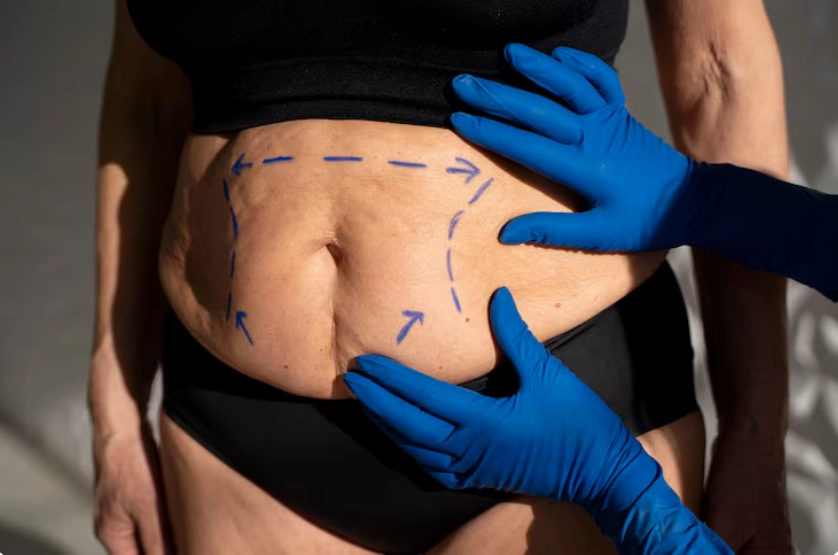
The inevitability of scars from liposuction is an absolute minimum. It is such a procedure that requires incisions, which always end with scars as they heal. However, it is still crucial to make them less noticeable by the use of proper methods and care.
The places where liposuction scars are most likely to be seen are those where people usually do not look closely, usually the same places where the surgeries are done. In order to reduce the size of the incisions, they are done in these mentioned areas which are not only small but are also hidden in the skin folds or natural creases, thus being less visible. Some such areas are:
- Belly: The incisions are almost always made at the bikini line level, thus the scars will be hidden under clothing.
- Legs: The scars might be found on the inner or outer thigh of the leg in case the liposuction of the thighs was done thus wearing shorts or skirts will easily hide the scars.
- Waist and Side Fat Areas: For the removal of fat from the waist and flank areas, incisions are being made in the natural folds area of the body.
The scar itself is an indication of the body’s natural healing reaction. The first days after the operation are characterized by redness and swelling in the incision areas. As time passes, the scars will become less red and even turn to a lighter color and eventually will lose their three-dimensionality to some extent, but still, depending on skin type and care, they may turn out to be visible for a few months to years.
Minimizing Scarring: Techniques and Aftercare Tips
Scars are unavoidable in liposuction; however, there are a few ways that can reduce the size of scarring and make the healing process faster. Proper aftercare is the basis for success in this as well as in many other situations. Lin Health Europe is the place where after acheck we are giving the patient a comprehensive and professional aftercare guidance, which takes place not only in the hospital but also at home.
- Follow Post-Operative Instructions: Compliance with your surgeon`s aftercare instructions is the single most important action in the effort to reduce scarring. Taking medications as prescribed, wearing the necessary compression garments, and refraining from the activities that may interfere with the healing process are included in this.
- Keep the Incisions Clean: In order to be free of infection, which could lead to bigger scars, you should carefully clean the places where you were cut (as instructed). The area must be dry and free of bacteria so that the healing process can be supported.
- Apply Scar Treatment Creams: By the decision of your surgeon, you are to start the use of topical treatments in which the use of creams for scar and silicone gels are the main helpers to make the scars less visible. These treatments help by keeping the skin soft and encouraging it to form collagen, which is the substance made by the body that it uses to repair the skin.
- Avoid Sun Exposure: Getting a sun tan is one of the things that can lead to the darkening of your scars, thus making it less possible to give them a chance to fade. It is necessary not to expose the treated part to the direct rays of the sun, especially in the first six months following the treatment.
- Massage and Lymphatic Drainage: Soft massaging and lymphatic drainage, in some instances, can help lower the swelling that is the main reason for tissue tension and still the skin can recover faster and more uniformly which makes scars less visible.
Recovery Timeline and Scarring Healing Process

Recovery times for liposuction vary according to the amount of work done. Thus, patients should anticipate around 3 weeks for healing. Most people are able to go back to work in a few days to a week but are advised to take it easy with exercise and lifting during the first 4 weeks after surgery.
- First Week: Both swelling and bruising will be at their peak, and the incisions will feel a bit tender. Resting is a must and the patient should be sure to follow the doctor’s instructions that are given after the surgery.
- 1-3 Months: The swelling will have decreased, and the scar tissue will be less prominent from red progressing in color to purple and, finally, to a lighter one. Most of the liposuction results will be the patient’s last part to see as the swelling disappears.
- 6 Months to 1 Year: At this point, the scars are much less noticeable, and the skin has begun to heal and contract around the treated areas. The scars, although still visible, are usually lighter and flatter in texture.
- 1 Year+: The fading of the discoloration continues and the area next to the treated one will be a certain way. If there are inevitable scars, they will be the least at this stage, but the general smoothness of the skin may still be influenced by the rate of individual healing.
Long-Term Care to Maintain Smooth Results and Minimize Scarring
The importance of long-term care after a liposuction procedure is to keep the results as well as the scarring to a minimum. The tips below are just a few of the many that can help you to get the most out of your procedure in the long run:
- Stay Active: Keeping in shape on a regular basis is very important to keep the liposuction results as well as to be in good general health. But it is very important that you follow the instructions of your doctor on the time when you can restart your physical activities.
- Healthy Diet: Eating a balanced diet can help you keep the liposuction results as well as avoid gaining too much weight. The main thing in order to have your skin stay soft and tight is to avoid large weight changes.
- Regular Skin Care: The use of moisturizers, scar treatments, and sun protection can maintain the skin barrier and reduce the long-term visibility of the scarring.
By implementing these measures, patients will be able to obtain the maximum potential of their scar improvement as well as maintenance of their smooth, beautiful results.
References
- American Society of Plastic Surgeons. Liposuction. Retrieved from plasticsurgery.org
- Rees, J. (2018). Liposuction and scarring: A detailed look. Aesthetic Surgery Journal, 38(4), 502-510.
- Williams, D. & Pincus, L. (2021). Minimizing scarring from body contouring surgeries. Journal of Aesthetic Plastic Surgery, 45(5), 715-722.
Frequently Asked Questions About Liposuction Scarring
Yes, scarring is a natural part of the liposuction process, as incisions are required for the insertion of the cannula. However, the scars are usually small and strategically placed to minimize their visibility.
Liposuction scars typically take around 6 months to a year to fully heal, with the initial redness fading within the first few months. The scars continue to improve in appearance over time.
While it’s not possible to completely remove liposuction scars, their appearance can be significantly reduced with proper aftercare, including the use of scar creams and silicone gels.
To minimize scarring, follow your surgeon’s aftercare instructions, apply prescribed treatments like scar creams, and avoid sun exposure during the healing process. Wearing compression garments as instructed also helps.
Liposuction scars are permanent but tend to fade over time. With proper care, they can become much less noticeable, especially when placed in discreet locations.