Like any surgery, rhinoplasty carries some risks.
Rhynoplasty Surgical Safety and Assessment of Overall Risk
To truly assess the medical safety of rhinoplasty, one should take it as a benchmark from the current outpatient cosmetic and reconstructive surgery landscape. From an authoritative medical standpoint, rhinoplasty is a procedure that is medically very safe, done as a regular day surgery by an experienced, board-certified facial plastic surgeon at an approved medical facility. Severe life-threatening complications after rhinoplasty are extremely rare, which is why most of the patients who receive this procedure and their recovery phase are without experiencing any significant health problems.
Rhinoplasty, which has long been considered the most complex and demanding operation in plastic surgery, does have certain risks. The nose is the principal feature at the centre of the face, and its construction with the delicate bones, the pliable cartilages, the inner linings of the nasal passages, and the entire airway system makes it such a complex structure. Although extremely rare, severe general medical emergency risks are possible, and minor aesthetic asymmetries or persistent post-operative swelling or a minor change in the airway function of the nose mean that rhinoplasty has a significantly higher revision rate than simpler cosmetic surgeries.
General Surgery and Anesthesia Considerations
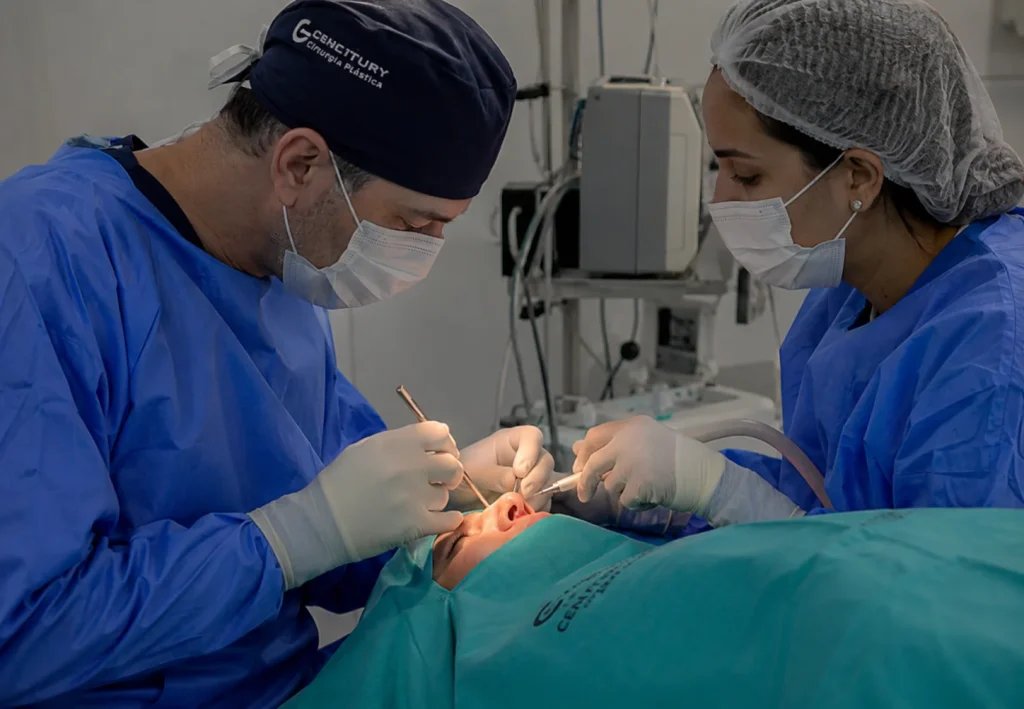
Along with every operation conducted under general anesthesia, rhinoplasty surgery has risks related to the systemic medicine and the surgical procedure. Among the more common ones are allergic reactions to the anesthesia medications, epistaxis or local post-operative bleeding, infections in the incision areas, minor ones, and temporary nausea after coming from the recovery phase. Thanks to the advancement of anesthesia techniques, the implementation of strict vital monitoring at all times, and the requirement of pre-surgery cardiovascular investigations, such risks have practically been removed from a medical standpoint.
To avoid most of these general risks, patients undergo thorough health assessments prior to being taken to the operating room. Detecting and managing bleeding disorders, controlling high blood pressure, and identifying and dealing with respiratory illness before the operation would help medical staff to customize the anesthetic plan accurately. Primary post-operative complications stay low, provided that proper surgical regulations are followed, and the focus is entirely on the structural healing phase.
Risk of Aesthetic and Functional Complications
In terms of standard operational risks, the main areas of concern regarding rhinoplasty involve long-term symmetry of face and functional airway of the nasal passage. A delicate anatomical balancing is responsible for the nose’s function. If cartilage removal is aggressive and the grafting is performed improperly, mid- and late-term complications may arise. These complications are reappearing dorsal humps, drooping nasal tip, nostril asymmetry, or internal nasal valve collapse leading to constant breathing difficulties or nasal stuffiness.
The use or omission of modern structural preservation strategies is decisive for the successful reduction of these aesthetic and functional complications. Whereas in the past rhinoplasty was limited to only shaving, today structural reinforcement of nasal support by placing structural cartilage grafts enables one to keep the air passage while contouring only the external part. Choosing an excellent surgeon who has deep structural knowledge will be beneficial to achieve the cosmetic changes and a well-ventilated nasal passage that lasts forever.
Restoration of Structural Integrity and Protection of Postoperative Period
Following a set of safe behaviors after the surgery is the main step in overcoming the surgical risks and achieving the perfect result. During the early recovery period (i.e., 6-8 weeks post-operation), the rebuilt cartilaginous frameworks, the delicate seams, and the moved nasal bones have to rely mainly on physical protection for them to form proper bonds of collagen and fibrin. To keep the physical change of your nose intact after surgery and make sure that the shape gets firmly fixed you have to avoid at least 6 to 8 weeks, using heavy-framed eyeglasses that press the nose bridge for at least 6 to 8 weeks; otherwise, the pressure on the grafts may cause the shift of the underlying structures and even the dislocation of the bone. Moreover, avoiding high-intensity physical activity, contact sports, refraining from forceful nose blowing, and from nicotine intake will lower the chances of a big increase in blood pressure, which would in turn cause vasoconstriction and may result in post-operative bleeding or delayed healing of the wounds.
Rhinoplasty in Turkey
Better facial aesthetics, advanced facial rhinoplasty, and safe medical pathways are all under the umbrella of our highly qualified medical care at LIN Europe Clinic. We understand that for an awesome rhinoplasty job with minimal or no revisions, the right placement of cartilage grafts, the support of the frame, and the adaptation of soft tissues have to be made with super precision, all of which is highly technically demanding. We make it a priority that everything related to your rhinoplasty operation, from surgical aspects to aftercare, should be carried out in the best possible spirit of medical excellence, transparency, and patient-centered support so that there is no place for even a whisper of a doubt of any kind as to a wrong procedure, and your safety and satisfaction are taken to a level beyond expectations.
As we place our hands on your face and nose, we are fully responsible for your structural changes from a very small level to a very high level. We guarantee you the pre-operative scans of your face and nose, down to the very details of your skin, and the monitoring of your recovery process with full precision. LIN Europe Clinic provides you with an array of services ranging from in-depth pre-operative imaging and surgical plan-making via digital mock-ups, to personalized aftercare checklists to ensure you follow your post-operative schedule perfectly, step-by-step, without missing anything in your body recovery phase and in the adaptation to your new lifestyle; we are right by you throughout. As your highly qualified physician team, it will be our responsibility to guard your cosmetic changes and also ensure that your health system is perfectly protected, so that you get your final face with your personality perfectly matched without worrying even a minute.
FAQ:
Rhinoplasty is a procedure that has an extremely low chance of causing life-threatening medical issues when performed by a board-certified, specialty-trained surgeon. Because of its high technical difficulty, rhinoplasty is associated with an increase in the need for revisions as compared to simpler operations only by a small margin.
Possible risks from getting a cosmetic nose operation are temporary bleeding, slight infection, extended swelling, being disappointed because of asymmetry in aesthetics, and, if internal nasal valves are not adequately supported during surgery, potentially breathing difficulty.
Picking a face plastic surgeon with lots of experience in structural rhinoplasty, taking part in all pre-operative health checks, giving up smoking, and making sure to follow every post-operative care rule very accurately, will lower the number of complications that you are at risk for during rhinoplasty.
Yes, general anesthesia is really safe. The administration of general anesthesia nowadays by a skilled anesthesiologist at an accredited hospital or facility that provides outpatient surgery and continuous vital sign monitoring at various stages of the procedure, is an extremely safe way.
Worldwide, the main operation being done by a surgeon the first time is revised in 5% to 15% of cases which is mostly because of slight asymmetry in the shape of the nose, or small breathing difficulties that appear because of the internal scar tissue that is being formed over a period of 12 to 18 months.
Toriumi, D. M. (2006). Structure rhinoplasty: Maintaining long-term tip projection, rotation, and cartilage stability while minimizing complication vectors. Facial Plastic Surgery Clinics of North America, 14(4), 289-301.
Gunter, J. P., & Rohrich, R. J. (1987). Management of surgical risk profiles, airway safety, and tissue dynamics in primary and revision rhinoplasty. Plastic and Reconstructive Surgery, 80(2), 161-173.
Rohrich, R. J., et al. (2014). Advanced postoperative care, deep structural stability, and risk mitigation protocols in facial contouring. Aesthetic Surgery Journal, 34(5), 587-595.