
Yes, with proper medical evaluation.
Biometrics of Nasal Mucosa and Chronic Inflammation
In nasal restoration, a complicated biometric journey of the nose presents itself in cases of chronic sinusitis. Chronic sinusitis is clinically defined as an ongoing paranasal sinus inflammatory condition, usually associated with mucosal thickening and blocked drainage pathways. Thinking about rhinoplasty, the question arises – how will the healing of a surgically remodeled nasal framework be affected by this ongoing inflammatory state?
At Lin Health Europe Clinic, we say that although chronic sinusitis will not be the reason for disqualifying surgery, it does call for the highest clinical readiness. Structural harmony implies that the nasal mucosa is stabilized even before the first cut is made. If the sinuses are infected, the systemic vitality of tissue can be weakened, which may lead to a problematic healing phase. With our high-definition diagnostic methods, we make sure that the biological balance of a nasal cavity is set so that, at the same time, aesthetic enhancement and good respiratory health are possible.
Functional Rhinoplasty: Surgical Brilliance in Synergy
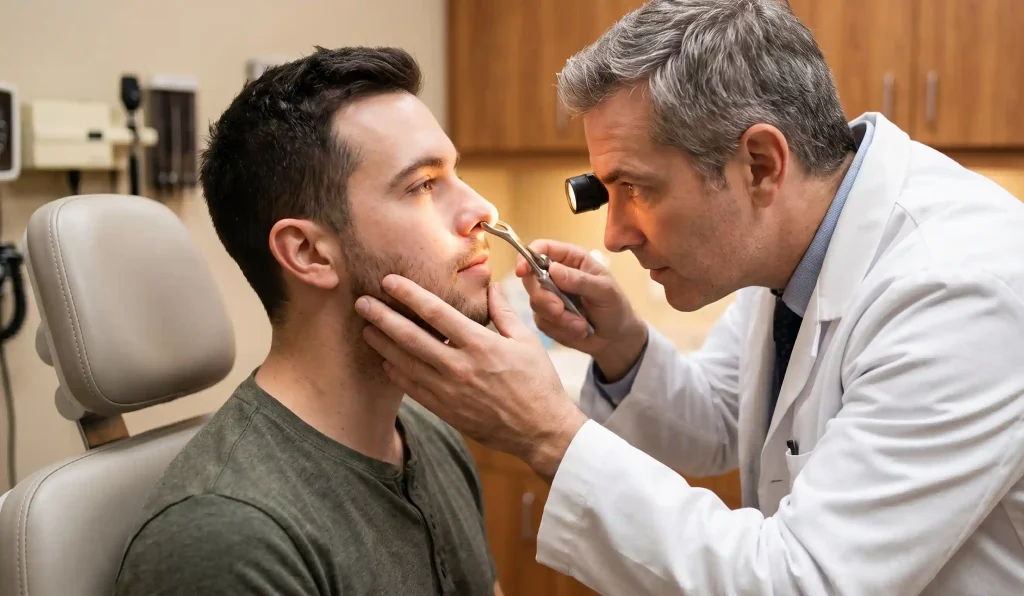
If rhinoplasty is performed while managing chronic sinusitis, one of the best options is a functional and aesthetic approach rolled into one. To handle sinus and nasal airway problems anatomically, a Functional Endoscopic Sinus Surgery (FESS) or septoplasty with aesthetic nose reshaping is the usual combination. What a surgical show that simultaneously treats the underlying cause of sinus blockage and sculpt your exterior profile!
Both internal nasal aesthetic and function should be considered in order to reach structural harmony, i.e., the nose should be shaped so that it does not cause the narrowing of internal airway, making sinus drainage even more difficult. Introducing medical innovation like powered instruments and endoscopes, our clinical mastery team located in Istanbul, is capable of unblocking sinus passages and rectifying a deviated septum at the same time as the main rhinoplasty. This detailed scenario leads to not only complete body wellness but also a beautiful appearance-enhancing result.
Structural Harmony and the Drainage Pathway
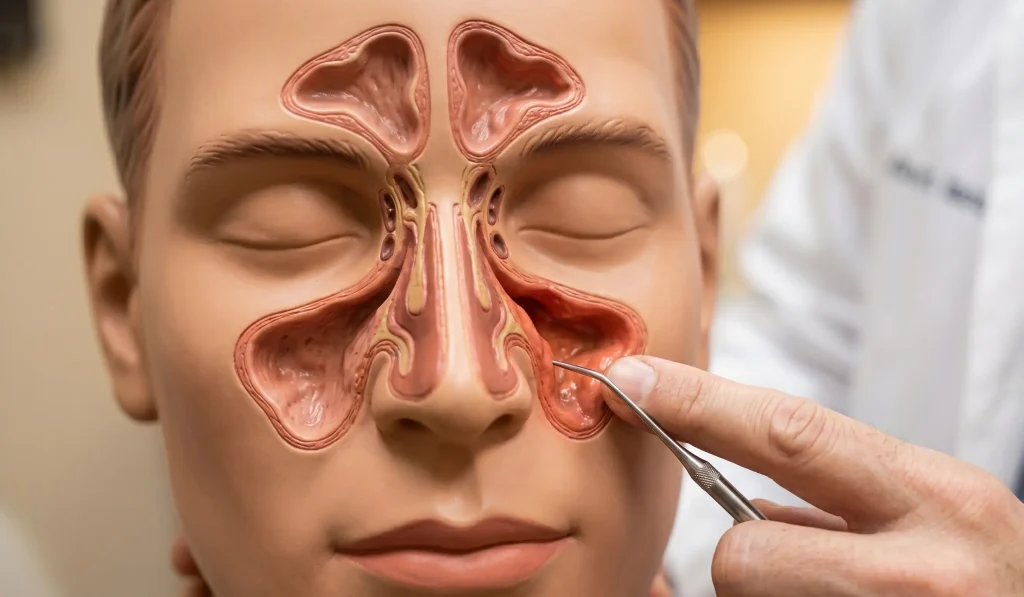
One of the key treatment objectives during a rhinoplasty procedure for a sinusitis patient is to keep the “osteomeatal complex” intact, bill of health — the place where the sinuses drain into the nose. From a biometric point of view, structural modifications made to the nose bridge or nose tip at the same time could impact these very important drainage paths. Failure to take into account the biometrics when altering the nasal structure could lead to worsening of the chronic sinus conditions.
Maintaining biological balance within the nasal vault goes beyond the accomplishment of the facial beauty to, in a way, the biography of the person living in it. We subject our surgical planning to the highest level of professional rigor, including working with the anatomic nasal map, so structural harmony, natural airflow, and drainage are maintained. Lin Health Europe Clinic is well equipped with state-of-the-art scanning technology which reveals internal anatomy, allowing not only the cutting and shaping of the external outer sculpting but also reaching and preserving the absolute pinnacle of internal function, such as the bestowed of human being. Attending thus to every detail of the anatomy, we deny the occurrence of any feared by persons experiencing chronic nasal conditions, “nasal congestion”.
Systemic Vitality and Pre-operative Preparation
Rhinoplasty, while a long-wanted dream of a person knowing its aesthetic and functional potentials, can be fraught with serious parafunctional hazards with concomitant chronic sinusitis. The importance of pre-operative management cannot be overstated. Our approach to the biometrics of the disease involves a time-release medicine, such as intranasal steroids, can be administered as well as saline rinses and antibiotics, especially targeted to the presented organisms, so as to bring the sinus mucosa into a state of biological balance before the surgery. Besides that, such preparation/preconditioning is not only a clinical necessity to minimize post-operative swelling but also a must to reduce the risk of infection.
It is a wise move to consider making changes to not only the skin, but also the mucosal layer of your nose and sinuses when preparing for a rhinoplasty. This is essential in managing the inflammation once surgery is over. We can help you come up with a pre-op care plan so that your sinus environment is in the best condition possible at the time of the operation. Here at Lin Health Europe Clinic, we are always advocating for the systemic health of our patients. We know that the highest level of aesthetic achievement can only be realized when the underlying biological systems are in perfect harmony.
Rhinoplasty in Turkey
Choosing Lin Health Europe Clinic means going through a global wellness therapy where the intricacies of nasal biometrics are in the hands of skilled clinical mastery. We appreciate that for our patients with chronic sinusitis, two objectives of rhinoplasty are desired: to breathe better and to look better. Turkey, where our beaming headquarters is situated, stands out as the pioneer of surgical brilliance, providing a setting where functional and aesthetic results are in perfect agreement.
By opting for Lin Health Europe Clinic, you are entrusting a medical team that leads in the blend of medical innovation and the safety of patients, which is at the center of all their decision-making. We run your staircase of professional rigor concurrently, supplying you with the direction and support for a high-definition recovery. Undergo the treatment in Lin Health Europe Clinic with sophisticated care and achieve results that are a perfect illustration of aesthetic and biological equilibrium. The journey to a well-shaped and confident of one’s profile is managed meticulously in the middle of Turkey.
FAQ:
Absolutely you can do rhinoplasty along with chronic sinusitis, but most of the time a combined functional approach is required to handle the sinus problems at the same time. In fact, a clinical necessity for a really good outcome is making sure that the internal airways and the external profile structurally agree with each other.
Usually, a purely aesthetic rhinoplasty will not solve sinus problems. Nevertheless, a combination with functional procedures such as septoplasty or sinus surgery (FESS) that you not only can improve your breathing and overall vitality but can also have a better-looking nose.
Simply having sinusitis does not mean you will be at risk of rhinoplasty. Yet, when sinuses are very acutely infected, the risk of post-operative complications can rise. We take very seriously the biological state of your sinuses and only proceed with surgery when they are in balance so that your overall health is not compromised.
Typically, the recovery period will be quite like a usual rhinoplasty, most of the local swelling going down by two weeks. But sticking to top quality aftercare, e.g. saline rinses, is crucial for the healing of the sinus lining and the achievement of structural harmony.
A short-term congestion is a typical physiological reaction after a nose operation. If the structures that allow for drainage are kept in harmony, then the end result should be a pretty significant improvement in both looks and breathing.
Tebbetts, J. B. (2002). Systemic Vitality and Surgical Precision in Nasal Procedures. Saunders Elsevier.
Gunter, J. P., et al. (2002). Dallas Rhinoplasty: Nasal Surgery by the Masters. Quality Medical Publishing.
Janis, J. E., et al. (2005). Nasal Anatomy and Biometrics: Implications for Functional Restoration. Plastic and Reconstructive Surgery.
Nahai, F. (2011). The Art of Aesthetic Surgery: Principles and Professional Rigor in Rhinoplasty. Quality Medical Publishing.
Stuzin, J. M. (2008). Biological Balance and Medical Innovation in Facial Rejuvenation. Plastic and Reconstructive Surgery.