Ears settle with minimal movement.
When it comes to performing high-definition ear redesign and otoplasty, it’s a fallacy among many that the ears will remain exactly where the surgeon places them during the operation, down to the millimeter. The truth is that the ears go through a natural process of “relaxation” or “recoil” during the first few months after surgery. This change is generally thought to be around 10% to 15% of the initial correction and can mean a small move of the ears by 2 to 3 millimeters outward from the scalp. This does not indicate a failure of the surgery but is actually a normal biological response to the stress imposed on the cartilage and skin envelope. When the postoperative swelling goes down and the tissues start to mature, the ears go from being a bit “over-pinned” to their final, natural, pleasant-looking position. It is crucial to grasp this “spring-back” phenomenon for planning patient satisfaction and results that actually look naturally integrated, rather than surgically made in Turkey.
Cartilage Memory and the Mechanics of Structural Harmony
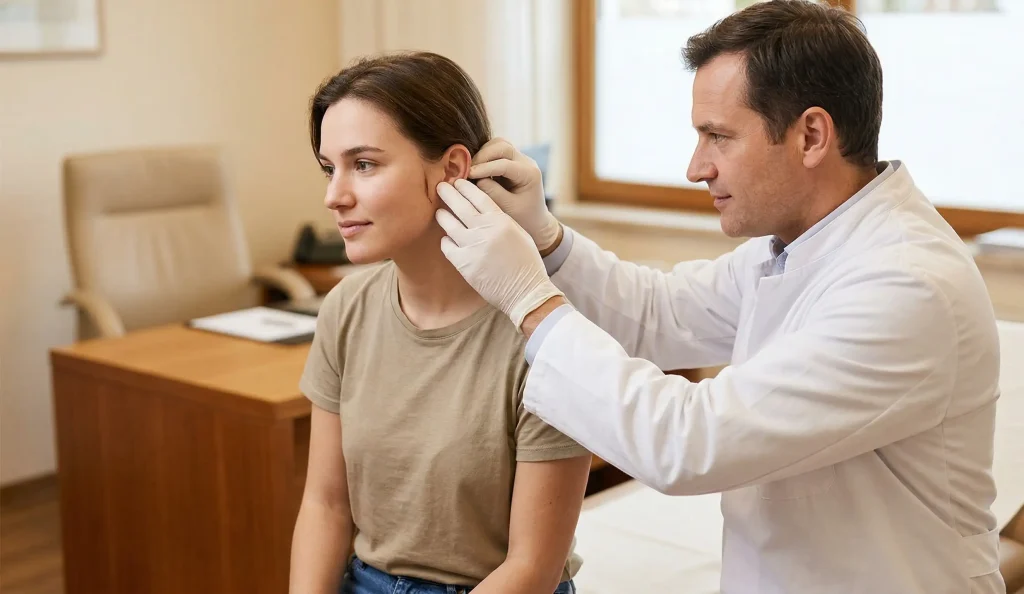
What complicates the correction of protruding ears most of all is “cartilage memory,” that is the structural framework of the ear has the innate inclination of keeping its original, prominent shape. Cartilage is a resilient, elastic tissue that possesses a high degree of “spring”; when it is reshaped using permanent sutures or scoring techniques, it continuously exerts a subtle pressure against these new anchors. In fact, to get a surgical result that lasts and looks harmonious, the surgeon must use surgical dehiscence in a way that will counterbalance the tension coming from inside. In other words, if the ears are pinned too conservatively, this natural recoil might bring the ears back to a prominent position, whereas a highly precise surgery will consider this micro-movement so that the final resting position will be exactly what was aimed at.
Further to this, the experts at Lin Health Europe Clinic consider the issue of cartilage memory a serious professional rigor. Our doctors in Turkey employ cutting-edge suturing and cartilage-weakening techniques that lower the “recoil” force significantly while, at the same time, preserving the natural contors of the ear. We even prepare detailed “Auricular Blueprint” for each international visitor at our Istanbul clinic, ensuring that the initial positioning takes the expected softening of the tissues into consideration.
Neocollagenesis: The Biological Glue for Ear Stabilization
The body’s internal healing response, particularly the stage of neocollagenesis, is closely linked to the lasting result of an otoplasty. Initially, the surgical sutures are what keep the ear in its new place; however, over time, it is the newly formed, robust collagen fibers that gradually “secure” the cartilage in its reshaped form. Basically, neocollagenesis works as a biological glue that permanently bonds the remodelled cartilage with its neighboring soft tissues. Over a period of three to six months, this internal framework both matures and draws strength from within, becoming capable of structurally counteracting any further movements or relapse of the ear’s position.
The medical personnel at Lin Health Europe Clinic intensely concentrate on fostering this biological stabilization for the patients they are working with in Istanbul. We know Turkey that a properly regulated inflammatory condition is needed for effective neocollagenesis to take place without the risk of going into excess scarring or “keloids”. After the surgery, we maintain the surgical site maturation through the application of surgical deha, additionally instructing patients on how to support their body’s natural repair by good post-operative care and systemic vitality. Through the provision of adequate ear protection during the vulnerable stage, Lin Health Europe Clinic guarantees that the new collagen matrix grows into a robust and permanent basis, so the high-definition final result can be stable for a lifetime.
Avoiding the “Pinned-Back” Look Through Surgical Brilliance
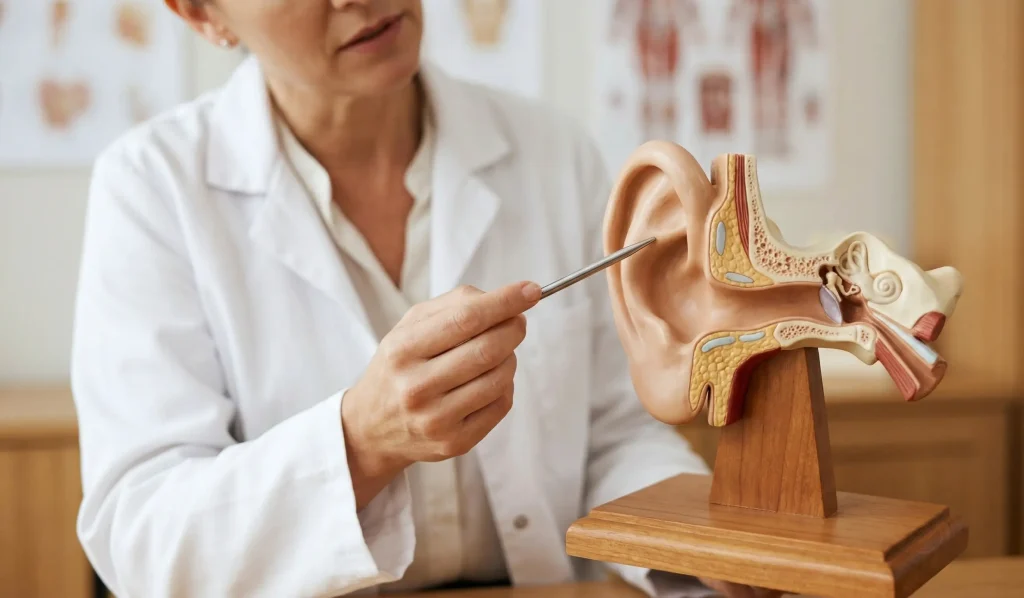
Making sure that an otoplasty gives a good result is essentially managing to find a fine point of equilibrium between correction and natural beauty. The “pinned-back” or “telephone ear” deformity is often a signal of a poorly done operation when the ears are forcibly pulled toward the head, ignoring the natural contours. Preventing this is a matter of getting surgical brilliance that will help to carry out a smoothly graduated correction which keeps intact the natural angles of the auricular framework. Intraoperatively, the surgeon also slightly over-corrects so that after the natural 2-3 millimeter recoil, the ears fall into a position that appears as if no effort was made and anatomically correct, thus preserving the essential structural harmony of the face.
Lin Health Europe Clinic unleashes a method of total professional rigor to ensure that every otoplasty finished in Istanbul is both imperceptible and visually pleasing. Our surgeons in Turkey work towards generating a soft, natural antihelical fold since this is the main factor that helps to avoid a surgically “flat” result. We also do high-definition follow-up monitoring to see how the ears are settling down, and notice that the changeover to the final position is symmetrical and well-balanced. By entrusting your otoplasty needs to Lin Health Europe Clinic, you will be getting a level of surgical expertise that not only safeguards your natural beauty but also promises that your ears are not merely “moved” and artistically restored to their perfect proportions in Turkey.
Otoplasty in Turkey
Lin Health Europe Clinic is an internationally known haven for those who want the highest level of auricular expertise combined with top-notch hospitality. The Turkey branch of our clinic is the epitome of medical advancement, where high-definition otoplasty and JCI standards of safety and professional rigor are combined in perfect harmony. Selecting our clinic means entrusting your ears to the most highly skilled and safety-aware surgeons in Istanbul, who view every ear correction as a work of art based on structural soundness and surgical brilliance. We are a leading destination for patients from abroad who not only desire the most natural outcomes but also a trusted, indulgent, and worry-free surgical experience that supports their systemic vitality and recovery through all phases.
FAQ:
During the first few months of healing, the ears usually relax by two or three millimeters. This slight movement is a natural feature of the cartilage settling in its new location.
Ear movements occur because the cartilage has a sort of ‘memory’ and thus tries to keep its original shape. In light of this predictable springing back, surgeons generally perform an extra pinning of the ears.
It is expected that the ears will look very tightly pressed to the side of the head right after the operation. As the swelling diminishes, they will slowly take on a more natural and proportionate position.
Complete relapse is uncommon if the operation is carried out strictly following professional standards and using the right techniques. Equally important is the adherence to all recovery-related instructions for the prevention of any unintended structural changes.
Usually, ears are deemed stable after healing for six months. At this point, the internal tissues have come to full maturity around the new configuration.
Janis, J. E., et al. (2005). Otoplasty: Managing Cartilage Memory and the Recoil Effect. Plastic and Reconstructive Surgery.
Thorne, C. H., et al. (2003). Otoplasty: A Clinical Review of Techniques and Structural Harmony. Plastic and Reconstructive Surgery.
Gosain, A. K., et al. (2002). The Role of neocollagenesis and Tissue Adherence in Auricular Restoration. Aesthetic Surgery Journal.
Elliott, R. A. (1990). Otoplasty: A System for the Prevention of Pinned Back Deformities. Clinics in Plastic Surgery.