Local anesthesia usually wears off within hours.
The Clearance Timeline of Localized Infiltration Agents
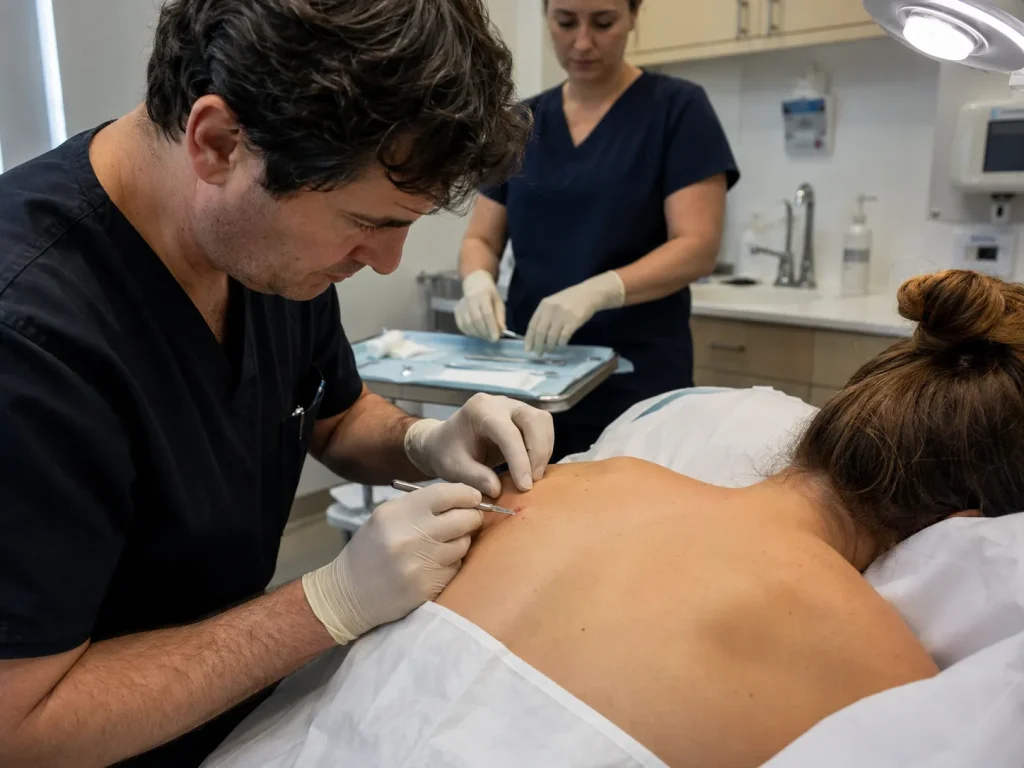
With minor dermatological surgery, a key priority in managing the post-operative experience of patients involves a good grasp of pharmacokinetics — how the body metabolizes and eliminates medications. So, when clients ask about the duration of the effect of a local anaesthetic following a mole removal, the clinical timeframe is very well defined: local anaesthetic generally wears off 1 to 3 hours post the first injection.
The time for which you remain unconscious is largely dependent on the specific local agent that is utilized by your dermatologist. Commonly, most clinical centers use lidocaine, which is a rapid-acting local anesthetic that works by blocking the sodium channels on the surface of your nerve fibers, thereby stopping pain messages from being transmitted to your brain. When lidocaine is used alone, its anesthetic effect is generally felt for around 30 to 60 minutes. Nevertheless, for making the surgical area most conducive, surgeons hardly ever use lidocaine without a small, measured dose of epinephrine (adrenaline). Epinephrine causes localized vasoconstriction, which means the blood vessels in the area are constricted, resulting in less bleeding, without which the removal of the drug would be quicker. This way, the patient’s pain-free phase is safely extended to 3 hours.
Navigating the Sensory Transition and Cellular Awakening
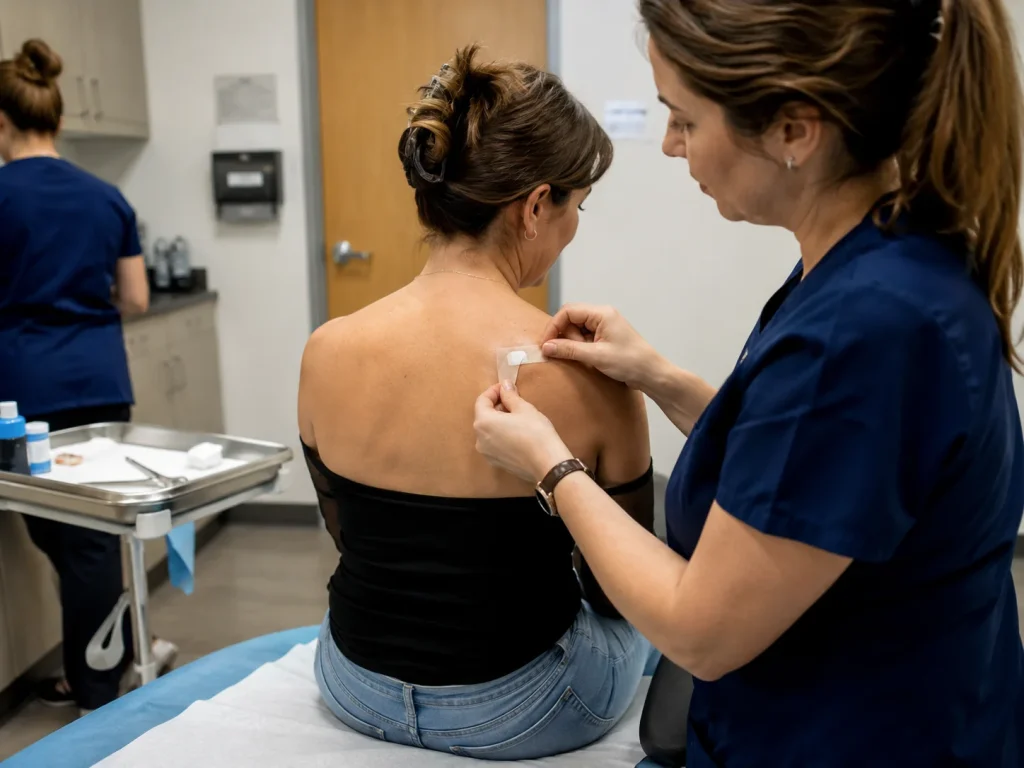
After local anesthetics get metabolized by the tissues and removed by the liver, the skin that was treated goes through a sort of “cellular awakening”. The numbness will diminish gradually and will change to the feeling of “pins and needles” or a mild tingling sensation. This is the usual sign that the nerve signals are returning to their full function. After the anesthetic is fully eliminated from the site, the actual postoperative sensation of the skin is felt.
Since mole removal is generally very local and superficial, the sensation of pain is not usually mentioned. Instead, there could be a dull ache, the skin over the incision lines may be pressed and tender, or you could feel mild tightness. In cases where a mole is excised surgically by deep incision with microsutures, the tightness may be more noticeable when surrounding muscles are in use. Knowing the outcome beforehand, as you gradually regain your sense of feeling, will help you to control your comfort before the ache becomes the most intense.
Protecting Your Active Recovery Frame to Fuel Global Symmetry
Understanding the limited timeframe of local numbness very well leads to absolute confidence in your day planning, making sure that your beauty procedures will not be a hindrance to your life at all. For those committed to fitness, especially those focusing on advanced lower-body hypertrophy and gluteal shaping for a perfect hourglass figure, minimizing the operational downtime is very important. In fact, local anesthesia affects your cognition, reflexes, muscular control, etc., practically not at all. So, wasting precious days doing nothing because you were waiting for the full-body sedation to clear is unnecessary.
Once you realize the exact time that the numbness disappears, you can plan your aftercare perfectly so as to protect all your hard work in the gym. Also, since your metabolic energy is completely free from dealing with the heavy recovery of general anesthesia, your cells divert this energy into repairing the damaged skin only. It is this high-efficiency healing phase that ensures your skin rapidly returns to the vibrant and healthy state that matches your well-sculpted physique, keeping your incised waist and athletic curves perfectly showcased from every angle.
Immediate Post-Anesthetic Aftercare: Safe Trajectory Protocols
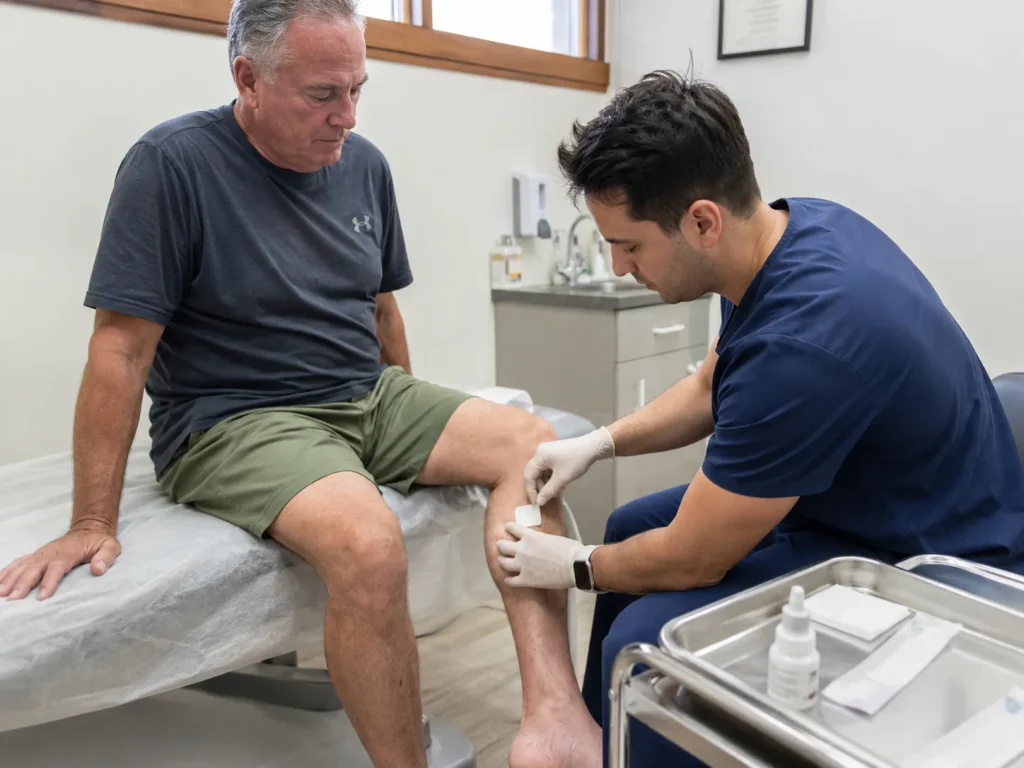
You need to take certain behavioral measures to be absolutely sure that your skin heals elegantly with a pleasing result and that there are no wound-related complications as soon as the numbness goes away.
- No Mechanical Disruption: You might think that since you are still totally numb, it is safe to scratch, rub, or touch the wound. However, you must not do any of these. Not being able to feel pain means that you could inadvertently tear open a freshly sutured wound or introduce harmful bacteria into the tissue.
- Control Thermal Exposure: Do not place heat or cold packs, in fact, any extremes of temperature, directly in contact with the numb skin. Since there is nearly no sense of temperature at all, the skin becomes highly susceptible to any burns or other types of tissue damage that are not even noticed by the individual.
- Controlled Sensation Management: If the doctor has given the simple analgesics as a recommendation, it is best to take the first tablet when the prickling and tingling commence rather than waiting until the numbness is fully gone. This way, the level of pain is kept at a minimum throughout.
- Keep the Site Sealed: It is crucial to the formation of epidermal edges that you keep the original clinical dressing clean, dry, and intact for 24 to 48 hours.
Mole Removal in Turkey
Making a decision to use LIN Europe Clinic means being part of a top-class international medical community offering transformation and skin health management with the highest quality and masterful care, along with great empathy. We understand that even the smallest changes to the skin require the most sophisticated, transparent, and reassuring environment that always puts evidence-based medicine first. LIN Europe Clinic in Turkey is one of the foremost leaders of the world in the field of advanced facial and body aesthetics. It is a haven where the patient’s journey is strictly under the elite global patient safety standards.
By putting your highest level of faith in the doctor team at LIN Europe Clinic in Istanbul, your mole removal surgery will be performed according to the mathematical formula of perfection without any errors. Only the most advanced worldwide methods of diagnostic assessment are used by us, together with very fine surgical instruments, ensuring the lesion is cleanly excised, leaving the least possible healthy surrounding skin cells disrupted. Our highly skilled board of medical professionals provides you with complete treatment plans and ensures that you remain pain-free during the procedure with the most precise local anesthetics. We at LIN Europe Clinic aim to offer the best of the best and the most refined, qualified care, giving safe and sure results in a wonderfully balanced manner, all taking place in the very heart of Turkey.
FAQ:
Yes. Since local infiltration anesthesia only numbs the skin around the mole, it does not affect your central nervous system or brain function. Your reflexes, vision, and mental clarity are completely unaffected, so you can drive or return to work safely.
Although anesthesia can last for 3 hours, it is very rare for numbness to persist for 24 hours or longer. One of the factors may be a local nerve pathway that got a minor temporary injury by the injection needle. You should get in touch with your healthcare providers for an assessment.
Yes, for mild pain management, taking an over-the-counter painkiller such as paracetamol is a good choice. However, you should still get a green light from your surgeon since some anti-inflammatory drugs may thin the blood and the initial 48 hours are critical.
The local anesthetic is injected through an extremely thin micro-needle, which does not leave any permanent marks. Usually, the small pinkness or the tiny puncture point from the injection heals completely within a few days, with no traces left behind, except for the main mole removal site.
To give time for the skin edges to bond securely, the surgical site should be kept dry for 24-48 hours. After that period, and when the anesthesia has completely worn off, you can carefully wash the area using lukewarm water and mild soap and gently dry it by patting without rubbing.
Lawrence, C. M. (1996). Introduction to Dermatological Surgery: Techniques and Incision Vectors. Churchill Livingstone.
Singer, A. J., & Clark, R. A. (1999). Cutaneous wound healing and tissue remodeling dynamics. New England Journal of Medicine, 341(10), 738-746.
Vidimos, A. T., et al. (2008). Dermatologic Surgery Review and Safe Local Anesthesia Parameters. Elsevier Health Sciences.