Yes, surgery is possible with careful planning.
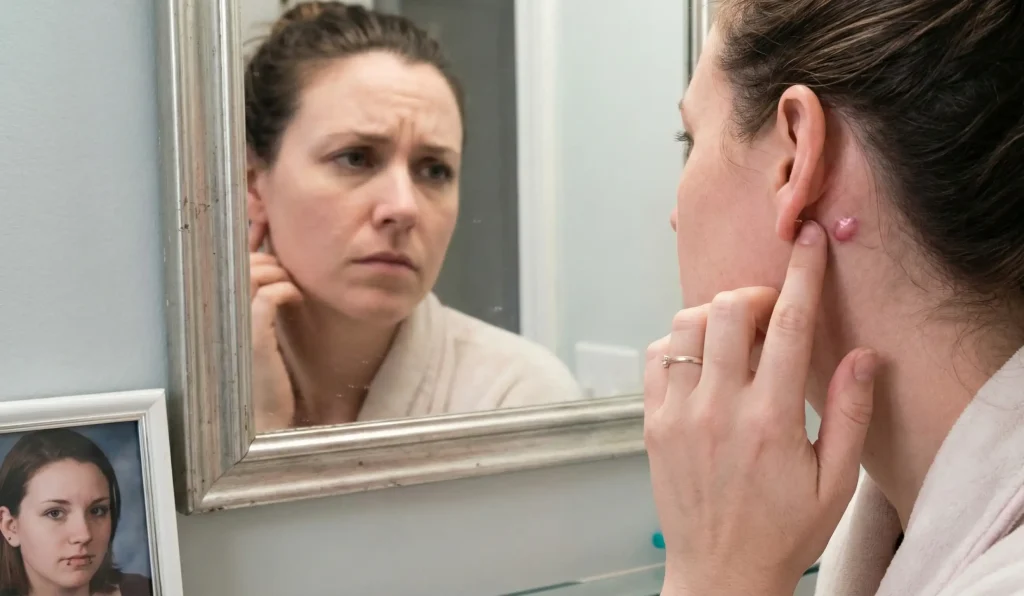
Perhaps the biggest hurdle to the aesthetic dream for many people is not the cost or the downtime, but their skin. If you have a history of the wounds healing as raised, hard, purple lumps that sometimes become larger than the original injury, it is likely that you have Keloid-prone skin. This inherited characteristic may make the idea of elective surgery be the last thing you would want to do. The nightmare scenario is that the surgery to make you look better will leave you with such an ugly scar that it will be a disfigurement that is worse than the skin condition that you already had.
On the positive side, being keloid skin does not necessarily mean that you are out of the plastic surgery game. On the contrary, it puts you in a category where you are at risk, and as such, you have to have a battle plan that is tailored to your case. We at Lin Europe Clinic are quite familiar with patients having keloid history as we treat them regularly, but this is only done as part of a strict “prevention first” protocol. We get it. Surgery for you is not over after the removal of stitches; to ensure your collagen behaves itself, the real work begins during the healing phase.
Diagnosis: Keloid or merely Hypertrophic?
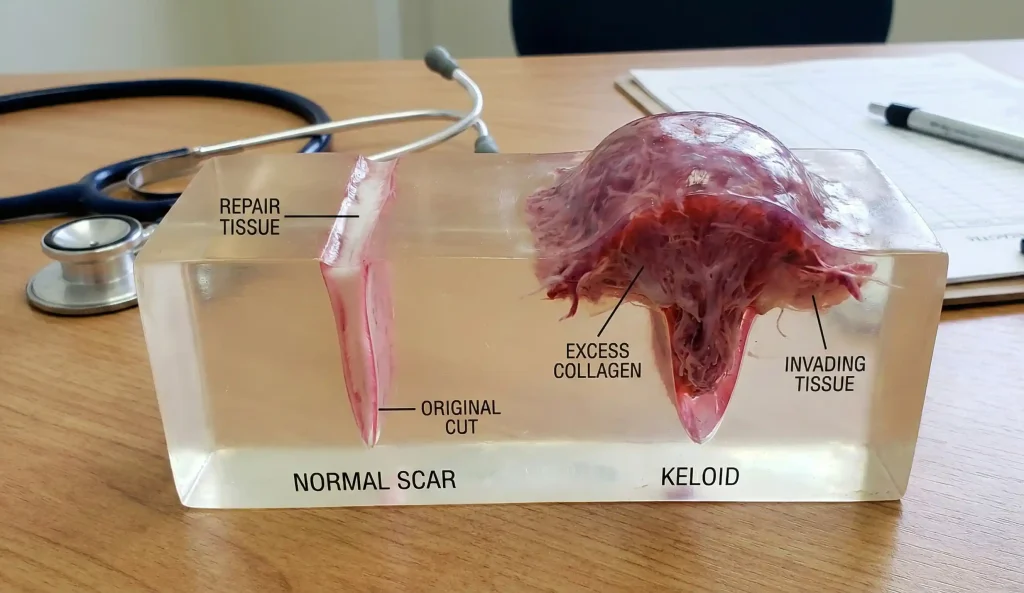
It is necessary to be sure what you have scientifically before we go ahead with a surgical plan. In many cases, patients who think they have keloids actually have Hypertrophic Scars. The division here is paramount:
Hypertrophic Scars are those that are raised and red, but that still lie within the limits of the original incision. They typically become less noticeable and flatter on their own over the course of a year or respond extremely well to the application of simple silicone tape.Real Keloids are overgrowths of scar tissue that are benign. Their growth pushes beyond the edges of the original wound, resulting in the healthy skin being “invaded” by the keloid, like a crab” They are not self-fading, and they can also be itchy or painful. Real keloids are hereditary and much more complicated to heal. One cannot simply “cut out” true keloids without a suppression plan as they will otherwise come back even bigger.
Danger Zone: Why Location Counts
Keloids do not randomly appear over the body. The chance of a scar being so bad depends a lot on where the operation is done. The skin tension effectively determines the role that this plays.
Very High-Risk Areas: The chest (especially the sternum), shoulders, upper back, and earlobes are the body’s “keloid capitals”. A woman opts for a breast lift or a man an otoplasty (ear pinning) – this carries a higher keloid risk in keloid formers because the skin in these regions is either naturally prone to collagen overproduction or under a lot of tension.
Low-Risk Zones: The Face is an unexpectedly forgiving part of the body though. A Blepharoplasty and (especially) an open Rhinoplasty are surgeries that will hardly ever result in the patient developing keloids even if the patient is prone. The facial skin is very thin and has a lot of blood flow. In addition, the mucosa (i.e., the pink skin inside the nose or mouth) almost never produces keloids, which makes internal nose surgeries very safe.
The Surgical Plan: Closure without Tension
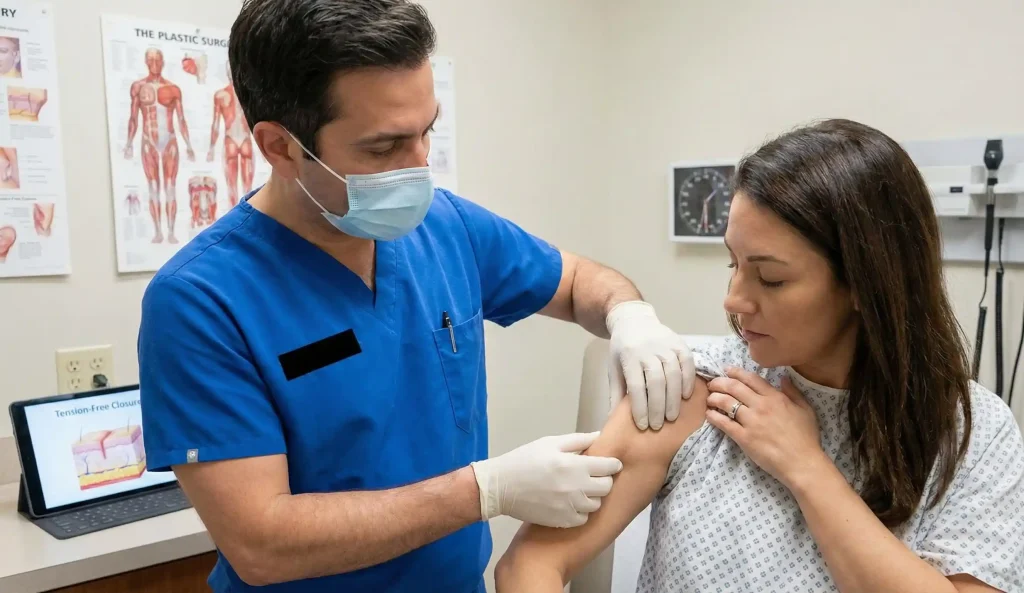
For keloid skin patients, the surgeon’s skills have to be impeccable. Keloids are most commonly caused by Tension, which is the number one trigger. Stitches that are pulling the sides of a wound so tightly together will make the body feel stressed, and then it will respond by releasing a huge amount of collagen to “strengthen” the area, thus resulting in a keloid.
Preventing this is achieved by means of a Multi-Layer Closure. Deep, dissolving sutures are inserted into the fascia and dermis to absorb all the tension. Subsequently, the skin’s outermost layer is brought together very gently, without any forceful pulling. We also refrain from using certain kinds of braided sutures that are known to cause inflammation. “Deceiving” the skin into thinking the wound is not under any stress means that, in a way, the genetic trigger for keloid formation is bypassed.
The Prevention Arsenal: Steroids and Silicone
We take a proactive approach by applying treatments to the scar before it becomes prominent.
Steroid Injections: For those who are at a higher risk, a corticosteroid (like Kenalog) can be injected directly into the wound edges either during the surgery or at the latest during the first post-op visit. This drug essentially inhibits the fibroblasts (excess scar tissue forming cells) that are usually responsible for collagen production.
Silicone Treatment: Silicone sheeting is obligatory since it forms a hydrating barrier which controls the growth factors of the scar.Pressure therapy: For ears keloids, after the surgery, wearing pressure earrings (clip-on style) helps to physically compress the capillaries which limits the blood flow that could nourish the potential scar tissue.
Lin Health Europe Clinic: “Scar Watch” Protocol
It is not just like at Lin Europe Clinic in Turkey, we throw our hopes into the universe and see what comes down. When you mark a “Keloid History” on your consent form, you will be placed under our Scar Watch Protocol which means that your follow-up plan is going to be different. We expect to be sent pictures of your wounds sooner and more regularly.
When we observe any minute indication of bumpiness, redness, or itching (the keloid’s “prodromal” symptoms), then we are quick to react with either local steroid injections or laser therapy. There is also the option of Radiation Therapy as a last resort (like in the case of recurring ear keloids) and it is the final weapon that stops the growth. We are not sugarcoating it for you: in the case of a very high risk, we might suggest you stay away from a high-tension Tummy Tuck, but we will approve a Rhinoplasty. The safety and the beauty of the procedure are ensured by adjusting it to your biological requirements.
Frequently Asked Questions About Keloid Skin and Surgery
It is possible. The chance of getting a keloid on the nose (especially the columella) is very small even for those with keloid skin. The mucosa inside the nose does not get keloids.
The belly is a medium-risk area. Since a tummy tuck causes high tension on the incision line, the patients with keloid skin should be given preventive steroid injections and use silicone sheets to reduce the risk.
Yes, however, just cutting off a keloid usually causes it to grow back bigger. The operation of excision must be accompanied by steroid injections or radiation therapy to stop the keloid skin from becoming as aggressive again.
No. Keloid skin does not usually start to overreact until months after the trauma. You could have perfect healing for 3 months but then the scar turns into a growing, itching one. Continuous observation is a must.
Chest (sternum and breast) is a high-risk area for keloid skin. If you have had spontaneous chest keloids, we may not recommend elective breast surgery or suggest a different, less-invasive technique.
Ogawa, R. (2017). Keloid and Hypertrophic Scars Are the Result of Chronic Inflammation in the Reticular Dermis. International Journal of Molecular Sciences.
Mustoe, T. A., et al. (2002). International clinical recommendations on scar management. Plastic and Reconstructive Surgery.
Berman, B., et al. (2017). Keloids and Hypertrophic Scars: Pathophysiology, Classification, and Treatment. Dermatologic Surgery.