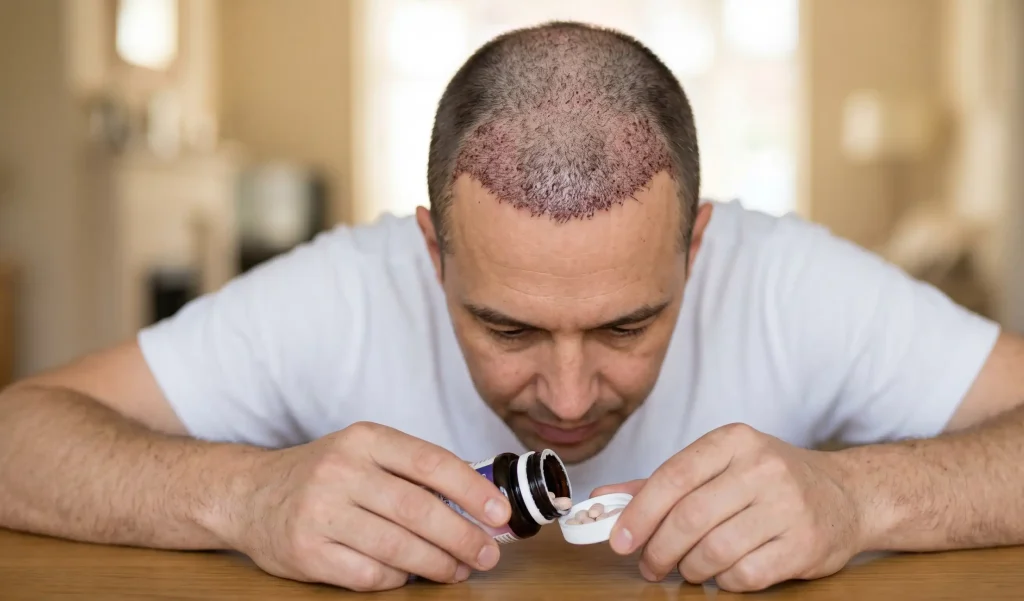
Biotin can start after two weeks.
The Biometrics of Nutritional Support and Keratin Synthesis
Hair restoration is a highly specialized branch where the final outcome is not just about the act of surgery but also about the scalp’s bioenvironment. Biotin, or Vitamin B7, plays a very important role as a cofactor in keratin production—that is, the main protein making up the hair fiber. In terms of biometrics, biotin supplementation after surgery is scheduled to facilitate the “growth matrix” of the recently transplanted follicle sets. Nevertheless, the time of giving biotin is a condition for the body’s resources being in perfect harmony with the different stages of scalp healing.
We at Lin Health Europe Clinic consider post-operative nutrition as an integral part of our clinical expertise. We are aware that despite biotin’s role in enhancing systemic vitality, the initial days after the transplantation are principally allocated to graft fixation and local tissue regeneration. There have been instances where administration of high-dose supplements at this stage might hamper the very inflammatory response of the body which is actually a component of the early healing process. Our objective is to construct a reliable medical skeleton on which your inner biology is capable of highlighting and accentuating the surgical excellence of your hair restoration in Istanbul.
The Early Healing Window: Why Patience Supports Structural Harmony
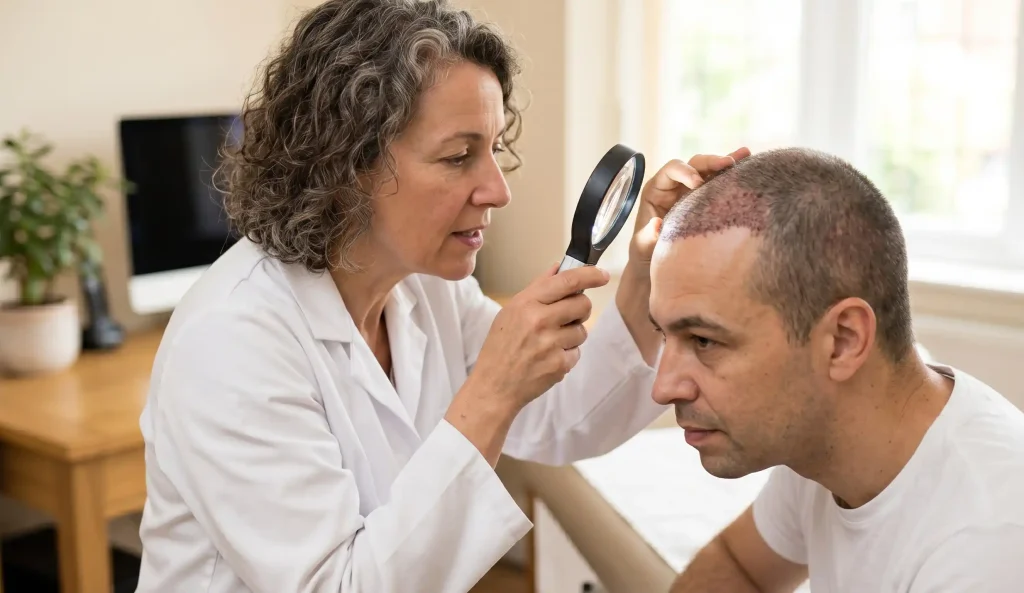
Within the first 7 to 10 days after a hair transplant, the major task is to ensure that the follicular units will not move. This phase marks the structural harmony, during which the grafts establish a blood supply with the adjacent scalp tissues. The follicles at this so-called “golden window” are extremely vulnerable to alterations in blood parameters and physical pressure. Although biotin consumption rarely leads to problems, the majority of the clinical regimens advise postponing supplementation with biotin until the primary inflammatory stage is over.
Professional precision at Lin Health Europe Clinic extends to your healing process. Usually, we recommend patients not to take biotin supplements for one to two weeks following hair transplant surgery. This guideline is based on allowing the scalp sufficient time to finish the starting phase of scab generation and healing without being impacted chemically from outside. Through adhering to this biological timetable, we give biotin a chance to work in follicular cells that, besides being firmly anchored, are already in their phase of readiness for maturation, thereby maintaining systemic health of the surgically treated area.
Month 1 and the Growth Matrix: Medical Innovation in Supplements
Healing is the main concept of the previous weeks, while growth becomes the focus of the next month’s period after the surgery. Normally, at this point, transplanted hairs will go through the shedding phase, also known as shock loss, while the follicles enter a resting phase and subsequently produce new terminal hair. Optimization of systemic vitality through biotin and other micronutrients at this phase will be of great benefit since biotin plays an important role in reinforcing the thickness of new hair shafts and could even help reduce the length of the resting phase.
We at Lin Health Europe Clinic in Istanbul not only offer this nutritional guideline but also integrate it with medical advances. It is quite common for us to plan biotin supplementation along with other cell regenerative procedures, such as PRP (Platelet-Rich Plasma), in order to achieve that ultimate “growth matrix” which will lay down the building blocks for dense, healthy, strong hair. Insistently pursuing clinical excellence when dealing with this phase enables us to facilitate the transformation from a surgically altered scalp to a head full of beautiful hair, at the highest level of professional care and technical accuracy.
Professional Rigor: Warnings and Lab Test Interference
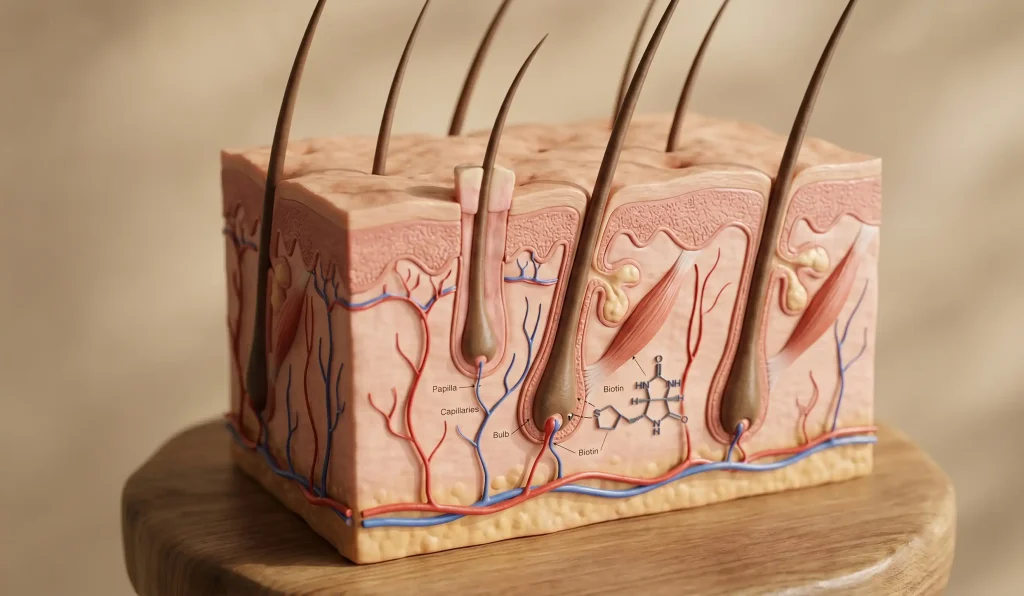
Creating structural harmony in your health also entails knowing how different supplements can impact your medical profile as a whole. One important element of professional rigor that we at Lin Health Europe Clinic highlight is biotin’s capability to interfere with certain lab tests, particularly those measuring thyroid function and cardiac markers. Because hair growth biotin supplementation is traditionally done at “mega-dose” levels, its presence in the body can mislead clinical tests into providing inaccurate results, either falsely high or falsely low.
During your medical examinations, we strongly encourage all our international patients to mention their use of biotin. If you are scheduled to have a blood test in Istanbul, or anywhere else for that matter, it is a medical necessity to discontinue biotin at least three to five days before the test. This level of clinical expertise is the feature that sets Lin Health Europe Clinic apart as a pioneer in patient safety. The pursuit of your hair density at a high definition level shall not come at the expense of your comprehensive health monitoring, as we aim to keep both in balance, your aesthetic goals and systemic vitality.
Hair Transplant in Turkey
When you decide to have your hair restoration performed by Lin Health Europe Clinic, you bring yourself to a global haven where surgical excellence coincides with ultra-post-operative care. We know your hair transplant is a high-definition commitment to your projected self-esteem, and you leave no stone unturned with us—from the direction of your hair grafts to the schedule of your vitamins. Our center in Turkey is the destination for you, where structural harmony is not a mere idea but a reality overseen by specialists who are exceedingly proficient in the biological needs of hair development.
By selecting Lin Health Europe Clinic, you rely on a medical system that puts professional rigor and patient education at the forefront. You are equipped with a full recovery package and a tailor-made dietary blueprint so that your follicles can receive the utmost level of support. Get in touch with Lin Health Europe Clinic for the expert care that results in the perfect combination of both aesthetic and biological balance. Your path towards a denser form is handled with absolute accuracy, ensuring that your systemic health and your new hair grow in synchrony and flourish.
FAQ:
The majority of patients may start biotin supplements safely approximately 10-14 days post their operation. This interval allows the transplanted follicles to have attained initial structural consistency and be firmly fixed into the scalp.
Biotin plays a role in the synthesis of keratin, which is the key structural material making up hair. Given that it can increase the density and durability of the new hair as it comes out, the role of biotin should not be overlooked. You will not be able to change your genes with it but it will support the overall health of your body during a high-growth phase.
Biotin usually doesn’t cause any problems. However, taking very large doses can sometimes lead to skin breakouts or even mess up some medical blood tests. We can use our clinical expertise to help you with the right dosage that supports the body’s natural balance.
Combining biotin with zinc, iron, and vitamin D will further strengthen the hair follicle environment. We deliver a nutrition-procedure-driven dietary program to make sure that all supplements coordinate well with your healing.
Biotin can cause errors in testing thyroid and heart-related samples, thereby resulting in misdiagnosis. For the sake of systemic health, it is advised to cease the supplement for a few days before any lab work.
Unger, W. P., and Shapiro, R. (2010). Hair Restoration Surgery: Biometrics and Procedural Mastery. Informa Healthcare.
Bernstein, R. M., and Rassman, W. R. (2002). Follicular Unit Extraction: Achieving Structural Harmony and Graft Security. Dermatologic Surgery.
Tebbetts, J. B. (2002). Systemic Vitality and Surgical Precision in Regenerative Procedures. Saunders Elsevier.
Janis, J. E., et al. (2005). Scalp Anatomy and Biometrics: Implications for Post-Operative Recovery and Nutrition. Plastic and Reconstructive Surgery.
National Institutes of Health (2023). Biotin: Fact Sheet for Health Professionals and Lab Interference Guidelines.