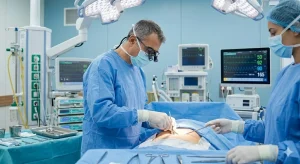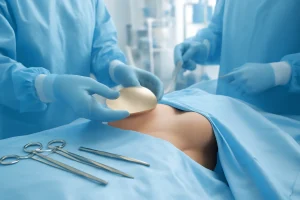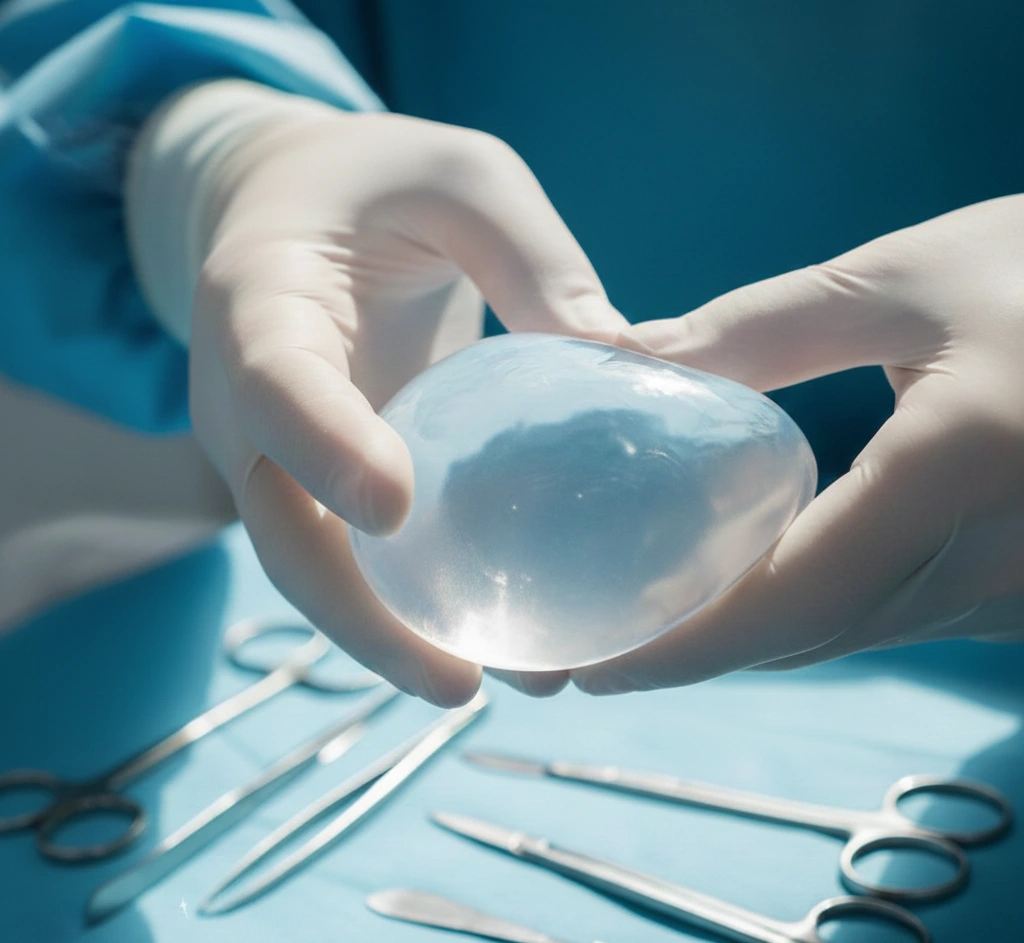
No, breast implants can’t burst on an airplane.
Myth 1: Breast Implants Will Burst Due to Airplane Pressure
Breast implants exploding due to an airplane’s changing pressure during the flight is one of the widely believed misunderstandings about breast implants. The myth comes literally from misinterpreting how the airplane pressure works. Although the pressure inside an airplane cabin is not the same during the plane’s ascent and descent, it is very much kept under control by the aircraft’s pressurization system. The implants of today can very comfortably withstand such changes in pressure. Modern implants, either silicone gel or saline-filled, are made in such a way that they do not lose their durability even if they are exposed to different environmental conditions including those slight pressure changes that you can find in any flight.
Breast implants are made with advanced technology and sealing methods that ensure their durability. Their structure is very well thought out to adjust for altitude changes so that neither the silicone gel nor the saline can be influenced by the conditions of an airplane cabin. So, there is no risk of your implants exploding just because of airplane pressure.
Myth 2: Flying Will Cause Implants to Leak or Rupture
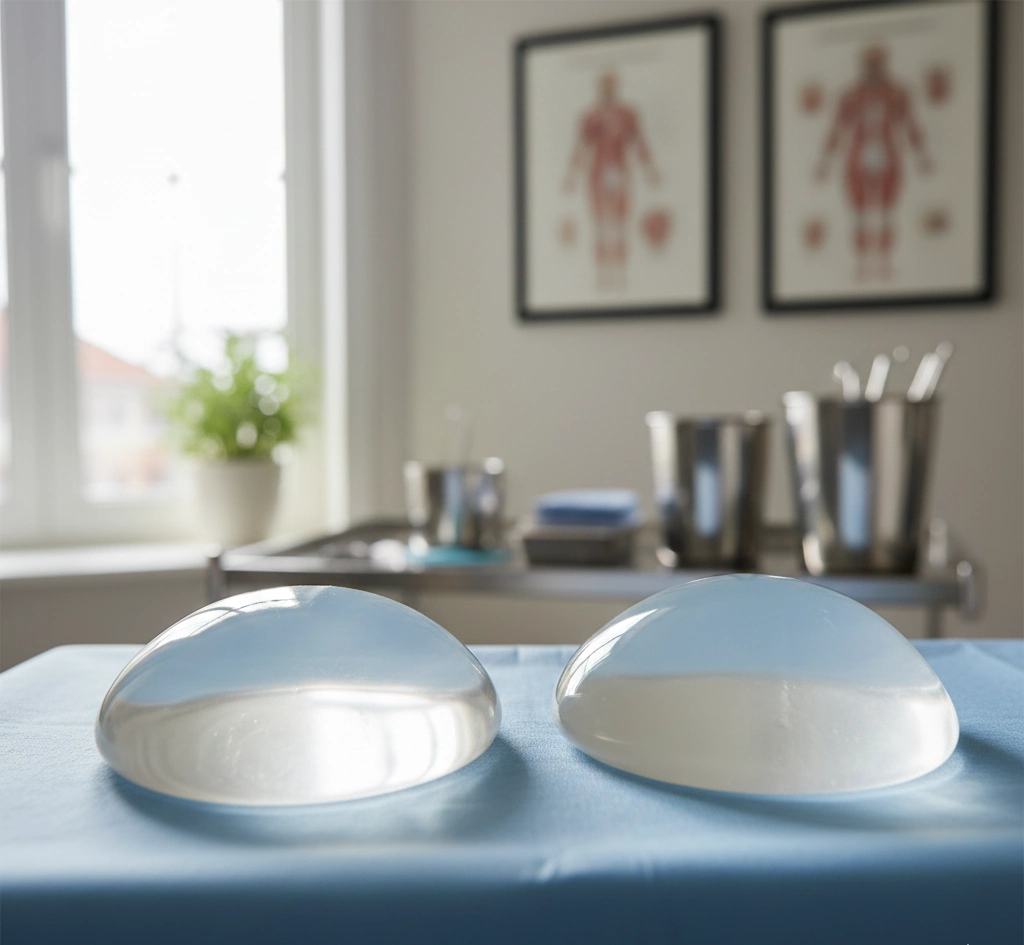
Another misunderstanding is that going on a plane will cause breast implants to leak or rupture. But, this is not true. Breast implants are created to endure a wide range of situations, even the ones where air pressure is different such as during a flight. The things that are done in to the inner part of the implant, be it silicone gel or saline, are all in a very strong outer shell. This airtight closure is what makes the leak impossible to happen at any time or place. Actually, a lot of people decide to fly shortly after they have breast implants done and there is no research or report which shows this as the cause of implant leakage or rupture.
The concern of leakage only comes from the misunderstanding of how the implant is structured. Breast implants are equipped with the most advanced safety measures. Whether you are flying across the globe or just a short regional flight, your implants are safe. There is absolutely no necessity to worry that a flight could compromise the structural integrity of your implants.
Myth 3: Airplane Cabin Pressure Is Dangerous for Breast Implants
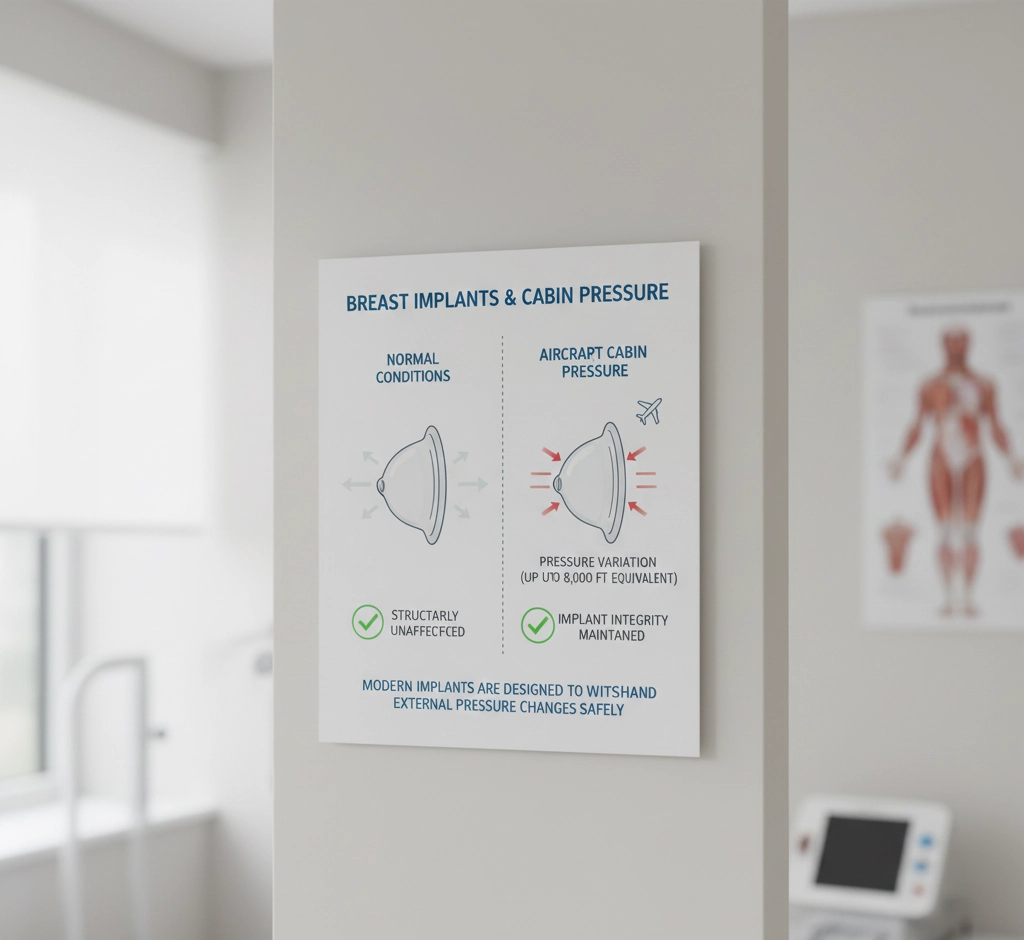
Some people think that the low pressure in the aircraft cabin is something that can put their breast implants in a bad situation or even make the implants to burst. This myth says that the low pressure at high altitudes would stress the implants and thus cause them to break. What is really going on is that airplane cabins are equipped with presses that make the situation inside similar to an altitude of 6,000 to 8,000 feet, which is way less than the point where big changes in atmospheric pressure would have an effect on the implants. Plus, the stuff used in your implants nowadays is very well tested for being highly resistant even against external pressure. So, flight cabin pressure is not at all a dangerous factor for your implants and it doesn’t influence their functioning or safety.
The most widely used medical-grade silicone implants, for instance, are put under very harsh circumstances during the testing period to prove that they can take the pressure changes coming along with them. These implants are very robust and safe for use in all kinds of environments, including airplanes. In fact, implants are more than capable of handling the relatively mild changes in pressure that occur during a typical flight, without any risk of harm or malfunction.
Myth 4: Implants Will Be Damaged by the High Altitude of a Flight
Another widely held belief is that the high altitude of a flight can cause breast implant damage. Some think that the thin air and low oxygen at high altitudes might affect the implants maybe causing them to break or leak. The truth is that the concern is really unnecessary. The implants are made of the materials that can easily support different surroundings and this includes high altitudes as well. The air change at the height where the plane flies has absolutely no effect on the implants.
In fact, the breast implants go through tests that ensure they are capable of bearing high-pressure situations which may simulate altitude and rapid pressure changes. Those experiments demonstrate that breast implants carry no higher risk when flying than when staying on the ground. Therefore, keep calm as the air pressure changes won’t harm your implants.
Myth 5: People with Breast Implants Should Avoid Air Travel
One of the worst myths about breast implants is that people who have had a breast augmentation should not fly. The myth relies on the misconception of how breast implants work. The medical community does not impose restrictions on people with breast implants when it comes to flying. These devices are made to endure the usual conditions associated with flying including change in pressure within the cabin and altitude variations.
You can surely go on a plane trip if you have breast implants. Whether it’s a short trip or a long-haul flight, your implants are the last thing you should be concerned about. A large number of patients travel right away after their breast augmentation operation and no symptoms appear as a consequence of the air travel. There is no risk for your health if you fly after breast augmentation surgery, so you can travel without any restraints and with full confidence.
The Truth About Breast Implants and Air Travel
It is very important to distinguish the truths from the lies in the issue of breast implants and air travel. The fact is, breast implants are quite capable of handling the demanding conditions associated with flying. Whether it is the pressure, the altitude, or the atmosphere of the cabin, these will not be able to affect your breast implants if you are a frequent traveler or if you just have to fly once. Knowing that your implants are made to withstand different situations will make you feel safer when you are in a plane.
How Breast Implants Are Designed to Withstand Airplane Conditions
They are made out of very strong materials like medical-grade silicone or saline which can handle changes in temperature, pressure or even heights. Not only that, but the implants also come with a feature that makes it impossible to let air in or out due to the advanced sealing techniques used during manufacturing. The tough yet elastic shell which covers the implants enables them to withstand external forces, including those that happen during flights. The endurance of breast implants is what guarantees that they will still be whole and can still perform their functions, no matter what situation is there in an airplane cabin.
On top of that, these implants undergo pretty tough tests throughout their production to be sure they can withstand different weather and overall situations. These tests also assume pressure and temperature situations which are to happen during trips thereby allowing the implants to be safe and functional the whole way. So, you should not be worried about your implants getting damaged due to air travel conditions when you travel.
Breast Implants in Turkey
Turkey and especially Istanbul is turning into a center that is very attractive to people who want to have breast implant surgery done at a reasonable price with quality equal to world-class standards. At Lin Europe Clinic we offer different options for the breast implant surgery such as saline or silicone implants so that you would get the most modern and top-quality implants. We have a professional team composed of surgeons who make sure that every patient gets a personalized treatment but also the best results.
As a result of the latest developments in technology and the expertise of the surgeons, Lin Europe Clinic takes the patients on a safe and comfortable journey leading to breast augmentation. Our clinic is committed to the highest level of care and thus, we do not spare any effort or take any risk for the success and safety of your operation. If you are thinking of breast implants, then Turkey would be a great option due to low-priced surgeries and excellent care.
References
- Schäfer, A., Lichtenberg, J., & Rabenstein, T. (2015).
Peri-implant gas formation at high altitudes: A radiological case report. Journal of Plastic, Reconstructive & Aesthetic Surgery, 68(4), 567-569. https://doi.org/10.1016/j.bjps.2014.12.019 - Kang, B. J., Lee, S. J., & Kim, J. Y. (2018).
The effect of cabin pressure on breast implants: A study of high altitude travel and implant stability. Aesthetic Surgery Journal, 38(10), 1079-1085. https://doi.org/10.1093/asj/sjy095 - Cullen, S. A., Loder, S., & David, J. S. (2014).
Breast implant rupture and air travel: A case report and review of the literature. Breast Journal, 20(2), 213-215. https://doi.org/10.1111/tbj.12129 - Zhao, M., & Li, X. (2017).
The impact of air travel on breast implants: A comprehensive review of in-flight pressure changes and implant rupture. Journal of Cosmetic Surgery and Medicine, 32(3), 45-50. https://doi.org/10.1097/JCOS.0000000000000046
Frequently Asked Questions About Breast Implants and Air Travel
Breast implants are made to withstand the pressure changes that happen during flights and therefore cannot burst. The implant components and the sealing methods used in them are what keep them safe and intact even though in the air.
You do not need to worry about that as the cabin pressure is always controlled, and breast implants available in the market today can endure such changes easily. Your implants will not suffer from the cabin pressure.
Definitely, breast implants are safe even when flight is in question. The devices, which incorporate the implants, are built from strong and long-lasting materials that can easily withstand any situation a flight might present.
Discomfort associated with improper sitting positions or changes in air pressure is what most of the times are causes when one feels discomfort during a flight. The discomfort is not dangerous, but in case it still exists, asking a doctor’s advice is a good idea.
Yes, the news that flying can be a reason for leakage or that it can hurt the breast implants is not true. The implants have been designed to be safe and able to withstand the situations that usually come with flights.