Your BBL is fluffing when swelling drops and the fat feels softer.
The post-operative period of the Brazilian Butt Lift (BBL) is well-known for the “trust the process” aspect. Immediately post-operation, patients often experience a panic attack because their buttocks feel rock-hard, appear swollen, and are unnaturally high. Thus, the main question arises: “How do you know when your BBL is fluffing?” At Lin Europe Clinic, we lead patients through this captivating stage where the “surgical look” disappears, and the genuinely natural, jiggly contours evolve.
“Fluffing” is a layman’s term that refers to the softening and settling of the transferred fat. In a similar way to how breast implants “drop and fluff,” the transplanted fat requires time to be connected to your body’s blood circulation and for the skin to stretch to the new volume. Identifying the signs of this change helps one to stop worrying and start appreciating the new figure.
What “Fluffing” Actually Means?
At a BBL, fat is taken from different parts of your body and injected into the buttocks. This causes the tissues to be traumatized. To protect the tissues, your body reacts by inflammation at the early stage. The buttocks are surrounded by fluid (edema), and the area becomes tight and firm. Usually, people say that it is like a “cement block” that you can touch.
Fluffing is the time when the swelling goes away and the fat cells that were still alive start behaving like regular body fat. The skin, which was so tight that it barely could keep the fat after the injection, slowly starts to become less tense. This is the moment when your “hard” results change into “soft” ones.
Sign 1: The Texture Change (The Poke Test)
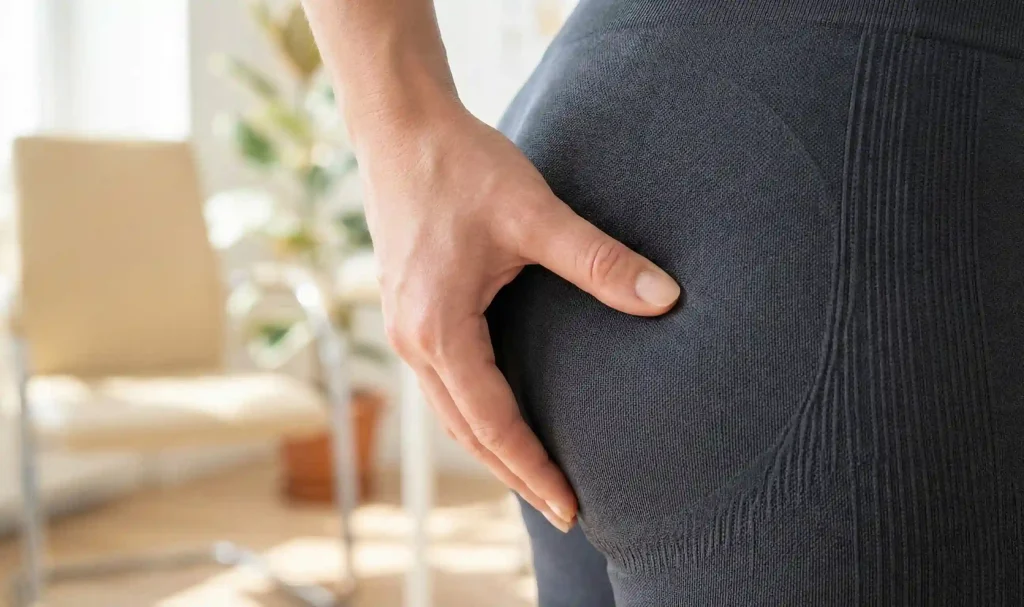
The first and most noticeable sign that your BBL is turning soft is the change in texture. At first, if you poke the side of your hip or the butt, it will resist your fingers very strongly, as if it were a rock. It is feeling like a dense and tough material.
Later on, when you are at the stage of fluffing (normally between weeks 6 to 8), the tissues become less compact. When you push your fingers in, the skin will give, and it will quickly return to the previous state. It is becoming similar to the rest of the body fat that is mushy, rather than a solid muscle. You will observe that your hips and behind move more naturally in your walk and thus your butt will have that nice pleasant “jiggle” instead of being stiff.
Sign 2: Increased Projection
Quite a few patients wrongly assume that their butt is shrinking during the recovery phase because when the swelling decreases, the figure becomes smaller. Yet, you may observe that during the fluffing phase your projection might even get better or at least stay the same.
The skin post-op is so tight that it is pressing the fat right onto the muscle, thus making the fat look smaller. When skin elasticity improves (fluffs), the fat can now protrude freely and is not forced to stay flat by the tight skin. Your body curves will be more rounded and the fullness will be noticeable because the flesh is no longer held in by the skin. The transformation of the silhouette changes from a plateau “shelf” to fuller, more feminine curves.
The Timeline: When Does It Happen?
Fluffing is not a single moment but a gradual change.
- Weeks 1-4: The “Hard Phase” Maximum swelling. The skin of the area is shiny, firm, and sensitive.
- Weeks 6-8: The “Transition Phase” There is a significant reduction in swelling. You can feel the patches of softness starting to develop.
- Months 3-6: The “Fluffing Phase.” Now the major softening can be experienced. The shape is settled, and the skin has completely relaxed.
- 6 Months+: Final Result. The fat has become integrated and is now soft and stable.
The Role of the Faja (Compression Garment)
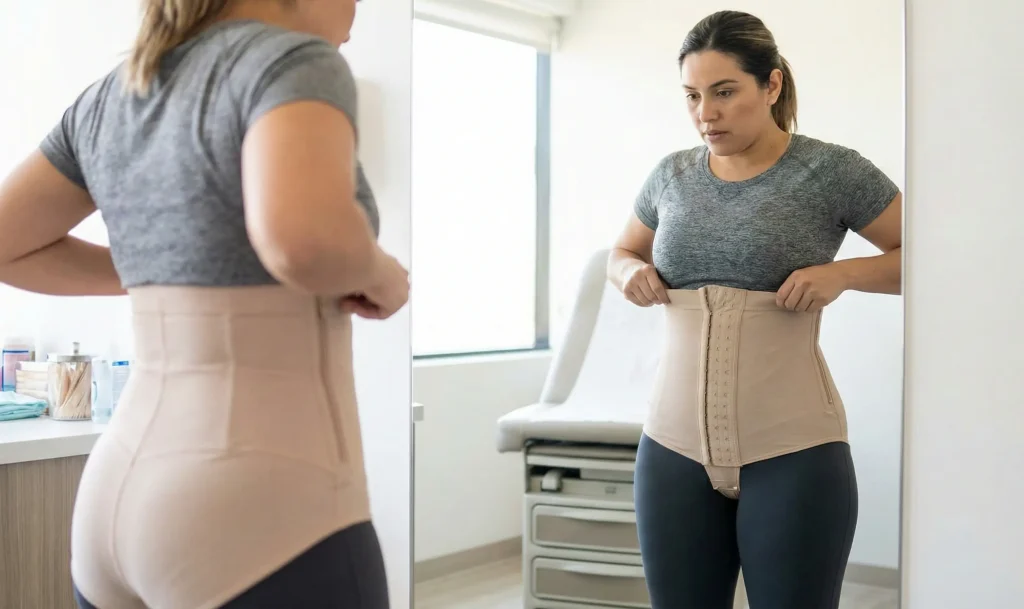
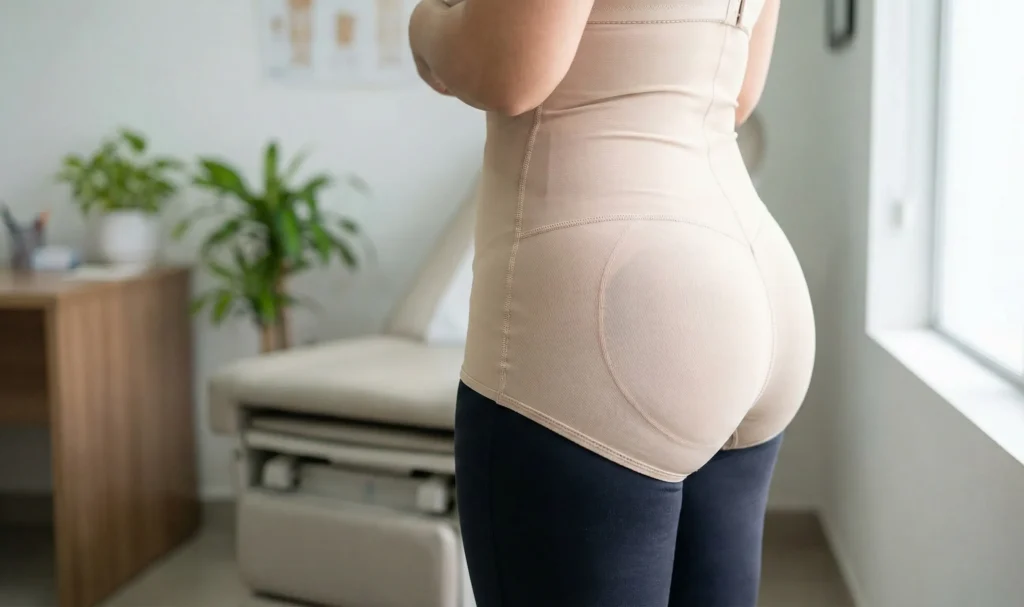
Your compression garment is integral in this unfolding of the events. Initially, the faja keeps the swelling under control. On the other hand, if the faja that is worn is too tight and worn for a long time, the fluffing of the tissues might actually be delayed. When you apply too much pressure on the fat cells, you are at risk of tissue death (necrosis) or the cells simply not growing naturally.
At Lin Europe Clinic, we commonly recommend our patients to change to a lesser compressive faja or use it for less time daily once they reach the fluffing stage (usually around 2 or 3 months). This way, the fat is given the opportunity to “breathe” and not being forced to take on the shape without limitation.
“Feeding the Fat” for Better Fluffing
In order for your BBL to fluff successfully, the fat cells need to survive. You should not be restricting calories during the fluffing phase. To “feed the fat,” we tell our patients to eat healthy fats (avocados, nuts, salmon) and drink plenty of water.
Should you shed weight too fast within this timeframe, you will deprive the newly grafted cells of nourishment, and rather than fluffing, your BBL will shrink. By keeping a steady, healthy weight, you allow the fat cells to be plump, hence you get the optimum texture and volume.
BBL Recovery in Turkey
Turkey is the number one place for body contouring in the world. At Lin Europe Clinic, Istanbul, we are proud to be one of the leading centers for a safe BBL. We realize that recovery time is equally as crucial as the surgical procedure. Our surgeons employ the vaser system for extracting the top-quality fat, which results in the best fat survival and thus nicer, healthier fluffing.
We look after you through the entire hardening and softening stages with our “all under one roof” service model. When it comes to making your faja smaller in size and massage techniques for lymphatic drainage, we offer the most reliable advice to assist you with your fluffing journey. Together with you, we create your dream figure in Istanbul, and support you until your results become soft and natural.
Frequently Asked Questions About BBL Fluffing
You know your BBL is fluffing when your butt cheeks totally change their texture, simply become soft and wobbly to the touch, and the order hardened, swollen “cement” feeling gone.
The fluff stage normally begins from 6 to 8 weeks and lasts until the 6 months’ mark.
It can look more rounded and sticking out as the skin loosens, but fat addition is not what happens at all. It is the shape that settles.
Yes. Overly tight compression can limit fat cells and as a result, prevent them from settling properly. Your doctor will advise you when you can start to loosen your garment.
Have a balanced diet with a good amount of healthy foods such as fats and proteins. Steer clear of crash diet which leads to the shrinking of fat cells.
Del Vecchio, D. A., & Rohrich, R. J. (2009). A classification of clinical fat grafting: different problems, different solutions. Plastic and Reconstructive Surgery, 124(2), 698-700.
Hoyos, A. E. (2014). High Definition Body Sculpting: Art and Advanced Lipoplasty. Springer.
Khouri, R. K., & Khouri, R. K. Jr. (2014). Current clinical applications of fat grafting. Plastic and Reconstructive Surgery, 134(4), 502e-513e.
Mendieta, C. G. (2011). The Art of Gluteal Sculpting. Quality Medical Publishing.
Sinno, S., et al. (2016). Determining the safety and efficacy of gluteal augmentation: A systematic review of outcomes and complications. Plastic and Reconstructive Surgery, 137(4), 1151-1156.