
Results are usually stable after ten years.
The Stability of Facial Structure After a Decade
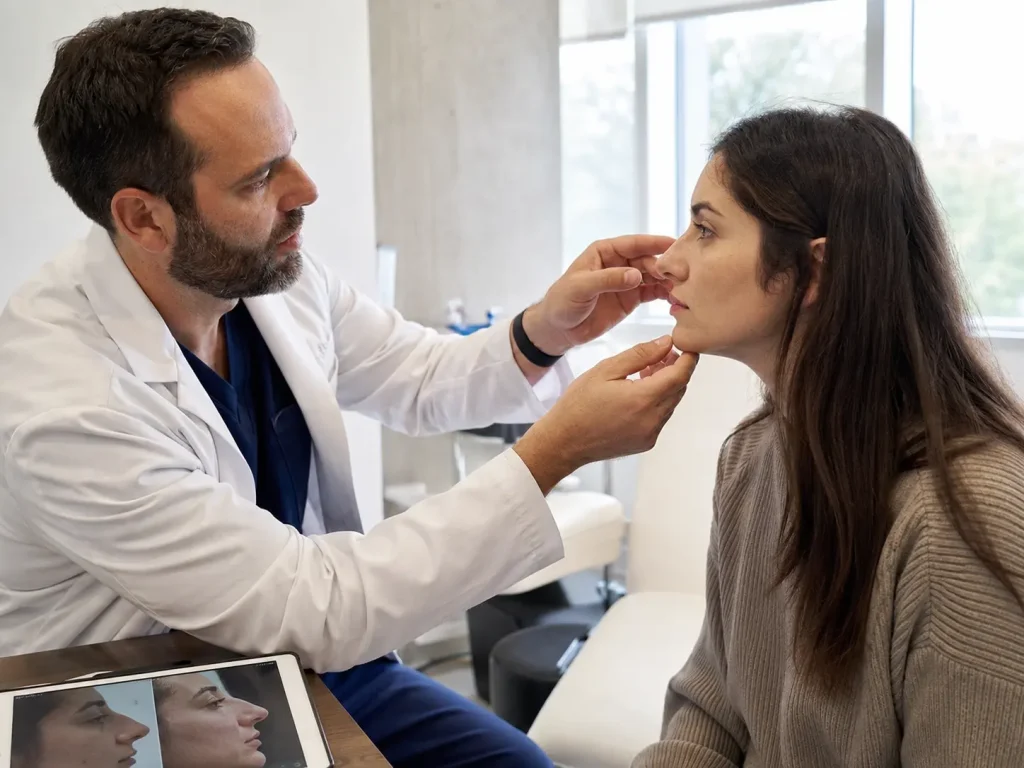
The moment of reaching the 10th year after a rhinoplasty is a major milestone that shows your surgeon’s work, your surgical team’s competence, and the quality of your surgical work foundation. At this point, everything inside has been healed to the bone (so to speak), internal scar tissue is completely matured, swelling has gone away many years ago, and cartilage grafts have been fully assimilated by the facial surroundings. When structural preservation techniques were utilized in the initial procedure, septal or ear cartilage that underpins a nose remains strong. They continue to support a refined projecting nose tip and smooth, straight ridge.
Nonetheless, noses reconstructed using older subtractive methods in which huge pieces of cartilage and bones were chipped away can already or even a little later than a decade, reveal changes. Lack of sufficient cartilage may allow the constant force of gravity and natural scar tissue tightness to result in a slight collapse of the structure, such as an inverted-V shape or drooping tip. Those noses that had strong structural grafting, like septal extension graft and columellar struts, are the least likely to suffer these late-time issues and will keep their visual strength and nose function in the best condition.
Dermal Changes from the Aging Process
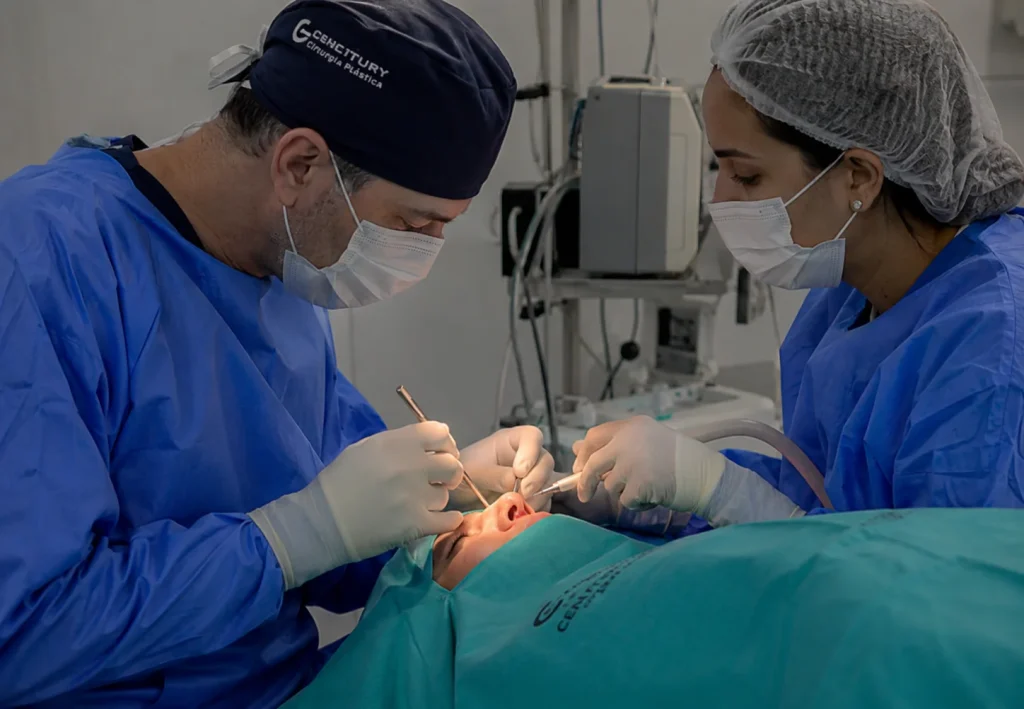
In reality, the idea that the face of a rhinoplasty patient will not experience the natural aging changes is wrong. Though the sculpted bone and cartilage frame will be modified permanently, your skin and the fat layer just below it will follow their aging pattern, that of the whole facial area. After 10 years of time, the natural process will thin, and the loss of the skin’s collagen and elastin makes you look older. In some cases, this aging of skin could lead to the underlying cartilage structures and graft joints being more defined or visible than before, especially in the very early years after surgery. Microscopic features of the cartilage can become slightly palpable in skin areas that are thin and, at times, quite palpable, whereas individuals with thick skin tend to have a soft smoothness. This interplay between aging skin and underlying facial bones has made surgeons nowadays even more mindful when shaping and rounding the graft edges to ensure an absolutely seamless result that remains for decades.
Respiratory Efficiency and the Function of a Nose over Many Years
The success of a rhinoplasty is judged not only by beauty and longevity but also by how well a person’s breathing has been taken care of over a long period of time. Ten years down a patient’s road with a rhinoplasty done properly, breathing is easy and clear from nose to nose without any blockage. The structural support that was added to the internal and external nasal valves during the first surgery stops the nasal walls from being pulled in while inhaling deeply, thus enabling air to flow freely even in older age. On the other hand, the reduction or damage of the internal valve without structural support at the initial stage may lead to a slow worsening in breathing over 12 years as a result of tissue contraction. From slight irritation during surgery to full-blown stuffiness or even snoring, breathing discomfort will grow as time goes on due to natural tissue changes.
Maintaining Facial Integrity, Protecting Facial Skin after a Face lift
Keeping the shape of a nose you’ve been satisfied with is the biggest reward of your rhinoplasty 10 years after your surgery. It is important to take care of the anatomy of a nose to the level that it can be preserved for the rest of your life. Your naso-maxillary region is at the center of your face, which naturally makes it very attractive visually, and that, on one hand, makes it more prone to trauma. To ensure that your aesthetic investment is not only maintained but further improved with the changes of time, you must continue adopting practical protection methods when partaking in extreme activities or even at home. Engaging in contact sports without a shield on your face, exposing the nose to blows and so on, or disregarding facial safety rules may result in fracture of the relocated nasal bones or shifting of the implanted graft in the tissue. It has to be noted that these are risks which could still arise even 10 years after you had done your original procedure.
Rhinoplasty in Turkey
Clinical excellence and genuine human empathy make us unique at LIN Europe Clinic, where your facial features, advanced structural rhinoplasty techniques, and surgical strategies are in the perfect hands of our medical team without any compromise. We believe that the long road to rhinoplasty success, with its exact cartilage grafting, structural support vectors and tissue changes, needs an environment of sophisticated medical treatment, total transparency and high support, which puts evidence-based medicine as the number one priority. When you decide to trust in our dedicated doctors of LIN Europe Clinic, your nose’s anatomical structures are examined in the most accurate way. You enjoy an end-to-end, personal preparation that combines detailed physical examination, high-resolution tissue imaging, and customized long-term counseling that will enable your nose to age elegantly as well as be a source of your pride at every stage of your life. Our top medical staff takes care of both your appearance changes and your health aspects to make sure you do not worry at all about your new profile being too sharp, or, on the contrary, not very clear, after you recover.
FAQ:
After 10 years, all the internal healing and swelling have long been completed. Also, the graft tissue has been fully absorbed into the body. Assuming the rhinoplasty involved recent developments of the structural techniques of nose shaping, the nose will not change its shape significantly and even though the skin will be aging naturally, the nose shall remain beautiful.
Barring any major accident, a rhinoplasty should not really be at risk of ruining or collapsing after 10 years. However, sometimes in very rare cases, if the nose job involved aggressive and outdated reductive methods without considering the use of support structures, late scarring contractions might occur that can cause minimal tip dropping or bridge collapse after decades.
In a sense, yes. Because the cartilage and bone have been re-shaped by surgery and hence remain in a fixed position, it is not they that age. However, as the skin which covers a nose gets thinner with age, it will gradually allow the underlying graft contours to become more visible and thus slightly more defined.
If the surgeon has provided adequate structural support to maintain the nose valve, there can be minimum disturbance in normal breathing. If a narrow airway without support has been created during surgery, tissues might have changed progressively and thus air resistance is likely higher in the next ten years.
Yes. A revision rhinoplasty surgery at a later date (for instance, 10 years or even more) might be the right decision in case you want to make late-stage structural corrections, fine-tuning of appearance aspects or improving your ability to breathe more efficiently. This is perfectly safe to go under again.
Toriumi, D. M. (2006). Structure rhinoplasty: Maintaining long-term tip projection, rotation, and cartilage stability over 10-year follow-up periods. Facial Plastic Surgery Clinics of North America, 14(4), 289-301.
Gunter, J. P., & Rohrich, R. J. (1987). Management of long-term structural changes, cartilage graft preservation, and skin envelope aging in rhinoplasty. Plastic and Reconstructive Surgery, 80(2), 161-173.
Rohrich, R. J., et al. (2014). Advanced postoperative care, deep structural stability, and long-term tissue integration in primary and revision rhinoplasty. Aesthetic Surgery Journal, 34(5), 587-595.