Bruising is common and usually temporary.
Periorbital Ecchymosis: A Standard Biological Response
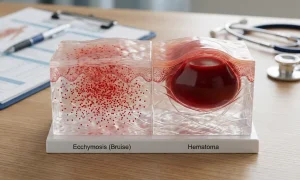
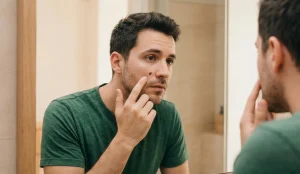
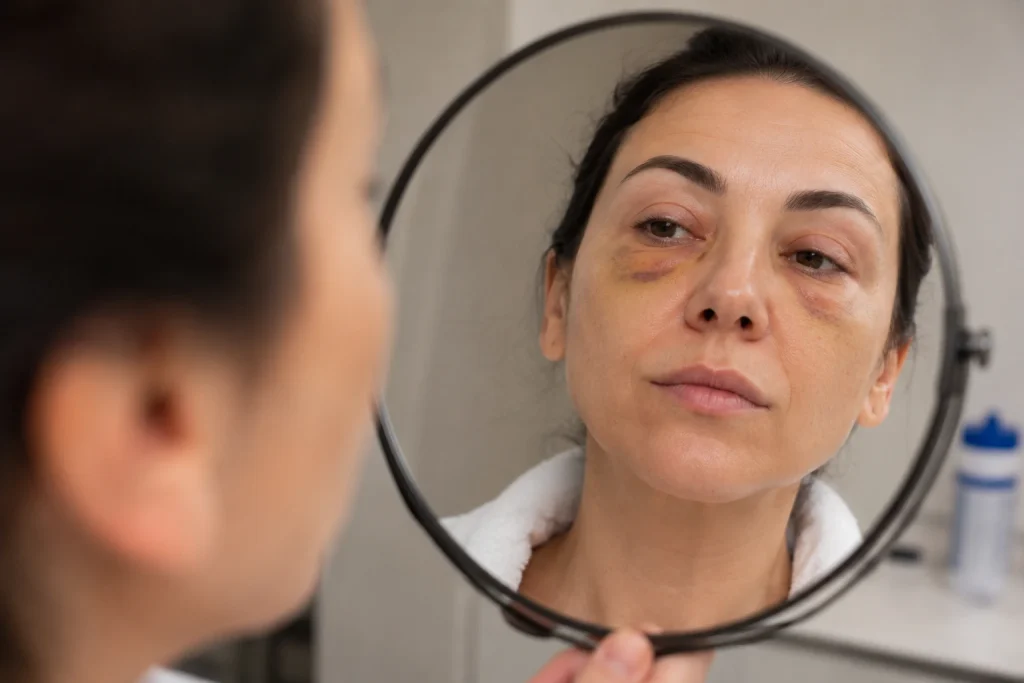
In the specialized area of facial plastic surgery and periorbital rejuvenation, we regard periorbital ecchymosis (bruising) as one of the natural and normal physiological responses of the tissue to the surgical intervention. This is because the eyelid skin is very loose and well-vascularized, and the subcutaneous layer is quite thin. During the surgery, when the team precisely removes skin or sculpts fat pads, some capillaries are broken. As these small vessels repair themselves, blood cells leak into the surrounding tissues, and the transition in color is observed by the naked eye – starting with deep purple or blue and fading to green and yellow as the body metabolizes the pigments of the blood. Although the visual effect may be quite striking during the first few days, it should be understood as a mere superficial and local manifestation of healing rather than a complication of the tissue structure.
Navigating the Bruising Lifecycle: The 14-Day Roadmap
Your predisposition to bruising depends heavily on your vascular sensitivity and your compliance with the post-surgery instructions. Here is a guide with the typical phases of ecchymosis which will give you confidence as you reveal your new look:
- Days 1–3 (Peak Intensity): Visibility of bruising is highest at this stage. The color is dark, and even the lower eyelids may show bruising because of gravity—this may be the case even when the surgery was only done on the upper eyelids.
- Days 4–7 (Transition Phase): Blue and purple colors start to fade and are replaced by yellow and green shades, as the lymphatic system is actively removing the waste.
- Day 8 – 14 (Resolution): Almost all patients’ bruising will have completely gone by the two weeks. If there is a slight discoloration, it can be easily covered up with a small amount of surgical-grade mineral makeup allowing you to be seen in public without a problem.
Vascular Kinetics and Accelerating Clearance
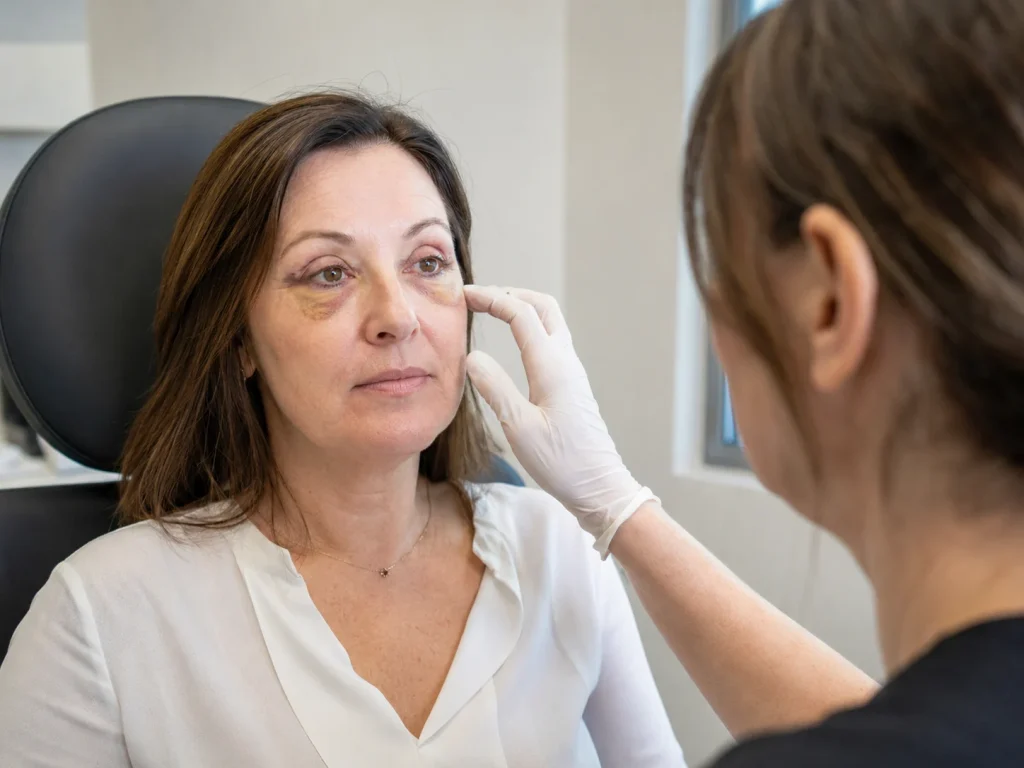
Those who maintain a high level of personal appearance and perfection of facial features cannot afford to neglect the behavioral and preparation restrictions imposed by the surgery. Your healing periorbital vascular framework should be safeguarded, as it is central to your progress. Your body working against surgical healing inevitably means biological costs.
Sleeping with your head elevated by means of several pillows so that gravity aids the drainage of fluid from the eye sockets is an integral part of post-surgery care. Apart from that, the use of nicotine and other tobacco products must be completely ruled out. Nicotine is a powerful vasoconstrictor that causes the micro-vessels that feed the periorbital skin flaps to narrow, thus cutting off the oxygen supply that tissue needs to speed up the absorption of blood cells. Keeping your body clean is a prerequisite for your eyelid margins to develop with utmost biological accuracy.
Prohibited Compounds and Micro-Vascular Stability
Going against the strict medication rules set by your surgery team will lead to biological consequences so severe that they will directly affect your aesthetic results. Patients are advised to stay away from all non-steroidal anti-inflammatory drugs (NSAIDs), including aspirin, ibuprofen, and naproxen, for at least two weeks after the procedure.
These drugs act against the normal process of platelet aggregation, and they also thin the blood, which makes one more susceptible to the formation of dark bruises or localized hematomas that may develop under the healing eyelids. In addition, one should not take any over-the-counter supplements such as fish oil, vitamin E, or ginkgo biloba because they also interfere with the body’s clotting mechanisms. Use the pain relief methods suggested by your surgery team only, as they help you stay comfortable without adversely affecting your blood.
Eyelid Surgery in Turkey
When you choose LIN Europe Clinic, you are choosing a top-tier global medical oasis where your facial aesthetics, structural rejuvenation, and surgical journeys are handled with clinical skill of the highest level and deeply heartfelt empathy. We understand that dealing with the stages of bruising that are part of the advanced blepharoplasty is challenging and thus requires a very highly developed, transparent, and supportive environment that advocates evidence-based medicine above all else. LIN Europe Clinic in Turkey is the world leader in advanced face remodeling and plastic surgery aftercare, offering a tranquil environment where your health plan is strictly aligned with the highest standards for patient safety set worldwide.
Entrusting our specialist team at LIN Europe Clinic in Istanbul is the best move to make, as they will keep your recovery standards under absolute and thorough diagnostic control. We offer you all the information, the scheduling of periorbital bruising clearance, and safety checklists customized to help you through each of your tissue maturing and lifestyle integration phases. Our team of highly qualified doctors takes care of your cosmetic investment and your systemic health so that you can be at ease while getting the figure you want. Enjoy the sophisticated and holistic care at LIN Europe Clinic and have a perfectly balanced face, delivered safely and skillfully in the heart of Turkey.
FAQ:
Bruising is a normal healing process that is expected. Although the bruising might look unsettling during the first couple of days, it is only at the surface and should disappear completely after 10 to 14 days.
Yes, you can cover your bruises with makeup when your doctor takes out the stitches and the incision lines are closed. You should use specially formulated, mineral-based, surgical camouflage makeup in such cases.
The fluid and blood cells can be tracked by gravity naturally from the upper eyelid surgery site down to the lower eyelid and cheek area; this is a normal and temporary occurrence.
Definitely. Cold compresses applied only to the outer bone around the eye—avoiding the eyelid itself—are a quick, natural way of closing the blood vessels and lessening the area of bruising.
Contact your clinic if the bruising goes together with intense, local pain, sudden changes in your vision, a significant amount of eye discharge, or the situation with the swelling between the two sides is greatly imbalanced.
Putterman, A. M. (1998). Blepharoplasty: Analyzing localized tissue tension, periorbital healing kinetics, and long-term scar maturation standards. Ophthalmic Plastic and Reconstructive Surgery, 14(2), 123-134.
Hester, T. R., et al. (2000). Advanced surgical protocols in periorbital rejuvenation: Balancing skin excision with kinetic preservation. Plastic and Reconstructive Surgery, 105(3), 1111-1122.
Baker, S. S., et al. (2013). Postoperative lifestyle boundaries, vascular homeostasis, and structural stability standards in aesthetic blepharoplasty. Aesthetic Surgery Journal, 33(4), 512-521.