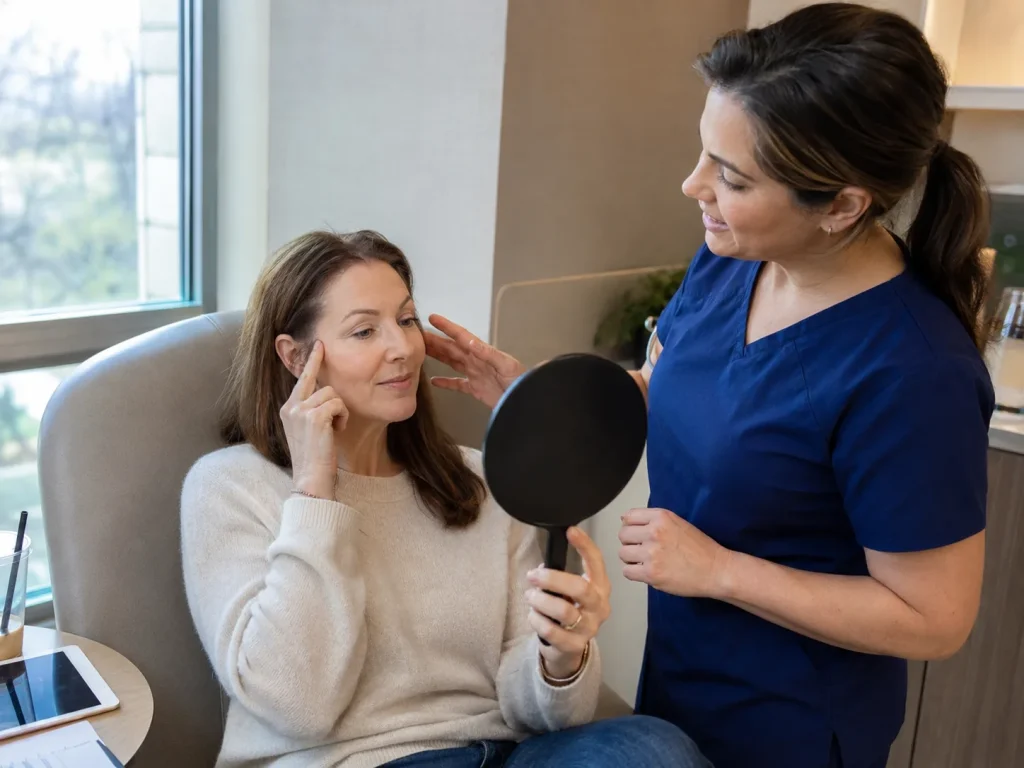
Most patients look normal within two weeks.
Biological Timeline of Periorbital Maturation
In the very focused area of facial plastic surgery and periorbital rejuvenation, patients are looking for a fixed point in time when they will feel “socially ready” and look natural after the procedure. The time to return to a normal look depends on the quick, but step-by-step, healing process of eyelid tissue. Because eyelids are the thinnest skin on the body, they are highly sensitive to changes; however, this same high blood supply enables them to quickly heal and clear the effects of a recent trauma.
- The Acute Recovery Window (Days 1–10): This is the phase when healing is visible. Bruising and swelling will be quite significant, but this is completely normal. Normally, your stitches will be taken out by the end of this period, and you will be able to start using mineral-based, surgical-grade camouflage makeup to cover the remaining yellow-tinted ecchymosis.
- The Socially Rested Window (Weeks 2–4): At two weeks, about 80% of the visible bruising and initial swelling has gone down. You will appear “normal” to someone who is not paying a lot of attention, although your closest friends might notice a slightly rested, fresh look in your eyes.
Factors That Influence Your Individual Maturation Rate
Although the two-week point is the average standard for looking socially normal, the actual process depends on a combination of technical surgical factors and your own biological resilience:
- Surgical Complexity: Redistribution of fat pads in eyelids with extensive manipulation or simultaneous brow lifts involves deeper tissue disruption and therefore a little more time for the fluid to clear completely is still needed.
- Baseline Dermal Health: People who have dense collagen and good elasticity in their skin will have fewer issues with abnormal swelling as their tissues repair, compared to those with very thin and transparent skin.
- Lifestyle Consistency: The degree to which you practically follow postoperative instructions like sleeping with your head elevated using multiple pillows and asking yourself low-sodium nutritional architecture will be majorly driving factor for the speed of the final swelling.
Protection of Facial Kinetics for More Natural Results
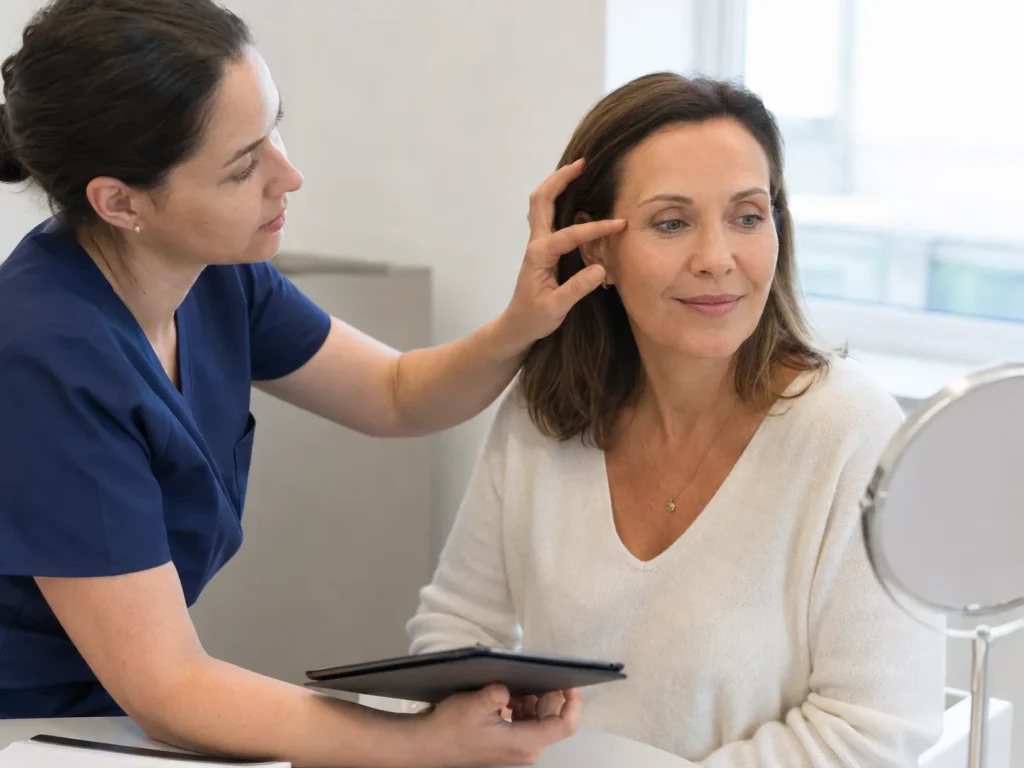
Following quite strict behavioral rules during your recovery phase is essential for people who keep a high level of personal grooming and expect flawless results from their cosmetic procedures. Your biological healing framework must be preserved, as you would be risking different types of biological reactions to make facial expressions or going out with the periorbital tissue in harsh elements, which might lead to one of the following: It might pull on the delicate healing skin, cause incisions to widen, prolong swelling, or make scars heal unevenly.
To make sure that your delicate eyelid margins heal with structural efficiency, you have to be very protective of your skin against environmental triggers by applying physical, broad-spectrum SPF on a daily basis and by wearing good-quality UV-blocking glasses. Also, it is a must to stop using nicotine and tobacco products completely. Nicotine is a strong systemic vasoconstrictor that quickly reduces the diameter of micro-vessels that deliver blood to the periorbital skin flaps and tissues, dramatically lowering blood oxygen levels necessary for the incisions to heal cleanly through cellular regeneration. Keeping a clean internal system will help your eyes to take on a natural, fresh look.
Social Ease Comes After Final Structural Maturity
It is very important to distinguish between looking “socially normal” and reaching “final structural maturity.” At the four-week stage of four weeks, you appear to be well-rested and energized to everyone. However, deep dermal layers and the internal scar capsule are still undergoing cellular remodeling processes. This internal phase can last up to three to six months after surgery. During this period, the initially hard incision line becomes softer, eyelid skin texture regains natural suppleness, and the final harmonious upper eyelid curve is clearly delineated. Your eyes will keep getting better as the tissue relaxes and, by-and-by, you will have a look that is “not only normal,” but also strikingly fresh and balanced.
Eyelid Surgery in Turkey
Choosing LIN Europe Clinic means you are entering a top global medical sanctuary where your facial aesthetics, structural rejuvenation, and surgical pathways will be handled with exceptional clinical expertise and deep empathetic care. We understand that undergoing advanced blepharoplasty with precise recovery phases requires a highly sophisticated, transparent, and very supportive environment that puts evidence-based medicine first above everything else. LIN Europe Clinic in Turkey is internationally renowned for advanced facial remodeling and plastic aftercare, offering a peaceful setting where your health map is tightly controlled by the highest global patient safety standards.
When you deeply trust our team at LIN Europe Clinic in Istanbul, the parameters of your recovery are monitored with the highest diagnostic thoroughness. We offer full, customized post-operative instructions, periorbital tissue mapping, and personalized safety checklists to accompany you step-by-step through all stages of your tissue maturation and lifestyle reintegration. Our top medical team will give you perfect protection for your cosmetic investment and systemic health, so that you can settle into your very own dream shape with total peace of mind. Come to LIN Europe Clinic for exquisite, all-embracing care and a finely balanced look, safely and skillfully created in the center of Turkey.
FAQ:
Generally, people cease to stare and consider you as someone who has just undergone surgery only after 2 to 4 weeks, as that’s when most of the bruising and swelling subside, quite a few even earlier – since the rest of the internal tissues mature over time and only mentally get used to the new image.
Usually within 7 to 10 days, once the sutures are taken out, you can start going back to the office if the work does not involve any physical effort. On top of that, you can do wear light makeup of a mineral nature to camouflage the downtime if you like.
At the one-month point, your eyes will be bright, fresh, and you will look a lot younger; however, they won’t seem “operated on” because the cuts have faded and the main swelling has gone away completely.
In order to speed up vascular healing, you need to totally avoid salt, keep your head elevated when you are sleeping, use cold compresses as suggested in the first 3 days, and stay away from nicotine at all costs.
You may look good at 4 weeks socially, but the most subtle and final structural changes will be seen between 3 to 6 months post operation after the internal tissues have completely softened and done settling.
Putterman, A. M. (1998). Blepharoplasty: Analyzing localized tissue tension, periorbital healing kinetics, and long-term scar maturation standards. Ophthalmic Plastic and Reconstructive Surgery, 14(2), 123-134.
Hester, T. R., et al. (2000). Advanced surgical protocols in periorbital rejuvenation: Balancing skin excision with kinetic preservation. Plastic and Reconstructive Surgery, 105(3), 1111-1122.
Baker, S. S., et al. (2013). Postoperative lifestyle boundaries, vascular homeostasis, and structural stability standards in aesthetic blepharoplasty. Aesthetic Surgery Journal, 33(4), 512-521.