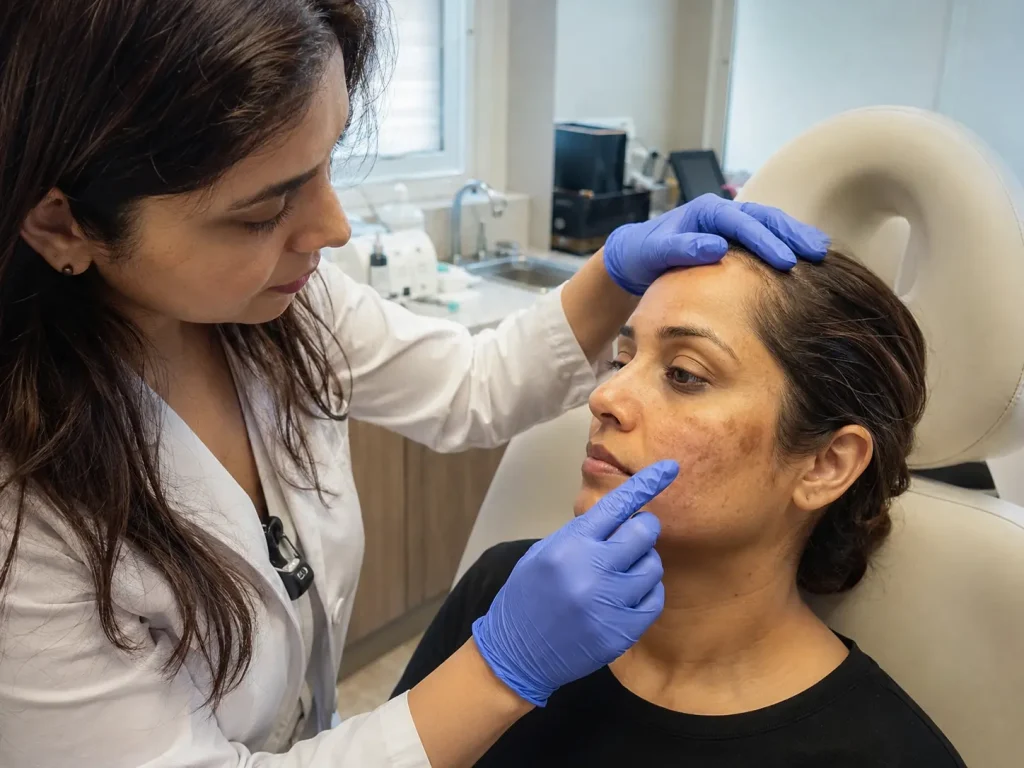
Mesotherapy may help improve melasma appearance.
Molecular Targeting of Melasma and Melanocyte Regulation
Cellular hyper-reactivity is a key component of the pathogenesis of melasma. Melasma is a multispectral, long-lasting, and acquired form of hypermelanosis that is usually characterized by the occurrence of symmetrical dark brown macules and patches that are primarily located on the malar, frontal, and mandibular areas of the face. Topical melasma therapy cannot always produce favorable results, as the topicals cannot reach the inner dermal layers where the melanocytes are overactive.
Mesotherapy is a very potent mechanical and chemical method for getting over this limitation. It does not limit their action to the epidermis but rather introduces depigmenting substances directly into the dermis. The active molecular components are transported through the use of mesotherapy to the environment of the hyperactive melanocytes, and the mesotherapy method helps to down-regulate melanin production, inhibit tyrosinase activity, and also re-establish the evenness of pigmentation from the inside.
Cutting-edge Molecular Ingredients to Subdue Pigmentation Cascades
In order to get rid of the existing dermal discoloration and to shut down the pathways that lead to hyperpigmentation, the mesotherapy chemical cocktail is usually fortified with strong depigmenting agents. The choices of these molecular blocks are based on mathematical calculations in order to disrupt the sophisticated biochemical events that lead to melanin overproduction.
- Tranexamic Acid: It is the main active ingredient in mesotherapy for melasma which can prohibit the binding of melanocytes to keratinocytes and inhibit the plasmin system which is one of the main reasons for pigment formation after UV exposure.
- Glutathione: It is a very potent, native antioxidant that changes the type of melanin synthesized from dark eumelanin to light pheomelanin, thereby contributing to the overall lightening of the skin.
- Vitamin C (Ascorbic Acid): It has a very strong decolorization power of oxidized melanin and is a powerful antioxidant that counteracts UV-induced free radicals.
- Niacinamide (Vitamin B3): It prevents the release of melanosomes into the surrounding cells so that the pigment cannot be deposited on the skin surface and show up on the outer skin.
Skin Homeostasis and Hyperpigmentation Aftereffects Prevention
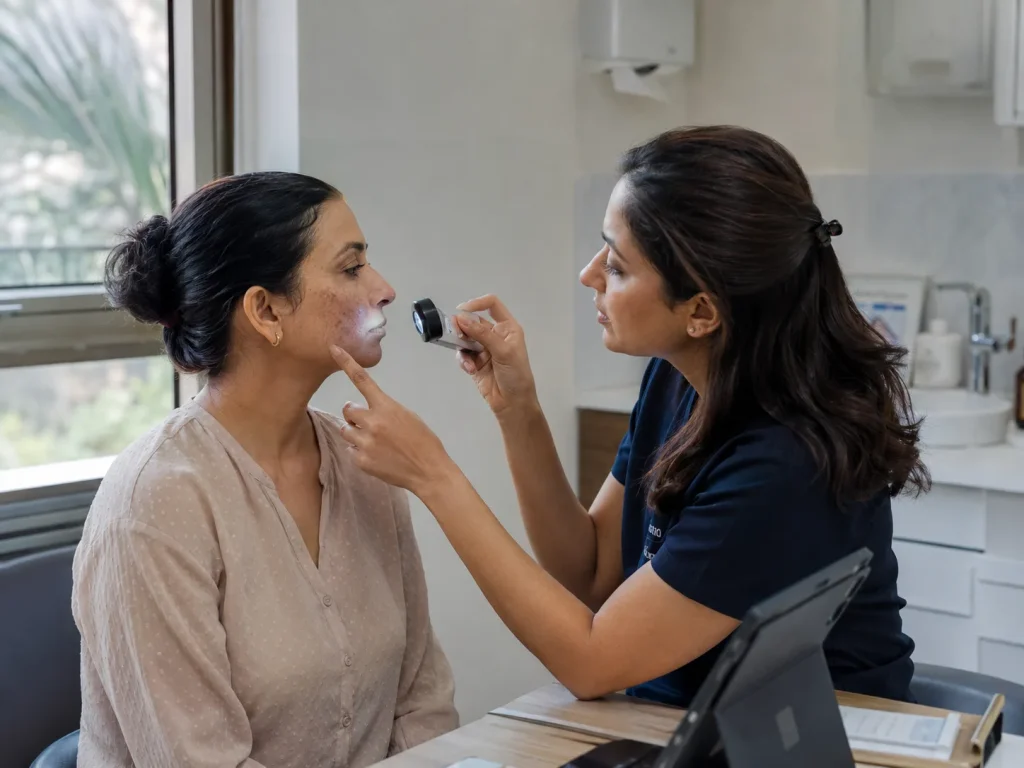
Without strict lifestyle boundaries and cellular environment sterility, any dedicated person who wants to look perfect and flawless with a very clear skin, in addition to a highly fit athletic body, should be warned that sudden inflammation is very damaging to the skin and can lead to you losing your skin progress. Melasma is a highly sensitive type of skin, and aggressive treatment of the face can even lead to a severe biological reaction: rebound hyperpigmentation, which worsens the original dark patches.
Using extremely fine micro-needles and performing the treatment very gently is the only way to do mesotherapy to avoid inflammation, and also to help you recover without any setbacks. In fact, in addition to covering yourself with a physical broad-spectrum SPF and wearing a hat, you should also do the “no nicotine” rule very strictly. Nicotine causes the constriction of microvessels in the face, which in turn hinders cellular recovery and preserves the inflamed state of the tissue that can result in the production of secondary pigment. A clean internal system is necessary for the depigmenting agents to exert their healing effect at a maximal level.
Is Melasma Downfall or Permanent Removal?
If you look at melasma as a genetically-driven chronic disease, then you will know that it is quite unrealistic to expect architectural stability of your appearance in the long-term. Mesotherapy can be very effective for fading dark spots and achieving a more even tone of the skin, but it is best to think of it as a mode of advanced clinical management detached from the concept of permanent cure.
Melasma is a skin condition that is worsened by hormonal imbalances, inherited tendencies, and environmental factors such as heat. Therefore, the melanocytes that are hyperactive still have their structural memory of tissue. Usually, with a full first treatment of four to six mesotherapy sessions, the pigment visibility can be drastically reduced, but the sudden exposure to the sun or hormonal changes can reactivate the cells. A combination of the injection schedule with a long-term continuous maintenance calendar and strict UV protection is necessary to keep the melanocytes in a suppressed state and to preserve a beautiful and well-balanced skin profile over time.
Mesotherapy in Turkey
LIN Europe Clinic is your passport to a premier international medical haven where skin health, non-surgical face transformations, and metabolic pathways are managed at the highest clinical level with the most profound empathetic care. We understand that in order to solve pigment-related problems like melasma, it is necessary to have a very sophisticated, transparent, and patient-friendly environment that puts evidence-based medicine at the highest level of priority. LIN Europe Clinic in Turkey is one of the best facilities worldwide for non-surgical facial remodeling and advanced mesotherapy therapies, and it offers a peaceful place where your health journey is carried out according to highly recognized patient safety standards worldwide.
At LIN Europe Clinic, Istanbul, you entrust your face to a highly experienced team who bluntly and thoroughly monitor the entire process of your treatment. We use skin mapping that is very detailed and personalized, checklists of UV protection, and nutrient synergistic advising that will lead you step by step through every stage of your cellular maturation and lifestyle integration. The medical team of our highest order will make sure that your cosmetic investment and systemic health go hand in hand, allowing you to rest comfortably with a clear conscience after your body reshaping. Come to the heart of Turkey and experience LIN Europe Clinic’s refined, comprehensive care and get a masterfully balanced canvas that is safe and masterfully delivered.
FAQ:
Essentially, mesotherapy cannot completely cure or remove melasma forever. However, it can remarkably fade and diminish the appearance of dark patches by injectiung depigmenting agents directly under the skin.
The majority of patients will need around 4 to 6 sessions, initially, spaced about 2 to 3 weeks, between each, in order to achieve a noticeable fading of their long-lasting hyperpigmentation.
Tranexamic acid is widely recognized as the most potent ingredient for mesotherapy treatment of melasma as it effectively inhibits the pathways responsible for melanin overproduction.
Certainly, since melasma is a long-term skin disorder, the dark blemishes may come back gradually if you do not keep your skin protected from sunlight or continue with regular maintenance sessions.
On the contrary, the procedure is quite bearable; before the treatment, a topical anesthetic cream is put on the face, which makes the micro-injections inflict very little discomfort or pressure.
Lee, J. H., et al. (2006). Intradermal micro-infusions of tranexamic acid for the treatment of melasma: A clinical and histological evaluation. Dermatologic Surgery, 32(5), 626-631.
Rotunda, A. M., & Kolodney, M. S. (2006). Mesotherapy and pigment modulation: A review of active compounds and cellular pathways. Aesthetic Surgery Journal, 26(3), 312-320.
Budamakuntla, L., et al. (2013). Comparison of local micro-injections of tranexamic acid versus topical creams in melasma management. Journal of Cutaneous and Aesthetic Surgery, 6(3), 139-143.