Shaving is usually safe after two weeks.
The Biometrics Of Follicular Anchoring and Early Graft Safety
Post-operative phase in trichology and restorative medicine is very critical, and precise clinical execution is necessary to meet the standards. One of the questions that arises is when it will be safe to shave after a beard transplant. However, the very answer to this question comes down to one significant point – the biological phases of follicular anchoring. Naturally, the hair follicle micro-grafts after the process need to be in a state of fibrin adhesion for 72 hours, which is the phase where the new hair roots are fixed in their facial channels by the body’s fibrin, the natural cellular glue.
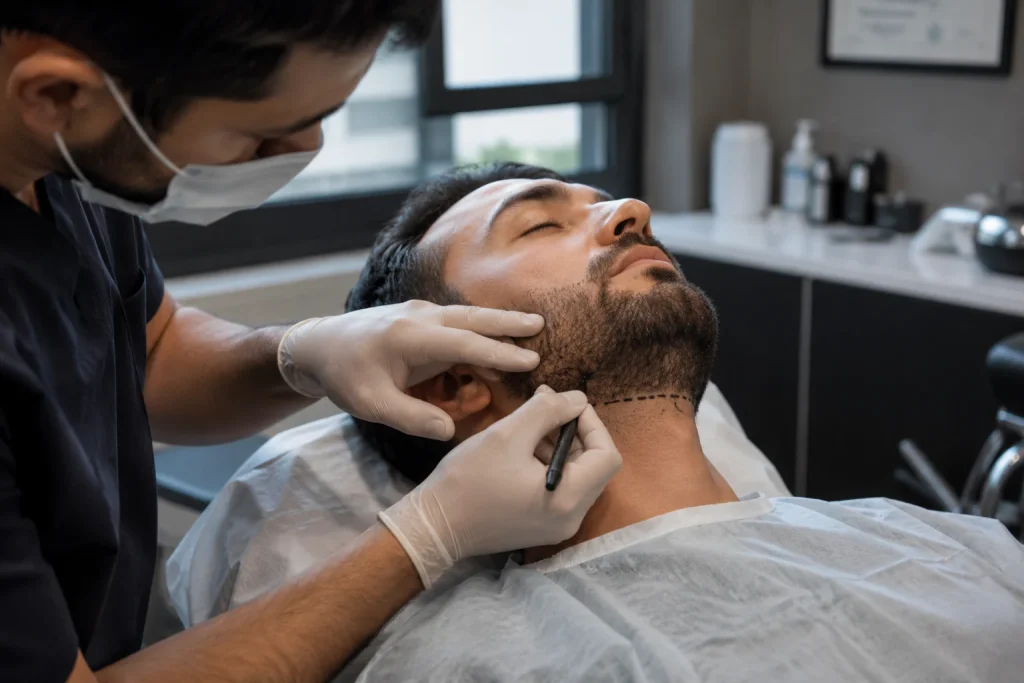
One careless rubbing, for example, shaving with a razor blade or trimming hair with a trimmer, will almost instantaneously dislodge the delicate hair roots, resulting in permanent graft loss and a patchy look. Reconstructive experts strongly recommend that you should not shave at all in the first 10 to 14 days after the procedure. This is a vital period during which the smallest vessels of the blood system succeed in connecting to the transplanted follicles, thus permanently embedding the living hair roots under the dermal matrix and making sure of their long-term survival.
The Epidermal Healing Phase and Trimmer Restrictions
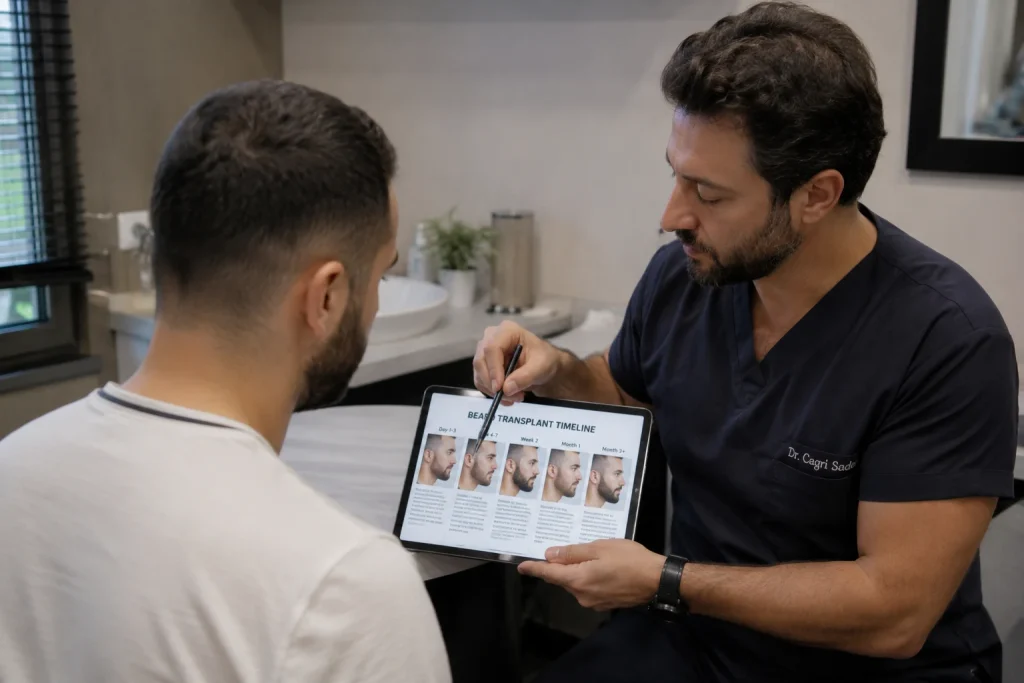
After the first fortnight, the follicles will be firmly fixed, although the adjacent facial skin will still be in the process of epidermal healing. Recipient areas will still be pink, have some micro crusts left, and be somewhat sensitive. Around the fifteenth day, the patients are given the green light to do the facial hair growth management; however, they are limited only to using a hair mechanical trimmer or scissors and not a traditional wet razor.
During the use of a trimmer at this intermediate stage, the guard needs to be adjusted to leave the hair one or two millimeters in height, so that the metal teeth will not touch the skin surface. It is forbidden to completely shave with a razor blade for the first month. The sharp blade exerts an extreme horizontal tension on the healing wounds and, at the same time, may bring bacteria to the skin pores, which are susceptible to hair folliculitis (inflammation of hair follicle), which could be one of the reasons why you might lose significant volume.
Preserving Sharp Facial Lines and an Athletic Frame
It is extremely important to fully comprehend the effect of a fabricated, well-defined jawline frame that complements your overall physical proportions and long-term architectural goals while analyzing your beard restoration journey. From the perspective of the individuals who work out extensively to transform their bodies, especially those who focus on lower-body hypertrophy and gluteal development, the lower facial structure is a very strong anatomical factor. A patchy, weak, or uneven beard can visually round your jawline, making you look like you don’t work out, which is a direct contradiction to your active lifestyle.
By strengthening your lower face with a thick, nicely shaped beard frame, the surgeon not only enhances your facial features but also harmonizes these features with your well-developed physical proportions. The new facial structure serves as a start to your upper body, projecting the same uncompromised systemic vitality and rigorous discipline as your physique. Following the post-operative shaving timeline strictly will ensure the sharp, masculine contours are perfectly developed, thereby preserving an elegant silhouette from every angle.
The Shock Loss Cycle and Razor Reintroduction
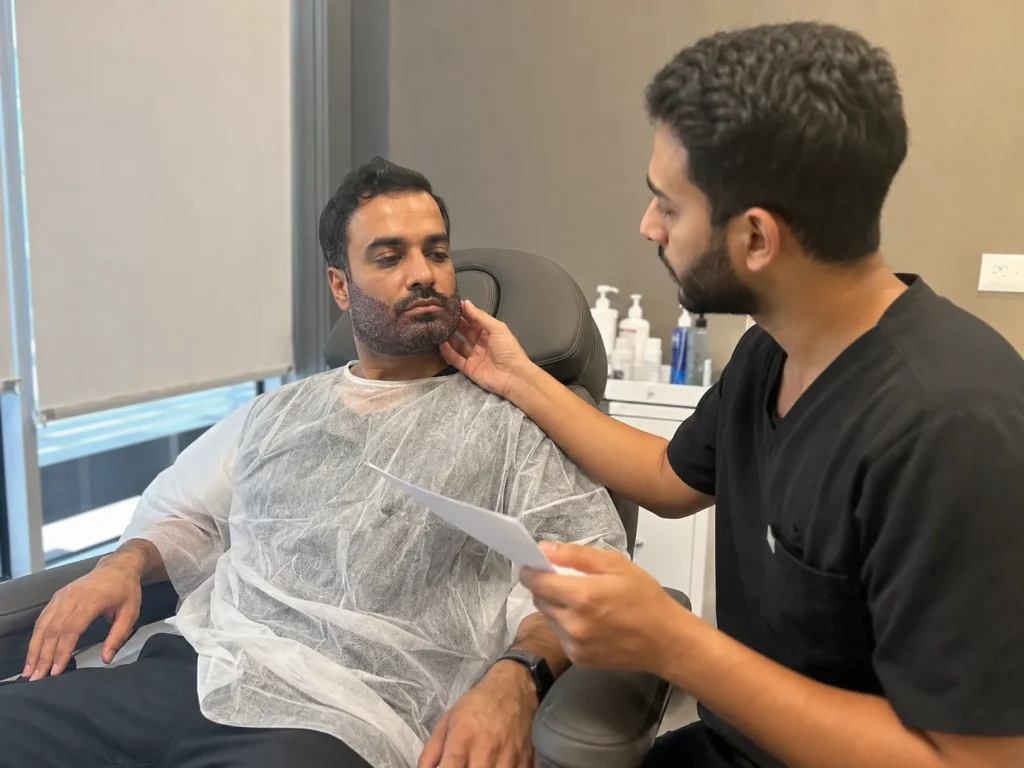
The absolute minimum time to wait before retaking a clean shave with a razor blade is thirty days post-operation, a timeline that coincides seamlessly with the major physiological transition known as shock loss. At the same time, the transplanted hair shafts will naturally shed as hair follicles temporarily enter a resting state due to surgery. This is a completely normal biological reaction; the living roots stay safe and healthy under the skin.
After the hairs shed, and there is no more redness or irritation, you can go back to your usual wet shaving routine. Actually, shaving the hairs that are shedding will boost the local micro-circulation and prepare the facial tissue for active growth. Around the third to fourth month, new, permanent beard hairs will emerge through the epidermis, and the fullest high-definition follicular density and final tissue maturation will be at its highest between twelve to eighteen months after the operation.
Beard Transplant in Turkey
LIN Europe Clinic is much more than just a beard transplant clinic – it is an entire medical oasis where your unique transformation is handled by world-class medical professionals with excellent clinical skills as well as empathy. We understand that a facial hair transplant recovery process is complex and requires a highly advanced, transparent, and personalized care level that supports evidence-based medicine above everything else. LIN Europe Clinic in Turkey is the global leader in advanced hair restoration and offers a peaceful place where strict patient safety standards are adhered to when planning a surgical procedure.
If you choose to trust our expert team of specialists in Istanbul, you will be in an environment that carefully plans the exact number of grafts and the contours of your face prior to any follicle work. We combine the most advanced diagnostic tools with the newest micro-sapphire blades to ensure that your beard transplant results in a natural, high-density look with very little downtime. Discover at LIN Europe Clinic the highest-level, comprehensive care and outstanding results, right in the center of Turkey.
FAQ:
It is very important that you do not use a razor blade for shave your face until a minimum of thirty days from the transplant has passed. Shaving with a razor blade before this time will be very damaging because the razor will exert mechanical tension on the fresh skin incisions and can dislodge the healing hair roots.
Yes, after day fourteen or fifteen it is safe to use scissors or an electric trimmer with a guard to trim your beard hair. You have to be very careful to ensure that the trimmer blade never comes in direct contact with the skin, at least one millimeter of stubble should remain.
If you dislodge a graft within the first few days it will certainly not grow and will even create a little missing spot in your density. So, you have to be very careful to not let this happen at all. Anyway, if after the contact with the graft you see that some kind of bleeding is occurring, you have to immediately get in touch with your reconstructive team for clinical advice.
Yes, this is a quite normal phase in the biological process known as the shock loss. The hair shafts are shed naturally because the follicles have entered a dormant phase but the roots are well protected and from the third month you will notice that they start growing new hair again.
LIN Europe Clinic has the best specialists in trichology and they have also embraced the latest in the technological micro-sapphire FUE methods so that they can give their patients the ultimate graft survival. Our medical team, who has specialized in hair transplantation in Turkey, personalizes each restoration program in a safe way to achieve a neat, natural, and dense jawline appearance.
Unger, W. P., & Shapiro, R. (2004). Hair Transplantation (4th ed.). Marcel Dekker.
Bernstein, R. M., & Rassman, W. R. (1997). Follicular Unit Transplantation. Dermatologic Surgery, 23(9), 771-784.
Jimenez, F., & Vogel, J. E. (2012). Distribution of human hair follicles: anatomical and physiological considerations in hair transplantation. Aesthetic Surgery Journal, 32(6), 711-720.