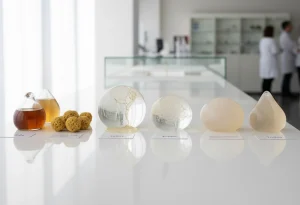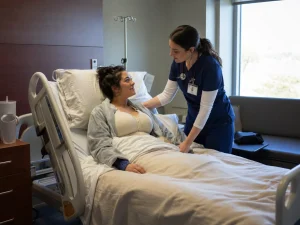
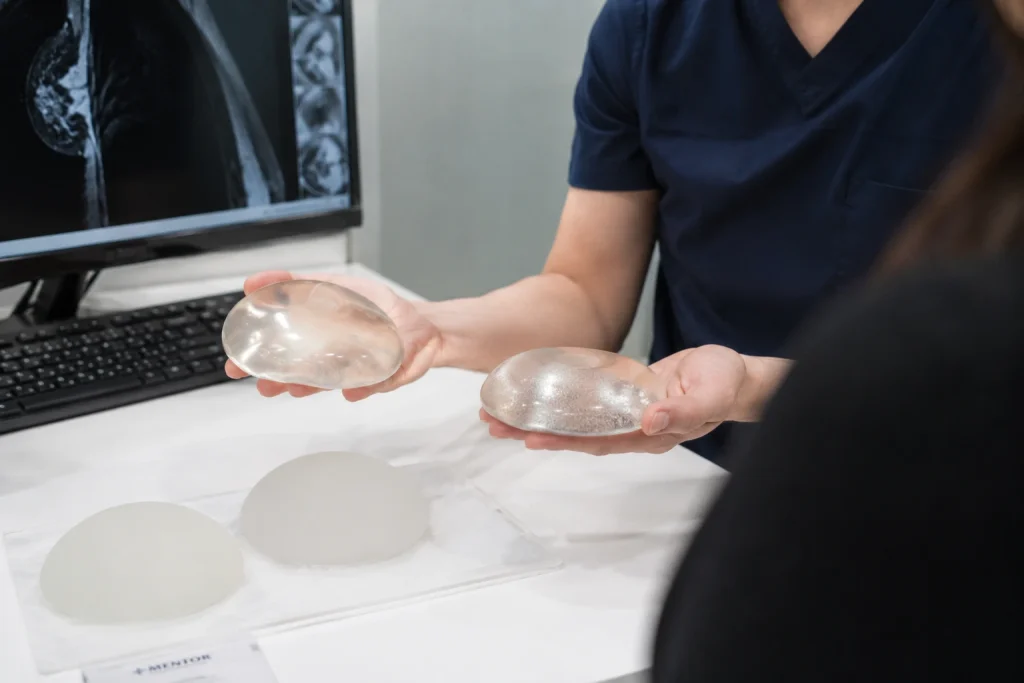
Yes, many implants remain safe for 20 years.
The Life Expectancy Of Implants
In the field of body architecture and aesthetic medicine, it is critical to know how long your enhancements will last. It is a common question whether breast implants can be left for twenty years. The answer is more related to regular check-ups than setting the implants an expiry date. The devices filled with medical-grade silicone or saline are very stable structurally; however, they are not necessarily designed to last for life at a fundamental level. Many patients do not see a failure in their implants after twenty years of use, and they are generally satisfied with their long-term appearance.
Still, the danger of the shell weakening through mechanical means sharply rises by the time the implant is aging through its second decade. Biological rubbing continuously happens, and the physical movements cause mechanical stress, so the tiny elements that build the shell of the implant will be at the point of deterioration. Leading-level plastic surgery acknowledges the patient might be willing to keep the implants for that long, but one hundred percent dedication to regularly checking up medically is necessary. One cannot think that the system as a whole will remain healthy without a great deal of effort in preemptively detecting the implant-related issues at the early stage, when they cannot be seen.
Silent Ruptures And Diagnostic Imaging Protocols
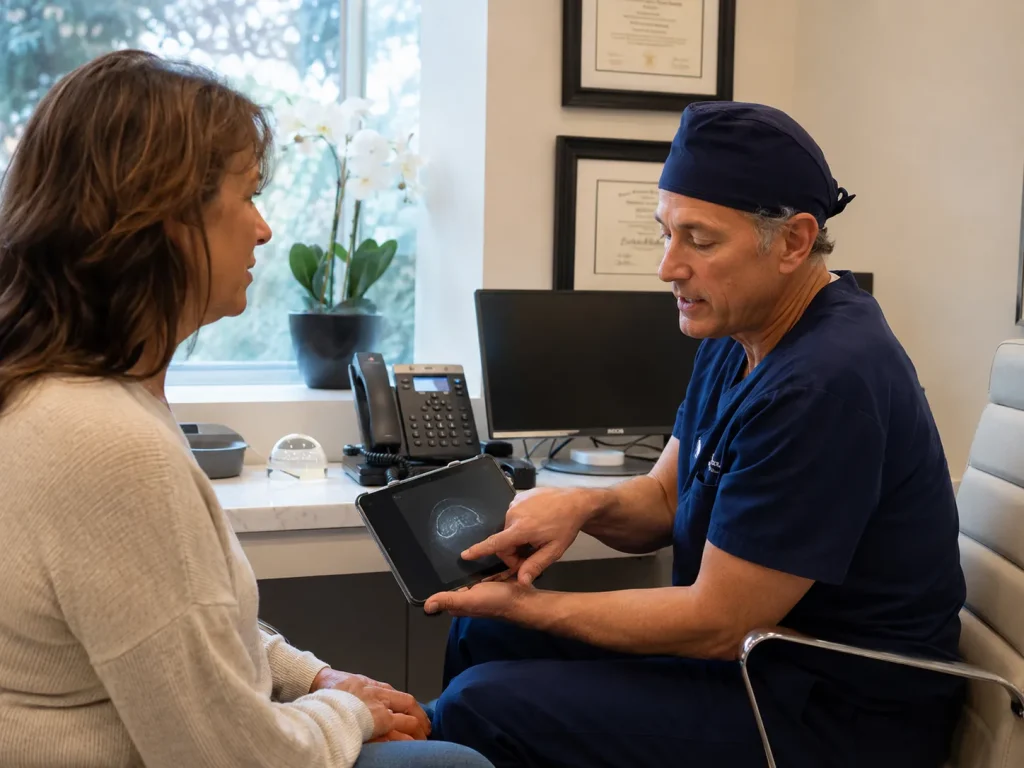
The greatest health concern with a silicone gel implant that still hasn’t been removed at 20 years is the very high likelihood of rupture without symptoms. In contrast to saline ones that show immediate visible deflation after the elastomer shell gets broken, the highly cross-linked silicone gel preserves its exact shape even if the outer casing is highly damaged. So a patient can have a ruptured implant for a long time without any sudden volume loss, pain, or immediate visual distress.
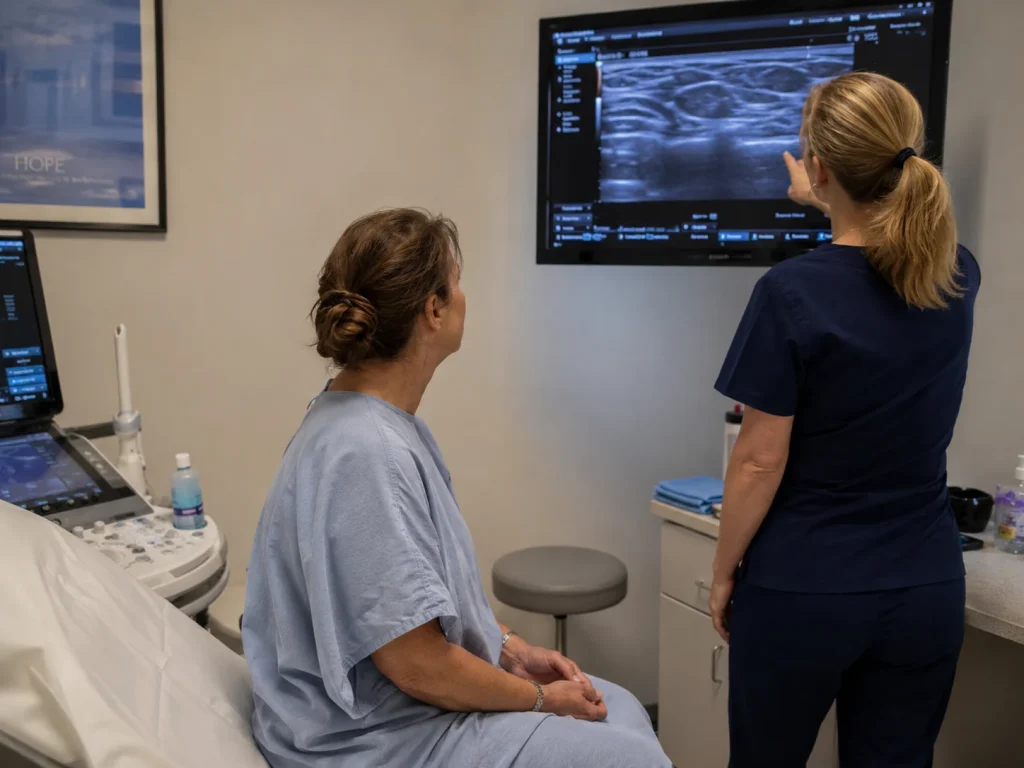
If you wish to keep your biological matrix and internal tissue networks intact, then getting a high-definition magnetic resonance imaging scan or targeted ultrasound to ensure the device is completely intact should never be missed, even if it is not exactly on the patients with 20-year-old implants routine yet. Reconstructive specialists require these scans to mathematically prove the device is not compromised. Such high-tech biometric assessments are used to make absolutely certain that no free silicone molecules have leaked out of the capsule formed around the implant, thus completely eliminating clinical uncertainty and securing your systemic health once and for all.
Preserving Athletic Proportions And Tissue Aging
In addition to the implant itself, the tissues that form the biological envelope continue to change significantly in terms of their architectural biology as time unfolds over a span of twenty years. The aging process that is naturally occurring, in combination with the sustained force of gravity and the overall collagen depletion throughout the body, will inevitably cause the loss of the elasticity level in your native breast tissue. In the time frame of 20 years, the skin layer surrounding the breast may become so overstretched that heavy implants appear to be lower on the chest wall quite significantly, or these implants may seem structurally disproportionate because their location has been changed drastically by the body since the time of surgical placement.
Those people who put lots of effort into body sculpting and are very disciplined when it comes to their athletic physique, especially those who have a strong focus on the lower body and gluteal development, the upper torso needs to be kept in tip-top shape. This is because a heavy and sagging upper chest area stands out visually against a sleek, highly active lifestyle and will often obscure the flow of a well-shaped frame. This striking reality of a biological nature is one that very often makes patients opt for an aesthetic upgrade, propelling a better synchronization of the upper body contour with the sophisticated lower curves, preventing the projection of a prematurely aged image.
The Surgical Exchange And Capsular Reconstruction
When a patient is ready to go for the twenty-year-old implants, the surgical intervention needed turns out to be a rather high-level procedure. Irrespective of whether the patient opts for a total explant or decides to have a surgical exchange in order to use a newly innovated biometric implant, it will be a lot more complicated than the original augmentation procedure. After two decades, the main internal fascial networks and the scar tissue capsule that surrounds these are most often heavily calcified and deeply established, meaning the surgeon is required to perform a capsulectomy at the very least in order to remove the old implant and, at the same time, completely reset the surgical pocket that is internal.
Patients who are interested in a complete structural overhaul almost always have a mastopexy, which is also known as a dermal lift at the same time as this removal operation. This is a kind of simultaneous procedure during which the specialist gets rid of the overstretched skin and mathematically flattens the surface of the tissue. With these kinds of advanced biometric approaches, it is now possible to achieve the results of a tight, natural uplifted contour which can effectively counteract a long time of gravitational stretching and completely restore your structural harmony.
Breast Implants in Turkey
By choosing LIN Europe Clinic, you will get the highest global standard medical treatments in a pure, medically and structurally flawless environment while offering the deepest empathetic care to your unique transformation. Our team fully understands that looking for and replacing implants that are twenty years old requires a personalized environment based on transparency and open communication, besides, of course, prioritization of evidence-based medicine. LIN Europe Clinic in Turkey has been a leader not only in advanced body contouring and medically elegant procedures, but also in serenity, where even your surgical roadmap is strictly dictated by the most patient-safe protocols that are elite among the international community.
When you trust LIN Europe Clinic in Istanbul, you will also become a part of a very comprehensively planned and executed biological measurement and evaluation of your exact needs process. Also, world-class diagnostic imaging tools and unparalleled surgical techniques are used to carry out classic and innovative implant exchanges and tissue reconstructions. Get in touch with the team at LIN Europe Clinic and be delighted in your beautifully balanced profile that represents the absolute pinnacle of biological success, which is safely and masterfully delivered in Turkey.
FAQ:
Some implants may last for 20 years without any problems but bear in mind that implants are not lifetime devices. You should have a doctor check them to make sure that the implant shell has not become deteriorated or ruptured without your knowledge.
Since implant gel is cohesive those that are made with modern technology will even keep their shape after breaking. A rupture in such a case is phantom. An MRI or ultrasound of high definition is the only method that can give due proof to them.
It is highly probable that the skin envelope that is your own has been loosened after being loaded with a mechanical force for twenty years. Top surgeons should be able to not only change your implants but also do a dermal lift so that you get back a firm and youthful architectural contour that is beautiful.
Absolutely! It takes a plastic surgeon with years of experience as well as continuing education to be able to perform a safe and effective explant or exchange surgery.
Right here in Istanbul, the LIN Europe Clinic, which is staffed by surgeons with professional qualifications at the highest level, can cater to your needs by using state-of-the-art diagnostic equipment to provide you with safe and effective treatments for even the most difficult revision cases. Their top priority is to make sure that your new look fits perfectly with your present physical proportions.
Adams, W. P., Jr. (2009). The process of breast augmentation. Plastic and Reconstructive Surgery, 124(6), 2144-2150.
Hölmich, L. R., et al. (2001). Incidence of silicone breast implant rupture. Archives of Surgery, 138(7), 801-806.
Maxwell, G. P., & Gabriel, A. (2014). The evolution of breast implants. Plastic and Reconstructive Surgery, 134(1 Suppl), 12S-17S.
McGuire, P., Reisman, N. R., & Murphy, D. K. (2019). Risk factor analysis for capsular contracture. Plastic and Reconstructive Surgery, 143(1), 9-19.