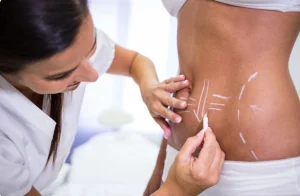

Rest about one to two weeks.
Bodily Metrics of Tissue Stability after Surgery
Body contouring and especially high-definition liposuction are quite special forms of art, where the body heals itself after the major changes that its physical structure has experienced. Obviously, the number of days of total rest prior to continuing the ordinary activities is one of the most important questions that one asks him/herself at the planning stage of the transformation/treatment. Strictly speaking, to the physiological aspect, the timeline gets dictated by the rate at which one’s subcutaneous layers that got disrupted can not only close the empty space that was left after the fat extraction but also again establish the state of structural harmony.
When it comes to a “rest”, we at LIN Europe Clinic think that it is not the same as doing absolutely nothing. In fact, in order to get the greatest safety level and also complete biological balance, one needs a well-thought-out combination of localized tissue rest and immediate, very soft systemic movement. While your muscles and skin, as an outer cover, have to be shielded from mechanical stress, your circulatory system still needs to be up and running in order to avoid complications. The way you handle this intricate shift with clinical mastery will help you in not only preventing fluid stagnation but also speeding up your comeback to the maximal systemic vitality.
The First Week: A Day-by-Day Recovery Map

Day 1: The Very First Hours After Operating
Today, you have to stick to strict rest and recover from anesthesia. Mild confusion and deep soreness are the characteristics of this period; the soreness is akin to that which you feel after a really tough workout. Tumescent drainage is a mixture of clear fluid and blood, which will seep out of the tiny incision openings; this is a completely normal physiological process that removes fluids and lessens the risk of post-operative bruising. You will get dressed in your customized medical compression garment right after the surgery to assist in tissue stabilization.
Days 2 and 3: The Height of Inflammation and Water Retention
The point of maximum swelling and inflammation in these areas is usually reached within this time frame. The amount of fluid coming out will diminish significantly, and the body will start to divert the fluid that is left into the lymphatic system. Depending on how much the swelling is, you may come across some areas feeling hard or tight due to the build-up of fluid. Taking a 5-10 minute walk every few hours during these days is a very important measure to get blood flowing and support your overall systemic health.
Days 4 and 5: Getting Up and About Again
By day four, the initial shock of the operation will have worn off considerably. The tiny cuts will be sealed, and the process of laying down the healing surface has begun. This will be the time that most of you will be ready for your first post-operation shower.
Days 6 and 7: The 7-Day Marker
Once the first week has passed, the swelling caused by the surgery will start to decrease gradually, and over a period of several weeks, it will be gone completely. At this point, only very minimal limitations will be experienced in normal day-to-day light activities and housework. Also, the skin will be in the early phases of healing and re-adjustment, and the impressive results that have been achieved through the surgical brilliance will become more and more apparent as the underlying edema continues to resolve.
The Exact Time for Rest: Work Resumption
How many days you will need to rest before starting the work again depends, to a great extent, on the nature of your job and the amount of fat removed during your session. In the case of those working less physically, especially if their job is mainly based on sitting at a desk, a resting time of between 3 and 5 days will be enough in most cases. At the 5th day mark, your systemic endurance should be good, and you will be comfortable enough sitting for long hours.
If you stand, walk, or do other types of light physical mobility during your work time, then the professional judgment based on a working period of 7 to 10 days will be the one that needs to be followed. If your work involves heavy labor, intense lifting, or sports activities, then you should wait until the tissue layers have matured for 3 to 4 weeks before subjecting them to such heavy mechanical stresses, thereby ensuring that your underlying musculature is fully protected.
Higher Risk Prevention and Management
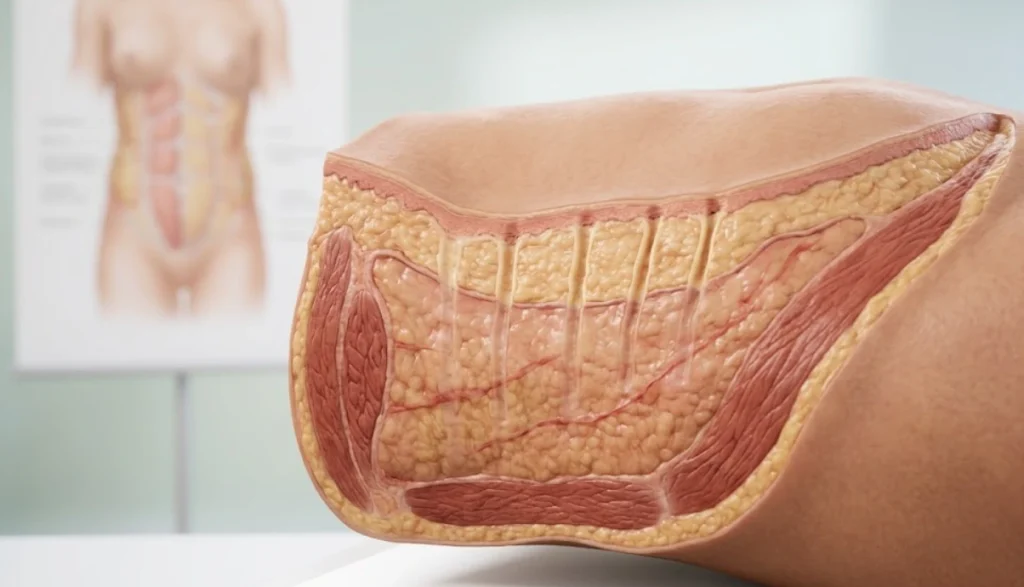
The two main elements that determine the tempo of a high-quality, high-definition recovery are the steady wearing of medical compression and the regulated movement dynamics. In the first month, your special compression garment should be on 24/7. The garment provides uniform hydrostatic pressure on the raw subcutaneous pockets, stopping the formation of fluid pockets (seromas) and making the skin “shrink-wrap” in a smooth manner over your musculature.
At the same time, from the very first day and every day thereafter, walking for just a few minutes counts as a must-do activity. Moving things slightly along will get the blood flowing, making it less likely that the blood will become congested; at the same time, it will help facilitate the clearing of the lungs, and the presence of the lymphatic fluid that has become stagnant will be compelled to move towards the nodes where it will be drained. At LIN Europe Clinic, we add to this active recovery plan with tailor-made diet menus high in protein and plenty of fluid intake so that your body has the precise cellular components to cope with the maturation phase in the most expeditious and comfortable way possible.
An Easy-To-Understand Chart: Recovery Milestones and Levels of Activity
| Recovery Milestone | Activity Allowed | Compression Need | Main Biological Task |
| Days 1 – 3 | Strict rest; very light indoor walking. | Yes, continuously (mandatory). | Dealing with fluid drainage and swelling. |
| Days 4 – 7 | Light housework; desk work. | Full time (allow only for showering). | The micro-wounds being sealed and the tissues being secured. |
| Weeks 2 – 3 | Complete flood back to office work. | Continuous (for swelling reduction). | Getting rid of lymphatic waste and softening of tissues. |
| Weeks 4 – 6 | Light cardio exercises; gym workouts with no impact. | Transition phase to part-time or night-only wear. | Skin matrix shrinking and muscle toning. |
| Month 2 + | Back to heavyweight lifting. | Not necessary (Unless specified). | Final stage of high-definition contouring. |
FAQ:
In general, those who have desk jobs may return to work in 3 to 5 days after surgery. By contrast, if you physically stand up or do light activities at work, then you might want to consider staying home for 7 to 10 days so that you are sufficiently rested.
Indeed, one should definitely engage in mild movements like strolling around the room for 5 to 10 minutes every few hours starting from day 1 post-surgery. Such gentle activity serves to maintain smooth circulation and at the same time aids in preventing accumulation of fluids, all the while not being too hard on the incisions.
Usually, a normal warm shower can be taken 4 or 5 days post-op when the micro-incisions have sealed. To stay safe, refrain from hot baths, swimming pools or hot tubs for a minimum of four weeks as these may lead to infection.
Your small incision sites can be expected to discharge a pinkish or clear fluid which is totally normal during the initial two days. This is the remaining tumescent solution that is leaking out and it is actually one of the factors helping to lessen your bruising and swelling after surgery.
With light cardio such as brisk walking or cycling one can gradually resume around the 3-4 week mark following surgery. Weightlifting and other strength training targeting the core should be completely avoided for a minimum of 6 weeks to ensure that the deep tissues are well-healed.
Tebbetts, J. B. (2002). Systemic Vitality and Surgical Precision in Circumferential Body Contouring. Saunders Elsevier.
Klein, J. A. (2000). The Tumescent Technique: Day-by-Day Post-Operative Management and Patient Safety. Mosby.
Janis, J. E., et al. (2005). Abdominal Anatomy and Biometrics: Implications for Post-Surgical Mobilization. Plastic and Reconstructive Surgery.
Nahai, F. (2011). The Art of Aesthetic Surgery: Principles and Professional Rigor in Aftercare Management. Quality Medical Publishing.