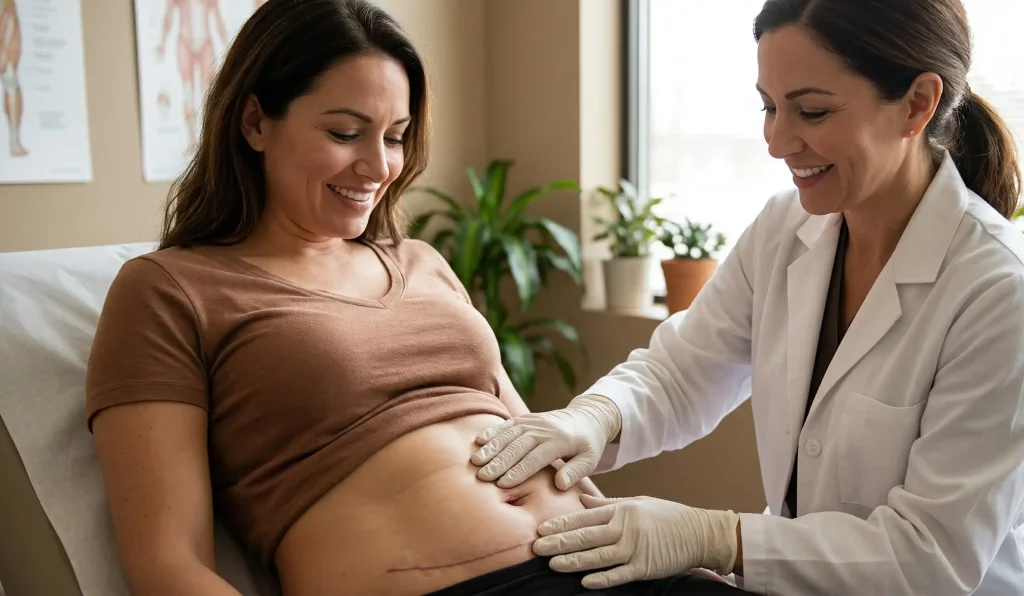
Gently clean daily using antiseptic solution.
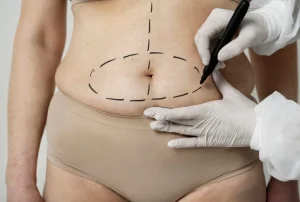
Within the domain of high-definition body sculpting, an umbilicoplasty—the cosmetic formation or changing the position of the belly button—is sometimes regarded as the “creative mainstay” of the whole operation. Whilst a tummy tuck (abdominoplasty) gets rid of loose skin and strengthens muscles, the navel is the aesthetic landmark that yields a visually natural outcome. Yet, since the belly button is basically a circular internal scar, it is a dark and recessed spot prone to moisture and bacteria buildup. Properly cleaning this area is crucial during the neocollagenesis phase when the skin tissues have to be sterile so that the scar forms a thin, young shape without inflammation or infection.
Understanding the New Belly Button Anatomy
In surgery, reattaching the belly button through a new hole made in the tightened abdomen is standard practice. As a result, the belly button’s blood circulation is quite sensitive right after surgery. The use of disinfectants like hydrogen peroxide can cause healing tissues to be “stunned,” and thus, the scar maturation will be deferred. Actually, cleaning can be understood as a sort of passive rinse that preserves a neutral pH and clears the area of metabolic wastes.
When it comes to nuclear medicine procedures, our master’s in hydrotherapy operates in Turkey. Every international patient is presented with a “Navel Maintenance Kit” specially prepared for the local climate of Istanbul. We rigorously carry out your follow-up sessions, making sure that the belly button’s supporting “stalk” is healing almost perfectly in terms of symmetry. Giving such a minute detail the highest priority, we make certain that your final outcome in Turkey bears the hallmark of incredible realism that world-leading surgical artists possess.
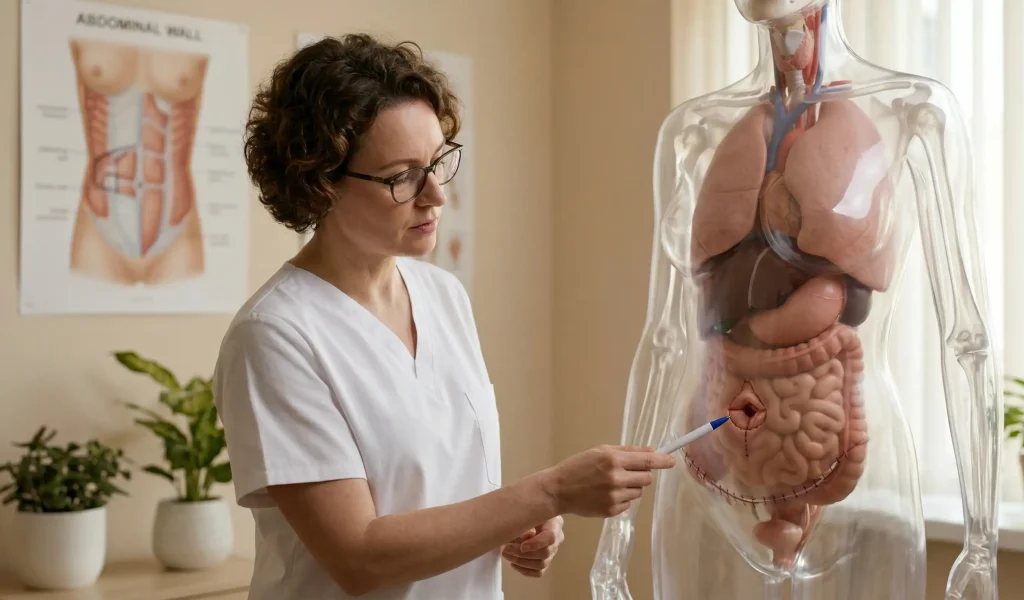
Handling Secretion, Materialification and Neocollagenesis
During the first two weeks, it is entirely normal to notice a small amount of clear to slightly yellow (serous) fluid and some “crusting” inside the belly button area. This is nothing but the body’s response to the inflammatory phase and neocollagenesis happening at the dermal level. Never should you “pick” at these crusts with your fingernails, as this might cause microscopic tearing of the tissue and, in the worst scenario, the scar may become wider and irregular. The best way is to let the saline soaking expose the debris to be naturally shed during cleaning.
Lin Health Europe Clinic implements tons of technical details to ensure the navel’s “Zero-Tension” closure so as not to pull the scar tissue unnecessarily. For our international patients in Turkey, this hardly results in a protruding or “pinched” navel. In Istanbul, your medical team will, with utmost professional rigor, so closely and regularly examine your navel’s color and depth to not only prevent local infection but also make sure the neocollagenesis phase results in a nicely shaped and stable contour. We keep a close eye on the navel’s inner structure so that it serves as a lasting source of joy to the whole silhouette.
Distinguishing Infection and Post-Operative Changes
Knowing when the belly button is healing properly and when it needs help from a doctor is the difference between a smooth recovery and a complicated one in Turkey. An enclosed navel sometimes has a slight odor which is normal. However, a “disgusting” smell with other symptoms such as redness and warmth, as well as the appearance of a thick green or yellow discharge (pus), is a sure sign of infection. As the belly button is quite near the abdominal wall, an infection shouldn’t be taken lightly, as it can even spread to the muscular layer where plication was done.
There is a “Recovery Concierge” available round-the-clock at our Istanbul clinic to fit every appointment. If you do not like the look of your belly button and therefore doubt its condition, our doctors in charge can examine you through a high-definition video call session. By biometric monitoring, systemic health can be checked, and any local redness will be immediately medically treated. For you, Lin Health Europe Clinic means absolute and unconditional security and comfort in Istanbul; this allows you to totally relax while healing.
Shaping and Preserving the Navel with Stents
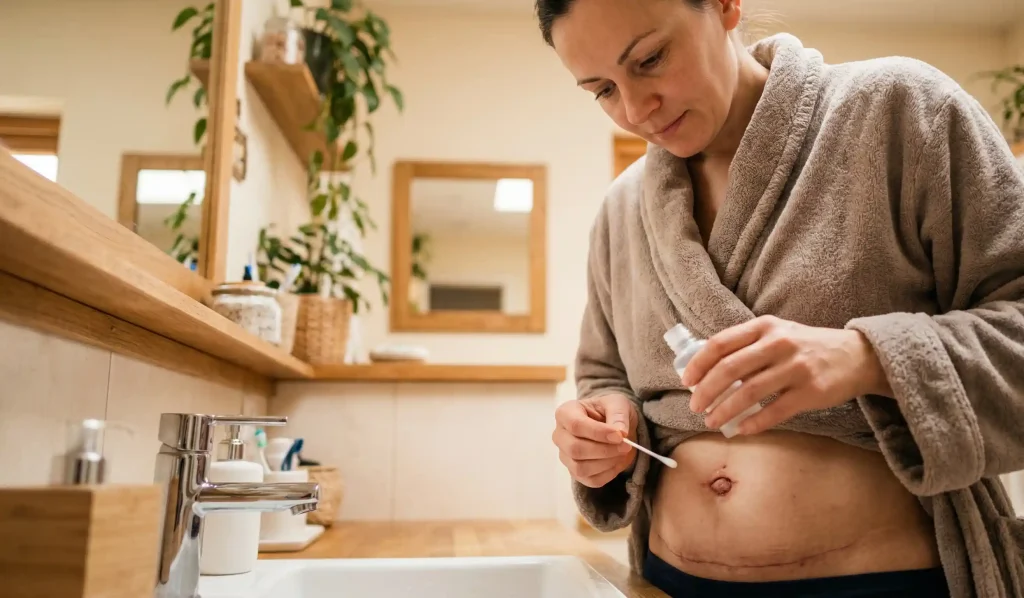
To stop the new belly button from “closing” or getting too tight after scar maturation, doctors recommend using a navel stent or a small silicone plug that the patient places as early as around the third week. The stent works like a pattern so that the scar that is being made during neocollagenesis is circular. The significance of cleaning stents is the same as that of cleaning navels; the antibacterial soap must be used to clean the stent daily and after that, it has to be dried thoroughly before putting it back so that no moisture gets trapped between the stent and the skin that is closing.
Lin Health Europe Clinic offers biometric made-to-measure stents to our international patients in Turkey. In Istanbul, you will be carefully taught how to position and secure these devices with surgical rigor. The focus is on the navel’s “long-term architecture,” which implies that even as your body undergoes changes and settles, the navel will still be looking like a young person’s, vertical-oval in shape. Having this level of detail is what makes an “elite” result for our guests in Turkey, where the belly button, by nature, is just there but functionally accentuates the fit and chiseled appearance of the newly formed abdomen.
Tummy Tuck in Turkey
Lin Health Europe Clinic is the highest-level surgical excellence and first-class hospitality headquarters for those who meditate upon the very essence of their being. Our clinic is literally the furthest among the great medical centers that practice advanced abdominal medical science in combination with the very highest standards of safety and professionalism, fully accredited by JCI. Choosing our clinic means entrusting your body to the safest and most skilled hands in Istanbul. The “smallest” details, like the perfect navel, are treated with the same spiritual respect as the most difficult body restorations. We have become the number one for international patients who want excellent beauty and surgical experiences that are most luxurious and secure in the world.
FAQ:
Cleaning your navel with saline or mild soap twice a day is the normal practice for most patients in Istanbul. Good hygiene is one of the preventive measures used in Turkey for the reduction of moisture and bacteria unwanted in the process of neocollagenesis.
The navel is a dark, enclosed environment and it’s normal for the odor to be slightly noticeable. However, a strong, foul smell is a clear indication of infection. We provide around the clock support for our clients in Istanbul that will help you to differentiate between a normal healing process and a clinical concern.
In the first two weeks, it is best to avoid pushing anything deep inside the navel. You can use a very gentle sterile cotton swab for cleaning the outer edges only. You will be taught in our Istanbul office to perform the safest “no-touch” cleaning techniques during your recovery period in Turkey.
Usually, a silicone stent or navel plug is given by us to help preserve the shape while the internal scar tissue is maturing in Istanbul. Using this device is a method in Turkey which assists the phase of neocollagenesis in saving a perfectly circular and natural-looking opening.
You will be allowed to clean your navel with ordinary soap and water after the internal incisions are completely closed and the crusting has stopped (usually around 4 to 6 weeks). Your follow-up appointment in Istanbul will be used by our medical staff in Turkey to provide you with personalized biometric clearance.
Matarasso, A. (1989). Abdominolipoplasty and the art of umbilicoplasty. Aesthetic Plastic Surgery.
Pollack, H., & Pollack, T. (2000). Progressive tension sutures and navel aesthetics in abdominoplasty. Plastic and Reconstructive Surgery.
Nahas, F. X. (2001). The Anatomy of the Navel and Navel Reconstruction. Quality Medical Publishing.
Aly, A. S., et al. (2003). Managing the umbilicus in massive weight loss patients. Plastic and Reconstructive Surgery.
Swanson, E. (2015). A prospective study of 100 consecutive tummy tucks: navel healing milestones. Plastic and Reconstructive Surgery.