Diet typically lasts several weeks.
In the metabolic and bariatric surgery field, the physical modification of your digestive system is just the initial step of your turnaround. When patients wonder how long they need to go on a “diet” after a stomach reduction, the clinical answer is twofold. The very restrictive surgical healing diet only lasts for about six to eight weeks. Nevertheless, the long-term nutritional guideline isn’t a temporary phase; it’s a permanent, lifelong way of eating. It would be a misconception, and quite a dangerous one at that, to look at a postoperative bariatric diet only as a weight-loss tool; on the contrary, its immediate biological function is to protect your newly constructed anatomy from life-threatening complications.
We at Lin Health Europe Clinic treat your nutrition after surgery as a very important part of your treatment, almost like a medical prescription. For our international patients traveling to Turkey, we give a big heads-up that your stomach, through surgery, has faced a very big trauma. Bringing in the wrong type or amount of food too early can literally cause the sutures inside to rupture. That’s why our place is the best one for anyone who wants full bariatric care; here, your nutrition will be changed very carefully in stages to allow perfect healing and a very successful metabolism for a long time.
Week 1 & 2: The Liquids Phase and the Protection of the Staple Line
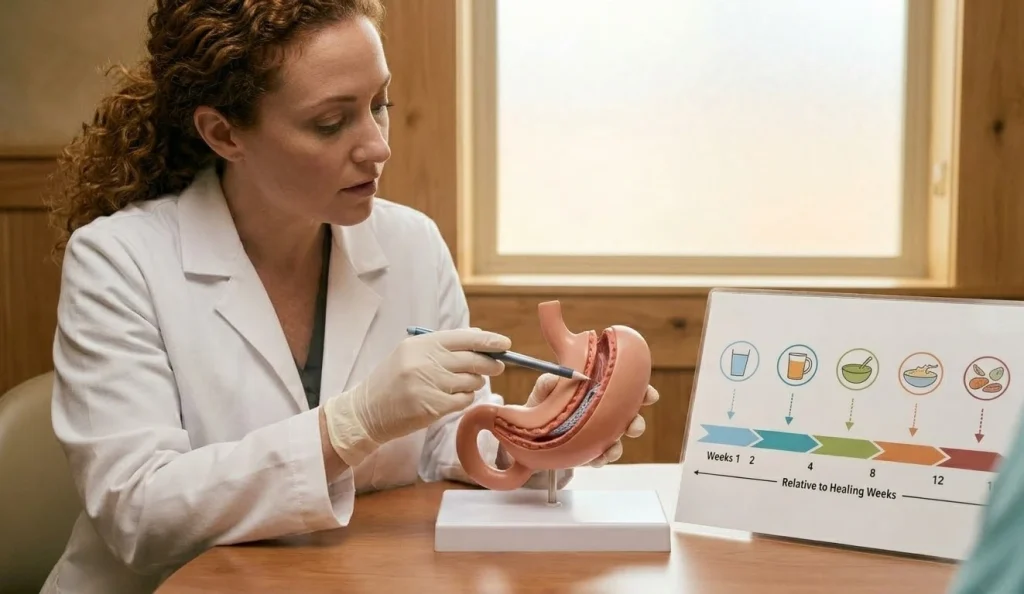
Your stomach after a Sleeve Gastrectomy or a Roux-en-Y Gastric Bypass is basically being held by the titanium staples and the inflamed tissues that are quite delicate and thin. So for the first 14 days, your stomach won’t be able to break down solid food mechanically. It all starts with clear fluids (like water, clear broths) to keep you hydrated as the swelling that happens after surgery goes down. Pretty soon, it moves to full liquids, most of which are protein shakes area medical-grade.
As per our expert dietitians in Turkey, at Lin Health Europe Clinic, this is a very important phase to stick to the liquid diet because it allows the nutrients to be absorbed with the least friction and mechanical contact, which practically cancels out the chance of a staple leak or very bad vomiting after the surgery.
Week 3 and 4: The Pureed Phase and Tissue Remodeling
Inflammation would have mostly gone down by the third week and the internal cuts are healing through tissue remodeling. Your stomach is still weak even though it’s healing. So at this point, the patients go on a pureed diet.
The essential guideline for the duration of this diet is that all the food should be smooth and not require any chewing at all. Examples of this type of food are blended cottage cheese, pureed lean meats, and yogurt. On the other hand, Lin Health Europe Clinic is very experienced in helping our patients to go through their mental adjustment as well. We notify our international patients that even if their physical condition is improved, their stomach lining would still be very fragile. If one consumes unpurified food, the particles can get stuck at the staple line that is healing, which is where infection can develop.
Weeks 5 to 8: The Soft Food Phase and Gastric Emptying
By the time you start the second month, the structural integrity of the new stomach pouch will be quite good. So, you can start the soft food diet. This mainly consists of foods that can be easily digested and are tender enough so that you don’t have to use a knife, like eggs, fish, and veggies.
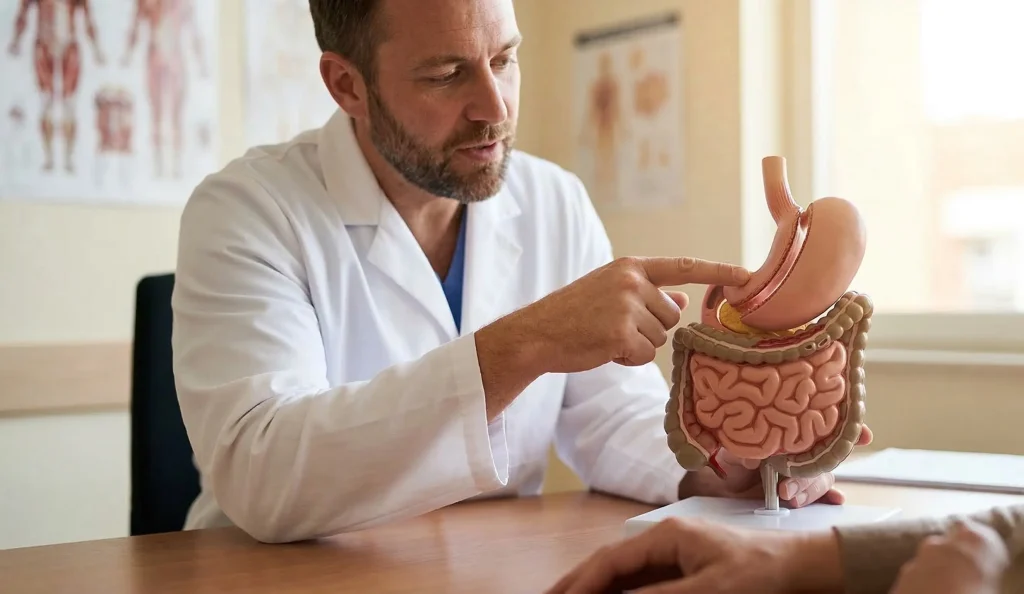
This is the time when you learn about gastric emptying. Since your stomach size has been reduced by up to 80%, you’ll have to be taught the biomechanical aspects of eating with a modified anatomy. The team at Lin Health Europe Clinic, Turkey, will show you the “protein first” clinical principle. Proteins that are dense need to be eaten before vegetables or carbs to avoid getting malnourished. And, it is also very important to chew the food until it becomes a liquid before swallowing to avoid any painful esophageal blockages.
Month 2 and Beyond: The Permanent Metabolic Reset
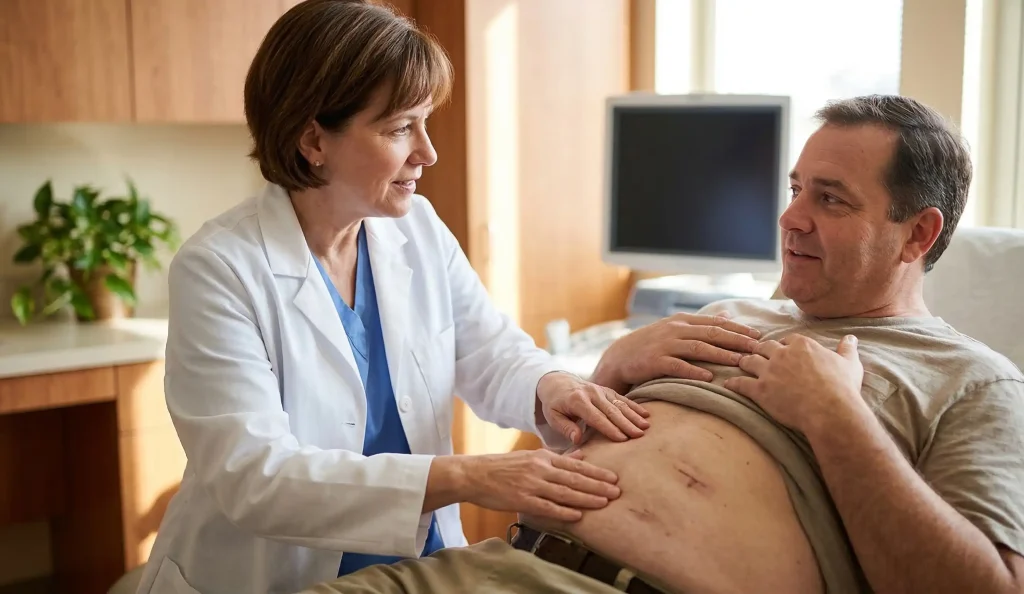
After two months, most patients will be able to start having a normal, solid food diet. However, the normal one will not be as we knew it before. You won’t be on a surgical healing diet anymore, but, at the same time, you have to abide by the physiological limits of your new anatomy.
Eating dense breads, tough meats, or high-sugar foods can cause severe gastrointestinal distress or “dumping syndrome,” which is where food passes too quickly into the small intestine, resulting in nausea, cramping, and a rapid heart rate. It is at Lin Health Europe Clinic that we make sure that you realize that a bariatric surgery by itself cannot cure an obese person; it is just a very powerful tool to use for anatomical purposes. Your long-term success will need a constant dedication to low-calorie, high-protein, and nutrient-rich whole foods, which you should take as micro-portions for the rest of your life.
Stomach reduction in Turkey
It is our firm belief at Lin Health Europe Clinic that if the surgery is excellent, the postoperative education should be the best as well. Our clinic in Turkey is a jewel of medical excellence where advanced metabolic science meets comprehensive, multi-disciplinary nutritional support. Behind the scenes, we run modern, JCI-accredited hospitals that mirror our global leadership position in international medical tourism and bariatric surgery.
In fact, choosing Lin Health Europe Clinic is deciding to have a lifelong medical partner who will help you through safe and permanent transformations. Our surgeons and dietitians in Istanbul work with your physiologic health first and foremost, rather than fast weight loss, which is unsustainable. We provide elite hospitality and professional rigor, which, over the years, have made us the most well-known in metabolic medicine. You will be with us from the beginning of your biometric screening to the final solid food transition. If you want the very best for your new body, you’ll find it here.
FAQ:
After bariatric surgery, you have to stay on a full liquid diet for the first 2 weeks. This step is not only compliance but practically necessary to avoid mechanical stress and keep the vulnerable staple line protected while it is getting healed in Turkey.
Generally, around the sixth to eighth week after surgery is when most people safely start eating solid and normal foods. Still, your meal sizes and nutrition priorities will always be different to support the metabolic changes that have been brought about.
If you eat solid foods before you are supposed to, you can physically break the internal stitches which can lead to a very dangerous, life-threatening leak of the abdominal cavity. Our medical team in Istanbul always carefully keeps an eye on your development to make sure that your stomach is healing without any disastrous anatomical complications.
Because the amount of your stomach that is left is very small, if you give the priority to proteins it will save you from going through severe muscle wastage and it will make sure that you get enough nutrients even during the period when you are losing a lot of weight. Eating protein first will also make you stay full for a longer time and you will be able to maintain your satiety even though you are on a low-calorie diet.
The intake of sugary food after a bypass or a sleeve can lead the dumping syndrome, which is accompanied by severe nausea, stomach cramps, and a fast heartbeat. In fact, in later years only a few very small pieces of these types of food may be tolerated, but your diet for the rest of your life needs to be largely based on nutrient-dense whole foods.
ASMBS (American Society for Metabolic and Bariatric Surgery). (2021). Bariatric Surgery Postoperative Guidelines.
Mechanick, J. I., et al. (2019). Clinical practice guidelines for the perioperative nutritional, metabolic, and nonsurgical support of the bariatric surgery patient. Surgery for Obesity and Related Diseases.
Schauer, P. R., et al. (2012). Bariatric surgery versus intensive medical therapy in obese patients with diabetes. New England Journal of Medicine.
Heber, D., et al. (2010). Endocrine and nutritional management of the post-bariatric surgery patient. The Journal of Clinical Endocrinology & Metabolism.