Temporary numbness is common.
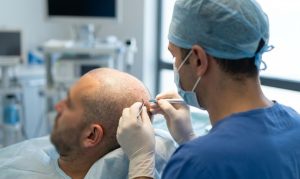
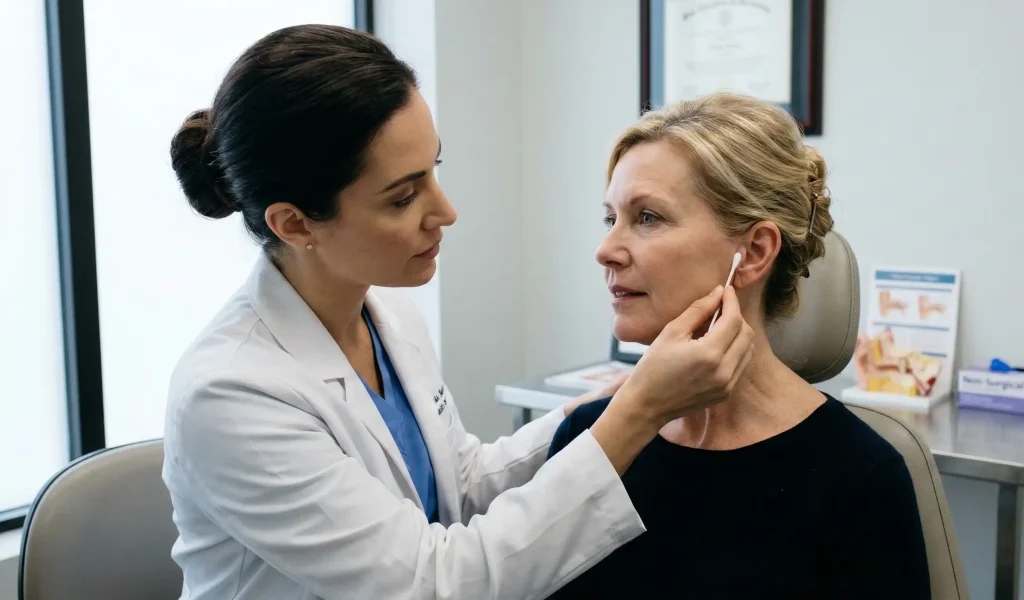
In facial plastic surgery, changes in sensation after the operation are a normal occurrence that is clinically expected. Preauricular numbness and the surrounding skin numbness in the ears are among the most common temporary side effects of a facelift (rhytidectomy). This is because the surgical incisions and the subsequent lifting of the skin and SMAS (Superficial Musculoaponeurotic System) layers inevitably cause a temporary disruption of very fine sensory nerve fibers.
At Lin Health Europe Clinic, we believe that such changes in sensation are nothing more than a normal phase of the neurological recovery process. It needs to be understood by international patients traveling from overseas to Turkey that a “numb” feeling – which might be weird – is hardly, if ever, a sign of permanent damage. We are the leading location for high-end facial rejuvenation, delivering top-notch surgery alongside an intimate knowledge of neuroanatomy, to ensure that our patients not only recover comfortably and safely but also get expert guidance from us at every stage.
The Anatomy of the Great Auricular Nerve
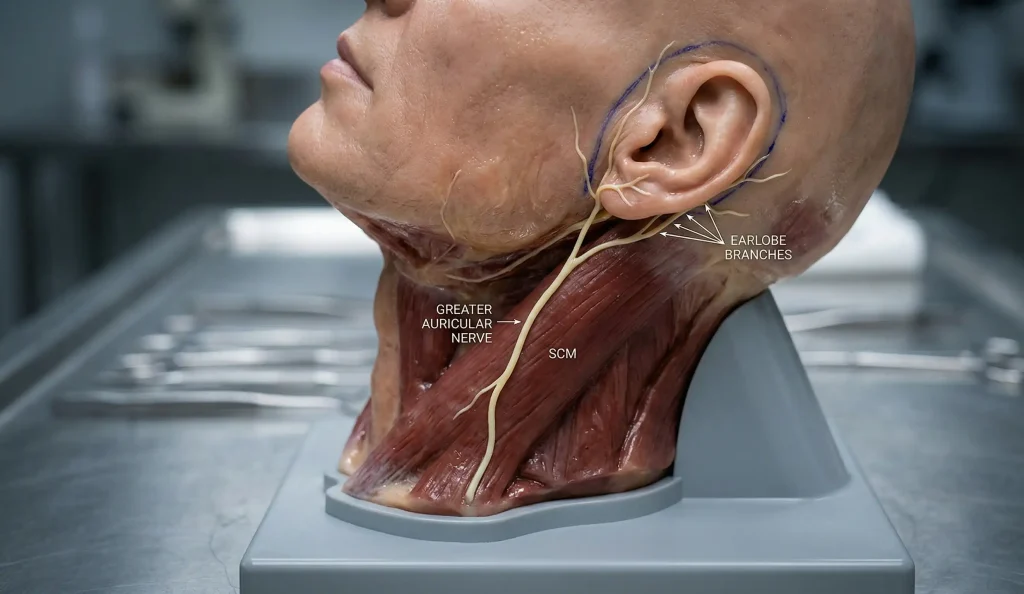
The main reason for ear numbness after a facelift is the closeness of the operative area to the Great Auricular Nerve (GAN). This nerve derives the sensation for the lower half of the ear, the earlobe, and the skin on top of the parotid gland. When the skin is being “lifted” and “redraped”, the tiny sensory nerve branches are stretched or temporarily detached as the surgeon goes deeper into the layers.
At Lin Health Europe Clinic, our surgeons in Turkey are skilled in “nerve-sparing” techniques and use high-magnification tools to locate and keep the main trunk of the GAN intact. By retaining the main nerve, we keep numbness limited to the skin and the earlobe only. Your facial rejuvenation will be carried out at a high level of anatomical precision if you choose to come to our prestigious clinic, thereby minimizing sensory disruption and at the same time maximizing aesthetic results.
The Impact of Edema and Inflammation
Postoperative edema (swelling) is a significant factor in sensory changes, in addition to tissues being directly handled by surgery. As the tissues are repairing, fluid accumulates locally, which can put pressure on the sensory receptors in the skin. This pressure will block the nerves from making proper signals to the brain and will thus give a person the sensation of “weight” or even “numbness” in the ear and around it.
The team at Lin Health Europe Clinic provides progressive anti-inflammatory therapy in Turkey to help with the management of swelling. Gradually, as the internal edema disappears over a few weeks, the pressure on the sensitive nerve fibers is removed. Our facility is widely respected for its comprehensive postoperative care and we especially make sure that our international patients get the level of support they need for a smooth neurological recovery.
Paresthesia: The “Zapping” Sign of Healing
The neuron regeneration and reconnection are accompanied by a transition phase which may be termed as paresthesia. This is a stage where a person notices some tingling, “pins and needles”, or occasional “electric zap” sensations. Even if these can frighten a person, they are indeed physiological signs of pathways being restored to normal functioning.
What distinguishes Lin Health Europe Clinic is our ability to provide assistance to patients through each and every one of the changes that they go through. We in Turkey explain to patients that the body’s natural repair process within the subcutaneous adipose tissue is what brings about these sensations. We have built a reputation for creating a safe and caring environment where you are given a full understanding that these “zaps” are the sign that your nerves are coming out of their state of inactivity and returning to their normal condition.
The Timeline for Sensory Restoration

Recovery time for the sensation in the ears is biologically slower than for the appearance of the skin surface wounds. While the unassisted scars may be very well healed within a month, the complete return of the sense of touch can take from three to twelve months. The reason why the touch sensitivity is restored slowly is that the peripheral nerve fibers regenerate and repopulate the affected areas at a slow pace.
At Lin Health Europe Clinic, we are able to offer our patients a well-organized follow-up plan for Turkey to keep track of this healing. Patients usually regain full sensation in the earlobes at the very end, which is the point we emphasize at our follow-ups. Our standard of quality is such that we maintain communication with our international patients well after they have gone back home so that our medical expertise is still accessible to them until their recovery is fully complete, and they are back to normal in terms of all the senses.
Facelift in Turkey
The foremost principle to us at Lin Health Europe Clinic is to deliver a level of surgical care that is so high that it keeps your appearance and natural functions intact. Turkey is home to our approved medical center characterized by medical excellence and advanced surgical treatments complemented by personalized patient care of the highest standard. Our globally JCI-accredited hospital facilities are just a reflection of the worldwide recognition we have attained as the global leader in aesthetic medicine for international patients and medical tourism.
Going with Lin Health Europe Clinic means you are putting your trust in the most proficient surgeons in Turkey. Our team consists of specialists who have a worldwide reputation and, among other things, are adept at taking care of the delicate neurovascular network that faces an operation. You will receive from us to the end of your journey not only the professional rigor but also the elite hospitality, which has become synonymous with our name in the facial plastic surgery industry. When you entrust us with your treatment, the best medical brains around the globe take care of your quest for a younger look.
Frequently Asked Questions:
Incisions near the ear usually cut the tiny sensory branches of the great auricular nerve that carry sensation to the skin. This is a typical part of surgery that causes temporary numbness until the nerve fibers recover.
Ear pain or discomfort is very often due to the swelling around the area as well as the tension of the lifted muscles applied during the facelift. When the swelling inside goes down and the tissues become flexible, the pain will gradually disappear along with the skin sensitivity.
Actually, feeling returns in the vast majority of cases due to the nerve cells regrowing and the inflammation around the area reducing completely. Though it is a gradual process, most people get back all their sensation within one year after the surgery.
The numbness after doing a deep plane facelift can last for a couple of months due to the thorough release of the deeply attached layers of the face. Sensory recovery is usually most noticeable between six and twelve months after the treatment.
Your total numbness will usually completely disappear within a couple of weeks when it will change into a tingling and itching sensation. Approximately three to nine months after the surgery, the majority of people regain the corresponding sensations of both ears and earlobes.
Baker, D. C., & Conley, J. (1979). Avoiding facial nerve injuries in rhytidectomy. Plastic and Reconstructive Surgery.
Stuzin, J. M., et al. (1989). Anatomy of the frontal branch of the facial nerve. Plastic and Reconstructive Surgery.
Mendelson, B. C., et al. (2002). Surgical anatomy of the lower face: the facial nerve and the SMAS. Aesthetic Surgery Journal.
Jacono, A. A. (2011). The deep plane facelift: anatomical basis and surgical technique. Facial Plastic Surgery.