Breastfeeding is still possible.
Within the field of reconstructive and plastic surgery, breast reduction (reduction mammoplasty) is mostly aimed at alleviating the physical symptoms of a large bust, such as chronic back pain, skin irritation, and deformity of posture due to the weight. Anyway, those patients who are still of child-bearing age should be made aware of the fact that a surgery like this may influence their milk secretion capacity afterwards. In order to feed a baby with mother’s milk, the milk ducts, mammary glands, and the nerves going to the nipple must be preserved during the surgery.
Lin Health Europe Clinic takes pride in its surgical philosophy that relieves the symptoms without sacrificing the biological functionality at the same time. None of the surgeons can guarantee with 100% certainty that after the surgery, the patient will be able to breastfeed at no trouble, since even women who have not undergone surgery may also suffer from various lactation problems; however, the surgical technique employed by the surgeon is the most crucial factor. As a patient planning Turkey trip, it is crucial to be well aware of the way diverse ‘pedicle’ configurations interfere with the anatomy of the milk duct system, to be able to decide wisely on the type of surgery you wish to undergo.
The Anatomy of Lactation and Surgical Pedicles
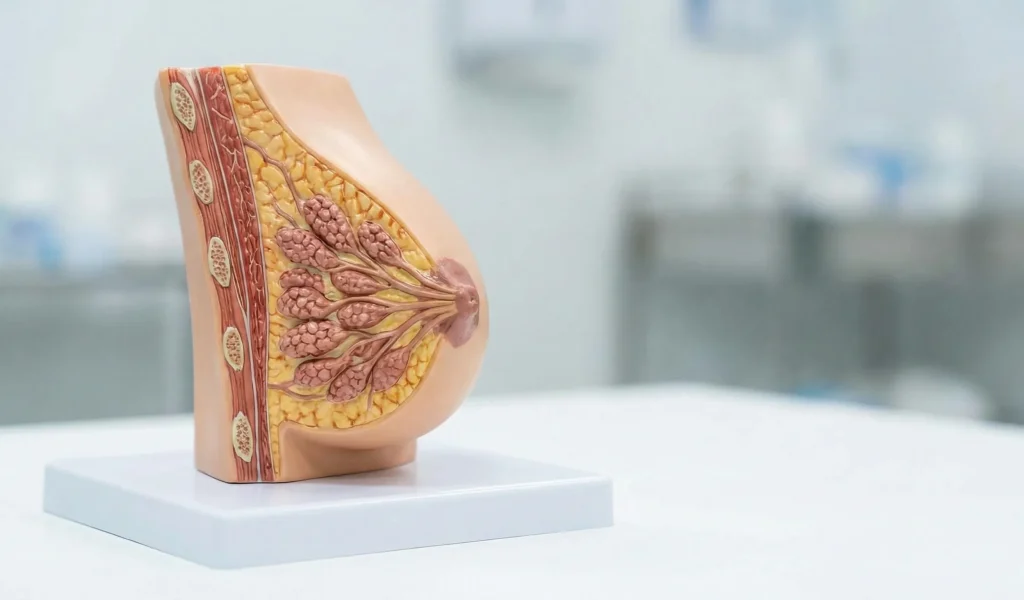
Purely anatomically speaking, the breast consists to mammary lobules and the milk ducts carrying the milk produced in those lobules to the nipple. Surgically speaking, a breast reduction needs the doctor to excise a large amount of subcutaneous adipose tissue as well as glandular elements, while isolating the nipple that shall be the last to lose its viability. The preservation of the nipple via a “pedicle”—a tissue strip that clever surgeons keep connected to the main body of the breast to maintain blood and nerve supply to the nipple—
is often preferred clinically by Lin Health Europe Clinic for facilitating mothers’ breastfeeding wishes. These techniques intend to preserve the central ductal tract intact. On the contrary, a “free nipple graft,” which is a procedure that completely removes the nipple and allows it to survive by getting attached again, usually disrupts all milk ducts and thereby makes breastfeeding impossible. Our surgeons in Turkey will determine the best pedicle from your anatomical disposition and your plans for having kids in the future.
Nerve Integrity and the Let-Down Reflex
The baby breastfeeding successfully will be a situation where your milk ducts are not only open but also include a functional “let-down reflex.” This reflex is activated when the baby’s sucking causes the nipple nerves to send a message to the brain for the release of oxytocin – the hormone responsible for milk ejection – along with prolactin. If during the surgery the nerves, specifically the fourth, fifth, and sixth intercostal nerves, are damaged, then this release of hormones may not be as efficient.
In our daily practice at Lin Health Europe Clinic, we perform the dissection in such a meticulous way so that the neurovascular bundles going to the nipple are not only preserved but also their anatomical and physiological functions are maintained. In this way, we help increase the likelihood that our patient at least lactate effectively upon stimulation of the nipple. While it is totally normal to have some temporary numbness or edema after a breast reduction in Turkey, the patient should expect full return of sensory and hormonal functions over time.
Glandular Tissue Volume and Milk Supply
Milk production or yield is directly proportional to the amount of milk-secreting glandular tissue that remains metabolically active within the breast after surgery. When the breast is significantly reduced, several kilograms of tissue must inevitably be excised, and so the total count of milk-producing lobules is decreased. But the human breast is very plastic, and quite a few women discover that they are capable of making enough milk even though their glandular volume has been diminished.
From a medical point of view, “supplemental nursing” is a typical approach after breast reduction. At Lin Health Europe Clinic, many women successfully achieve breastfeeding even if the milk supply is not sufficient to cover 100% of the infant’s needs. Drs in Turkey conduct preoperative counseling because they emphasize the fact that the real chances of total success at “all-or-nothing” is variable, but the principal thing is that partial breastfeeding is very common and achievable.
Scars and Edema Post-Op: Do They Impact Breastfeeding?

A breast reduction operation is followed by the internal healing process during which scar tissue develops. In some situations, internal scarring to a great extent may cause blockage or compression of the milk ducts that still exist, this may potentially give rise to such conditions as mastitis or local swelling. With this knowledge, the surgeon understands that the technique used in operating should be very gentle and precise to prevent additional internal fibrosis.
Keeping the breast tissues healthy after a surgery necessitates controlling further post-op edema (swelling). At Lin Health Europe Clinic, we instruct our patients in Turkey on the modalities of proper convalescence; in this way, the inflammatory reaction is kept to the shortest period and considered most favorable. By limiting the period of tissue distress to the first couple of weeks, we are able to keep the mammary glands’ fragile internal structure intact and thus maintain the duct pathways clear for their future use.
Breast Reduction in Turkey
The Lin Health Europe Clinic is in agreement with the fact that a surgical procedure like breast reduction is momentous in a woman’s life and that it should not necessitate her giving up either her feminine grace or her motherhood dream. Our surgeons in Turkey are experts in the field of “parenchyma-sparing” surgery. Using an enlarged diagnostic scope, we identify the densest areas for glandular tissue and then, as far as possible, preserve them.
We hold thorough communication with our foreign patients, which goes as far as including a frank discussion of their reproductive plans. We offer full transparency and respect medical ethics in giving you a realistic picture of your lactation potential, depending on your special physical characteristics. Lin Health Europe Clinic is your choice for a precise surgery in Turkey that honors both your aesthetic goals and biological future.
Frequently Asked Questions About Breast Reduction
Usually, the surgery may only impact the total volume of milk to be produced, but if not, it is only in those rare instances when the nipple is totally removed. Most post-op individuals would, therefore, be able to still attend nursing albeit to a lesser degree.
Only the methods that preserve the nipple’s connection to the tissue (pedicle methods) can potentially allow you to breastfeed. In this regard, our Turkish surgeons refrain from using free nipple grafts in cases where the patients desire to breastfeed in the future.
It is quite the opposite; the surgery only affects the delivery system and quantity, not the nutritional quality of the milk. Your body is still capable of producing very nutritious milk for your baby.
Indeed, due to advances in medicine, breast reduction surgeries with subsequent successful breastfeeding are more common than one might think. Our team in Turkey works according to the latest protocols that aim at preserving, to the greatest extent possible, the critical psychological and physiological relationship between the glands and the nipple.
You will be advised to wait a minimum of six months after full weaning before scheduling the surgical procedure. During this time, your breast tissues and glands will go through their normal cycle of getting back to baseline operation level at Lin Health Europe Clinic.
Brzozowski, D., et al. (2000). Breastfeeding after reduction mammoplasty: a review. Plastic and Reconstructive Surgery.
Marshall, D. R., et al. (1994). The effect of breast reduction on breastfeeding. British Journal of Plastic Surgery.
Thibaudeau, S., et al. (2010). The impact of breast reduction on lactation: a meta-analysis. Journal of Plastic, Reconstructive & Aesthetic Surgery.
Souto, G. D., et al. (2003). Nipple-areola sensation and breastfeeding after breast reduction. Aesthetic Plastic Surgery.