Precise surgical shaping ensures a natural-looking belly button.
In plastic surgery, a belly tuck operation is commonly judged by the way the umbilical area looks. Though the main objectives of the procedure are skin removal and repair of diastasis recti, the navel becomes the artist’s signature of the work. The “surgical” look is revealed by a badly performed umbilicoplasty which is a result of circular scars, unnatural position, or pillars. Producing a “nice” belly button is nowadays a great artistic challenge that involves the three-dimensional anatomy and tissue tension knowledge in a very subtle way.
At Lin Health Europe Clinic, the navel is considered an extremely aesthetic landmark. It is not “taken off” and “put back”; the natural umbilical stalk that is still connected to the abdominal wall is kept while the surrounding skin is moved. For victims who fly to Turkey, it is crucial to grasp the details of navel shaping – from the geometric incision to the internal suturing techniques – so as to ensure a natural result even in swimwear.
Geometric Incision and Scar Concealment
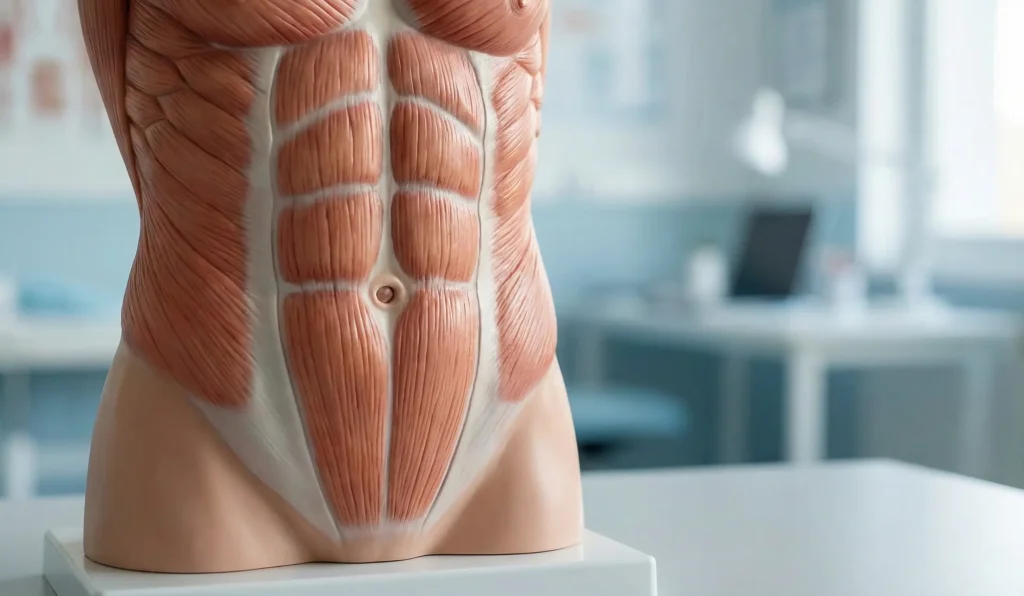
One of the most frequent faults made in a standard tummy tuck procedure is to make a simple round incision for the new navel opening. It is extremely likely that as the wound heals, a visible, constricted ring of scar tissue will appear. Nowadays, among the various types of complex geometric shapes that the Lin Health Europe Clinic doctors use, there are “inverted V,” “U,” and “Y” incisions, for example. These shapes not only break the scar line but also, due to their different extensions, successfully prevent the circular contraction which generates the so-called “pinched” look.
By placing the transition between the umbilical tissue and the abdominal skin deep within the navel’s “valley,” the surgeon can effectively hide the scar. Our surgical protocols in Turkey emphasize “inward-facing” sutures. This method essentially pulls the scar tissue towards the abdominal wall which means that the visible part of the navel is smooth, natural skin rather than a flat surgical line.
Navel Positioning and The Golden Ratio
The positioning of the belly button, both vertically and horizontally, is dictated by the proportions of the body. When it is too high, the torso looks elongated artificially; when it is too low, the midsection looks squashed. From a clinical perspective, the navel’s ideal position is normally at the level of the top edge of the iliac crest (the hip bones). Medical personnel at Lin Health Europe Clinic use accurate measurements to fix the navel in the right place, not only centered but also commensurate with the newly-formed, slender waist of the patient.
In Turkey, we frequently resort to the “Golden Ratio” in order to achieve facial and body perfection. If applied to the navel, this means that the belly button should be in a hollow of the body. Hence, during a tummy tuck, the skin is pulled down with a lot of tension. There is an interesting twist here where the surgeon has to correctly anticipate the location of the new opening so that the umbilical stalk meets the skin at the same level, and they wouldn’t get stretched or distorted, but even retain a vertical oval shape that is considered younger looking.
Creating the Periumbilical Depression
A natural belly button does not sit flush against a flat stomach; it sits at the bottom of a gentle “valley.” This effect can be created if the surgeon manages to get rid of some subcutaneous fat around the navel. Pulling the skin over the muscles without any extra is sure to give a flat and fake look. At Lin Health Europe Clinic, a step of “periumbilical thinning” or “defatting” is included in the program that intentionally eliminates some of the fat cells.
Precisely, the removal area is located below where the navel meets the skin, resulting in a natural dip of the skin. Now, the skin can ‘sink’ or fold to the muscle wall, hence offering the depth needed for the realistic look. This method proves great when done alongside the abdominal liposuction in Turkey, inducing awareness of the contrast between the flat abdominal muscles and the umbilical recess.
Superior Hooding and Vertical Orientation

Studies of bellybutton anatomy have shown that youthfulness is often related to a slight “hooding” or small overhang of skin at the top of the navel, whereas a belly button that is a perfect, open circle usually looks like a surgical artifact. Surgeons at Lin Health Europe Clinic, Turkey, use a method which allows conserving a little area of the twelve o’clock position navel opening skin, at which time they eliminate the rest.
Thus, the small ‘hood’ is actually an embodiment of the natural forces of gravity and the loosening of tissues that are characteristics of non-surgical abdomens. Additionally, the vertical orientation is the goal. According to clinical studies, a vertically oval navel is associated with a fitter, more athletic body type. When the umbilical stalk is being sutured to the skin, these are the moments you regulate, with the result that the navel will not be horizontally stretched due to improperly distributed tummy tuck tension.
Tummy Tuck in Turkey
One thing still strongly influencing the ultimate shape of the belly button is the way it heals during the first few weeks after the surgery. The body’s natural response to a wound, contraction, may change the shape, despite the perfect surgical technique. As a result, opening, possibly narrowing, or “closing up” can be prevented by a “navel shaper” or a small silicone plug regularly used by the patients at Lin Health Europe Clinic.
These pieces of equipment are inserted into the belly button and are worn underneath the compression garment. They keep the opening’s circular or oval diameter and let the skin heal with the proper depth. In Turkey, our post-surgical workout team will offer required instructions on cleaning the area, plus how and when to use these shapers, so the delicate internal scars get correctly formed without making the external part appear different.
Frequently Asked Questions About Tummy Tuck Navels
Yes, a very natural look is attained when the scar is hidden within the depression of the belly button. Through good technique, the belly button is prevented from just looking like a circular hole in the skin.
Superior hooding is basically a very minor skin overhang at the top of the navel. This little feature imitates youthful anatomy besides helping to avoid the surgical, “flat” appearance.
No, the umbilical stalk of your original belly button which is still attached to the abdominal muscles remains. The surgeon makes a new skin opening and brings the stalk through it.
Yes, your surgeon can change the shape so that it becomes more oval or vertical in orientation. This is a usual step of umbilicoplasty at Lin Health Europe Clinic.
A bad result may be mistaken for a flat and wide circle with a very noticeable scar. If the tension of the skin was not correctly controlled, it can also look shallow or be located in the wrong place.
Rohrich, R. J., et al. (2003). The art of umbilicoplasty in abdominoplasty. Plastic and Reconstructive Surgery.
Pallua, N., et al. (2010). The vertical-hole technique for umbilicoplasty. Aesthetic Surgery Journal.
Abhyankar, S. V., et al. (2006). Anatomical study of the umbilicus and its application in umbilicoplasty. British Journal of Plastic Surgery.
Malic, C. C., et al. (2007). Umbilicoplasty: A review of techniques. Journal of Plastic, Reconstructive & Aesthetic Surgery.