It reduces swelling and improves fluid circulation.
Thinking of a massage, most people get pictures of a relaxing hour, scented candles and deep tissue pressure to break the knots of the muscles. Yet in the case of a Plastic Surgery recovery, the term Lymphatic Drainage Massage (LDM) refers to something entirely different and separate in the world of medicine. It is neither a luxury spa treatment nor a pampering session but a vital medical therapy to manually stimulate the body’s waste management system when it has been significantly affected by trauma. At Lin Health Europe Clinic, we believe that the surgery contributes about 50% of the final result; the other half depends on how well you care for the healing process, and LDM plays the most important part in that care.
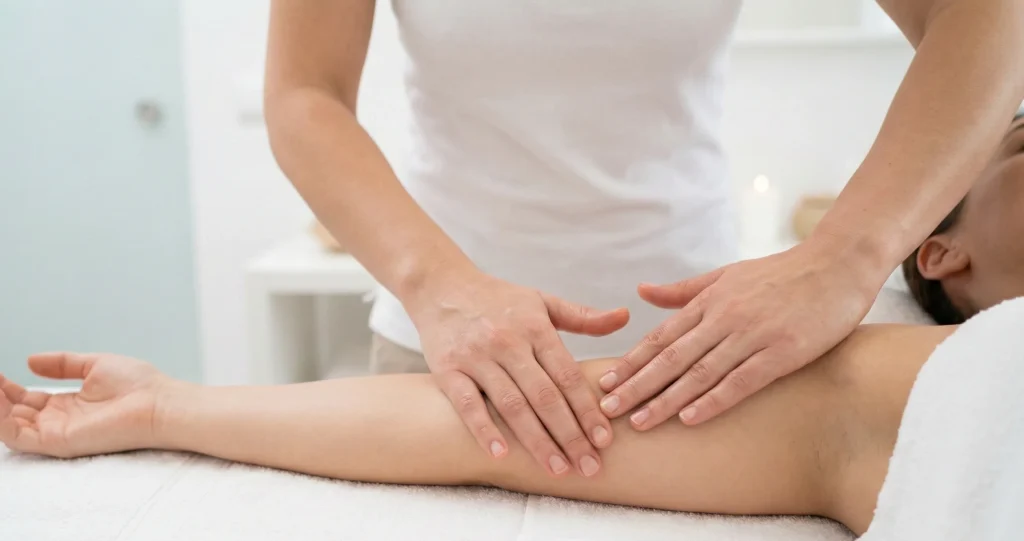
After such surgeries as Liposuction, Tummy Tuck, or BBL, the lymphatic drainage routes naturally get broken for a short period due to these aggressive operations. As a result of the blockage of the regular flow of fluids, there will be a significant swelling (edema) and a risk of the waste products being deposited in the tissues. The lymphatic drainage massage is, in fact a special, consistent method that imitates the way lymph vessels function. It hands-on guides through this matted fluid toward the nearby healthy lymph nodes, thus facilitating the body in removing waste products, decreasing the swelling and revealing the new body shapes way ahead of the time when nature alone would be able to produce these results.
The “Sewage System” of the Body

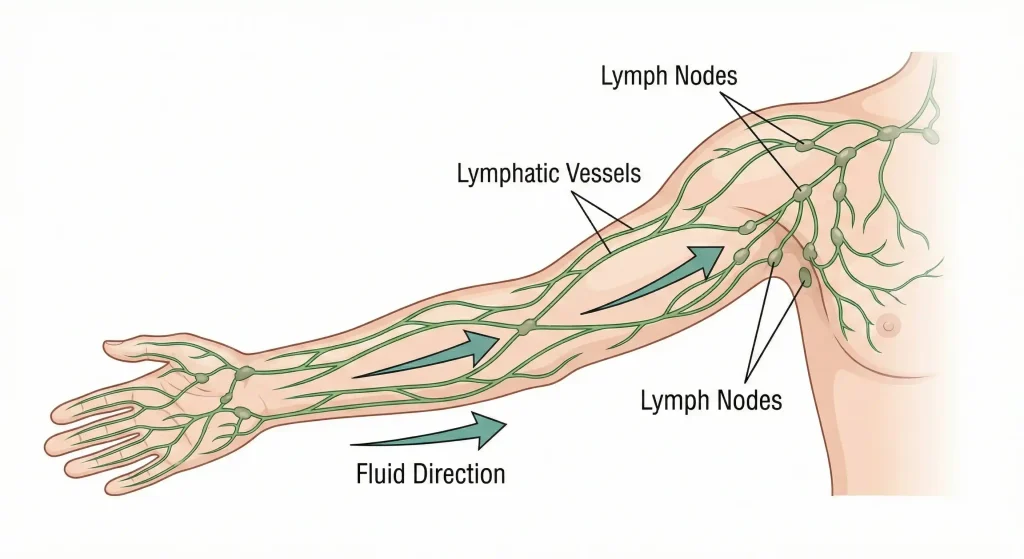
To really get to the bottom of why this massage is necessary, you really have to get down to the basic understanding of the lymphatic system itself. In contrast to the blood system which is pumped by the heart, the lymphatic system is without a central pump, the flow of lymph relies on the movement of muscles and the respiratory system, through which lymph is pushed along a network of fine vessels. It can be compared to the body’s “sewage treatment plant” as it takes up metabolic waste, bacteria, and surplus fluid from the tissue, processes them through the lymph nodes, and after that, the purified fluid is returned to the blood circulation.
When a liposuction procedure is performed by a surgeon, the cannula penetrates the fat tissue and, in the process disrupt the lymphatic capillaries. The body’s natural response to the “injury” is inflammation, which floods the damaged area with protective fluid. Due to the broken drainage pathways, the fluid has no outlet and therefore gets trapped, thus the treated area turns into a swollen sponge that is also hard. Manual Lymphatic Drainage (MLD) is the external pump. By performing very specific stretching movements, the therapist mechanically opens the initial lymphatic collectors and moves the stagnant fluid into the deeper vessels, thus effectively starting the drainage process again.
Preventing Fibrosis: The “Lumpy” Nightmare
The biggest nightmare following a high-definition body contouring is undoubtedly Fibrosis. The condition basically means your skin will be covered with hard lumps, bumps, and ridges which are actually scar tissue that is permanent. Fibrosis is a consequence of the presence of protein-rich fluid in the tissues that is prolonged over time. The body finds a way to organize the stagnant fluid into a tough, fibrous structure that can totally mar the appearance of a VASER or J-Plasma procedure. Once the condition of fibrosis is confirmed, it is extremely challenging to treat, and there might be a need for a revision surgery.
Consistent Lymphatic Drainage Massage is the main tool to fight the hardening of tissue. By keeping the fluid moving and preventing it from accumulating in one place, the therapist prevents protein fibers from clumping together. Thus, the skin can heal evenly and in harmony with the muscle. The therapist is able to feel these hard areas that are forming during the first weeks after the operation and prior to them becoming visible and uses the special techniques to break them down, the tissue being kept soft and pliable. It is as if “pressing” the skin from within, although it is still fresh and hence vulnerable.
Manual Hands vs. Machines: Which is Better?
There are patients who wonder if they could do without a therapist and just use a machine (like Pressotherapy boots). Machine compression devices are definitely great for circulation and can be used to keep the system running smoothly but they are not very suitable for post-operative healing. The pressure on the entire limb is uniform when a machine is used and thus, the exact spot where a fluid pocket (seroma) originates, or a flank adhesion develops, cannot be detected by the machine. Instead, it only sees the leg as a cylinder, not a wound that is healing.
Manual Lymphatic Drainage carried out by a professional therapist has a great advantage over the machine treatment in that it is not only therapeutic but also diagnostic. The hands of a therapist can take the texture of a tissue thus, revealing the areas where heat, hardness, or over-fluidity exists. They can control the pressure and the direction of the massage with such precision as to avoid the cut and the drainage milliliters by milliliters that is essential to the patient who has had the complex liposuction 360 procedure where guiding the fluid across the anatomical watersheds (the lymph territories’ barriers) without causing pain or damage is critical.
The Sensation: It’s Not Deep Tissue
Patients are commonly mistaken by the notion that if no pain has been felt, then there couldn’t have been any gain. It is usually expected that the massage therapist will apply the pain deep into very sore muscles. However, the real MLD is extremely tender. The lymphatic vessels are situated right under the skin and above the muscle. If the therapist is pressing too hard, they actually collapse these tiny vessels, which stops the flow completely. The pressure used is often said to be similar to a nickel resting on the skin – very gentle and rhythmic.
That leaves patients who feel “hard” quite perplexed because physically it seems they should get “mashed” so as to get “soft.” In fact, the light, repeated stretching of the skin acts as a stimulus to the parasympathetic nervous system, which in turn relaxes the body and opens up the vessels. The tangible consequence of a successful session is frequently a call of nature right after. This is because, as the therapist releases trapped fluid (measured in liters) back into the bloodstream, the kidneys pick it up and get rid of it. The so-called “detox” effect is probably the clearest indication that the massage is working, as it lessens the bloating and water weight drastically after each session.
Post-Op Care in Turkey: The Lin Health Protocol
At Lin Health Europe Clinic, we neither look at a lymphatic drainage massage as something that is “extra” nor as a “luxury” to a surgical procedure, but rather as an integral part of it. With our all-inclusive medical packages, we provide a dedicated course of professional MLD treatment that may be initiated even as early as 24 to 48 hours post the operation. We are convinced that it is not the right decision to send a patient back to their hotel (without immediate lymphatic support) as it would be a recipe for increased swelling and poor results.
Our therapists specialize in lymphatic therapy post-surgery and work in direct communication with the surgeon. Thus, they are aware not only of the areas that have been grafted (e.g., a BBL) and the ones that therefore must be avoided, but also the most aggressive ones where liposuction was done and need extra attention. This coordinated care approach guarantees that your recovery is under daily surveillance. If a seroma should form, our therapist identifies it right away and informs the medical team. By combining world-class Vaser Liposuction with expert manual therapy, we provide you with the assurance of not only a brand-new figure when you leave, but also healthy and soft tissue that will gradually settle over time.
Frequently Asked Questions About Lymphatic Drainage Massage
Good manual lymphatic drainage should definitely not be painful. The pressure is super light as the lymph vessels lie close to the surface of the skin. So, if the massage is painful and deep, it most probably means that it is done incorrectly at the very early post-op stage.
Actually, we suggest that you start with daily sessions during the first week when you are in Turkey and then gradually reduce the frequency to 2 or 3 times a week for a month after you get back home.
Sure, you can use some simple self-massage methods to assist the process but remember that you will never match the skill of a professional therapist who not only knows how to apply the right pressure but also reaches the difficult areas such as the back.
It is true that it can temporarily help your weight look lower by removing excess water and reducing bloating through the drainage of retained fluids, but it does not have the ability to burn fat cells or bring about permanent fat loss without combining it with other steps.
Please be informed that failure to do your lymphatic drainage massage post-surgery may cause you to suffer from an increase in the duration of swelling, pain, and the development of fibrosis (hard scar tissue lumps) at the risk of the skin turning uneven or rippled and this will last forever.
Vodder, E. (1936). Le drainage lymphatique manuel. Revue de Thérapeutique.
Masson, I., et al. (2016). Manual lymphatic drainage for the treatment of edema after liposuction. Journal of Cosmetic Dermatology.
Godoy, J. M. P., & Godoy, M. F. G. (2011). Treatment of cellulite based on the hypothesis of a novel physiopathology. Clinical, Cosmetic and Investigational Dermatology.
Földi, M., & Földi, E. (2006). Földi’s Textbook of Lymphology. Elsevier Health Sciences.