Breasts can regrow slightly with weight or hormonal changes.
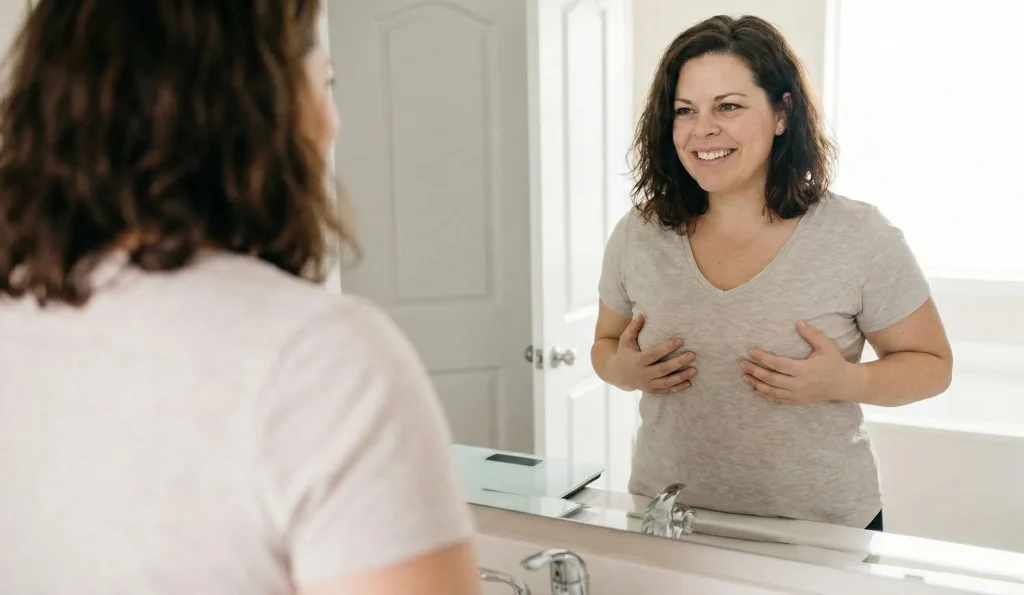
A Breast Reduction is probably the most life-changing plastic surgery for women having to deal with macromastia (abnormally big breasts). All the symptoms like chronic back pain, grooved shoulders, and skin rashes that have you feeling like a walking medical case will be relieved directly. However, a little voice of doubt might always stay in a patient’s mind, ‘Will they ever grow back? It is a reasonable worry since we constantly change. Physically, our bodies are always changing, so it is understandable to wonder. Here is the short answer: Breast reduction is generally permanent but it is also a fact that your breasts are living tissues and not stones. Though the breast tissues that were surgically removed cannot grow back like a tail of a lizard that regenerates, the breast tissues that were left could still change in size depending on your health and lifestyle. At Lin Health Europe Clinic, we have the view that knowing the biological basis of breast volume changes, namely fat and gland, is the right way to your investment protection and the keeping of your new, lighter silhouette for a lifetime.
The Biology of Removal: Cells Do Not Multiply
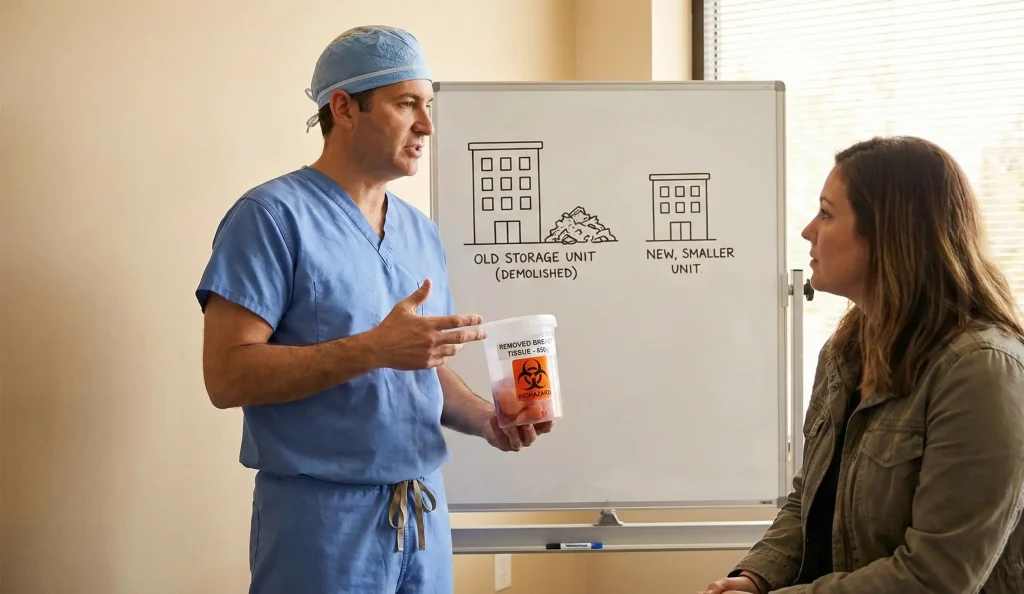
If you want to know if Breast Reduction is permanent, you have to look into what goes on during a breast reduction. We physically take away a certain measured amount of skin, fat, and glandular tissue at the same time. In adults, fat cells (adipocytes) and glandular lobules do not regenerate. We have referred to removal of tissue to the extent of 500 grams on each breast side and it is that tissue that is gone permanently for those specific cells. They are neither able to divide nor regenerate like hair or fingernails.
Hence, technically, the breast does not “grow back” if by this one means the regeneration of the lost parts. The reduction of the breast’s structure is irreversible. If you can keep your weight and hormonal status unchanged, your breast size will correspond to the one you had after the surgery for a very long time.
The Weight Trap: Expansion, Not Regrowth
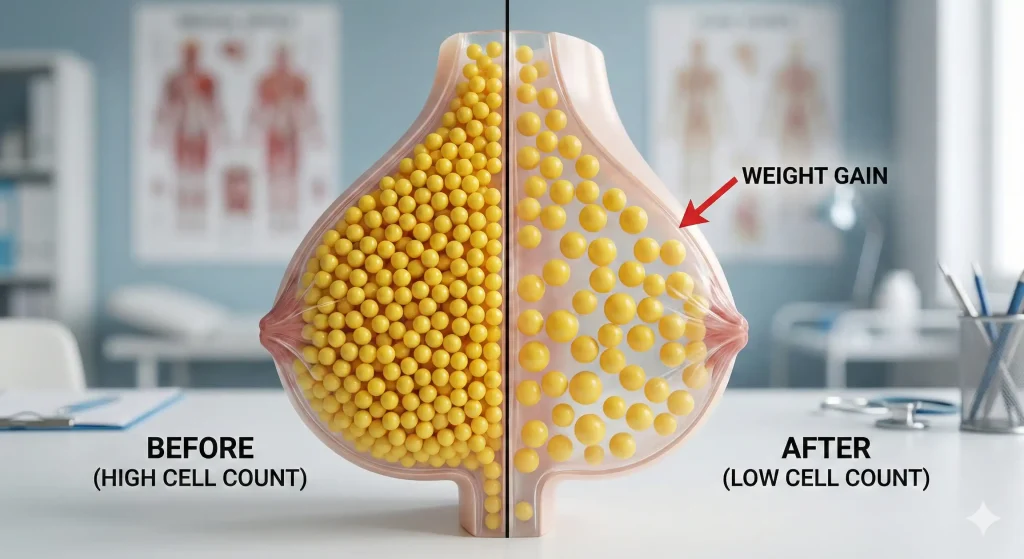
The first reason why women will come up with an argument like their breasts have “grown back” after a Breast Reduction is because their weight has gone up significantly. The truth is, while a large portion of breast fat is extracted, we do not exclude the cutting of every single fat cell. The fat cells that are left exhibit the same behavior as they did before.
When you put on 10-15 kg after the surgery, the fat cells that have been left in your breasts will get bigger to be able to hold the extra energy. This is what’s called Hypertrophy (cell growth in size), not Hyperplasia (cell number increase). Such an increase in size may add up to two cup sizes; thus, visually, it is as if the breast reduction was not successful. On the other hand, if you lose a lot of weight, your breasts may appear empty or loose, which is an effect known as ptosis. Consistency is the saving your Breast Reduction accomplishments.
The Hormonal Trigger: Pregnancy and Menopause
Breasts, being glandular organs, are highly dependent and quite responsive to hormones such as estrogen, progesterone, and prolactin. After a Breast Reduction, you still possess the rest of the functional glandular tissue which is connected to the milk ducts. If pregnancy comes after the operation, your body will produce a huge amount of hormones for the remaining tissue, preparing it for milk secretion. So, as a consequence, the glandular tissue grows and the breasts may be temporarily enlarged and have the potential to stay that way. In the same way, Menopause involves a change in the balance of hormones and hence the glandular tissue is replaced with soft fat. Although this does not necessarily raise volume, it alters the firmness and shape. We sometimes propose that young girls with Juvenile Hypertrophy (excessive development during the teenage years) should only get Breast Reduction after they have stopped growing and the normal breast size has been reached, i.e. when they are around 20-22 years old, so as to avoid getting the true glandular regrowth.
The “Bottoming Out” Illusion
At times, patients are confusing one thing for another; they mistake “regrowth” for “reshaping“. As we all know, over time, gravity will work on the operated breast the same way it does the natural one. The breast tissue might relocate below its normal position on the chest wall, a condition which is referred to as Bottoming Out.
Therefore, the breast may look as if it is fuller or heavier at the bottom and thus, the impression that the breasts are bigger will be created even though the actual volume has not changed. This is mainly due to the loosening of the skin, rather than that the breast tissue having grown. A Breast Reduction lifts the breast but it is not capable of stopping the aging process. To put it bluntly, your skin will be stretched once again, which is the explanation of why the use of a good bra is very important for the long life of this procedure’s results.
Lin Europe Difference: The Lipo-Reduction Combo
At Lin Health Europe Clinic, we use a method that helps to lower future fluctuation risk to an absolute minimum level. Besides, we often supplement the surgically excised traditional method with VASER Liposuction of the lateral chest wall (the “side boob”) and the axillary tail.
Fatty tissue is the one that is mostly responsive to weight gain. Thus, by removing this fatty component of the breast to a large extent, we make your results more “weight-proof.” We employ Superomedial Pedicle technique that allows for the removal of a considerable amount of heavy tissue from the lower pole while preserving the blood supply to the nipple. So, structurally, you are guaranteed that even though you do put on some pounds, your Breast Reduction will still look and feel the same with a good lift and shape.
Frequently Asked Questions About Breast Reduction Regrowth
Breast regrowth after surgery is actually uncommon. If you do gain a lot of weight or if you get pregnant, however, the little tissue that’s left can expand or grow, leading to an increase in breast size after a breast reduction surgery.
Pregnancy is a time when the breast tissue swells and stretches. Some post-breast reduction patients are able to get back to the size they were at immediately after surgery once they stop breastfeeding, but most find that their breasts are either a little bigger or more saggy than before the pregnancy.
Definitely. Fat cells in the breast, like the ones in any other part of the body, will swell with fat. Therefore, the fastest way to undo the aesthetic success of a breast reduction is to put on weight.
Our advice is to wait until the breasts fully mature, which usually happens by the time you’re 20. Performing surgery on teenagers with Juvenile Hypertrophy is risky as the tissue might continue growing even after the operation.
The tissue removed will never come back. The cells that were cut out don’t regenerate. Provided that you keep your weight steady, breast reduction surgery is really a lifetime answer for heavy and sagging breasts.
Strong, B., & Hall-Findlay, E. J. (2015). How Does Breast Reduction Affect Breastfeeding? Plastic and Reconstructive Surgery.
Cruz-Korchin, N., & Korchin, L. (2002). Vertical reduction mammaplasty: The effect on breast size and shape. Aesthetic Plastic Surgery.
Spear, S. L., et al. (2012). Recurrence of macromastia after reduction mammaplasty. Plastic and Reconstructive Surgery.