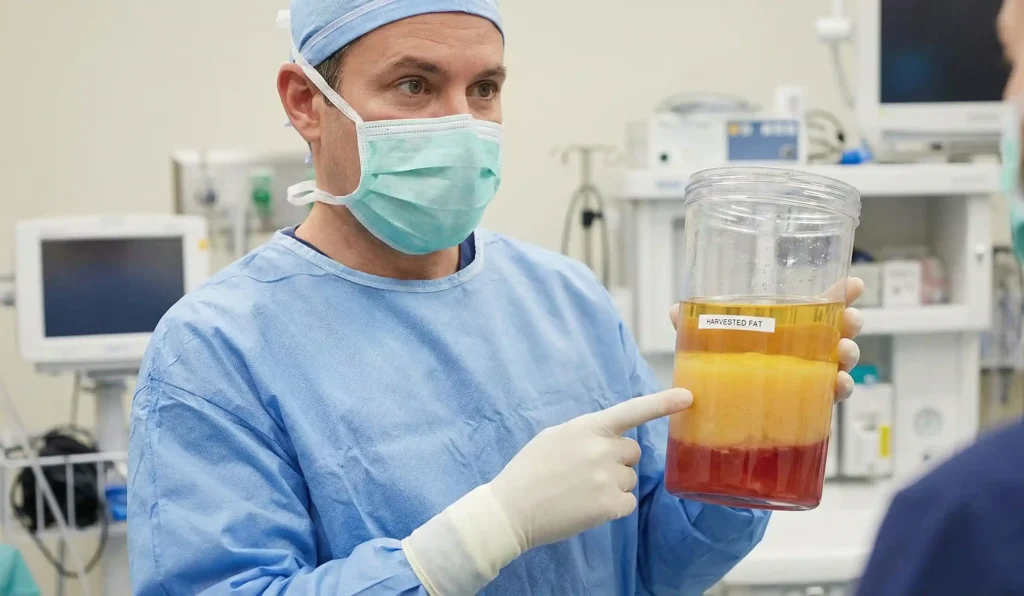
Typically, 60–80% of the transferred fat survives.
The Brazilian Butt Lift (BBL) differs from typical plastic surgeries as it does not involve implants but rather transplants. Essentially, you’re taking living tissues from areas you would like to get rid of (such as the stomach or flanks) and placing them in an area where you want more volume (your buttocks). Because we’re working with living cells, a biological factor of uncertainty is always present, which each patient must understand; not all cells will survive.
It is common for patients to immediately look at their post-surgery swollen butts and become infatuated with the size only to panic six weeks later when the volume seems to have decreased. They then ask, “Is my BBL disappearing?” In most circumstances, the answer is no; it is merely settling. Learning about the biology behind fat graft survival can really help with expectation setting. In Lin Europe Clinic, we stand for genuine biology. We neither promise nor imply 100% retention as that is scientifically unachievable, rather, through the use of advanced harvesting techniques, we are getting closer to the scenario of cells staying alive forever.
The Golden Rule: The 70/30 Split
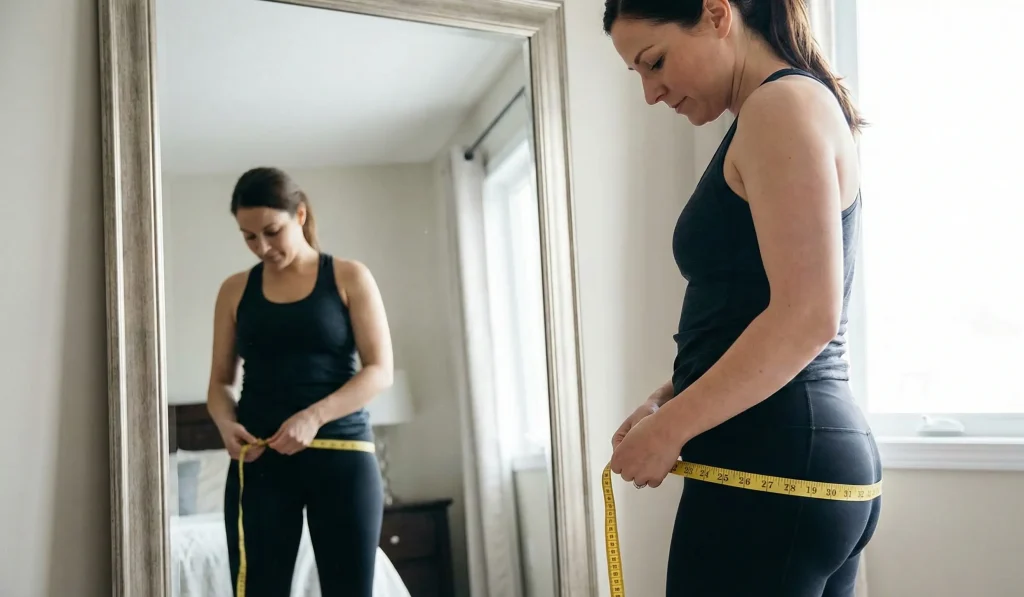
The plastic surgery field often references studies suggesting that approximately 60% to 80% of the fat cells transferred will remain alive over an extended period. It naturally follows from that statement that the remaining 20% to 40% of the fat will get reabsorbed by your body and be eliminated as waste.
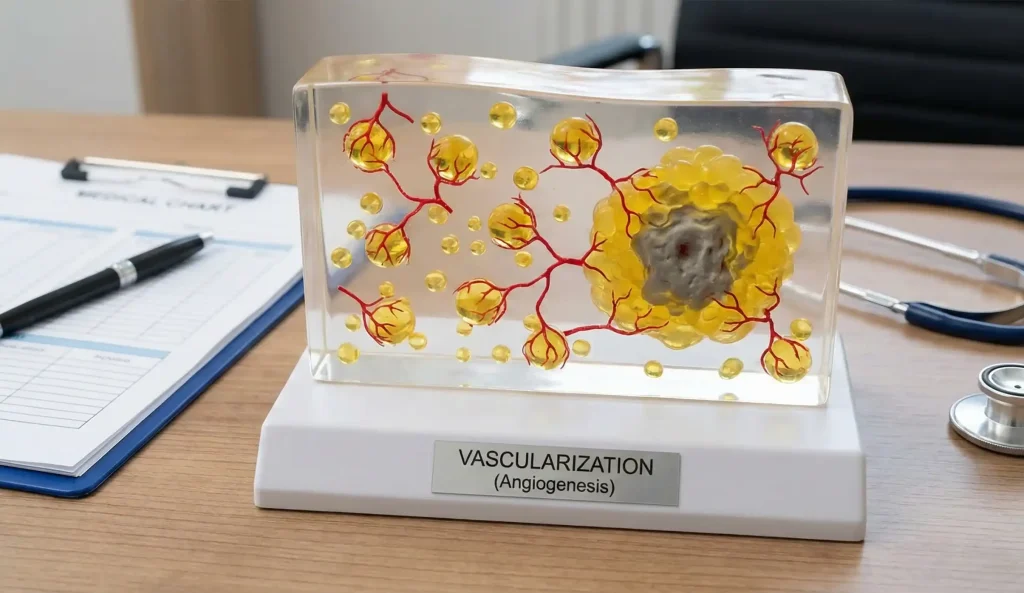
This by no means should be equated to an unsuccessful operation; rather, it is just the way grafting works. When fat is drawn from a donor site, the blood supply to these fat cells is essentially severed. Once transferred to the recipient site, the fat cells must get a new blood supply from the host (angiogenesis) within a couple of days if they are to be alive and well. Some of them just fail to form these connections quickly enough and so are lost (apoptosis). Hence, an experienced surgeon tends to put in a slightly higher volume than the final target to make up for this explainable loss. If you want a 500cc outcome, we might put in 700cc, with the knowledge that the “extra” is kind of your insurance against the natural die-off rate.
The “Fluff Fairy” and the Timeline of Shrinkage
Your recovery journey is anything but straightforward at least in terms of volume changes. Initially, your after-surgery buttocks look enormous but most of it is not fat. It is a combination of fat, the liquid used for tumescent anesthesia, and a heavy inflammatory process.
- Weeks 1-6 (The Drop): Once the swelling goes down and the body starts breaking up the dead fat cells, the size will visibly decrease again. This is really the stage when you see patient getting stress over it.
- Months 3-6 (The Fluff Fairy): This is the transformation phase. When the skin loosens enough and the surviving fat cells acclimatize to their new environment, the buttocks become more yielding and have a natural projection. The whole BBL community fondly calls this phenomenon “The Fluff.” Although the overall measurement will probably be less than on your first day post-op, the figure gets rounder and more lifted.
The Enemy of Survival: Pressure and Hypoxia
What causes the death of fat cells? The greatest offender is Pressure. Fat cells are delicate. If you lean directly on your newly grafted buttocks within the first few days, you physically constrict the blood vessels that are only at the capillary level. This cuts off oxygen supply to the fat cells (hypoxia), and thus causes their death.
Additionally, Overstuffing is another enemy. Most patients demand the largest possible result, but there is a physical limit to the volume of fat the buttocks can hold. When a surgeon forcibly packs too much fat into a limited space, the pressure inside goes up, and the blood vessels get crushed. Ironically, when a surgeon puts too much fat, the overall survival is less due to the cells suffocating each other. Hard nodules of dead fat (oil cysts) rather than a soft, nicely curved contour are formed.
Feed the Fat: Nutrition and Weight Stability
After a BBL, dieting is absolutely out of the question. In fact, you are medically encouraged to consume lots of calories. The newly grafted fat cells, now fresh and active, are very metabolically demanding; they require nutrients in order to set up their blood supply.
We suggest eating a high-protein and good fats (avocados, nuts, salmon) diet. By putting your body on a calorie-restricted diet during the first three months, your body will be forced to use the transplanted fat as an energy source before it can even come to your old stubborn fat. Besides, BBL fat behaves like normal fat. If in the future, you end up losing 10kgs, your butt will also shrink. If you put on 10kgs, it will expand. To keep the precise figure that you and your BBL surgeon are happy with, you have to keep your weight within a very narrow range of plus/minus 3kgs.
BBL Surgery in Turkey
The focus at Lin Europe Clinic in Turkey is on how clean the harvested material is for great BBL fat survival rates. For this, we rely heavily on VASER Liposuction, the machine that uses ultrasound energy to break up fat cells very gently. Some research indicates that ultrasound-assisted fat harvesting can produce fat grafts of very high viability because it frees the fat from fibers without the mechanical trauma caused by aggressive scraping.
Furthermore, we operate with a “closed-loop” system, where the fat is collected in a sterile environment, purified to separate the oil and blood, and then re-injected without ever being exposed to air. This decreases infection risk and ensures that only the healthiest, golden yellow fat cells are implanted. Alongside that, we have a rigorous post-op protocol to keep you on the right track. There, we show you exactly how to sleep and sit to protect your investment, thus ensuring the “70%” that survives is perfectly sculpted.
Frequently Asked Questions About BBL Survival
It is generally estimated that around 60%-80% of the transferred fat remains for the long term. The funny part is, the body gradually reabsorbs the rest of the BBL fat naturally within the first 3 months.
Sitting means applying pressure on the graft and thus starving it of blood. Therefore, to get the best BBL survival results, it is advised that you refrain from sitting right on your butt for at least 2 to 6 weeks, the exact time period depending on your surgeon’s instructions.
Yes. The transferred fat cells act just like normal fat cells. So if you lose a lot of weight after the operation, the fat cells in your buttocks will decrease in size and your BBL will be smaller.
Totally. Nicotine makes blood vessels smaller which in turn cuts down the oxygen supply given to the new fat graft. Smoking lowers the BBL fat survival rates greatly and also increases the chances of fat necrosis (dead fat lumps).
It is encouraged to “feed the fat” (eat at maintenance calories or slightly above) during recovery, but it is not necessary to put on excessive weight. For supporting BBL fat survival without the risk of gaining visceral fat, healthy fats and proteins are the best choices.
Del Vecchio, D., & Bucky, L. (2011). Breast augmentation using pre-expansion and autologous fat transplantation: a clinical series. Plastic and Reconstructive Surgery. (Cited for fat graft survival principles).
Hoyos, A. E., et al. (2018). Gluteal augmentation with fat grafting: the multi-plane technique. Aesthetic Surgery Journal.
Sinno, S., et al. (2016). Determining the safety and efficacy of gluteal augmentation: a systematic review of outcomes and complications. Plastic and Reconstructive Surgery.