Itching usually lasts a few days to weeks.
The symptom that everyone associates with surgery is pain and most patients are quite prepared for it with their pain prescriptions and mental strength set. Unexpectedly, around seven days after the operation, a new and often more irritating symptom appears which is different from pain: the itch.
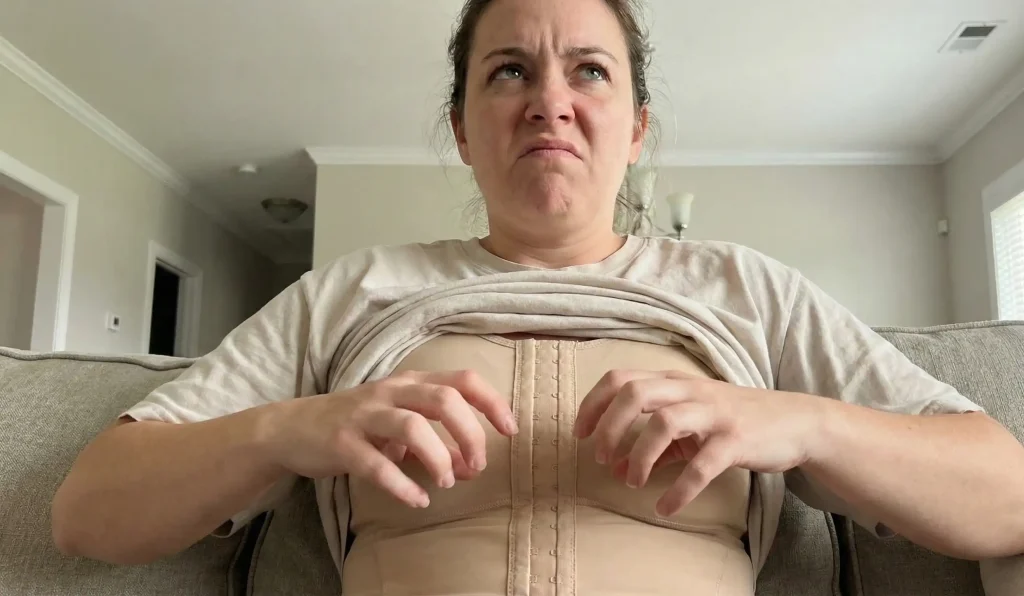
Some people even say that the itching is six times more unbearable than the pain. You may locate it as a sensation of a great irritation that is under the skin and that you are not able to scratch or a feeling of nervous tickling of the skin around incisions. This condition, whose medical term is Pruritus, is typical of your body and the environment, thus, there is no need for concern. Actually, it is the return of your skin’s healthy state and a reaction of the nerves that are triggered and for this reason it is a positive sign. Even though the painkilling medication has done some good, the itch always comes back. Lin Europe Clinic is where the staff cares for patients and explains the ‘science of itch‘ to them so that they do not spoil the skin repair process by scratching it because they do not know it.
Histamine Reaction: The “Healing Hormone”
You might wonder why the operation site itches only to find out that it is because of the histamine compound (chemical). Incidentally, following a surgical cut made by your surgeon, your body’s immune system goes into a frenzy (characterized by a histamine which is a chemical release) to eliminate bacteria and repair the wound. Histamine dilates (opens) the blood vessels for the blood to come to the area.
It is those red blood cells that supply the area with oxygen and nutrients that make perfect the wound healing process, but on top of that, histamine also provokes skin nerve endings which anyway send the brain a signal that the skin should be scratched. This chemical is also the one that is released when mosquitoes bite you. Your post-surgical wound is, for all intents and purposes, inflamed by histamine all over the first week at least. Such histamine or inflammatory phase of wound healing peaks around day 5 to day 10 post-surgery.
Nerve Regeneration: The “Zaps and Prickles”
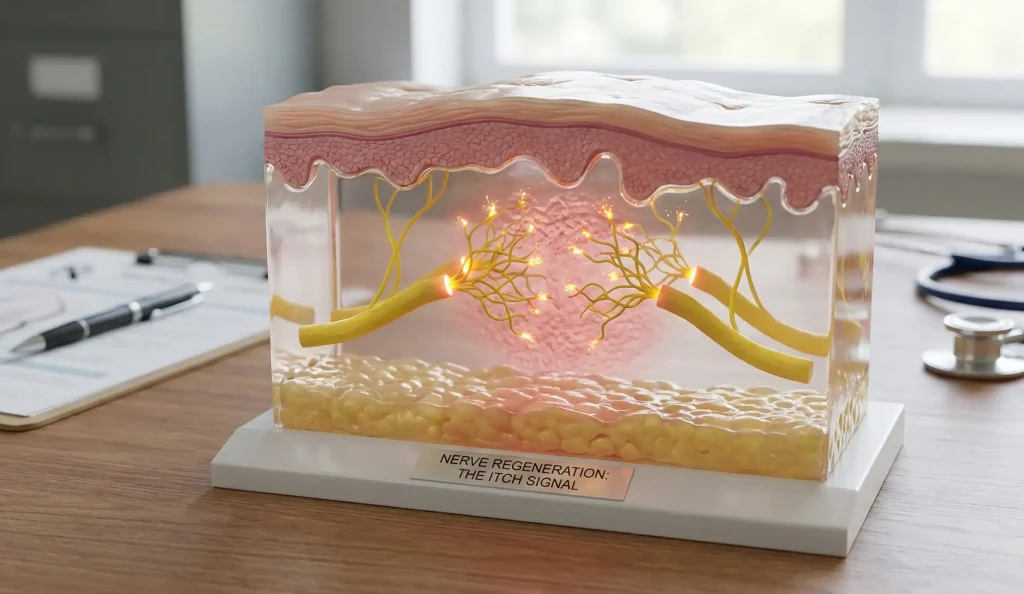
If the itching starts to linger, especially if you experience it as a deep sensation, nerve regeneration is likely to take the blame. After any surgery, such as a tummy tuck or breast lift, the small nerves which carry sensations to the skin are cut, or severed due to being stretched, inevitably.
Because the nerves keep growing outward, they become highly sensitive to stimuli. They send disorganized, random electrical impulses to the brain which, in the majority of cases, interprets these signals as feelings of itch, burn, and electric shock. The condition of neuropathic itching may sometimes continue for quite a while. Very frequently, it comes back with the sensation of the PMD (post-microsurgical dysesthesia) subsequently experienced during the first normal sensory reinnervation following the local nerve regeneration.
Compression Factor: Dryness and Heat
The impact of your surroundings cannot be underestimated. Possibly, you are instructed to wear a compression garment (faja) for 24 hours a day.
- Dryness: A compression garment is knitted in a way that it will absorb the sweat while at the same time the constant rubbing of the skin by the garment partly robs the skin of its natural oils (lubrication). Therefore, if the skin becomes dry, flaky, and scaly, humiliating itching will be inevitable.
- Heat: The synthetic nature of the tight garment does not allow heat that your body produces to go out. Perspiration is very irritating to the skin when is sitting on the skin under the influence of compression. This is the reason that people tend to experience itching at night when they are warm and in bed.
- Contact Dermatitis: Very occasionally, the patient can get a reaction to the fabric detergent used to wash the garment or the latex fabric itself. If one is diagnosed with contact dermatitis, the skin rash will be raised, red, and bumpy.
The “No Scratch” Rule: What to Do Instead
The cardinal rule that governs the recovery of your body from the operation is that incisions must never be scratched. When you do that, it will put bacteria under your fingernails and pass them on to the fresh wound that leads to infection. Besides, if you scratch the wound mechanically, the new and delicate skin glue will be damaged thus the wound will split (opening of the wound or dehiscence) and a hypertrophic scar will be left. Here are some ideas for you to get relief without scratching:
- The slap method: Here a patient applies a very light slapping or tapping on a layer of clothing over an incision so that relief can be obtained and the nerves are confused.
- Ice packs: A 10-minute application at the most of ice wrapped in a cloth will numb the skin and the inflammation will be lowered.
- Antihistamines: Since histamine is the culprit, an over-the-counter oral antihistamine (like Benadryl or Claritin) can work wonders, especially at night to help you sleep.
- Moisturize: Apply a lotion that doesn’t smell and one that is made for sensitive skin. Keep the skin around the incision, which is not open, well hydrated.
Lin Europe Clinic Advice: Medication Management
At Lin Europe Clinic in Turkey, our patients’ itching is equally important as their pain, so if your itch is so bad that it keeps you awake at night, we might change your medicine. It is fascinating that some prescription narcotics (opioids) have extreme itching as a side effect that occurs most often. If you are on strong painkillers and scratching at your nose or arms all the time, it might be a drug effect rather than a healing one.
We also help you maintain your garment hygiene properly. We strongly suggest wearing a soft, 100% cotton tank top underneath your compression garment. It creates a breathable barrier that keeps the sweat away and prevents the rough elastics from rubbing directly against your sensitive healing skin thus helping to reduce significantly the “contact itch.”
Frequently Asked Questions About Post-Op Itching
Yes. At night, the levels of cortisol (which helps to control inflammation) drop, and body temperature frequently rises when you are in bed, so the itch sensation becomes stronger when you are trying to sleep.
No. Don’t put creams, lotions, or oils on a cut that is still open and bleeding unless your surgeon has given you the go-ahead. It might cause infection or break down the sutures.
The very surface itching that you feel probably won’t last more than 2 to 3 weeks. Nevertheless, the deep, “electric” nerve itch may still cause you trouble intermittently for 3 to 6 months until full sensation is restored.
Not really. Itching is a sign of the skin healing. But, if the itch is accompanied by very red skin, hotness, yellow discharge, or a fever, it indicates an infection.
It is very often the case that your back itches simply because the compression garment is rubbing against your back, or you are having a reaction to the pain medication. Keep your skin hydrated and move around frequently.
Nedelec, B., et al. (2012). Prevalence and severity of pruritus in adult burn survivors. Journal of Burn Care & Research. (Cited for wound healing itch mechanisms).
Chung, B. Y., et al. (2020). Pathophysiology and treatment of pruritus in skin diseases. International Journal of Molecular Sciences.