Follow support bra use and avoid early strain.
During the initial several weeks following a breast augmentation, the chief worry of most patients is that their implants look “too high.” They are positioned near the collarbone creating a “square” or “torpedo” shape which looks and feels very unnatural. Patients are just itching for them to come down. Yet, seasoned plastic surgeons are aware that the problem that is the opposite – implants that drop too low – is a lot more difficult and permanent complication to deal with. This condition is called “Bottoming Out” (Inferior Displacement).
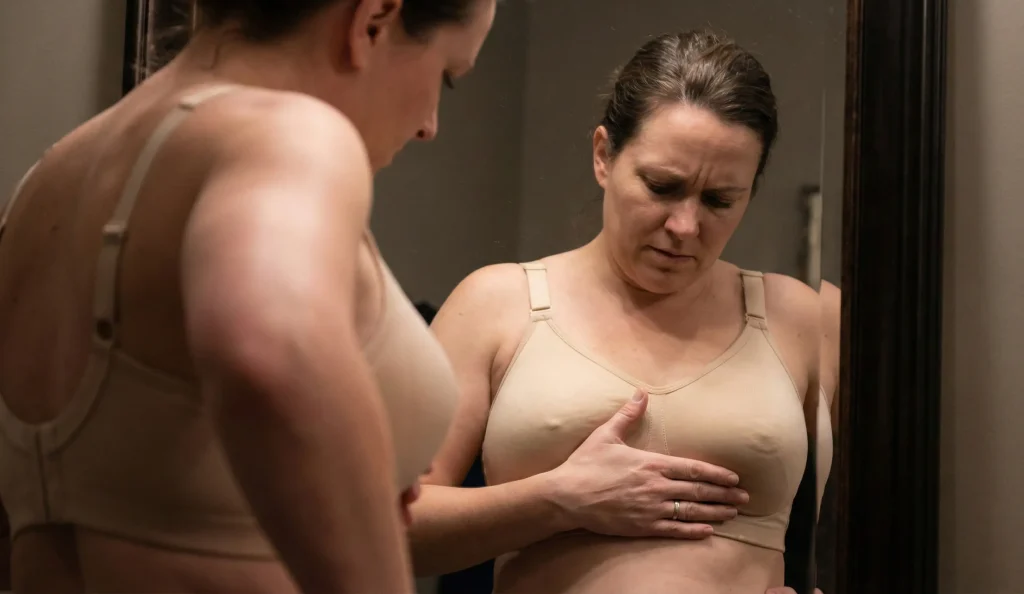
With bottoming out, implant slides beyond the natural crease under the breast (inframammary fold or IMF) and ends up being located lower on the chest wall. In appearance, this results in an extra “long” breast with the nipple placed very high on the breast mound, pointing upward, whereas most of the volume is below it. It is highly likely that this kind of outfit will be subject to a complex and costly revision surgery. Whilst the role of surgical technique is huge, your conduct during recovery is the second line of defense. Lin Europe Clinic emphasizes the importance of knowing how your “internal bra” works that is a major secret weapon against gravity.
The Anatomy of the Anchor: The Inframammary Fold (IMF)
To get down to bottoming out, you first need to get into the anatomy of the breast’s base. The Inframammary Fold (IMF) is more than just a skin line where the breast meets the ribcage; it is a robust ligamentous band that resembles a shelf. It is responsible for supporting the weight of the breast tissue.
In a breast augmentation procedure, the surgeon makes a pocket for the implant. However, if the surgeon artificially lowers this natural fold in order to fit a large implant, or if the patient’s natural tissue at the fold is weak, the shelf could break. Just like you would put a very heavy book on a fragile shelf, which might be your case. And if the shelf breaks, the book will fall down. Once the implant moves beyond this border, it gradually becomes more and more difficult to distinguish the breast from the belly. Prevention starts by honoring the structural integrity of this fold throughout the healing phase.
The “High and Tight” Philosophy
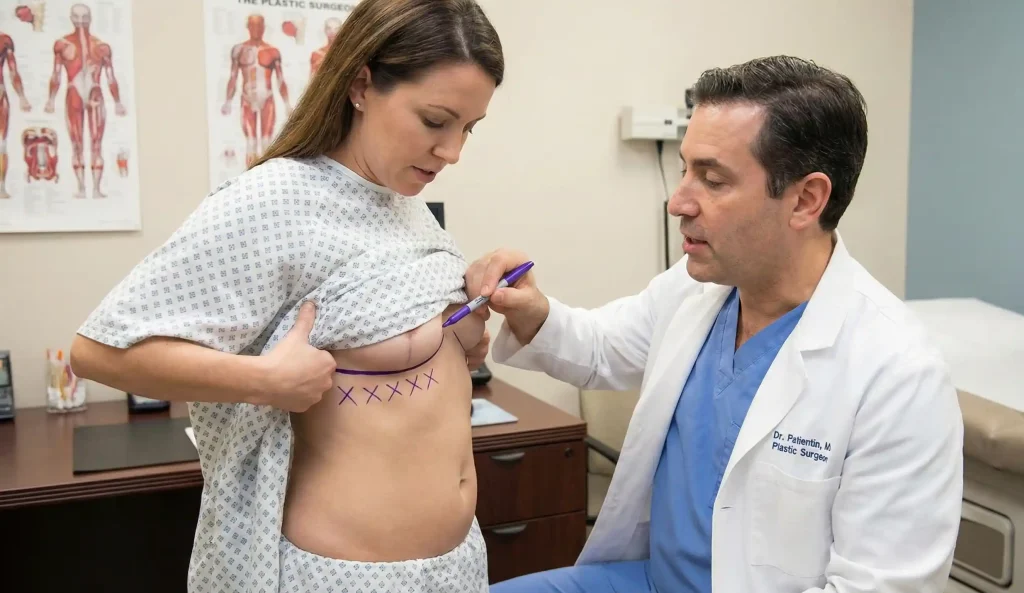
So, this explains why plastic surgeons tend to leave implants “high and tight” right after surgery. This is a kind of safety buffer. We use gravity as the stretching factor of the lower muscle and skin gradually over the next three months. But on Day 1, if an implant is placed exactly in the final spot, gravity will by Month 6 inevitably pull it down too low.
Hence, the prevention of bottoming out needs to be patient. You should hold back your implants from coming down too fast. Downward pushing massage of the breast or overuse of the stabilizer strap (breast band) when tissues are already loose might cause a blowout of the bottom of the pocket. If your implants are high, trust the process. You can lower a high implant later, whereas if you top out bottom, you will have to go through the whole lift procedure again.
The Role of the Surgical Bra
Indeed, your surgical bra is crucial to the prevention of bottoming out. The capsule (internal scar tissue pocket) is developing around the implant during the first 6 to 12 weeks. Subsequently, the capsule will be hardened slightly, and the implant will be held in place very well. The external bra and your skin are the only things keeping the implant up until the capsule forms.
Certainly, if you change to a very simple bralette or go braless too soon, the whole weight of the silicone will be directly resting the healing incision and the IMF. In this way, the internal tissues can be slowly peeled apart by this constant downward pressure thereby increasing the pocket size downwards as well. A surgical bra that supports you well and has a strong under-band works like an external shelf, saving your tissues from the loads while they get stronger. For patients with heavy implants (400cc+), structural bra support is not only essential at a weekly but also at a monthly level.
Implant Weight vs. Tissue Quality
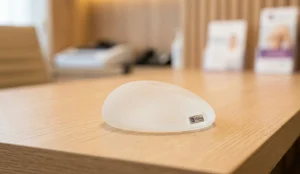
There is a very obvious physical relationship between the size of the implant and the probability of bottoming out which goes like this: Bigger implants weigh more and drop quicker. A 300cc implant is exerting a very light pressure on the lower pole of the skin. On the other hand, a 600cc implant continuously applies an incredibly high pressure on that area which, over time, can both thin the skin and stretch the ligaments.
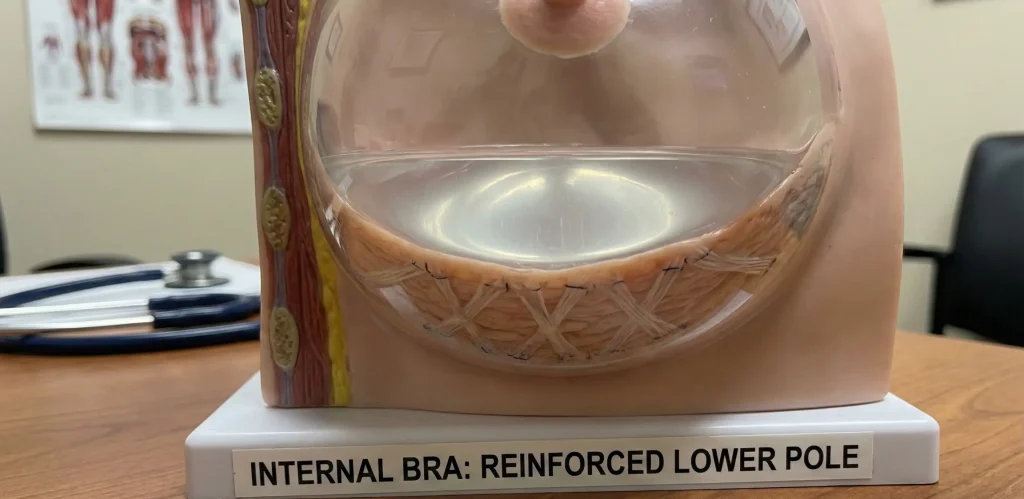
If your skin has lost its elasticity (maybe from pregnancy, weight loss, or just because of your genes), and you decide to have a large heavy implant, you will almost certainly bottom out sooner rather than later. More often than not, in these cases, the preventive measures come before the surgery itself. It may be that a smaller implant will be okay, or a so-called “Internal Bra” (surgical mesh like Galaflex) should be used. This mesh is a biologically compatible scaffold dissolving with time, and it leaves a firmer layer of collagen that acts as a hammock and thus structurally reinforces the bottom of the pocket to handle the extra weight.
The Stabilizer Band: A Double-Edged Sword
The breast band (an elastic strap worn across the top of the chest) is one of the tools that patients and surgeons commonly use to get high implants down. Like any tool it can be dangerous if used incorrectly.
If your skin is already loose and your implants are falling quite fast, wearing the band will keep forcing the implants down, now with even more pressure, and eventually, the implants will break through the IMF. Please note that the band should only be used if and when/where your plastic surgeon instructs you to use it. As soon as you realize that the implants are going downhill or your nipples are looking too high, stop using the band immediately. It is the worst thing you can do in the situation of bottoming out (the fire is already raging, so you are basically throwing fuel into it).
Sleeping Position: The Gravity Break
For the first few weeks, we recommend that patients sleep on their backs with their heads elevated at a 45-degree angle. This advice is not only for minimizing swelling; it is mainly about pocket control. As you can guess, lying flat or standing while sleeping will cause your implants to be pulled down towards the fold by gravity.
The only way to get the implants to go up is by sleeping on your stomach. The intriguing thing is, that once the patient is able to heal and show early symptoms of bottoming out, we advise them to continue wearing a bra even at night on a permanent basis and try avoiding a braless night. Sleeping in a soft support bra means that your breasts do not meet gravity during sleep and thus the eight hours of unconsciousness won’t be enough time for it to do any kind of damage.
Experience the Lin Europe Difference: Proactive Monitoring
At Lin Europe Clinic in Turkey, we realize just how small and often invisible to the untrained eye the difference is between a “natural drop” and “bottoming out”. This is exactly why our post-operative follow-up is so stringent. Besides hearing your complaints, we also take pictures and do visual measurements of your breasts at each check-in.
When we are able to spot the early symptoms of the implant going down (too fast implantation in the first month) without a surgical technique, we use taping protocols or your compression garment is adjusted to stop the slide. During consultation, we advise such patients to use internal mesh if they have larger implants or inadequate skin; that way, we can prepare the skin for holding their dream result for life. We all know the importance of perfectly performing the primary surgery, but here at Lin Europe Clinic we feel equally necessary to be perfectly performing primary surgery thereby preventing the need of revision.
Frequently Asked Questions About Bottoming Out
The nipple is usually the earliest indication that it is pointing upwards (to the sky) while the breast volume appears to be lower at the bottom. Also, you may see that the space between your nipple and the crease under your breast has increased significantly.
Definitely not. Bottoming out is a failure of the structure of the tissues or the pocket. You can’t expect skin or the ligaments under the breast to get tighter just because you do chest exercises (pec flyes, etc.). A surgical repair will be needed.
Not at all. “Drop and fluff” is the controlled, and therefore, desirable settling of the implant into the pocket. Bottoming out is when the implant is settling too far, sliding out of the fold that was intended.
A surgical mesh (such as Galaflex) greatly lowers the risk by providing a stronger scaffold of scar tissue at the bottom of the breast, thus it acts like an internal hammock which is 3-4 times stronger than the native tissue.
Uneven healing is a very common occurrence. One side might have had naturally weaker tissues or maybe you spent more time sleeping on one side thus putting more pressure on that breast during the crucial healing phase.
Tebbetts, J. B. (2002). Dual Plane Breast Augmentation: Optimizing Implant-Soft Tissue Relationships. Plastic and Reconstructive Surgery.
Bengtson, B. P., et al. (2012). Style 410 highly cohesive silicone breast implant core study results at 3 years. Aesthetic Surgery Journal.
Adams, W. P. (2009). The process of breast augmentation: four sequential steps for optimizing outcomes. Plastic and Reconstructive Surgery.