Usually after 5–7 days.
During the consultation stage, one of the first questions spirited ladies ask is, “How quickly will I be able to drive again?” We acknowledge that you probably want to get to your usual life. Driving reflects freedom: the capacity to carry out errands, go to work, or pick up kids without resorting to other people. Nevertheless, breast augmentation is a big operation that will definitely impair your upper body mechanics and reaction time in a way that you probably won’t realize until you actually get behind the wheel.
Generally, a medical doctor would say that you can only go back to driving a car after 5 to 10 days, but this is not an arbitrarily picked number. The rule is based on three non-negotiable safety factors: the elimination of narcotic painkillers from your system, your physical range of motion, and the sudden impact risk. At Lin Europe Clinic we care about your safety and the safety of the people on the street. Thus, we highly recommend that you get a friend, a partner, or a taxi to drive you around during your first week of recovery because driving too early is not only risky but it is illegal as well.
The Medication Barrier: “Driving Under the Influence”
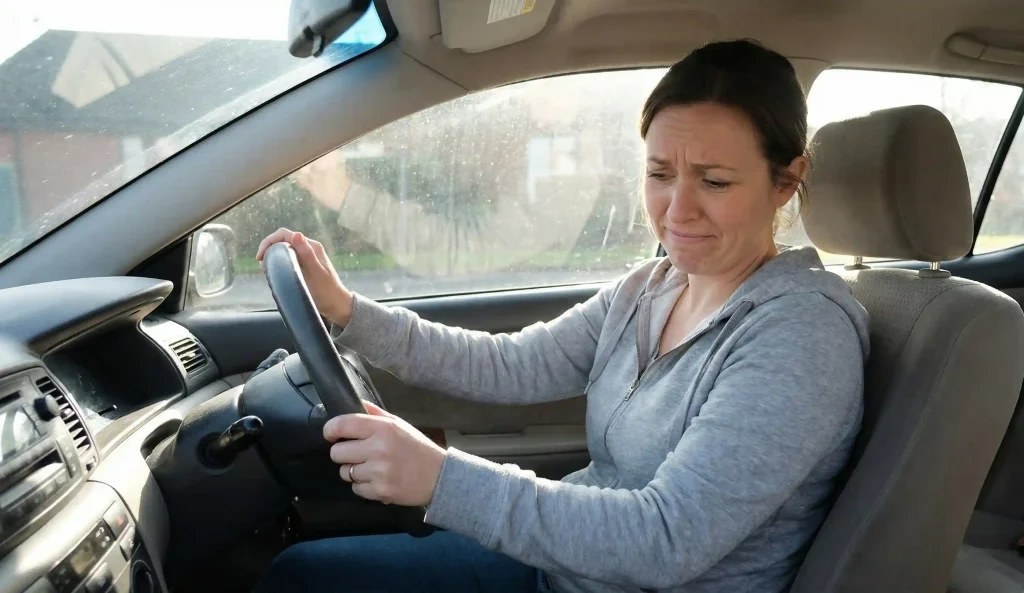
The immediate factor that will stop you from driving is the medication that you are going to take. Just after the operation for the first few days you’ll probably get a prescription for painkillers like narcotics (e.g. codeine or oxycodone) and maybe muscle relaxants in order to keep the pain at a manageable level. Such drugs are CNS (central nervous system) depressants which means that your brain becomes slower in its ability to process information, your eyes get blurry and your response time is significantly reduced.
It is a good idea to be without the influence of these drugs for at least 24 hours before you can think about driving again and during this timeframe, you can only take Paracetamol or Ibuprofen. Legally, many jurisdictions consider it as driving under the influence (DUI) if you operate a vehicle and at the same time you take medication that is prescribed for narcotics after surgery. There is also an insurance trap a lot of patients forget about: if you get involved in a car accident while driving despite the fact that the doctor advised you not to, or you are taking narcotics prescribed to you, then your insurance company can cancel your policy, leaving you responsible for all damages.
The Physical Barrier: The “Emergency Stop” Test
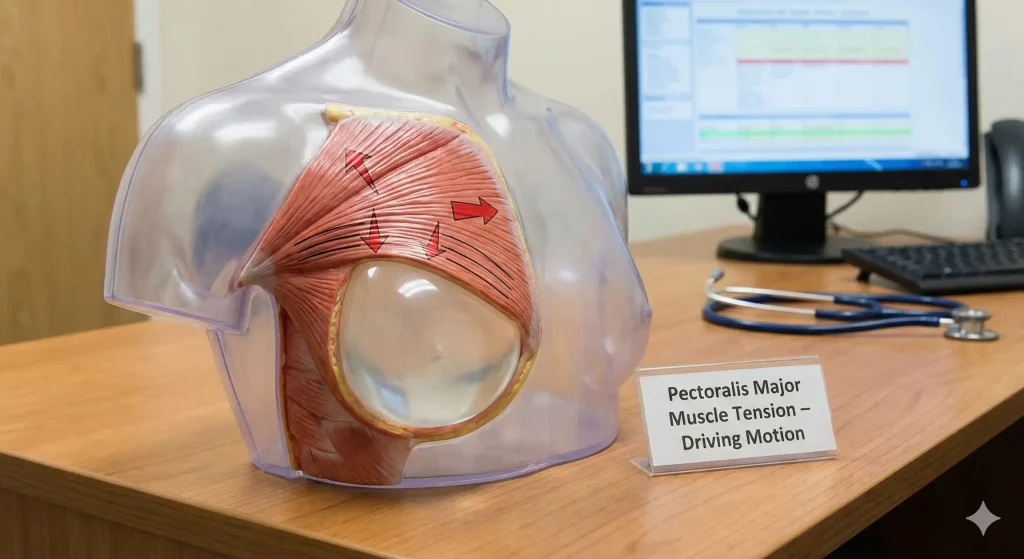
Apart from the drug-induced fog of their minds, people have to face the real condition of their chest muscles. It is certainly true that driving can be a physically tiring task that is why your muscles of the upper body are actively engaged while doing it. Locating and/or using your pectoralis major muscles is necessary to carry out the tasks of turning a car wheel, shifting gears (in manual cars), and checking the blind spots. For those who have got their implants Under the Muscle (Dual Plane), the most likely situation is that their pecs will be very sore and tight and that they might even be in spasm during the first week of recovery.
You have to test yourself for the “Emergency Stop”.
Think about it: say, if a child runs into the street or a car in your lane suddenly and unexpectedly, can you brake suddenly and jerk the steering wheel instantly so as to avoid the collision? Not only will your body weakly react to the sensation of pain but chest tightness will leave you with less confidence in your ability to react. That little moment of hesitation where your brain processes the pain before it can give the command to the muscles is the only moment the accident can happen. You are not allowed to drive if your simulated sharp turn causes a flinch.
The Hidden Danger: Reaching and Twisting
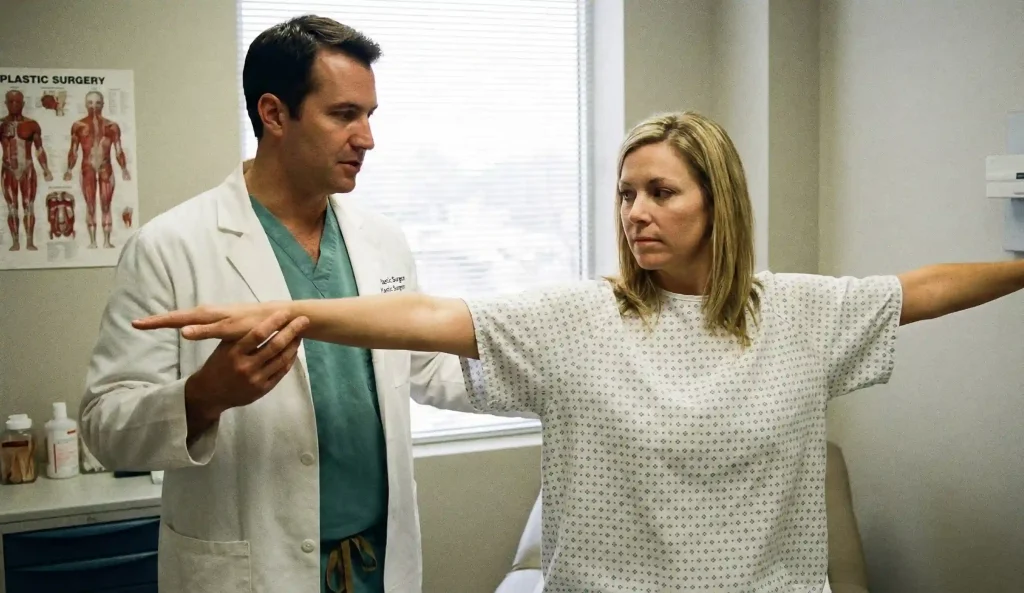
It really is every bit as concerning how the secondary movements become the problem as is the case with just the steering. No matter what the case is- be it if you are holding out the window to get a ticket, or if you are reversing into a parking space and therefore you have to twist your torso, or if you want to get the child on the back seat then all these actions increase the chance of your incisions getting strained really badly. What these twisting movements (torque) do is that they stretch the internal sutures which basically is a cause of “torque bleed”, hematoma, or bruise.
For those of you who are driving a manual transmission car the stakes are quite higher because you will continually be pressing the gear lever away from you which means you will be tensing your left pectoral muscle repeatedly. As far as our patients from Europe who both have manual and automatic cars are concerned, we usually advise the former to wait for two weeks in total whereas the latter can be ready after 7 to 10 days.
The Seatbelt Dilemma
The last problem is caused by the seatbelt itself. It is the seatbelt’s diagonal strap that is directly placed on the chest and when the seatbelt is suddenly tightened during an emergency stop the strap presses hard on the area where your chest is healing and where your implants are.
At the beginning of the healing process, the pressure may cause a great deal of discomfort or it may irritate the incision. Although putting a small pillow or a soft towel just between the strap and your chest will give you some relief, there will still be a certain amount of pressure. We suggest that you go in the back seat as a passenger for the first couple of rides because the risk of the airbag going off in the front seat is an additional danger to the healing tissues that are at the very initial stage.
Driving in Turkey vs. Home
Our patients who are from other countries and are travelling to Lin Europe Clinic in Istanbul are simply asked not to drive during their stay. This is because Istanbul is a big city with heavy traffic and requires drivers constantly to be very alert and sometimes aggressive. On top of those factors, if you try to find your way in a foreign city while you are recovering from surgery it will be very stressful. The level of cortisol and blood pressure becomes elevated when stress is high and these are two factors that increase the risk of bleeding.
For transport to your doctor visits and airport runs, we provide VIP transfer services so you never have to worry about transport. When you get back home, which is usually 7 days after the operation, you should be off the hard painkillers and therefore you can cautiously take a short and slow test drive in an empty parking lot with a passenger who can help you if necessary before going to the highway.
Frequently Asked Questions About Driving
Yes, provided that you have not taken any narcotic painkillers for 24 hours and you are able to turn the steering wheel without pain or hesitation.
Although modern implants are very sturdy and the chance of rupturing due to an airbag is minimal, the force of the hit may result in severe bruising, hematoma, or displacement of the healing pocket.
Normal driving won’t cause displacement. However, the twisting movement involved in reaching the back seat or checking blind spots can be quite painful and may put strain on the healing internal stitches.
Yes, it is very advisable to place a small soft travel pillow between your chest and the seatbelt strap to spread the pressure and protect your incision.
Yes, patients with implants under the muscle usually take a few extra days (up to 10-14 days) to be able to drive comfortably because the action of turning the wheel directly engages the sore pectoral muscle.
Choudhary, S., et al. (2018). Return to driving after breast augmentation: A prospective study. Aesthetic Surgery Journal.
Vandeweyer, E. (2005). Safe driving after breast augmentation. Annals of Plastic Surgery.