
Usually every 10–15 years.
Based on patient perception, breast augmentation is almost always considered a permanent solution to one’s aesthetic needs. In order to permanently maintain a beautiful figure, the patients spend in the procedure, their emotions and a lot more. Nonetheless, both medical specialists and manufacturers categorize breast implants as prosthetic devices rather than organs that live a lifetime. Just like a knee replacement or a dental crown that are worn out and need to be changed over time, breast implants also wear out within the changing environment of the human body. At Lin Europe Clinic, we strive to provide honest education so that you can take responsible care of your health in the long-term.
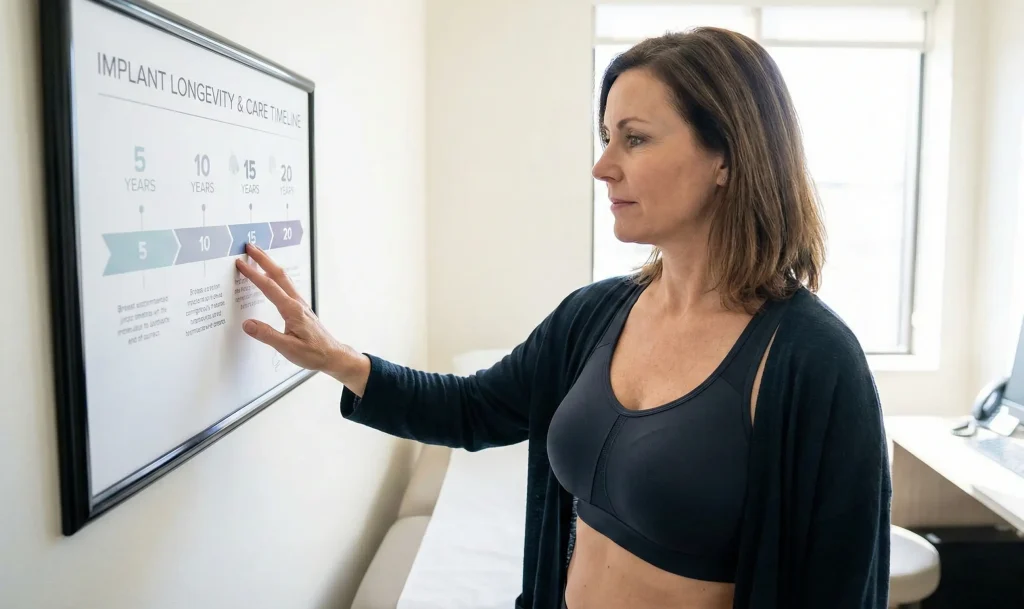
You probably want to have an exact expiry date so that you can plan your life accordingly. To the question: “How often do breast implants need to be replaced?”, it is not a simple answer in terms of time. According to statistics, the average lifespan is 10 to 20 years but there are many cases when women keep their implants for a longer time without any problem. Generally, we want you to pay attention to the state of the implant and not to its age. When you realize the reasons behind the replacement and the right time for it, you are able to make the right decision not only for your safety but also for your confidence.
Debunking the 10-Year “Rule” Myth
Many people believe that once the implants are 10 years old they should be replaced automatically. Ten years rule” was the ten-year replacement rule of the wrong first implant models and it was an outdated recommendation. The present-day regulatory bodies, such as the FDA, do not recommend the elimination of intact, asymptomatic implants as a preventive measure. If your implants are soft, aesthetically pleasing, and structurally sound, then you should not consider surgery just because ten years have passed.
You could consider a 10-year duration as a time for being extra careful to maintain your health rather than as a time to go under the knife. With each year of implantation, the risk of rupture increases by about 1%. Thus, if compared to a device that is one year old, a ten-year-old implant will statistically be slightly more likely to fail. Post-10-annual visits should be part of the patient’s care routine in order to verify that the shell has not been compromised, according to our recommendations.
Replacement Medical Indications: The “Has To”
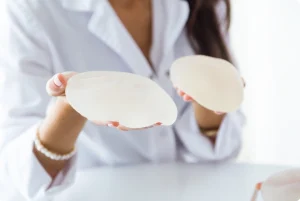
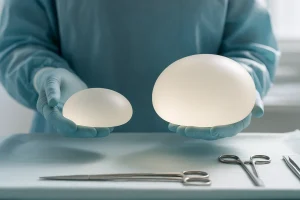
The clearest direct sign for replacement is device failure. Deflation is the immediate sign of failure in saline implants when the breast volume is lost within hours or days. Sometimes, with silicone, a “silent rupture” takes place which means that although the shell is broken, the cohesive gel is still inside the scar capsule, so you will not instantly notice any changes. This is why you need to have tests done, e.g.ultrasound or MRI, to be sure of the condition of the silicone implant shell.
Besides mechanical failure of the device, capsular contracture is another very common, primary medical indication for revision. The scar capsule around the implant your body forms can become too thick and the tissue too tight. The implant gets squeezed when this contraction happens, the breast becomes firm, distorted, or painful. As the discomfort and/or appearance changes which used to be tolerable become intolerable, the patient is then willing to undergo surgery. The surgeon will extract the fibrous tissue and in most cases replace the implant as well in order to restore the softness.
Replacement for Aesthetic Reasons: The “Want to”
It rarely takes 15-20 years for a body to change so much that no longer resembles the one from which the figure is not statuesque, lean, and contoured, but instead aged, slack, and wrinkled due to suspension of aging process and body weight changes as well as pregnancy. While the implant residue can be absolutely fine, the natural breast tissues become the real cause of the problems. Often, the implant is still at the normal place on the chest wall, but the breast tissues have dropped and show below the implant, hence the read as the “Snoopy deformity”. For instance, patients opt for implant replacement at the breast lift to achieve a smooth and natural shape.
Along with the passing of years, the things that make you happier and more satisfied also change. It means that you want a smaller size to fit your life which has been become more active and in which you do not want to show so much. On the other hand, the same patients who increased their breast volume after having kids in order to fill out the loose skin wish to undergo at least by second revision in the following cases. Then the replacement is none of the a, b, or c options. It turns out that you decide to revise your are physical appearance through surgery in order to be a reflection of the person you have become.
Monitoring and Screening Diagnostics

Being actively involved in the durability of your outcomes is a beautiful way for you to demonstrate self-care through continuous monitoring. In order to detect new lumps, ripples, or changes in firmness plastic surgeons recommend that you should do self-examinations. When you know the normal feeling in your implants very well, you can tell the slight differences with confidence. If one breast suddenly swells or the symmetry between the two breasts changes, you should consult immediately with a board-certified plastic surgeon.
There are various screening measures to detect silent ruptures in silicone implants, which are also supported by official rules. At present, the FDA advocates a magnetic resonance imaging (MRI) or very high-resolution ultrasound (US) five to six years after the initial surgery, and then every two to three years subsequent to that. Such tests are able to provide a view of the capsule that a physical examination is not able to perform. If you follow this routine, then when you eventually rupture, you find out immediately and intervene in time to prevent serious problems.
Breast Implants in Turkey
Your decision to undergo breast implant surgery at Lin Europe Clinic in Turkey is a result of our commitment to offer you only premium-grade, FDA-approved devices for maximum durability that meet not only your expectations but also our highest standards. We cooperate with manufacturers such as Mentor and Motiva, that have their own implants with Lower rupture rates, stronger shells and other features that use modern technology in their production. Our surgeons Istanbul are in charge of selecting the implant profile that perfectly fits your anatomy, thus reducing the mechanical stress on the device, which is probably why the implant life is extended.
Your bond with Lin Europe Clinic does not just end on the day of the operation. We keep you equipped with the full records of your implants, including the identification cards that are extremely important for the future monitoring. If the need for reoperation or replacement arises years after your first surgery, our team in Istanbul is ready for a comprehensive approach to a complex secondary surgery. Your safety in the long term is our main concern and we treat it with the same meticulous attention as the initial procedure that led to the transformation.
Frequently Asked Questions About Implant Replacement
No, it is not necessary to change your implants every 10 years if they are still intact and you’re satisfied with their look and feel.
The most common and obvious signs that breast implants need to be replaced include a change in the shape of the breast, the appearance of a hard lump (hardening of the breast), rippling which is a visible or palpable wave-like texture, or persistent pain in the area of the chest.
As for how long modern breast implants can last, silicone gel implants that are made today are tough and should last in many cases without problems for up to 10 to 20 years, and even longer if no issues arise.
Since a scar tissue around the implant may be present, a revision surgery can be more challenging, but the results can be just as good and the recovery time just as short if the surgeon is skilled in that operation.
When doing a re-implantation, why not consider getting either a larger or smaller implant, depending on whether you want to go up or down in size to better reflect your current body shape.
Maxwell, G. P., & Gabriel, A. (2014). Biofilms and breast implants: How the science of biofilms affects the practice of breast surgery. Aesthetic Surgery Journal.
Spear, S. L., et al. (2007). Natrelle round and shaped silicone gel-filled breast implants. Plastic and Reconstructive Surgery.
Collis, N., & Sharpe, D. T. (2000). Silicone gel-filled breast implant integrity: A retrospective review of 478 consecutively explanted implants. Plastic and Reconstructive Surgery.