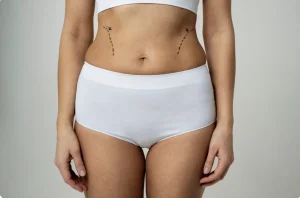
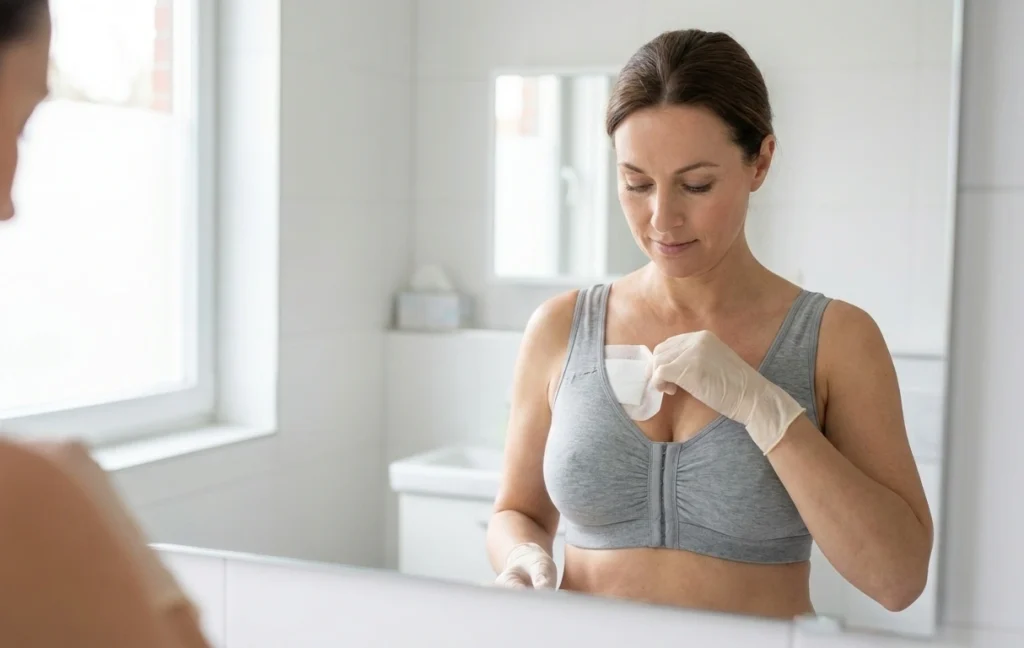
Bandages are usually removed within a few days.
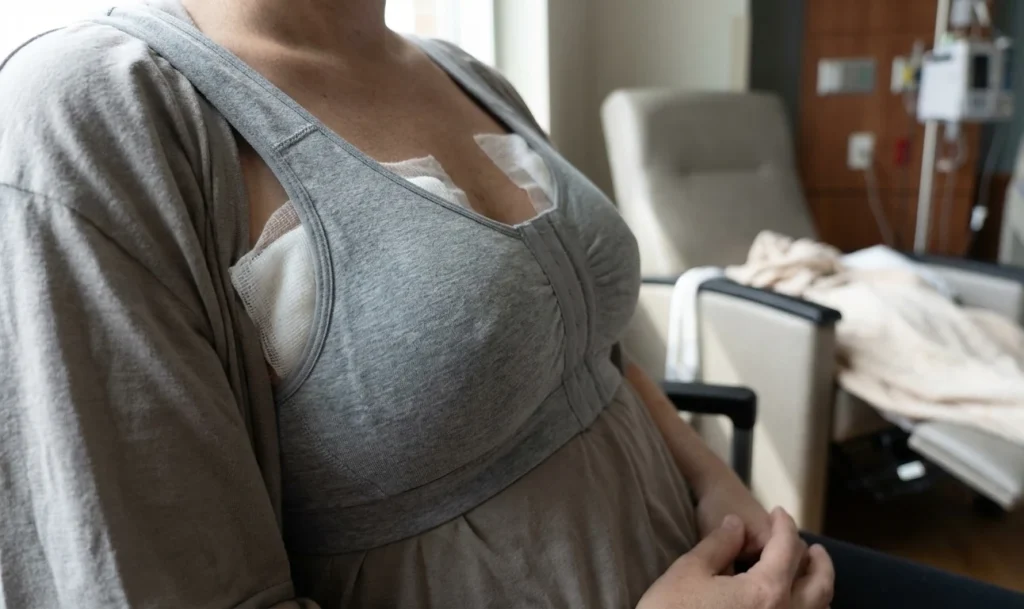
Guess what? You have finally decided on going through with it. It is hard to believe that you will never have to do those days of exhaustive research, doctor consultations, and nerves again. The surgery part of your story is over, you are back in your hotel in Istanbul, and slowly the anaesthetic potions are losing their effect on you. You eagerly look at your chest hoping to find a new figure, but all you do find are thick layers of white gauze, tight elastic wraps, and maybe a compression garment that resembles a suit of armor more than lingerie.
The temptation to peek is almost irresistible. You want to appraise the size, admire the cleavage, and convince yourself that everything is “right”. This first night frenzy to message the clinic with the question: “When can I take off bandages after breast augmentation?” is the most typical that we get at Lin Europe Clinic.
We here, at the Lin Europe Clinic, can totally relate to the impatience and the desire to know that breast implants are okay. On the other hand, we also recognize that 3-4 days of wearing a compression bra is actually critical for molding the breast pocket and avoiding the accumulation of fluid. Unwrapping your gift too early won’t just spoil the surprise; it will also diminish the thrill that comes with the result of your work. Here you have your clear, detailed daily plan of what is worn, what is taken off, and when.
The “Mummy” Phase: The First 24 to 48 Hours
Very soon after your operation, you may find that an absorbent gauze has been tightly packed under a surgical compression bra, or your chest is wrapped in a heavy elastic bandage (most commonly known as an Ace wrap). This dressing serves many purposes apart from just covering and giving you some privacy; it is a therapeutic procedure. The bandage firmly, continuously presses the chest to shut down those tiny vessels that may still be bleeding and subsequently keeps down the swelling following the operation.
- The Rule: Even if you are very uncomfortable, you must not loosen, touch, or cut this first dressing yourself.
- The Reveal: It is very usually the case that a doctor or a nurse takes off this weighty outer layer of anticontaminating protection at your initial follow-up appointment, which is generally 24-48 hours after the breast augmentation procedure. That is the moment of the “big reveal”. The doctor will look at the incision sites to make sure there are no hematomas (which is a blood build-up), check the nipple color to be sure they are well perfused, and then throw away the heavy, thick bandages. As a result, you will feel an enormous relief when, at long last, the huge pressure is removed.
The “Do Not Touch” Area: Steri-Strips and Glue
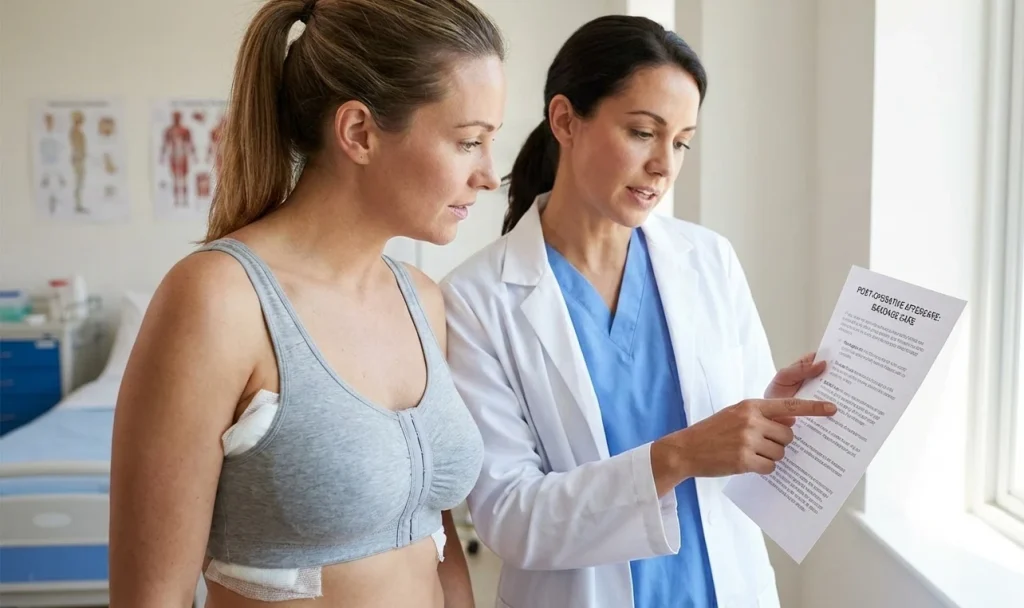
Upon disposal of the heavy bandages, the new bosoms will be visible to the patient at last. Nevertheless, if the patient takes a very close look at the incision line (whether it is tucked in the fold below the breast or at the areola), there will be tiny pieces of paper tape or a clear, shiny layer of surgical glue.
These are Steri-Strips (surgical tape) or Dermabond.
- Stress Warning: In no event should you ever peel these off.
- Rationale: When using these strips, the skin edges are mainly held together by them while the deeper, absorbable stitches that are not visible are kept apart. Besides, these strips function as a “biological seal” that prevents the penetration of bacteria into the wound. When you peel them off because they are “protruding” or “peeled”, you risk the wound opening (dehiscence), which will result in a scar that is not only wide and ugly but also infected.
- Schedule: Those pieces of tape are thus made to be sturdy. They stay for 2-3 weeks and then start to curl up a little bit at the edges and lose their stickiness, falling off naturally like an old sticker. Don’t rush – just let them fall off naturally. If they are barely hanging and you can cut the loose part with a pair of scissors, but don’t pull the whole strip.
The Conversion: From Bandages to the Surgical Bra
The moment the doctor removes the heavy wrap for the first time, you won’t be escorted home “bare”. The doctor will change you into a medical-grade surgical support bra (and, most likely, a breast band strap that goes across the top of the chest).
This bra serves the purpose of a “removable bandage”.
- Period: Wearing this bra is mandatory all the time (round-the-clock, including during the night) for the first 4 to 6 weeks. You should not change over to a pretty lace bra or an underwire bra during this phase. Underwires can create friction against the fresh incision and cause the tissue to become irritated.
- Reason: This uninterrupted pressure is essential to keep the implants in their correct pocket. The “breast band” pushes the implants down to stop them from sitting too high on the chest, thus, facilitating the “drop and fluff” of the implants.
- Taking Off: You are permitted to remove the bra for a brief moment to shower (once your doctor has given you the green light) or to launder the bra, but you must put it back on straightaway.
Showering: The Water Test
The issue of when to take off bandages usually relates to one’s wish to be clean.
- Standard Protocol: One can generally take a shower 48 hours post-operation after the medical team has removed the heavy outer bandages.
- Method: You can lather and rinse gently with lukewarm water only your shoulders, then your front, and finally over the top of your breasts. It is permissible for the Steri-Strips to get wet. Still, bathing in a Jacuzzi, swimming in a pool, or taking a long bath is not allowed for the next 4 weeks as these activities have a high risk of infection. After showering, the tape has to be dried very softly by dabbing with a clean towel. Never scrub or rub the incision area.
Troubleshooting: What to Look For
For the first few days, it is quite normal for the patient to spot some small bloodstains or yellowish fluid coming through the gauze or tape.
- Solution: Wound contact with the air and bacteria can result from opening the dressing. Instead, just put a new, clean and dry piece of gauze or panty liner on top of the old and wet one to absorb the fluid and provide some extra comfort and protection. Don’t bother to take the tape off just to “check” the wound.
- Symptoms to Watch For: If the bleeding is rapid and soaking through the padding (like having a very heavy period), or if you see blood (bright red) continuously dripping, or if the bandage seems to be extremely tight only on one side (which means that one breast is swelling faster than the other), you have to call us without delay.
Frequently Asked Questions About Bandages and Recovery
You must not remove the original heavy bandages on your own; the surgeon will take them off at your first follow-up visit, which is usually 24 to 48 hours after the surgery, when they check the incision.
Violating your surgical bra every day for 24 hours, including during sleep, is very important for at least 4 to 6 weeks, and that is why you cannot take it off even when sleeping. This will ensure that the implants heal in the correct position and do not shift.
There is nothing wrong with Steri-Strips getting wet in the shower; you can just dry them by gently patting them with a clean towel and make sure you do not rub them or try to peel them off.
The surgical tape or Steri-Strips will typically start to peel at the edges and fall off by themselves after about 2 to 3 weeks; do not pull them off.
This is an implant stabilizer band, which is applied to the implants to exert downward pressure and thus prevent them from being lifted up too high on the chest wall during the muscle healing process.
Adams, W. P., Jr. (2008). The process of breast augmentation: four sequential steps for optimizing outcomes for patients. Plastic and Reconstructive Surgery.
Bengtson, B. P., et al. (2007). Style 410 highly cohesive silicone breast implant core study results at 3 years. Aesthetic Surgery Journal.
Maxwell, G. P., & Gabriel, A. (2009). Biofilms and capsular contracture: The significance of the clinical implications. Aesthetic Surgery Journal.