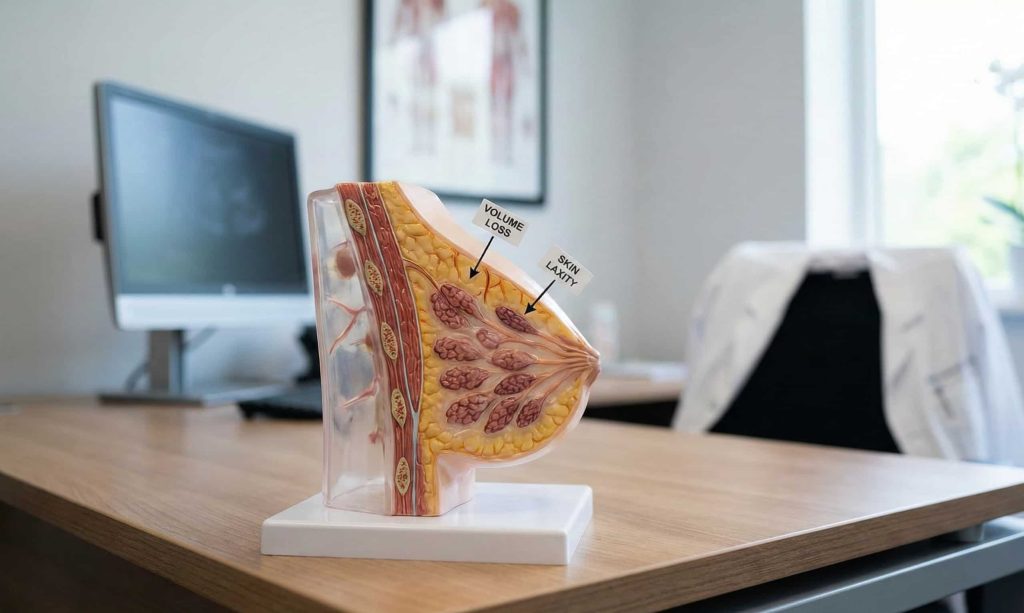
Breast sagging after rapid Ozempic weight loss.
The emergence of GLP-1 agonists such as Ozempic, Wegovy, and Mounjaro has dramatically changed weight loss, enabling millions to lose weight very fast. On the other hand, rapid and significant changes in body size often become accompanied with an unexpected side effect known under the nickname “Ozempic Boob“. At Lin Europe Clinic, we are receiving a lot of questions from customers who are very happy about their new slim waist but at the same time upset about the sudden loss of volume and elasticity of their breasts.
‘Ozempic Boob‘ is not a term used by medical professionals, but it simply refers to breast ptosis (sagging) resulting from fast, massive weight loss. In the case of slow weight loss, the skin has time to adjust and retract; however, the rapid decrease in fat caused by these drugs leaves the skin empty and loose. This article will tell you about the physiological process behind this issue and also about the operations that can help you regain your shape.
The Anatomy of Deflation
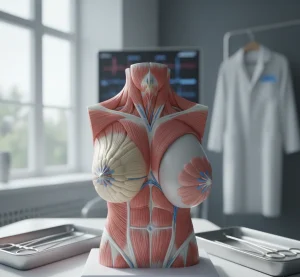
If you want to know exactly what is going on with “Ozempic Boob” you first need to understand the structure of the breast. A lady’s mammary gland consists of glandular tissue and fat tissue. The amount of each varies mostly from one female to another, but for a large number of ladies, the volume of fat accounts for a major part of their breasts.
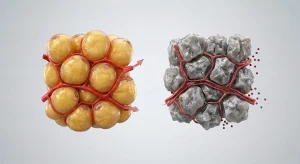
When you are on a drug that controls your appetite chemically and, at the same time physically, forces your body to go through lipolysis (fat breakdown), most probably, first and foremost, your body will totally use the fat stores of the chest as a fuel source. The problem with the fat is that it goes away extremely fast, and the skin in your breasts can’t get tight by contracting the elastin fibers that quickly. So, your breasts first lose their volume and then they get loosened out by the skin. Breasts with no volume but full of skin are what deflated balloons look like, only these breasts look like they are touching the chest wall while the nipples are oriented downward.
Why Speed Matters

What is the main reason that “Ozempic Boob” is another form of aging mamas? Aging takes place at a much slower pace of diet and exercise, where changes in your weight vary usually between 1 and 2 pounds a week. The skin will be able to rearrange its collagen network to some extent due to this time. COn the other hand, GLP-1 medications can have a dramatic effect on your weight in a matter of days.
Such a rapid loss of volume is kind of a shock for the skin. The ligaments of the breast (Cooper’s ligaments) that are responsible for keeping the breast tight and are supported by tension of the fat, when the fat disappears they lose this tension; then, the breast will drop, and eventually, the skin will be loose. Typically, the patient will feel the texture that the skin has become like “crepy” or “empty” and she will also mention a loss of firmness even before she had gained the extra weight.
Treatment 1: The Breast Lift (Mastopexy)
Many post-Ozempic patients consider breast volume restoration their main concern, but it is only one side of the problem, there is also a problem of excess skin. If you have a sufficient amount of breast tissue but it is just low, a breast lift (mastopexy) is the ideal treatment.
The operation will allow the surgeon to take the skin that is stretched out and too much and then remodel the breast so the tissue that is left will form a cone that is higher and tighter. Also, the nipple is transferred to a position that has the characteristics of a younger nipple. Weight loss patients selecting for the “auto-augmentation” operation at Lin Europe Clinic are quite common. The procedure consists in using the existing lower breast segment, which would typically be excised, to be folded and fixed beneath the upper pole for more volume without implant.
Treatment 2: Implants for Volume Restoration
Should you find yourself in a situation where the medication has had a near-total depletion effect on breast fat, then the only natural tissue left for you will be very little, and consequently, a breast lift might result in you having a cup smaller than you want. For this reason, an implant (Augmentation-Mastopexy) together with a lift will be your solution.
Basically, the implants substitute the breast fat volume that has been lost. They bring up the upper pole of the breast (the décolletage) which is the first area to show the signs of “hollowness” after weight loss. Such a solution brings back not only the breast shape but also the breast size, thus, giving you the body shape with which you started your weight loss journey.
The Timing: When to Have Surgery?
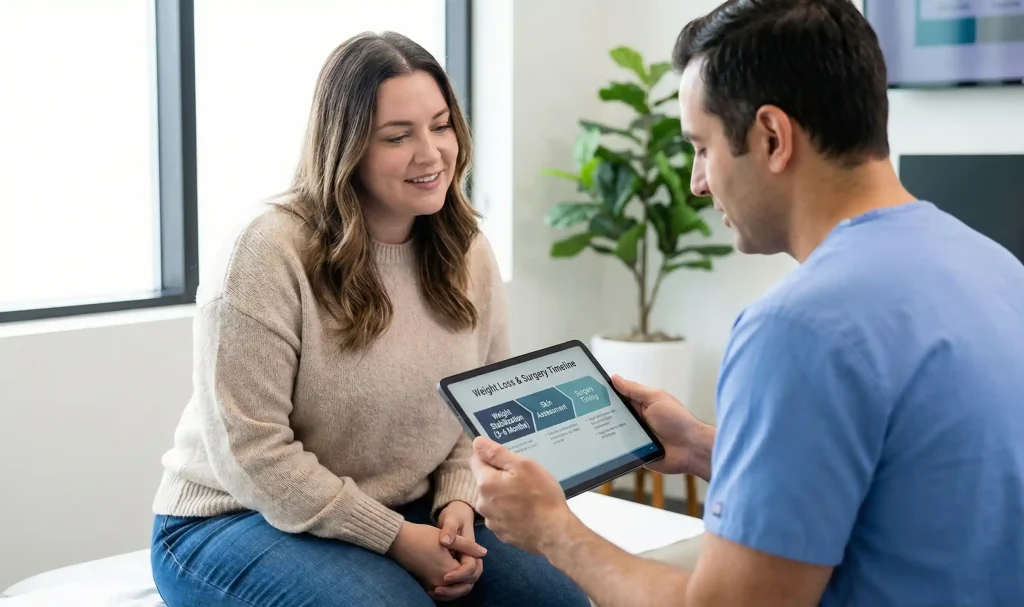
The must-follow safety rule is the one with which this is the most crucial question of all. You cannot go for surgical correction of your breasts while you are still in the process of losing weight. In case you have a lift and then lose a further 20 pounds, the breasts will start to sag again, thus, the surgical result is lost.
A 3-to-6 month waiting period after stabilizing your weight is a mandatory requirement at our clinic before we book a surgery. During this time, your nutritional status will be stable and your body has adapted to the new mass. Also, if your plan is to discontinue Ozempic, we suggest that you wait to be sure that you don’t undergo a major “rebound” weight gain that could cause the scars to stretch out again.
Nutritional Support for Skin Health
Diet on its own is not able to cure loose skin; however, the type of nutrients that you consume plays a major role in your body’s ability to heal after the surgery. When people lose weight rapidly, they can sometimes end up getting protein deficiency or a lack of vitamins, these conditions can make wounds heal slower.
In cases where we warn our patients that they are going to have breast surgery in order to fix “Ozempic Boob“, we also do nutritional diagnostics. Depending on the results, we will advise on boosting collagen and protein consumption so your body has the main materials to get the scars healed strongly and beautifully.
Post-Weight Loss Surgery in Turkey
Actually, the Turkish Republic is a world-famous destination for patients in need of post-bariatric and post-weight loss plastic surgery. The team at the Lin Europe Clinic in Istanbul is specialized in dealing with the particular tissue composition of clients who have undergone a massive weight loss. We recognize that “Ozempic skin” is less elastic and that it needs somewhat different approaches to tightening.
Our approach to such a huge lifestyle and body changes is to keep everything “under one roof” at our establishment, that is why the process from your weight loss journey to your body contouring journey will be done safely and effortlessly. Besides, we will take care of all the details like the laboratory and the airport VIP transfers. We hope that you will take your transformation to the next level in Istanbul and change your “Ozempic Boob” to a perky, confident chest.
Frequently Asked Questions About Ozempic Boob
“Ozempic Boob” is a slang term that describes the drooping, empty look of breasts which is one of the side effects of rapid weight loss during the use of GLP-1 drug medications.
The medication facilitates rapid melting of fats. As breasts contain a lot of fat, they lose their volume before the skin can get tight again, hence the wrinkled appearance of the breast.
No. After the skin has been stretched and the fat is completely removed, it is very rare that the skin will naturally tighten without assistance. In most cases, surgery is necessary.
Sometimes no. A simple breast lift would do the trick if you still have a good amount of tissue. However, if you have lost a lot of volume, then implants will be necessary to make the breasts look full again.
They are more or less the same, but usually, there is more damage in the Ozempic case as the weight loss happens very fast and hence the skin doesn’t have enough time to retract naturally.
American Society of Plastic Surgeons. (2023). Plastic Surgery Trends Report: Post-Massive Weight Loss.
Hurwitz, D. J. (2016). Total Body Lift: Reshaping the Breasts, Chest, Arms, Thighs, Hips, Back, Waist, Abdomen, and Knees after Weight Loss. Thieme.
Rubin, J. P. (2018). Aesthetic Surgery After Massive Weight Loss. Elsevier.
Shermak, M. A. (2014). Breast lifting and augmentation in the massive weight loss patient. Clinics in Plastic Surgery, 41(4), 697-709.
Song, A. Y., et al. (2006). Mastopexy with auto-augmentation in massive weight loss patients. Plastic and Reconstructive Surgery, 118(7), 177-184.